Akechi Castle (Kani City, Gifu Prefecture) Complete Guide | History and Highlights of the Mountain Castle Said to be the Birthplace of Akechi Mitsuhide
Akechi Castle, located on Seta Nagayama in Kani City, Gifu Prefecture, is a mountain castle known as the birthplace and upbringing of Akechi Mitsuhide, a hero of the Sengoku period. Also known as “Nagayama Castle” or “Akechi Nagayama Castle,” it is a typical medieval mountain castle that skillfully utilizes the natural terrain, and remains a popular spot for many history buffs and hiking enthusiasts.
This article comprehensively introduces information you should know before visiting, including the detailed history of Akechi Castle, its structure and highlights, access methods, and related spots in the surrounding area.
What is Akechi Castle? | Basic Information and Overview
Akechi Castle is a mountain castle built on a hill approximately 175 meters above sea level in Kani City, Gifu Prefecture. It is characterized by its structure that makes maximum use of the natural terrain, such as protruding ridges and valleys, and holds an important position in castle research as a typical example of a medieval mountain castle.
Location and Basic Data
- Location: Seta Nagayama, Kani City, Gifu Prefecture
- Alternate Names: Nagayama Castle, Akechi Nagayama Castle
- Castle Structure: Mountain Castle
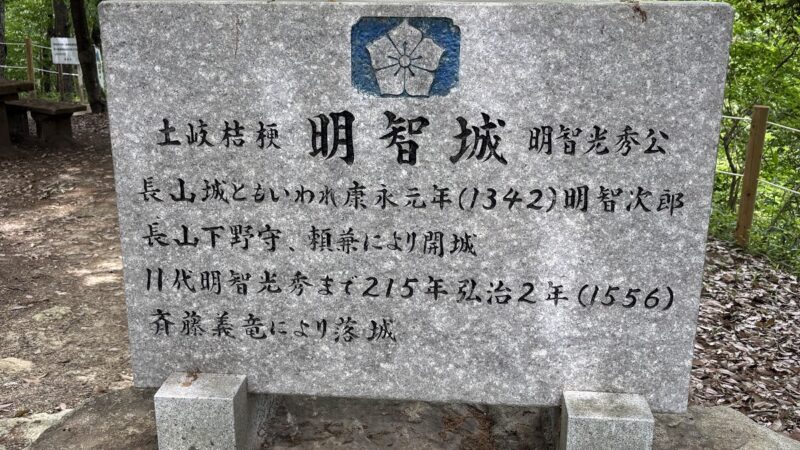
- Year of Construction: Kōei 1 (1342)
- Builder: Toki Yorikane (First head of the Akechi clan)
- Main Lords: Successive heads of the Akechi clan
- Year of Abandonment: Kōji 2 (1556)
- Elevation: Approximately 175 meters
- Relative Height: Approximately 80 meters
- Remains: Enclosures, earthworks, moats, etc.
Opening Hours and Access
Akechi Castle Ruins are always open, and there are no specific opening hours. However, as it is a mountain castle, visiting during daylight hours is recommended for safety reasons.
Access by Public Transportation:
- Approximately 25 minutes on foot from Meitetsu Hiromi Line “Akechi Station” to the trailhead.
- Approximately 20-30 minutes on foot from the trailhead to the main keep ruins.
Access by Car:
- Approximately 10 minutes from Tokai-Kanjo Expressway “Kani-Mitake IC”.
- Parking available near the Akechi Castle Ruins trailhead (a few cars).
History of Akechi Castle | A 200-Year History from Construction to Fall
Kōei 1 (1342) | Construction by Toki Yorikane
The history of Akechi Castle begins in Kōei 1 (1342), when Toki Yorikane (Shimotsuke-no-kami), a descendant of the Mino Genji clan, renamed the area “Akechi” and built a castle there. The Toki clan was a powerful family that served as the shugo (military governor) of Mino Province, and Yorikane, as a branch of the clan, ruled Akechi-shō (the area around present-day Kani City).
When Yorikane adopted the name “Akechi,” this entire region became the base of the Akechi clan, and it flourished as the ancestral castle of the Akechi clan for approximately 200 years.
The Development of the Akechi Clan and the Birth of Mitsuhide
The Akechi clan expanded its power within Mino Province and came to occupy an important position as a senior retainer of the Toki clan. It is believed that Akechi Mitsuhide was born at Akechi Castle around 1528 (there are various theories).
It is also said that Mitsuhide became the lord of the castle at the age of 11, and he is thought to have spent approximately 30 years there. During this time, Mitsuhide devoted himself to martial arts and scholarship, laying the foundation for the Sengoku period warlord who would later assassinate Oda Nobunaga in the Honnoji Incident.
1556 (Kōji 2) | Saitō Yoshitatsu’s Attack and Fall of Akechi Castle
The history of Akechi Castle came to an end with the attack by Saitō Yoshitatsu in 1556 (Kōji 2). That year, power struggles intensified within Mino Province, and Saitō Yoshitatsu clashed with his father, Saitō Dōsan. After defeating Dōsan, Yoshitatsu launched an attack against the Akechi clan, who had sided with Dōsan.
At the time, the lord of Akechi Castle was Akechi Mitsuyasu, Mitsuhide’s uncle. Faced with an overwhelming difference in military strength, Akechi Castle fell. It is said that Mitsuyasu helped Mitsuhide escape from the castle, while he himself perished with its fate. With this fall, Akechi Castle, the Akechi clan’s stronghold, disappeared from the stage of history.
Mitsuhide, who escaped, later sought refuge with the Asakura clan of Echizen Province, eventually serving Oda Nobunaga, and growing into one of the most representative warlords of the Sengoku period. ## Structure and Remains of Akechi Castle | Exploring the Characteristics of Medieval Mountain Castles
Layout Utilizing Natural Terrain
Akechi Castle is a typical medieval mountain castle built on a hill approximately 175 meters above sea level. It is characterized by its clever use of natural terrain such as protruding ridges and valleys, minimizing artificial construction.
The castle grounds extend approximately 400 meters north-south and 200 meters east-west, with multiple baileys (kuruwa) arranged in a stepped pattern. This arrangement effectively prevents enemy intrusion and allows for the efficient deployment of defending forces.
Main Bailey Site and Major Baileys
The main bailey site is located at the highest point of the castle, measuring approximately 30 meters east-west and 20 meters north-south. Currently a flat space, it is presumed that the lord’s residence and watchtowers once stood here. From the main bailey, one can see a panoramic view of Kani city, suggesting that it also functioned as a lookout post.
The main enclosure (Honmaru) was surrounded by several baileys, each functioning as a defensive line. Relatively large baileys remain, particularly on the south and east sides of the Honmaru, and are thought to have been used as barracks for soldiers and storage for supplies.
Earthworks and Moats
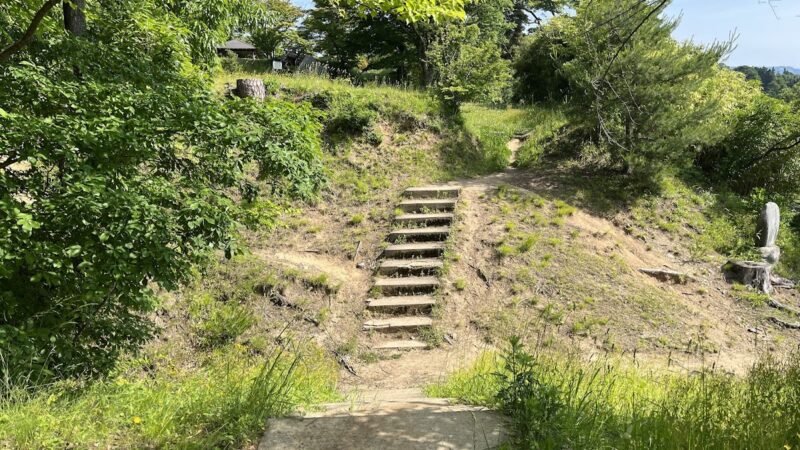
Akechi Castle retains relatively well-preserved remains of its defensive structures from that time, including earthworks and moats.
Earthworks are earthen walls built along the edges of the baileys, preventing enemy intrusion and providing an advantage against arrow and stone attacks from within the castle. Earthworks approximately 1-2 meters high can still be seen in various locations.
Moats (Horikiri) are dry moats dug across ridges, serving as important defensive structures to hinder enemy advances. Traces of moats remain on the north and west sides of the Honmaru at Akechi Castle, allowing visitors to experience the defensive structure of the time.
Preservation Status and Controversy Regarding the Remains of Akechi Castle
While the remains of Akechi Castle are generally considered to be relatively well-preserved, there is disagreement among experts as to whether these remains truly represent a castle or are simply part of a natural hilly terrain.
Because clear stone walls and building foundations are not present, the castle must be judged solely on the earthen structures characteristic of medieval mountain castles, making interpretation difficult. However, considering historical documents, local traditions, and topographical features, it is considered highly probable that this was the residence of the Akechi clan.
Highlights of Akechi Castle Ruins | Recommended Walking Route
Kikyo-zaka Route | Main Ascent Route
The most recommended route when visiting Akechi Castle Ruins is the “Kikyo-zaka” (bellflower slope). The bellflower is known as the family crest of the Akechi clan, and the route name itself evokes a connection to Mitsuhide.
From the trailhead to the main keep ruins, it takes approximately 20-30 minutes, with a well-maintained walking path. Guide signs are placed along the path, so even first-time visitors can reach the castle without getting lost. The gentle slope makes it an ideal course for hiking.
The Well of Akechi Mitsuhide’s First Bath
Along the hiking trail, there is a historical site known as the “Well of Akechi Mitsuhide’s First Bath.” This well, said to have been used for Mitsuhide’s first bath, still flows today.
The existence of this well is considered an important historical site supporting the tradition that this is Mitsuhide’s birthplace. However, there are multiple theories about Mitsuhide’s birthplace, and this is not definitive.
Observation Spot | View from the Main Keep
From the ruins of the main keep, you can enjoy a magnificent panoramic view of Kani city. On a clear day, you can see as far as Nagoya, and imagining the castle lords gazing upon this view evokes a sense of historical romance.
Especially during the cherry blossom season in spring and the autumn foliage season, the surrounding mountains are beautifully colored, making it a popular scenic spot.
Statue and Memorial of Akechi Mitsuhide
Several memorials and explanatory plaques related to Akechi Mitsuhide are installed around the castle ruins. Visitors can learn more about Mitsuhide’s life and the history of Akechi Castle, deepening their understanding.
Castle Stamps and Souvenirs | Take Home Memories of Akechi Castle
With the recent castle boom, Akechi Castle also sells “castle stamps” (gojōin). These stamps are like certificates that can be purchased as a memento of visiting the castle; they are beautifully printed items featuring the castle name and family crest.
Akechi Castle stamps can be purchased at tourist facilities and Akechi Mitsuhide-related spots in Kani City. They are popular as souvenirs of visits and as collectibles for castle tours.
Where to obtain the castle stamp:
- Kani City Tourism Exchange Center (central Kani City)
- Tourist information centers around Akechi Station
- Other designated sales locations within Kani City
The price is usually around 300-500 yen, and the design may vary depending on the time of year.
The Akechi Mitsuhide Birthplace Debate | Kani City Theory and Other Candidate Locations
There is a major historical debate regarding the birthplace of Akechi Mitsuhide, and no definitive answer has been reached. The following areas are listed as the main candidate locations:
The Kani City, Gifu Prefecture Theory (Akechi Castle)
The theory that Akechi Castle in Kani City is Mitsuhide’s birthplace is based on local legends and the existence of historical sites such as the “well where he was given his first bath.” Furthermore, the historical fact that the Akechi clan used this area as their base for approximately 200 years also supports this theory.
Kani City is actively promoting tourism as the birthplace of Mitsuhide, and is developing various events and facilities as “the town of Akechi Mitsuhide.”
Gifu Prefecture Ena City Theory (Akechi Castle)
Akechi Castle, located in Akechi-cho, Ena City, is also one of the candidates for Mitsuhide’s birthplace. This location also shares the place name “Akechi,” and is said to have a connection to the Akechi clan.
Akechi Castle is also known as “Shirataka Castle” and is a Gifu Prefecture designated historical site. However, it has been suggested that this Akechi clan may be a different lineage from the Akechi clan of Kani City, and the debate continues.
Gifu Prefecture Yamagata City Theory and Kyoto Prefecture Theory
In addition, there are traditions claiming Mitsuhide’s birthplace in Yamagata City, Gifu Prefecture, and within Kyoto Prefecture. These regions also have historical sites related to Mitsuhide and the Akechi clan, each claiming its own unique evidence.
Relationship between Historical Facts and Legends
The reason why Mitsuhide’s birthplace cannot be definitively determined is that there are no reliable historical records from that time. Mitsuhide only appears on the historical stage after serving Oda Nobunaga, and much of his earlier life remains unknown.
However, the very existence of such debate demonstrates the high level of interest in Akechi Mitsuhide, and visiting historical sites throughout the region allows for a multifaceted approach to understanding his character.
Related Spots in the Surrounding Area | Exploring Places Associated with Akechi Mitsuhide
If you visit Akechi Castle, be sure to also visit the surrounding Akechi Mitsuhide-related spots. Many historical sites associated with Mitsuhide remain in Kani City and its surrounding areas.
Tenryu-ji Temple (The Family Temple of the Akechi Mitsuhide Clan)
Tenryu-ji Temple, located about 10 minutes by car from Akechi Castle, is known as the family temple of the Akechi clan. The temple grounds contain the memorial tablet of Akechi Mitsuhide and the graves of the Akechi family, serving as a place to mourn those who died when the castle fell.
Every year on the anniversary of Mitsuhide’s death, a memorial service is held, attracting many history enthusiasts. It’s a quiet temple nestled in the mountains, a place where you can feel the weight of history.
Mitsuhide Spots Around Akechi Station
Around Akechi Station on the Meitetsu Hiromi Line, there are facilities and monuments related to Mitsuhide. A bronze statue of Mitsuhide stands in front of the station, and detailed information can be obtained at the tourist information center.
Kani City Tourism Exchange Center
The Kani City Tourism Exchange Center, located in the center of Kani City, features exhibits on Akechi Mitsuhide and the history of Kani City. Visiting before visiting Akechi Castle to gain some background knowledge will allow you to enjoy the castle ruins more deeply.
Mino Kanayama Castle Ruins
Located about 15 minutes by car from Akechi Castle, the Mino Kanayama Castle Ruins are also a popular spot as a mountain castle from the Sengoku period. This castle is known as the residence of the Mori clan and has a different castle structure from Akechi Castle.
Comparing the two castles allows us to understand the diversity of castle architecture during the Sengoku period.
Hana Festa Memorial Park
A place you’ll want to visit between historical explorations is the “Hana Festa Memorial Park” in Kani City. This park boasts one of the world’s largest rose gardens, where you can enjoy seasonal flowers. It’s about a 20-minute drive from Akechi Castle.
Points to Note and Advice When Visiting Akechi Castle
Clothing and Equipment
Since Akechi Castle is a mountain castle, the following preparations are recommended:
- Comfortable walking shoes: Although the hiking trails are well-maintained, athletic shoes or trekking shoes are suitable as it is a mountain trail.
- Comfortable clothing: Choose comfortable clothing appropriate for the season.
- Drinks: Hydration is especially important in the summer.
- Insect repellent: There are many insects in the mountainous areas at certain times of the year.
- Rain gear: The weather can change quickly, so a folding umbrella is recommended.
Best Season for Visiting
Akechi Castle ruins can be visited throughout the year, but the best seasons are:
- Spring (March-May): Cherry blossoms and fresh greenery are beautiful, the weather is mild, and it’s ideal for hiking.
- Autumn (October-November): The autumn leaves are beautiful, and the cool weather makes for a comfortable stroll.
- Winter (December-February): The air is clear and the views are excellent. However, cold weather gear is necessary.
- Summer (June-September): The greenery is lush and insects are abundant. Visiting in the early morning or evening is recommended.
Estimated Time Required
Please allow the following time for visiting the Akechi Castle Ruins:
- From the trailhead to the main keep: 20-30 minutes on foot
- Exploring the area around the main keep: 30-60 minutes
- Descending: 15-20 minutes on foot
- Total: Approximately 1 hour 30 minutes to 2 hours
Including related spots in the surrounding area, this will make for a half-day to full-day sightseeing plan.
Safety Precautions
- As this is a mountain trail, it can become slippery during and after rain.
- Please complete your descent before sunset.
- If you are hiking alone, inform your family or friends of your destination.
- Checking your cell phone signal strength beforehand is recommended.
The Impact of the NHK Taiga Drama “Kirin ga Kuru”
The 2020 NHK Taiga drama “Kirin ga Kuru” featured Akechi Mitsuhide as the protagonist, sparking a nationwide Mitsuhide boom. This led to a significant increase in visitors to the Akechi Castle ruins.
In conjunction with the drama’s broadcast, Kani City has been working to improve the area around Akechi Castle, including improving signage and expanding the parking lot. They have also strengthened tourism promotion as “Akechi Mitsuhide’s town,” conducting various events and guided tours.
Even after the drama ended, interest in Mitsuhide continues, and Akechi Castle has become an important historical tourist spot in Gifu Prefecture.
The Future of Akechi Castle | Efforts for Preservation and Utilization
Kani City is actively working on the preservation and utilization of the Akechi Castle ruins. Our main initiatives include:
Preservation of Historical Structures
- Protection of historical structures through regular mowing and tree management
- Surveying and recording of historical structures such as earthworks and moats
- Conducting academic archaeological excavations (as needed)
Development as a Tourist Facility
- Maintenance and updating of walking paths and signboards
- Development of convenience facilities such as parking lots and restrooms
- Consideration of barrier-free access (to the extent possible)
Educational and Outreach Activities
- Utilization in local history education at local elementary and junior high schools
- Holding guide training courses
- Conducting historical lectures and symposiums
Utilization of Digital Technology
- Recreation of the castle as it once was using AR (Augmented Reality) technology
- Providing audio guides via smartphone apps
- Conducting online virtual tours
Through these initiatives, the Akechi Castle Ruins continue to develop not only as a historical site, but also as a place to learn about and enjoy the local history and culture.
Summary | Experience the History of the Sengoku Period at Akechi Castle
Akechi Castle in Kani City, Gifu Prefecture, is a valuable historical site where you can touch upon the roots of Akechi Mitsuhide, a representative warlord of the Sengoku period. As a mountain castle surrounded by nature, it’s an attractive spot where you can learn about history while enjoying a hike.
There are many highlights, including the view from the main keep ruins, legendary sites such as the well where he was given his first bath, and earthen structures unique to medieval mountain castles. By visiting related spots in the surrounding area, you can gain a deeper understanding of Akechi Mitsuhide and the history of the Sengoku period.
When visiting Kani City, be sure to visit the Akechi Castle ruins and experience the scenery seen by Sengoku warlords approximately 500 years ago. With well-maintained walking paths, it’s a place that can be enjoyed by a wide range of people, from history novices to castle enthusiasts.
Regardless of whether or not this is the true birthplace of Akechi Mitsuhide, there is no doubt that this place was an important base for the Akechi clan. Enjoy a journey where you can feel the romance of history and the spirit of the Sengoku period.