Kuramasu Castle, Tendo City (Yamagata Prefecture): A Key Base in the Sengoku Period and the History of the Kuratsu Clan
Kuramasu Castle, located in Tendo City, Yamagata Prefecture, is a castle that functioned as an important relay point in the Mogami River basin during the Sengoku period. Located approximately 4 kilometers west of Tendo Castle, and ruled by the Kuratsu clan, this castle played a crucial role in the expansion of Mogami Yoshiaki’s power. This article provides a detailed explanation of the history, structure, and current Kuramasu area of Kuramasu Castle.
Overview of Kuramasu Castle
Kuramasu Castle was a medieval castle located in Kuramasu, Tendo City, Yamagata Prefecture. Situated approximately 4 kilometers west of Tendo Castle, it was built in a geographically important location as a relay point on the Mogami River. This location was extremely important for the transportation of supplies and military communication.
Castle Size and Structure
Kuramasu Castle is estimated to have measured approximately 100 ken (about 200 meters) east-west and approximately 120 ken (about 235 meters) north-south. This size was standard for castles ruled by local powerful families at the time, and its design was functional in both defense and governance.
While detailed records of the castle’s structure are not available, it is believed that, as is characteristic of castles in the Yamagata region during the Sengoku period, the castle’s layout utilized the natural terrain. Its location near the Mogami River likely allowed it to use the river as a natural moat.
History of Kuramasu Castle
Governance by the Kuratsu Clan
Kuramasu Castle was ruled by the Kuratsu clan. The Kuratsu clan was a powerful local family that controlled this area, but amidst the turmoil of the Sengoku period, they eventually came under the influence of Mogami Yoshiaki.
While many details of the Kuratsu clan’s lineage remain unclear, the connection between the place name Kuramasu and the clan name Kuratsu suggests they were a family deeply rooted in this region. They are believed to have played an important role in the development and governance of the area.
Relationship with Mogami Yoshiaki
During the Sengoku period, Kuramasu Castle was a strategically important base for Mogami Yoshiaki, who was attempting to unify the Yamagata region. It was a relay point connecting Tendō Castle and the Mogami River, making it indispensable for the transportation of supplies and military operations.
The Kuratsu clan chose to submit to Mogami Yoshiaki and, as a reward, were transferred to Mogami Oguni (present-day Mogami-cho, Mogami-gun, Yamagata Prefecture). This is thought to have been part of a reshuffling of forces carried out by Mogami Yoshiaki as he strengthened his control over his territory. After the Kuratsu clan left Kuramasu, the region came under the direct rule of the Mogami clan.
Role in the Siege of Yachi Castle
Kuramasu Castle and its lord, Kuramasu Chikakage, played a crucial role in Mogami Yoshiaki’s siege of Yachi Castle. Mogami Yoshiaki ordered Kuramasu Chikakage to construct the “Mukasari-michi” (a road leading from Kuramasu to Yachi) under the pretext of marrying Shiratori Nagahisa’s daughter (or adopted daughter, Hiyoshihime) to his eldest son, Yoshiyasu.
However, this marriage proposal fell through, and Mogami Yoshiaki lured Shiratori Nagahisa to Yamagata Castle and assassinated him. Afterward, Yoshiaki used the Mukasari-michi to launch a swift attack and capture Yachi Castle. The road built by Kuramasu Chikakage played a crucial role in this strategy.
This event demonstrates that Kuramasu Castle and its surrounding area functioned as an important forward base in Mogami Yoshiaki’s expansion of power.
The Position of Kuramasu Castle in the Yamagata Region during the Sengoku Period
Strategic Importance of the Mogami River Basin
The Mogami River is a major river that traverses Yamagata Prefecture and has long played an important role as a vital transportation hub for goods. Even during the Sengoku period (Warring States period), controlling the Mogami River’s water transport was extremely important for regional control.
Kuramasu Castle was located at a relay point connecting Tendō Castle and the Mogami River, making it a crucial base for the accumulation of supplies and military communications. It is believed that these geographical factors played a significant role in Mogami Yoshiaki’s emphasis on this region.
Relationship with Surrounding Castles
Many castles existed around Kuramasu Castle, including Tendō Castle, Yachi Castle, and Sagae Castle. These castles cooperated with each other to form a regional defense system.
The relationship with Tendō Castle was particularly close, and Kuramasu Castle is thought to have played a role as a subsidiary castle protecting the western side of Tendō Castle. As the relationship between the Tendō and Mogami clans changed, the strategic importance of Kuramasu Castle also shifted.
Kuramasu After the Edo Period
Abandonment of Castles
With the advent of the Edo period, many castles were abandoned due to the shogunate’s policies, such as the “One Castle Per Province” decree. Kuramasu Castle was no exception; its military role ended with the end of the Sengoku period (Warring States period).
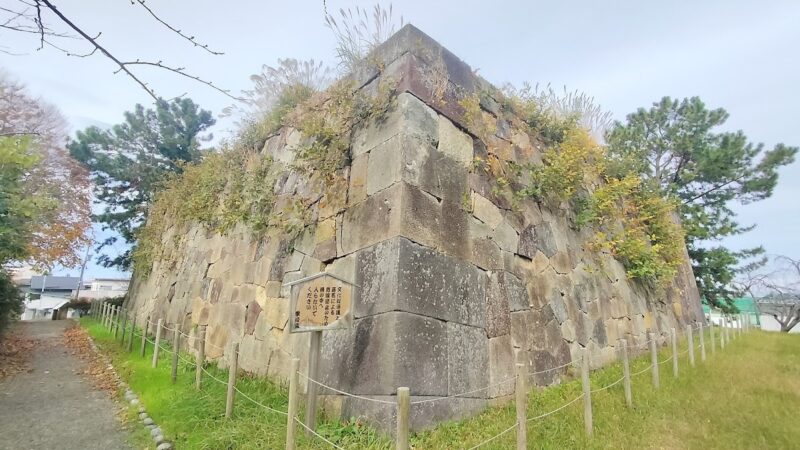
After its abandonment, the castle site was used for farmland and residential areas, and the castle’s remains gradually disappeared. Currently, it is difficult to identify any clear remains.
Formation of Kuramasu Village
Throughout the Edo period, Kuramasu developed as a village. Taking advantage of its location near the Mogami River, it flourished as a base for agriculture and the transportation of goods.
In the Meiji era, modern administrative divisions were established, and Kuramasu Village was officially designated. Later, on October 1, 1954 (Showa 29), Tendo Town, Naruse Village, Kuramasu Village, Tsuyama Village, Teratsu Village, Yamaguchi Village, and Tamugino Village merged to form the new Tendo Town.
Current Kuramasu District
On October 1, 1958 (Showa 33), Tendo Town became Tendo City, and Kuramasu has remained a district of Tendo City ever since.
The current Kuramasu district is home to the Kuramasu Municipal Community Center. This community center is a wooden building constructed in 2015 (Heisei 27), using cedar wood from Yamagata Prefecture for its structure and interior/exterior finishes, creating a facility that exudes the warmth and gentleness of wood. Its address is 672 Kuramasu-Minami, Tendo City.
Cultural Properties and Historical Sites of Kuramasu
The Giant Cedar Tree of Nishijotoku-ji Temple
Within the grounds of Nishijotoku-ji Temple in Kuramasu stands a giant cedar tree designated as a cultural property of Tendo City. Standing to the left of the main hall, this cedar boasts a root circumference of 9.23 meters, a trunk circumference of 6.61 meters, and a height of approximately 20 meters, making it the largest cedar tree in the city. This giant tree is cherished by the local people as a living witness to the long history of Kuramasu. Estimated to be several hundred years old, it may have watched over this land since the time when Kuramasu Castle existed.
Historical Landscape of the Region
While there are no clear remains of a castle in the Kuramasu area, the place names and topography evoke the past. The geographical location near the Mogami River remains unchanged, providing clues to understanding that this area was a crucial transportation hub.
Current Status and Challenges of Kuramasu Castle Research
Limitations of Historical Sources
Historical sources concerning Kuramasu Castle are limited, leaving many questions unanswered regarding its detailed structure and history. The main sources of information are fragmentary references in records concerning Yamagata Castle and Mogami Yoshiaki.
Future research through local historical documents and archaeological investigations may reveal new facts. It is hoped that advancements in local history research will clarify the true nature of Kuramasu Castle.
Possibility of Archaeological Investigation
While it is difficult to pinpoint the exact location and extent of the castle ruins in the current Kuramasu area, future archaeological investigations could potentially provide new insights into the castle’s structure and the lifestyle of its inhabitants.
Technologies such as ground-penetrating radar and exploratory excavations could potentially confirm the existence of remains. Such investigations are desirable for unraveling the region’s history.
History of Kuramasu Castle and Tendo City
Relationship with the Tendo Clan
The Tendo region, where Kuramasu Castle is located, was ruled by the Tendo clan during the medieval period. The Tendo clan held significant power as a powerful local clan from the Nanboku-cho period to the Sengoku period.
While the details of the relationship between the Kuratsu clan and the Tendo clan are unclear, Kuramasu Castle, located within the Tendo clan’s sphere of influence, is thought to have been part of the Tendo clan’s governing structure. Later, as Mogami Yoshiaki expanded his power, the Tendo clan’s influence declined, and the region, including Kuramasu, came under the control of the Mogami clan.
Origin of the Place Name
There are several theories regarding the origin of the place name “Kuramasu,” but the most likely explanation is that “Kura” (倉) means a place for storing goods, suggesting that it originated from a collection point for goods utilizing the Mogami River’s water transport. The character “Masu” (増) is thought to indicate that development progressed and the settlement increased.
Place names are important clues reflecting a region’s history, and the name Kuramasu itself can be said to tell the story of this area’s historical role.
The Significance of Yamagata and Kuramasu Castle in the Sengoku Period
Mogami Yoshiaki’s Power Expansion Strategy
Mogami Yoshiaki was one of the most successful daimyo in the Yamagata region during the Sengoku period. Through skillful diplomacy and military actions, Yoshiaki unified a wide area within Yamagata Prefecture.
Kuramasu Castle and its surrounding area held a crucial position in Yoshiaki’s power expansion strategy. In particular, the construction of the escape route during the capture of Yachi Castle is a prime example of Yoshiaki’s meticulous planning. By having Kuramasu Chikakage construct a road, they were simultaneously preparing for military action while maintaining the peaceful pretext of a marriage proposal—a dual strategy.
A Key Relay Point for Regional Control
In regional control during the Sengoku period, controlling key transportation hubs was extremely important. Kuramasu Castle served as a relay point connecting Tendō Castle and the Mogami River, fulfilling diverse functions such as transporting goods, transmitting information, and military communication.
Securing and maintaining such relay points can be said to be one of the factors that enabled Mogami Yoshiaki’s stable rule of his territory.
The Value of Kuramasu Castle in Modern Times
Importance in Regional History Research
Kuramasu Castle is an important example for understanding the realities of regional control in the Yamagata region during the Sengoku period. Although not a large-scale castle, it is a valuable historical site that shows the process of governance by local powerful families and their integration into the power of Sengoku daimyo.
In regional history research, clarifying the role of such small and medium-sized castles leads to a more detailed understanding of the social structure of the Sengoku period.
Formation of Local Identity
For the residents of the Kuramasu district, the history of Kuramasu Castle is a crucial element in forming their local identity. The fact that their land was once an important strategic base is a source of pride and attachment to their community.
Learning about and passing on local history is important for strengthening community bonds and maintaining cultural richness.
Access to Kuramasu Castle and Surrounding Information
Location
The site of Kuramasu Castle is located in Kuramasu, Tendo City, Yamagata Prefecture. However, as mentioned above, no clear remains are left, making it difficult to visit the castle ruins.
When visiting the Kuramasu district, it is recommended to use the Kuramasu Municipal Community Center (672 Kuramasu-minami, Tendo City) as a landmark. The community center is a new facility built in 2015, where you can obtain local information.
Nearby Historical Sites
When visiting Kuramasu, we recommend also visiting the following historical sites and facilities:
- Nishi-Jotoku-ji Temple: Home to a giant cedar tree designated as a city cultural property
- Tendo Castle Ruins: The base of the Tendo clan, located approximately 4 kilometers east of Kuramasu Castle
- Tendo City Former Higashimurayama County Office Museum: A facility where you can learn about the history of the region
By visiting these historical sites, you can gain a deeper understanding of the history of the Tendo region during the Sengoku period.
Access
Access to the Kuramasu area is approximately 10 minutes by car from JR Tendo Station. If using public transportation, you will need to use Tendo City’s community buses, but since the number of services is limited, we recommend checking the timetable in advance.
Summary
Kuramasu Castle played an important role in the Yamagata region during the Sengoku period. Ruled by the Kuratsu clan and later under the control of Mogami Yoshiaki, this castle served as a crucial transit point between Tendo Castle and the Mogami River, making it essential for both supply transport and military operations.
The castle, measuring approximately 200 meters east-west and 235 meters north-south, was standard for a local powerful family’s castle, but its geographical location gave it strategic importance. In particular, the crucial role played by the escape route constructed by Kuramasu Chikakage during Mogami Yoshiaki’s siege of Yachi Castle demonstrates the strategic value of this region.
After the Edo period, the castle was abandoned, and Kuramasu developed as a village. Following a merger in 1954, it is now a district of Tendo City. While no clear remains of the castle exist, cultural assets that tell the history of the region remain, such as the giant cedar trees at Nishijotoku-ji Temple.
The history of Kuramasu Castle is an important case study for understanding the realities of regional control during the Sengoku period, and further research is expected. For the local people, it can be considered a valuable legacy that allows them to know the history of their land and take pride in it.
When you visit Tendo City, why not also take a trip to the Kuramasu district and reflect on the historical role this area played while feeling the remnants of the Sengoku period?