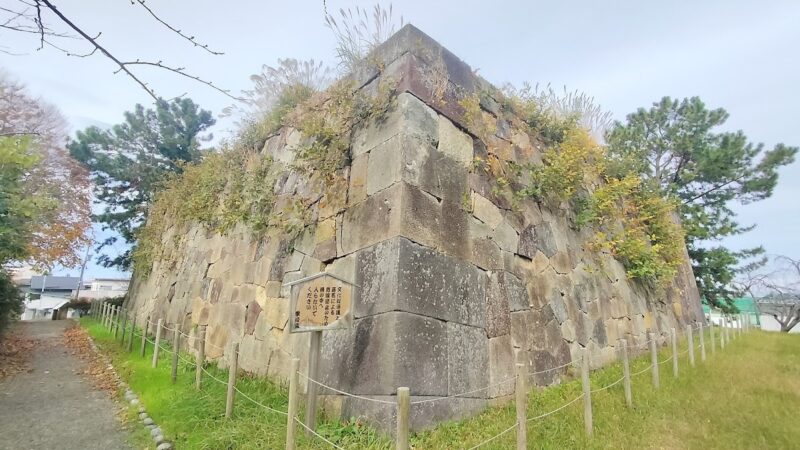
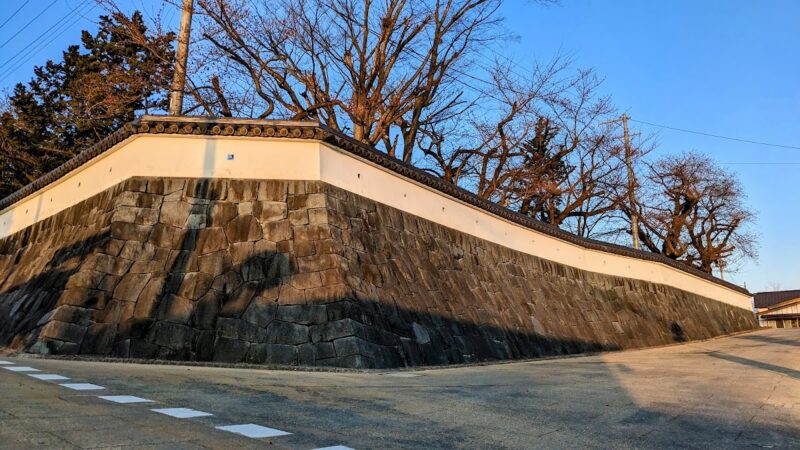
Oguniyama Castle (Oguni Town, Yamagata Prefecture): An Important Base in Okitama District from the Sengoku Period to the Edo Period
Oguniyama Castle (Oguni-sanjo/Oguni Castle), located in Oguni Town, Nishioitama District, Yamagata Prefecture, was an important base in Okitama District, Dewa Province, from the Sengoku period to the Edo period. This castle, commonly known as “Oguni Castle,” served as the political, economic, and military center of Oguni-go as a flatland castle, and after 1692 (Genroku 5), it became the “Oyakuya,” the center of domain administration. This article provides a detailed explanation of the history, remains, highlights, and current state of preservation of Oguniyama Castle.
Overview of Oguniyama Castle
Oguniyama Castle was a flatland castle located in Oguni-Kosaka-cho, Oguni Town, Nishioitama District, Yamagata Prefecture. It existed from the Sengoku period to the Edo period and functioned as the center of governance in Oguni-go.
Basic Information
- Location: Oguni-Kosaka-cho, Oguni-machi, Nishiokitama-gun, Yamagata Prefecture
- Castle Structure: Flatland Castle
- Construction Period: Sengoku period (exact date unknown)
- Abandonment Period: After the Meiji Restoration
- Main Lords: Vassals of the Date and Uesugi clans
- Alternate Names: Oyakuya (after Genroku 5)
Oguni-machi is located in the southwestern part of Yamagata Prefecture and is the second largest municipality in the prefecture by area. Its current population is approximately 6,000, and it is known as a region where rich natural environments and historical culture coexist.
Geographical Characteristics
Oguniyama Castle was located at a strategic point on the Echigo-Yonezawa Road, an important highway connecting Echigo (Niigata Prefecture) and Yonezawa. This location was extremely important militarily and economically, and it had a post town called Oguni-juku, playing a role in managing the distribution of goods and the movement of people.
The surrounding area was dotted with samurai residences, shrines, and temples, serving as the central hub of the entire Oguni region and possessing urban functions. While its flatland structure was less defensive than a mountain castle, its design prioritized administrative and economic functions.
History of Oguniyama Castle
The history of Oguniyama Castle unfolded over a long period spanning from the Sengoku period to the Edo period and the Meiji Restoration.
Sengoku Period: Construction and Early History
While there are no clear records of the exact construction date of Oguniyama Castle, it is believed to have been built under the influence of the Date clan, who ruled the Okitama region during the Sengoku period. At that time, the Okitama region was a region where the powers of the Date and Uesugi clans were in balance, and Oguni region was also subject to this political tension.
Due to its location near the border with Echigo Province, Oguni Castle also served as a military surveillance base. Gathering information and maintaining military vigilance via the Echigo-Yonezawa Road were among the castle’s important functions.
The Uesugi Era
In 1598 (Keicho 3), after Uesugi Kagekatsu’s domain was reduced from 1.2 million koku in Aizu to 300,000 koku in Yonezawa, the Okitama region became a direct territory of the Uesugi clan. During this period, Oguni Castle was managed by an Uesugi vassal, who served as the administrative center of Oguni village.
Under Uesugi rule, an administrative system centered around Oguni Castle was developed, strengthening its role as a base for managing the surrounding villages. Samurai residences were established in the castle town, giving it the appearance of a small castle town.
Edo Period: Transformation into an Official Office
In 1692 (Genroku 5), Oguni Castle was renamed “Official Office.” This reflected the influence of the Edo Shogunate’s “One Castle Per Province” decree and the changing role of castles in a time of peace. Its military character diminished, and its function as an administrative institution became more prominent.
As a local government office, the Oguni office handled administrative duties such as tax collection, maintaining public order, civil administration, and judicial matters in the Oguni region. Managing Oguni-juku, a post town on the Echigo-Yonezawa Highway, was also a crucial task. Monitoring travelers and merchants along the highway, and managing the distribution of goods, were routinely carried out.
From the End of the Edo Period to the Meiji Restoration
During the end of the Edo period, the Oguni government office, as part of the Yonezawa Domain, was affected by the Boshin War. The Yonezawa Domain participated in the Ouetsu Reppan Alliance, but ultimately surrendered to the new government.
After the Meiji Restoration, with the abolition of the feudal domains and the establishment of prefectures, the Yonezawa Domain was abolished, and the office’s functions were lost. Many of the buildings were demolished, and the site was sold off to private individuals, resulting in the loss of its castle-like appearance.
Characteristics and Structure of the Castle
Oguni-yama Castle, being a flatland castle, possessed characteristics distinct from mountain castles.
Layout and Structure
The layout (design and arrangement) of Oguni Castle was characteristic of a flatland castle, emphasizing administrative functions. At the center was the main enclosure (equivalent to the main keep), where the lord’s residence and administrative offices were located.
While defensive structures such as moats and earthworks surrounded the castle, the defensive structure was relatively mild, rather than utilizing the rugged terrain of a mountain castle. This reflects the peaceful Edo period and its character as an administrative center.
Arrangement of Surrounding Facilities
Various facilities were systematically arranged around Oguni Castle.
- Retainer Residences: The residential area for samurai was located around the castle, forming a samurai district.
- Shrines and Temples: Temples and shrines, the centers of faith in Oguni village, were located in the castle town.
- Townspeople’s District: An area for merchants and artisans was established as Oguni-juku (Oguni post town).
- Road Facilities: Post town facilities for the Echigo-Yonezawa Road were developed.
These arrangements formed a small castle town centered around Oguni Castle, supporting its function as the political, economic, and cultural center of Oguni village.
Remains and Current State of Oguni Castle
Currently, very few remains of Oguniyama Castle remain. Due to development after the Meiji Restoration, most of the castle facilities were lost.
Existing Remains
While there may be slight traces of earthworks and moats remaining as topographical features in some parts of the castle site, only a limited number of clearly identifiable remains exist. Part of the current Oguni town area is thought to correspond to the former castle grounds.
Archaeological Excavation and Research
Regarding Oguni Castle, detailed archaeological excavations have not been conducted, and research has primarily relied on historical documents. There remains a possibility of new discoveries during preliminary surveys related to future development.
Distinguishing Oguni Castle from Other Oguni Castles
Since there are several castles named “Oguni Castle” in Yamagata Prefecture, care must be taken to avoid confusion.
Oguni Castle in Okitama District, Dewa Province (the castle in this article)
- Location: Oguni Town, Nishiokitama District
- Structure: Flatland Castle
- Period: Sengoku period to Meiji Restoration
Oguni Castle in Tagawa District, Dewa Province
- Location: Shiri, Oguni-machi, Tsuruoka City (formerly Atsumi Town)
- Structure: Mountain Castle (elevation 348.5m)
- Features: Designated as a National Historic Site (2002)
- Relative height difference: Approximately 235.5m (one of the largest in the prefecture)
This Oguni Castle is a full-fledged mountain castle built on the summit of Tateyama Mountain, and the remains are well-preserved. It is a completely different castle from the Oguni Castle in Okitama District.
Oguni Castle in Mogami District, Dewa Province
- Location: Honjo, Mogami Town, Mogami District
- Alternate Names: Iwabe-tate, Honjo-kan
- Lords: Mogami Hosokawa clan, Oguni clan (Kuramasu clan)
This is another castle that existed in the Mogami region as a mountain castle.
History and Culture of Oguni Town
Oguni Town, where Oguni Mountain Castle is located, is a region with a rich history and culture.
Geography and Climate of Oguni Town
Oguni Town is located in the southwestern part of Yamagata Prefecture, on the border with Niigata Prefecture. Its area is approximately 737 square kilometers, making it the second largest municipality in Yamagata Prefecture.
Most of the town area is covered in forests, surrounded by mountains including the Iide Mountain Range. The climate belongs to the Sea of Japan side climate and is known for its heavy snowfall in winter.
History of Oguni Town
Oguni Town has a long history, having occupied an important position as a transportation route connecting Echigo and Dewa since ancient times. In the Middle Ages, Oguni developed as a region centered around Oguni Castle, and during the Edo period, it prospered as part of the Yonezawa Domain.
In 1889, with the implementation of the town and village system, Oguni Town was established, and it remains so to this day. Even during the large-scale municipal mergers of the Showa era, it maintained its independent town status and preserved its unique regional identity.
Culture and Tourism of Oguni Town
Besides the ruins of Oguni Castle, Oguni Town has many other historical and cultural resources.
- Hot Springs: Akashibakyo Onsen, Ogunigawa Onsen, etc.
- Natural Landscapes: Iide Mountain Range, Akashibakyo Gorge, White Forest, etc.
- Traditional Culture: Matagi culture, snow country lifestyle culture
- Food Culture: Wild vegetable dishes, soba noodles, local sake, etc.
Access
This section introduces how to access Oguni Town and the ruins of Oguni Castle.
Public Transportation
Using the JR Yonesaka Line
- Get off at Oguni Station on the JR Yonesaka Line
- Approximately 10-15 minutes on foot from the station to the center of Oguni Town
- Approximately 1 hour from Yonezawa Station to Oguni Station
Express Bus
- Local buses are available from Niigata and Yamagata areas (please check)
By Car
From Yamagata Area
- Use National Route 113 (Oguni Kaido)
- Approximately 50km from Yonezawa City, approximately 1 hour
From Niigata Area
- Use National Route 113
- Approximately 100km from Niigata City, approximately 2 hours
Nearest Interchange
- Approximately 40km from Nanyo-Takahata IC on the Tohoku Chuo Expressway
Access to the Castle Ruins
The Oguni Castle Ruins are located in the current town of Oguni, but since no clear remains are left, there are no specific viewing facilities. The area around the Oguni Town Hall is believed to correspond to the former castle grounds.
Historical Significance of Oguni Castle
Oguniyama Castle played a crucial role as a center of regional governance in the Okitama region.
Role as a Key Point on a Highway
The Echigo-Yonezawa Highway was an important transportation route connecting the Sea of Japan side with the inland areas. Oguni Castle managed this highway and played a role in controlling the flow of goods and information. This function was consistently maintained, even as its importance shifted from military importance in the Sengoku period to economic importance in the Edo period.
Center of Regional Administration
During the Edo period, Oguni Castle, functioning as a government office, was the administrative center of Oguni-go. It was responsible for all aspects of regional governance, including tax collection, maintaining public order, civil and criminal trials, and disaster response.
These functions were carried over to the modern local administrative system after the Meiji Restoration, leading to the current Oguni Town Hall.
Cultural Center
The area around Oguni Castle was home to numerous shrines and temples, making it the cultural center of the Oguni region. Festivals and events held in the castle town played a vital role in strengthening community bonds.
Related Historical Sites and Facilities in the Surrounding Area
Around Oguni Town, there are historical sites related to Oguni Castle and other facilities worth visiting.
Oguni Town Historical and Folk Museum
This facility introduces the history and folk culture of Oguni Town. It features exhibits on Oguni Castle and the history of the Oguni region.
Surrounding Castle Sites
The Okitama region has numerous castle sites known as the “Forty-Eight Castles of Date-style Okitama.” Oguni Castle is one of them, and visiting it along with other surrounding castle sites provides a comprehensive understanding of the history of the Okitama region from the medieval to early modern periods.
Historical Sites of the Echigo-Yonezawa Road
Historical sites of the Echigo-Yonezawa Road are scattered throughout Oguni Town. Remnants of old road markers and milestones remain, allowing us to imagine the appearance of the old highway.
Current Status and Challenges of Oguni Castle Research
Research on Oguniyama Castle (Oguni Castle) has primarily been based on documentary sources.
Status of Historical Sources
While historical sources concerning Oguni Castle are scattered throughout the records and geographical records of the Yonezawa Domain, detailed records specifically focused on the castle itself are limited. There is a possibility that administrative documents from the time of the shogunate remain, and further excavation of historical materials is anticipated.
Need for Archaeological Investigation
To date, no full-scale archaeological investigation of the Oguni Castle site has been conducted. While it is highly likely that many remains have been lost due to urbanization, there is a possibility that some remains still exist underground.
It is hoped that the actual state of the castle will be revealed through opportunities such as preliminary surveys associated with future development projects.
Position in Regional History Research
Oguni Castle occupies an important position in regional history research as a center of regional governance in the Okitama region. Studying Oguni Castle is essential for understanding the Uesugi clan’s governing system, the realities of road management, and the structure of the local community.
Summary
Oguni Castle (Oguni-yama Castle) in Oguni Town, Nishiokitama District, Yamagata Prefecture, was a flatland castle that functioned as the political, economic, and cultural center of Oguni from the Sengoku period to the Meiji Restoration. Located at a strategic point on the Echigo-Yonezawa Road, it remained an indispensable presence in the local community, shifting its role from a military base to an administrative center.
Although very few castle remains exist today, it is an important historical site for understanding the history of Oguni Town. The history of Oguni Castle provides valuable information for understanding the realities of regional governance under the Uesugi clan, road management during the Edo period, and the development of the local community.
When visiting Oguni Town, why not imagine the castle that once stood amidst the current townscape and reflect on the long history this region has experienced? Oguni Town, where rich nature, hot springs, and history and culture are intertwined, will offer visitors many discoveries and inspiring experiences.