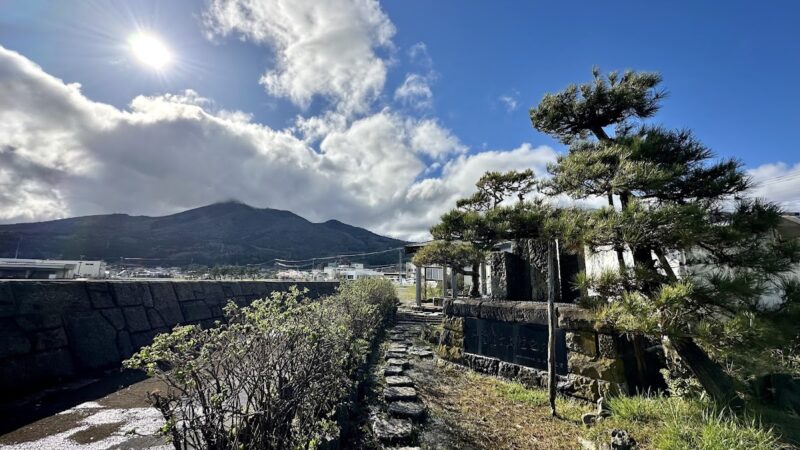
Complete Guide to Yuguchi Chausu-date Ruins (Hirosaki City) | History, Remains, and Access Information
What are Yuguchi Chausu-date Ruins?
The Yuguchi Chausu-date Ruins are the remains of a medieval castle located in Yuguchi Ichino-Yasuda, Hirosaki City, Aomori Prefecture. Built on a hilly area on the south bank of the Iwaki River, these ruins hold significant historical value as a residence of a medieval samurai in the Tsugaru region.
While Hirosaki City boasts famous castles such as Hirosaki Castle and Horikoshi Castle, the Yuguchi Chausu-date Ruins, though smaller in scale, are an indispensable site for understanding the medieval history of the Tsugaru region. The remains, including the baileys and moats, are still well-preserved, attracting attention from castle enthusiasts and history researchers.
Location and Geographical Characteristics
The Yuguchi Chausu-date Ruins are located in the former Soma Village, Nakatsugaru District (present-day Yuguchi area of Hirosaki City). The Yuguchi area is located on the south side along the Iwaki River, adjacent to Shimoyuguchi, and bordered by Torii-no to the north, Shimoyuguchi to the east, Ainai to the south, and Kurotaki to the west.
The castle ruins were built on a hill approximately 80 meters above sea level, with a relative height difference of about 30 meters. This location was a strategically important strategic spot, offering a panoramic view of the surrounding area and crucial for monitoring and controlling transportation routes in the Iwaki River basin.
History of the Yuguchi Chausu Castle Ruins
Construction Period and Background
The exact construction date of the Yuguchi Chausu Castle is unclear, but it is believed to have been built in the late medieval period, particularly during the Sengoku period (Warring States period) from the 15th to the 16th centuries. During this time, the Tsugaru region was under the control of the Nanbu clan, and local lords established castles throughout the area.
Numerous medieval castles and fortifications exist in the Tsugaru region, and the list of castles and fortifications in Aomori Prefecture includes Maeda Ezo Castle, Yokouchi Castle, Komagome Castle, Tozaki Castle, Tomon Castle, Tsukushiyama Castle, Shirihachi Castle, Takada Ezo Castle, Takada Castle, Hosogoe Castle, Sannai Castle, Kodate Castle, Shinjo Castle, and Aburakawa Castle. Even just around Hirosaki City, many castles and fortifications have been identified, including Hirosaki Castle, Horikoshi Castle, Wadoku Castle, Ishikawa Castle, Oura Castle, Yamatozawa Castle, Aoyagi Castle, Miya Castle, Sakaiseki Castle, Takasugi Castle, Takano Castle, Kuniyoshi Castle, Kuniyoshi Shinkan Castle, Kuniyoshi Kodate Castle, Furuyashiki Castle, Kurotsuchi Castle, Sakuraba Castle, Sasa Castle, Sanseiji Castle, Makinae Castle, Taneichi Castle, Oguriyama Castle, Ozawa Castle, and Otomo Castle.
Castle Lord and Related Clans
Regarding the lord of Yuguchi Chausu Castle, reliable historical records are scarce, and details remain unclear. However, judging from the surrounding castles and fortifications, it is highly probable that it was used as a residence by a local lord subordinate to the Nanbu clan, or by a powerful local lord in the Tsugaru region.
In the latter half of the 16th century, Tsugaru Tamenobu (later the first lord of the Hirosaki Domain), who was the lord of Oura Castle, attempted to gain independence from the Nanbu clan, launching a surprise attack on Nanbu Takanobu, the lord of Ishikawa Castle, and capturing it. The Tsugaru region experienced a turbulent period. It is possible that Yuguchi Chausu Castle was also involved in some form of conflict during this process.
Abandonment and the Present
While there are no clear records of when Yuguchi Chausu Castle was abandoned, it is believed that many small fortifications ceased to serve their purpose after Tsugaru Tamenobu built Hirosaki Castle (originally Takaoka Castle) and completed the unification of the Tsugaru region. Especially in the Edo period, once the Hirosaki Domain’s system of rule was established, such medieval fortifications lost their military function and were abandoned.
Currently, the Yuguchi Chausu Castle site is a forest including privately owned land, but the remains are relatively well preserved. Investigations by local history enthusiasts and castle researchers are leading to a renewed appreciation of its value.
Features and Highlights of the Remains
Layout and Structure
The layout (castle design and arrangement) of the Yuguchi Chausu Castle site exhibits the typical form of a medieval hill castle, skillfully utilizing the hilly terrain. The main remains identified are enclosures (kuruwa) and moats.
The main enclosure is presumed to have been located at the highest point of the hill and surrounded by earthen ramparts. Multiple enclosures are arranged in a stepped fashion from this main enclosure, demonstrating ingenuity in enhancing defensibility. Moats and vertical trenches were provided between each enclosure, creating a structure that hindered enemy intrusion.
Enclosures (Kuruwa)
Multiple enclosures have been identified at the Yuguchi Chausu Castle site. The main enclosure is relatively flat and is thought to have housed the lord’s residence and important facilities. The size of the castle was standard for a small medieval residence, and it functioned as a space that combined daily life and defensive functions.
Auxiliary enclosures, known as secondary enclosures and lower enclosures, were arranged in a stepped pattern, and it is presumed that these were used as barracks for soldiers or storage for supplies. The arrangement of the enclosures reveals the builder’s intention to make the most of the limited terrain.
Moats and Earthworks
Moats were one of the most important elements in the defense of a residence. At the Yuguchi Chausu Residence site, traces of trenches (moats cutting across ridges) and vertical moats (moats dug along slopes) have been confirmed. These moats limited enemy entry routes and created a battle environment advantageous to the defenders.
Regarding the earthworks, some parts are unclear due to weathering and vegetation, but traces of earth mounds remain along the edges of the enclosures. The earthworks functioned as defensive walls and also served to shield the interior of the enclosures from outside views.
Excavated Artifacts
Regarding the artifacts excavated from the Yuguchi Chausu Castle site, detailed information is limited because a full-scale excavation has not been conducted. However, there are reports of the discovery of medieval pottery and earthenware fragments through surface collection and small-scale surveys. These artifacts provide clues to the period in which the castle was used and the lifestyle of its inhabitants.
Relationship with Surrounding Medieval Castles and Fortifications
Castles and Fortifications in the Hirosaki City Area
In addition to the Yuguchi Chausu Castle site, numerous medieval castles and fortifications exist in Hirosaki City and its surrounding areas. These castles and fortifications were interconnected and formed a political and military network in the Tsugaru region.
Major Castles and Fortifications:
- Aoyagi Castle (Yuguchi Castle): Located near the Yuguchi Chausu Castle, it is situated in Aoyagi, Shimoyuguchi. Also known as the Yuguchi Castle, it is thought to have had a close relationship with the Yuguchi Chausu Castle.
- Ozawa Castle: Located in Hirono, Ozawa, it may have played a role in the defense line of the Yuguchi area.
- Yamatozawa Castle (Oasa Castle): Located in Ichinowatari, Nojiri, it is one of the castles and fortifications in the Chitose, Ishikawa, and Horikoshi districts.
- Oguriyama Castle: Located in Oguriyama, Sawabe, it is said to be related to Ishikawa Castle.
- Ishikawa Castle: Also known as Ishikawa Daibutsu-ga-hana Castle and Ishikawa Thirteen Castles, it was an important base for the Nanbu clan. It is known for being captured by Tsugaru Tamenobu.
- Horikoshi Castle: Located in Horikoshi, Kawai and Kashiwada, it was the castle where Tsugaru Tamenobu made his base before building Hirosaki Castle.
Castles and Fortifications in the Nyui District
The Nyui district of Hirosaki City also has a concentration of important castles and fortifications:
- Nyui Chausu Castle: Located in Nyui, Chausu Castle and Iwanoue, it shares the name “Chausu Castle” with the Yuguchi Chausu Castle. This name is thought to originate from the fact that the shape of the castle resembles a chausu (a tool for grinding tea).
- Nyuui Old Castle (Mizunoe Castle): Located in Hirayama, Nyuui.
- Nyuui Castle (Nyuui New Castle/Osumi Castle): Located in Tatenohira, Yakushido, also known as Nyuui Great Castle.
The arrangement of these castles and fortifications reveals that in the Tsugaru region, multiple fortifications cooperated to form a defensive system in each area.
History and Culture of the Yuguchi Area
Origin of the Place Name Yuguchi
There are several theories regarding the origin of the place name Yuguchi, but one theory suggests it means the place (mouth) where hot springs (yu) gush forth. However, there are no famous hot springs in the current Yuguchi area, and the exact origin of the place name is unknown.
Sub-districts and Regional Divisions
The Yuguchi district contains the following sub-districts:
- Ichino-Shimoyama
- Ichino-Hosokawa
- Ichino-Yasuda (Location of the Yuguchi Chausu-kan Ruins)
- Sanno-Shimoyama
- Sanno-Hosokawa
- Nino-Shimoyama
- Nino-Hosokawa
- Nino-Yasuda
These sub-district names reveal topographical features (Shimoyama, Hosokawa) and the history of development (Yasuda).
Connection to the Iwaki River
The Yuguchi district is located along the Iwaki River and has played an important role in water transport and agriculture since ancient times. The Iwaki River is a first-class river flowing through the Tsugaru Plain and functioned as a major artery for transportation and logistics even in the Middle Ages. It is thought that the Yuguchi Chausu-kan was built in a location overlooking the Iwaki River with the intention of monitoring and controlling this water transport route.
Access and Visiting Information
Location
Address: 1-Yasuda, Yuguchi, Hirosaki City, Aomori Prefecture
Access Methods
Access by Car:
- Approximately 20 minutes from the Tohoku Expressway “Owani-Hirosaki IC”
- Approximately 30 minutes from central Hirosaki City via National Route 7
- Parking: There is no dedicated parking lot. Please avoid street parking and use nearby public facilities.
Access by Public Transportation:
- Take the Konan Bus bound for “Soma” from JR Hirosaki Station, get off at the “Yuguchi” bus stop, and walk for approximately 15 minutes.
- However, since the number of buses is limited, it is recommended to check the timetable in advance.
Notes on Visiting
- Consideration for Private Property: The Yuguchi Chausukan Ruins may include private property. When visiting, please obtain permission from the landowner or abide by any “No Entry” signs.
- Safety Precautions: As these are ruins located in a forest, please wear appropriate clothing (long sleeves, long pants, trekking shoes, etc.). Insect repellent is also necessary during the summer months.
- Protection of Ruins: Please be careful not to damage the ruins such as earthworks and moats. Please take all your trash with you.
- Season: The best season for visiting is from spring to autumn, but winter is dangerous due to snow. Also, in summer, overgrown vegetation may obscure the ruins.
- Avoiding Solo Activities: Avoid solo activities in the forest, and if possible, visit in groups.
Current Status of Medieval Castle Research in Aomori Prefecture
Number and Distribution of Castles
Hundreds of medieval castle sites have been confirmed in Aomori Prefecture. These castles are widely distributed in cities such as Aomori City, Hirosaki City, Goshogawara City, Kuroishi City, Towada City, Mutsu City, Tsugaru City, Hirakawa City, and Hachinohe City, as well as in counties such as Kamikita District, Shimokita District, and Sannohe District.
Many of these castles were built from the Nara period through the Heian period and into the medieval period, reflecting Aomori Prefecture’s geographical characteristics as a border region with Ezo (Hokkaido).
Research and Preservation Activities
Regarding medieval castles in Aomori Prefecture, local historians and castle researchers are continuously conducting investigations. Websites such as “Castle Wanderings” publish numerous layout maps and photographs of castles, including the Yuguchi Chausu Castle ruins, contributing to the advancement of research.
The Hirosaki Municipal Library’s “Classical Texts of Tsugaru,” which digitizes ancient documents and materials related to castles in the Tsugaru region, is also publicly available. These materials are invaluable sources of information for unraveling the history of medieval castles, including the Yuguchi Chausu Castle.
Future Challenges
Future challenges in the study of medieval castles in Aomori Prefecture include the following:
- Systematic Archaeological Excavation: Many castles remain unexcavated, and academic archaeological excavations are desired.
- Preservation of Remains: Many remains are lost due to development and natural disasters. Preservation measures for important remains are necessary.
- Excavation of Historical Materials: For castles with many unknown aspects, such as the lord and construction date, the excavation of new historical materials is hoped for.
- Outreach Activities: Activities to widely communicate the value of these castles as regional historical heritage and deepen understanding of their preservation are important.
Sengoku Period History of the Tsugaru Region and the Yuguchi Chausu Castle
Rule of the Nanbu Clan
The Tsugaru region in the Middle Ages was under the rule of the Nanbu clan, who were descendants of the Kai Genji clan. The Nanbu clan expanded into Mutsu Province during the Kamakura period, establishing their base in Nukabe District (present-day eastern Aomori Prefecture to northern Iwate Prefecture) and expanding their power.
In the Tsugaru region, relatives and vassals loyal to the Nanbu clan were stationed, establishing residences throughout the area and governing their territories. It is highly probable that the Yuguchi Chausu Castle was built as part of this system of control.
The Rise of Tsugaru Tamenobu
In the latter half of the 16th century, Tsugaru Tamenobu (originally Oura Tamenobu), based at Oura Castle, rose to prominence. Although considered a member of the Nanbu clan, Tamenobu harbored ambitions of independence and successively conquered surrounding forces.
In 1571 (Genki 2), Tamenobu launched a surprise attack on Nanbu Takanobu, the lord of Ishikawa Castle, and captured it. This victory established Tamenobu’s dominance in the Tsugaru region, and he subsequently conquered Namioka Castle, Horikoshi Castle, and other castles, advancing the unification of Tsugaru.
The Fate of Yuguchi Chausu Castle
It is unclear what role Yuguchi Chausu Castle played and what its fate was amidst the turmoil of the Sengoku period. However, it is certain that many small castles were caught up in battles, surrendered, or abandoned during Tsugaru Tamenobu’s unification efforts.
When Tamenobu built a new castle in Takaoka (later Hirosaki) in 1603 (Keicho 8) and established a governing base for the Tsugaru region, it is thought that small medieval castles like Yuguchi Chausu Castle ended their military role and withdrew from the stage of history.
Cultural Value of the Yuguchi Chausu Castle Site
Historical Significance
Although the Yuguchi Chausu Castle site is not large in scale, it has significant historical value in the following respects:
- Unraveling the Reality of Medieval Tsugaru: Researching small castles like this one, in addition to large castles such as Hirosaki Castle, allows for a more concrete understanding of the governing structure of medieval Tsugaru and the daily lives of samurai.
- Witness to Local History: This is a valuable archaeological site that tells the history of the Yuguchi area and is a source of regional identity.
- Fortification Research: The relatively well-preserved remains are important materials for studying the construction techniques and defensive philosophies of medieval castles.
Comparison with Other “Chausu-kan” Sites
Besides the Yuguchi Chausu-kan, there are several other castles in Aomori Prefecture that bear the name “Chausu-kan,” such as the Nyui Chausu-kan. The name “Chausu” is thought to originate from the resemblance of the castle’s shape to a tea mill, and is often found in castles built on circular or oval-shaped hills.
Comparing and studying these Chausu-kan sites may reveal common construction techniques and regional characteristics.
Directions for Preservation and Utilization
Regarding the preservation and utilization of medieval castles like the Yuguchi Chausu-kan site, the following directions can be considered:
- Promotion of Academic Research: First, accurate surveying and partial excavation surveys should be conducted to understand the actual state of the remains. 2. Cultural Property Designation: If its importance is recognized, legal protection will be sought through city designation as a historical site.
- Environmental Improvement: Minimal improvements, such as establishing viewing paths and installing explanatory signs, will be made to create an environment where history enthusiasts can safely visit the site.
- Information Dissemination: The existence and value of the castle ruins will be widely disseminated through websites and brochures.
- Collaboration with the Community: We will collaborate with local residents and schools to protect and utilize the site as a local historical heritage.
Summary
The Yuguchi Chausu Castle Ruins are a medieval castle site remaining in Yuguchi, Hirosaki City, Aomori Prefecture, and are a valuable historical heritage site that conveys the Sengoku period of the Tsugaru region. Built on a hill overlooking the Iwaki River, the remains of the castle, such as the baileys and moats, are relatively well preserved, making it an important resource for the study of medieval castles.
Often overshadowed by more famous castles like Hirosaki Castle and Horikoshi Castle, smaller fortified residences like the Yuguchi Chausukan are crucial to understanding the realities of medieval Tsugaru. This residence played a vital role as the local lord’s residence and a regional defense base.
While no full-scale archaeological excavations are currently underway, research by castle researchers and history enthusiasts continues, leading to a renewed appreciation of its value. It is hoped that future academic research and preservation efforts will ensure the Yuguchi Chausukan site becomes a source of regional pride and a valuable site for historical learning.
Aomori Prefecture boasts hundreds of medieval castles and fortified residences, each telling a unique story of its region. Visiting the Yuguchi Chausukan site offers more than just a historical site; it provides an opportunity to reflect on the medieval history of Tsugaru, the turmoil of the Sengoku period, and the lives of the local people.
Those interested in history or castles should definitely visit the Yuguchi Chausukan site when in Hirosaki City. This will be a valuable experience to feel the history of the Middle Ages in a quiet mountain forest, far removed from major tourist destinations.