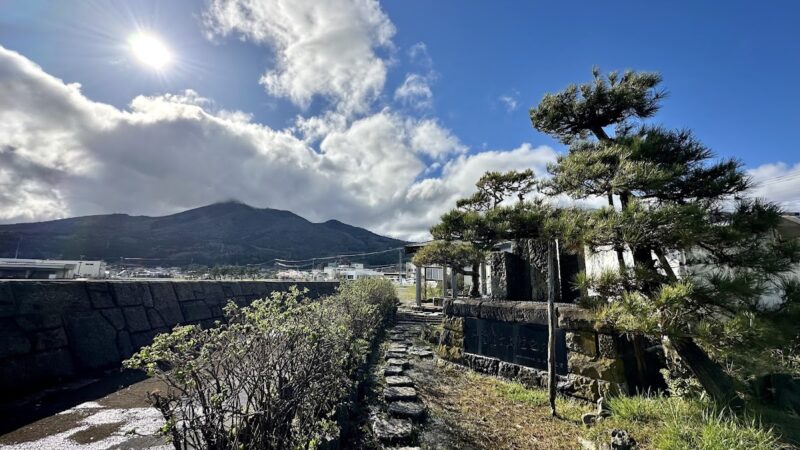
Complete Guide to the Ando Clan Residence (Aomori Prefecture) | A Thorough Explanation of the History and Highlights of Fujisaki Castle Ruins
The Ando Clan Residence Ruins (Fujisaki Castle Ruins), located in Fujisaki Town, Minamitsugaru District, Aomori Prefecture, are known as the birthplace of the Ando clan, who ruled the Tsugaru region from the late Heian period to the Muromachi period. Currently, the site is the grounds of Fujisaki Hachimangu Shrine, and remnants such as earthworks and moats, conveying the grandeur of the castle in its heyday, still remain.
This article comprehensively explains information to help you deeply understand the history of Fujisaki Town, from the historical background of the Ando Clan Residence to the remains that can be seen today and related historical sites in the surrounding area.
About the Ando Clan Residence (Fujisaki Castle)
Fujisaki Castle Ruins (Birthplace of the Ando Clan)
Fujisaki Castle is a fortress built by Takaakimaru, considered the ancestor of the Ando clan. It is said to have been built in 1082 (Eihō 2) or completed in 1092 (Kanji 6). While there are several theories regarding the construction date, it is undoubtedly an ancient castle built during the late Heian period, a time of the rise of the Ōshū Fujiwara clan.
Takaakimaru is said to be the second son of Abe Sadatō. There is a legend that he was Abe Sadatō, who fled to Tsugaru after his father, Sadatō, was defeated by Minamoto no Yoriyoshi and Kiyohara no Takenori in the Former Nine Years’ War of 1062 (Kōhei 5). It is believed that this Takaakimaru built a castle in Fujisaki and founded the Ando (Andō) clan.
Fujisaki Castle was located in the central part of the Tsugaru region, at a strategic transportation hub between the Hirakawa and Asaseishigawa rivers, and functioned as a political and military center in the inland Tsugaru area. This geographical location was the reason why present-day Fujisaki Town flourished as a transportation hub from ancient times.
The History of the Ando Clan and the “Ezo Governor”
During the Kamakura period, the Ando clan, as a local powerful family, was appointed “Ezo Governor” by the shogunate. The Ezo Governor was an official entrusted with the governance of Ezo (present-day Hokkaido) in the north. It is said that through this position, the Ando clan gained control of trade rights in Ezo’s products and amassed enormous privileges.
The Ando clan, based in Jusanminato (present-day Goshogawara City, Aomori Prefecture), controlled trade along the Sea of Japan, transporting marine products such as kelp and salmon, as well as furs, obtained through northern trade, to Honshu, amassing great wealth. Fujisaki Castle, the birthplace of the Ando clan, served as a spiritual center for the family.
The Nanbu Clan’s Rule over Tsugaru and Fujisaki Castle
During the Muromachi period, the Ando clan was defeated in a conflict with the Nanbu clan and driven out of Tsugaru. Subsequently, Fujisaki Castle was used as a base for the Nanbu clan’s rule over Tsugaru. Ironically, Fujisaki Castle, the birthplace of the Ando clan, became the base of the Nanbu clan that drove them out.
This historical transition symbolically illustrates the shifting power dynamics in the Tsugaru region during the medieval period. When visiting the Fujisaki Castle ruins, keeping this complex historical context in mind will lead to a deeper understanding.
Fujisaki Hachimangu Shrine and Castle Ruins
History of Fujisaki Hachimangu Shrine
Currently, Fujisaki Hachimangu Shrine stands on the site of Fujisaki Castle. This shrine is believed to have been founded in the Heian period, when Fujisaki Castle was completed, as the guardian deity of the territory. It is said to have been located on the slope of the earthen rampart on the east side of Fujisaki Castle.
Fujisaki Hachimangu Shrine preserves valuable cultural artifacts, including a stone monument from 1340 (Ryakuō 3), the Andō Clan Chronicle, and the Twenty-Third Night Tower, making it an important historical site that conveys the history of the Andō clan. The Andō Clan Chronicle, in particular, is a valuable historical document for understanding the history of the Andō clan.
Remaining Earthen Ramp and Moat
Within the grounds of Fujisaki Hachimangu Shrine, valuable remains that convey the grandeur of Fujisaki Castle in its heyday remain. In particular, the long earthen rampart where the shrine building stands and the moat remains below it are important remains for understanding the structure of a medieval castle.
The earthen rampart remains several meters above the ground facing National Route 7, suggesting that Fujisaki Castle was a considerably large fortress. A monument marking the “Remains of the Fujisaki Castle Earthen Ramp” and the “Birthplace of the Ando Clan” stands atop the rampart, making it an important historical site.
The remains of the moat are also well-preserved, making this a valuable place to see a medieval castle defense system firsthand. These remains are also important resources for understanding castle construction techniques in the Tohoku region from the Heian to Muromachi periods.
Access and Visiting Points
Fujisaki Hachimangu Shrine is located approximately 1 kilometer south of Fujisaki Station on the JR Gonō Line, about a 15-minute walk. It’s also easily accessible by car, as it faces National Route 7.
When visiting, first observe the scale of the earthen rampart, then examine the surrounding terrain from above to understand why the castle was built in this location. Tracing the moat remains and imagining the extent of the castle grounds is also an interesting experience. By carefully reading the stone monuments and information boards within the temple grounds, you can gain a deeper understanding of the history.
Related Historical Sites in Fujisaki Town
Besides the Ando Clan Residence, Fujisaki Town has many other historically important sites. Visiting these together will allow you to understand the history of Fujisaki Town in a more comprehensive way.
Karaito Gozen Historical Park
Karaito Gozen Historical Park is a historical park steeped in legends from the Heian period. The legend surrounding Karaito Gozen has been passed down in Fujisaki Town for centuries and is part of the region’s cultural identity. The park features related historical sites and explanatory boards, allowing visitors to experience the world of the legend.
Falconry Station Site
The Falconry Station Site is believed to be the location of a resting place where the feudal lord once conducted falconry. Falconry was an important military training method for samurai in the Middle Ages, and also a symbol of power. This historical site suggests that Fujisaki was an important base in the Middle Ages.
Seki Shrine
Seki Shrine is a shrine related to agricultural water and is an important historical site that tells the history of agriculture in Fujisaki Town. The history of the irrigation canals that supported the rich agriculture of the Tsugaru Plain was indispensable to the development of this region. Various legends remain at Seki Shrine, making it an interesting place to learn about the local folk culture.
Kashima Shrine
Kashima Shrine is a shrine said to have been established by inviting a deity from Kashima Shrine in Hitachi Province (present-day Ibaraki Prefecture). It is a historical site that shows how the Kashima faith, which enshrines a god of war, extended to Tsugaru, and allows us to understand the spread of faith in the Middle Ages.
Tokushita Hachimangu Shrine and the Ancient Yew Tree
Tokushita Hachimangu Shrine has an ancient yew tree estimated to be several hundred years old, and is designated as a town natural monument. This ancient tree can be said to be a living witness that has watched over the history of Fujisaki Town, further enhancing the sacred atmosphere of the shrine.
Mizuki Castle Ruins
Mizuki Castle Ruins are a separate medieval castle site from Fujisaki Castle, believed to have been built during the rule of the Nanbu clan. Understanding its relationship to Fujisaki Castle and the reasons for the existence of multiple castles will provide a deeper understanding of the medieval history of this region.
Fukushima Ruins
The Fukushima Ruins are the remains of a settlement dating from the Jomon period to ancient times, and are an important site demonstrating that the history of Fujisaki Town predates the era of the Ando clan. Excavated artifacts offer insights into the lives of people in ancient times.
Ministry of Agriculture and Forestry Experiment Station Ruins
A modern historical site is the Ministry of Agriculture and Forestry Experiment Station Ruins. From the Meiji era onward, Fujisaki Town played a crucial role as a research center for agricultural technology. Research that laid the foundation for modern apple cultivation in Aomori Prefecture was conducted here, making it an important site from the perspective of modern agricultural history.
Recommended Content
When visiting Fujisaki Town, we recommend not only visiting historical sites but also enjoying the local culture, specialties, and cuisine.
Fujisaki Town’s Local Products and Cuisine
Fujisaki Town is one of Aomori Prefecture’s leading apple-producing areas. In particular, apple varieties such as “Fuji” are of high quality and are highly regarded nationwide. During the autumn harvest season, tourist farms are open where you can enjoy freshly picked apples.
You can also enjoy local cuisine from the Tsugaru region. Traditional dishes rooted in the region, such as Kenojiru, Igamenchi, and Kaiyaki Miso, will be a delightful treat after exploring the historical sites.
Tourist Facilities and Experience Programs
The Fujisaki Town tourist information website, “Fujisanpo,” introduces various tourist facilities and experience programs. A variety of seasonal programs are available, including apple picking and local cuisine making experiences, providing visitors with opportunities to experience the charm of Fujisaki Town.
Event Information
Fujisaki Town hosts various events throughout the year. Visiting during seasonal events such as the spring cherry blossom festival, summer festival, and autumn harvest festival will make for a more fulfilling travel experience.
Hot Springs and Relaxation
There are hot spring facilities around Fujisaki Town, where you can soothe your tired body after exploring the history. The hot springs in the Tsugaru region are known for their excellent water quality, making them ideal for relieving travel fatigue.
Deeper Stories of Fujisaki Town Not Found in Guidebooks
The charm of Fujisaki Town isn’t limited to the information found in typical guidebooks. There are many deeper stories of Fujisaki Town, including legends passed down by locals and historical traces hidden within the rural landscape.
Unexpected Encounters and Discoveries
While strolling through Fujisaki Town, you might encounter historical traces in unexpected places. For example, old stone monuments remaining in the seemingly ordinary rural landscape, or small shrines quietly enshrined beside irrigation canals—if you observe carefully, you’ll find witnesses to history everywhere.
Hearing legends and folktales not found in guidebooks through conversations with locals is another great pleasure of exploring Fujisaki Town. Legends about the Ando clan and the myth of the hidden passage in Fujisaki Castle, rooted in the local area, stimulate visitors’ imaginations.
Mini-Trip Story
The Fujisaki Town tourism information website, “Fujisanpo,” features a mini-trip story called “Fujisaki Sanpo (Exploring the Birthplace of the Ando Clan).” This is a model course for efficiently visiting historical sites related to the Ando clan, designed to allow visitors to see the main historical spots in Fujisaki Town in half a day to a full day.
By following such a story-driven walking route, visitors can experience not just sightseeing historical sites, but a journey that allows them to relive the flow of history.
Media Coverage
In recent years, interest in lesser-known medieval castles has been growing among history and castle enthusiasts, and Fujisaki Castle has been featured more frequently in the media. It is often featured on castle-specialized websites and history magazines, attracting history lovers from all over Japan.
Practical Advice for Your Visit
Contact Information
When planning a visit to Fujisaki Town, contacting the Fujisaki Town Tourism Association or the Fujisaki Town Hall will provide you with the latest information. Since the facilities you can visit and the events held vary depending on the season, it is recommended to check in advance.
The Fujisaki Town tourism information website, “Fujisanpo,” provides comprehensive information on tourist facilities, gourmet food, local products, events, history, experience programs, hot springs, and more. Checking the website before your visit will help you plan a more fulfilling trip.
Access Details
The nearest station is Fujisaki Station on the JR Gonō Line, accessible in approximately 30 minutes from Aomori Station and approximately 15 minutes from Hirosaki Station. From the station, you can visit the main historical sites on foot or by rental bicycle.
If traveling by car, it is approximately 15 minutes from the Kuroishi Interchange on the Tohoku Expressway and approximately 40 minutes from Aomori Airport. Since the main historical sites are scattered along National Route 7, traveling by car is convenient.
Points to Note During Your Visit
Fujisaki Hachimangu Shrine is still a functioning place of worship, so please observe proper etiquette when visiting. The remains such as earthworks and moat traces are valuable cultural assets, so please be careful not to enter restricted areas.
Photography is generally permitted, but restrictions may apply during festivals and other special occasions, so it is recommended to check in advance.
Combining with Nearby Sightseeing
Fujisaki Town is adjacent to Hirosaki City and is close to major tourist attractions such as Hirosaki Castle and Mount Iwaki. Combining a visit with a trip to Hirosaki will allow you to gain a deeper understanding of the history and culture of the Tsugaru region.
Furthermore, visiting the Jusanminato Ruins (the base of the Ando clan) in Goshogawara City and the Namioka Castle Ruins (the residence of the Kitabatake clan) in Aomori City will provide a more comprehensive understanding of medieval Tsugaru history.
Summary
The Ando Clan Residence (Fujisaki Castle Ruins) is an important historical site indispensable to understanding the history of Aomori Prefecture, as it is the birthplace of the Ando clan, who ruled the Tsugaru region from the late Heian period to the Muromachi period. The earthworks and moat remains that still exist within the grounds of Fujisaki Hachimangu Shrine are valuable remnants that convey the magnificent appearance of the castle in its heyday.
Besides the Ando Clan Residence, Fujisaki Town is dotted with historical sites from various periods, including the Karaito Gozen Historical Park, Seki Shrine, Kashima Shrine, Mizuki Castle Ruins, and Fukushima Ruins, allowing visitors to trace the long flow of history from ancient to modern times.
Beyond historical walks, Fujisaki Town offers diverse attractions, including local specialties such as apples, gourmet food such as regional cuisine, experiential programs, and hot springs. Why not take a trip to experience the deeper stories of Fujisaki Town that you won’t find in guidebooks, using the mini-trip stories provided on the Fujisaki Town tourism information website “Fujisanpo” as a reference?
With its historical traces remaining amidst the rural landscape, legends passed down by locals, and unexpected encounters and discoveries, Fujisaki Town is a fascinating place that offers visitors a new historical experience.