A Thorough Explanation of Yoshida Castle’s History and Highlights | A Strategic Point in Mikawa Known as the Castle of Success
Located within Toyohashi Park in Toyohashi City, Aichi Prefecture, Yoshida Castle is a historical fortress that played a crucial role as the political and military center of the eastern Mikawa region from the Sengoku period to the Edo period. Its iconic iron turret River is a symbolic feature, and it remains a popular tourist spot in Toyohashi City, attracting many visitors and history enthusiasts.
This article will provide a comprehensive overview of Yoshida Castle, from its detailed history to its current highlights, access information, and surrounding facilities.
History of Yoshida Castle | From Imabashi Castle to the Castle of Success
Construction of Imabashi Castle and its Renaming to Yoshida Castle
The history of Yoshida Castle dates back to Eisho 2 (1505). In that year, Imabashi Castle was built by Makino Kohaku, the lord of Isshiki Castle in Toyokawa. One theory suggests it was built around 1496. Makino Kohaku in Imabashi as a base for expanding his power in the eastern Mikawa region.
Later, the place name Imabashi was changed to Yoshida, and the castle’s name was also changed from Imabashi Castle to Yoshida Castle. While there are various theories about the timing of this name change, it is believed that the name mid-Sengoku period.
Battles in the Sengoku Period
During the Sengoku period, Yoshida Castle, a strategic point in eastern Mikawa, was the site of fierce battles between the Imagawa clan of Suruga, the Takeda clan of Kai, and the Matsudaira clan (later the Tokugawa clan) of Mikawa.
Yoshida Castle was known as a “fortified castle” that utilized its terrain between the Toyokawa and Asakura rivers. It was a key transportation hub on the Tokaido road and also a logistics center utilizing the Toyokawa River flowing in from Shitar Yoshida Castle was strategically crucial for the various daimyo vying for supremacy in the Tokai region.
Capture by Tokugawa Ieyasu and Appointment of Sakai Tadatsugu as Castle Lord
In 1564, Tokugawa Ieyasu (then Matsudaira Motoyasu), who was advancing the unification of Mikawa Province, captured Yoshida Castle. Ieyasu appointed Sakai Tadatsugu, known as the foremost of the Four Heavenly Kings of vital base for controlling Mikawa.
Sakai Tadatsugu used Yoshida Castle as his base to govern the eastern Mikawa region and conduct military operations. Throughout Ieyasu’s unification of Mikawa and his subsequent rise to power, Yoshida Castle continued to play a vital role as a defensive stronghold in the
Castle Development and Town Improvement by Ikeda Terumasa
In 1590, when Tokugawa Ieyasu was transferred to the Kanto region by order of Toyotomi Hideyoshi, Ikeda Terumasa (Terumasa) became the lord of Yoshida Castle with a domain of 152,000 koku. Ikeda Terumasa is known a Himeji Castle.
During his 10 years as lord, Terumasa carried out large-scale expansion work on Yoshida Castle. He expanded the castle grounds, improved the stone walls, and systematically developed the castle town, transforming Yoshida Castle intoone grounds became vast, extending from present-day Akumi-cho to Asahi-cho in the east, from Magarite-cho to Gofuku-cho in the south, and to Sekiya-cho in the west.
However, because Terumasa was transferred to Himeji in Harima Province in 1600, the castle expansion work was not fully completed. Nevertheless, the basic layout of the current Yoshida Castle was established during the time of Ikeda Terumasa.
Yoshida Castle in the Edo Period and the Origin of the “Castle of Success”
In the Edo period, under the shogunate system, the administrative center of the Mikawa Yoshida Domain was established at Yoshida Castle. Yoshida Castle was positioned as one of the important defensive strongholds of the Tokaido road, and capable fudai daimyo (hery shogunate elders, Osaka castle governors, and Kyoto Shoshidai (Kyoto Commissioner) were chosen as castle lords.
Because many of the successive lords held important positions in the shogunate, Yoshida Castle came to be known as the “Castle of Success.” While it was entrusted only to fudai daimyo with domains ranging from 30,000 to the 80,00 family, Fukamizu Matsudaira family, Mizuno clan, and Ogasawara clan, domain transfers were frequent.
Throughout the Edo period, Yoshida Castle remained the center of the Tokaido post town of Yoshida-juku (later Toyohashi), and a vital political, economic, and cultural hub of the region.
Yoshida Castle After the Meiji Restoration
After the Meiji Restoration and the abolition of the feudal domains, Yoshida Castle was abandoned. Many of the castle’s structures were demolished, and the castle site was developed into a park.
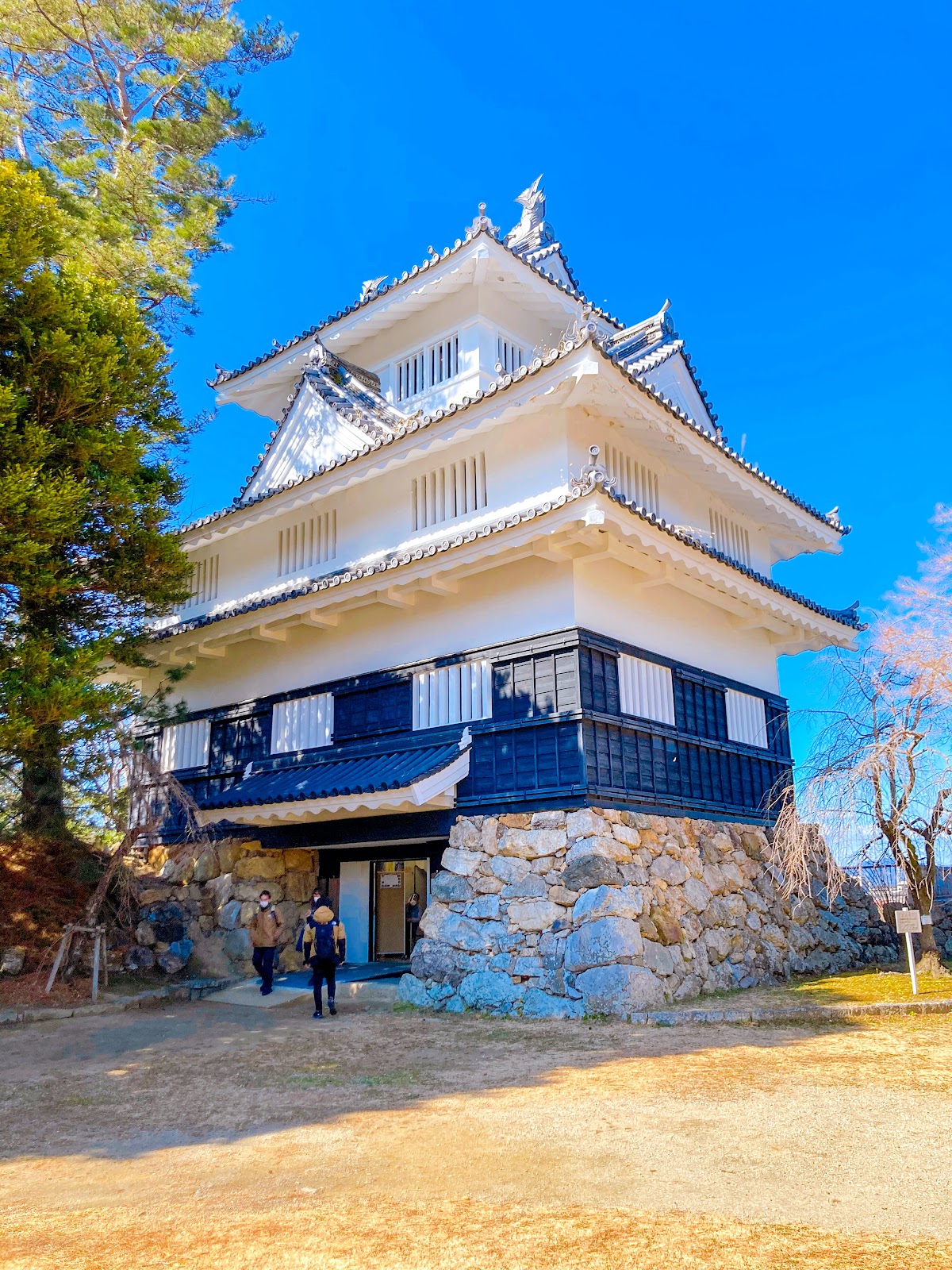
In 1954 (Showa 29), the city of Toyohashi reconstructed a replica of the iron turret, which now stands as a symbol of Yoshida Castle, conveying its former grandeur. While the current iron turret is a reconstruction based on historical records, it is not replica keep.
Yoshida Castle’s Layout and Structure
Characteristics of the Semi-Ringed “Rear-Fortified Castle”
Yoshida Castle’s layout is a semi-ringed “rear-fortified castle,” with the main keep as the base point, and the second and third baileys positioned in front and to the sides, with the Toyokawa and Asakuragawa rivers at its back. Thisstruct rivers while allowing for multiple lines of defense against frontal attacks.
However, a structure with rivers at its back also had weaknesses. Because the main keep (Honmaru) was vulnerable to direct attacks, a lower enclosure (Koshikuruwa) was constructed behind it, and the stone walls wereve high stone walls behind the main keep remain one of the highlights of Yoshida Castle today.
Layout of the Main Keep, Second Enclosure, and Third Enclosure
The main keep (Honmaru) was the central part of the castle, housing the lord’s residence and administrative offices. On the east side of the main keep, facing the Toyokawa River, a stone wall was built along the river, with a turret erected on top. turret on the east side of this main keep.
The second enclosure (Ninokuruwa) surrounded the south and west sides of the main keep, housing the residences of retainers and warehouses. The third enclosure (Sanokuruwa) extended further out, with moats and earthworks forming the boundary with the cast
Remains of Stone Walls and Earthworks
Many remains of stone walls and earthworks still exist at Yoshida Castle today. The stone walls, especially those around the main keep, are remarkably well-preserved, showcasing the castle-building techniques of the Ikeda Terumasa era.
The stone walls exhibit transitional techniques from rough-hewn stonework to fitted stonework, making them valuable historical resources for studying castle architecture. Furthermore, earthworks remain at the boundaries of the second and third bailey castle in its heyday.
Highlights of Yoshida Castle
Iron Turret (Kurogane Yagura)
The most famous symbol of Yoshida Castle is the Iron Turret, standing on the banks of the Toyokawa River. This turret, a replica reconstructed in 1954, captivates visitors with its beautiful three-story structure.
There are several theories regarding the origin of the name “Iron Turret,” but it is believed to have been named after the fact that it housed firearms and boasted a strong defense. The interior of the turret is currently open to the public as a history of Yoshida Castle and Toyohashi.
From the turret, you can enjoy a panoramic view of the Toyokawa River, experiencing the scenery that the former castle lords must have gazed upon. Especially during cherry blossom season, the view of the cherry blossoms in Toyohashi Park and the 관광객.
Stone Walls of the Main Enclosure
The stone walls surrounding the main enclosure are one of the best-preserved remains of Yoshida Castle. The eastern wall facing the Toyokawa River is particularly tall, demonstrating the advanced castle-building techniques of the time.
By observing the construction methods of the stone walls, you can discern the changes in technology over time. The section renovated during the time of Ikeda Terumasa is characterized by a relatively orderly construction method. Walking along the top of the stone walls, y the Sengoku period to the Edo period.
Historical Sites in Toyohashi Park
The Yoshida Castle ruins are now developed as Toyohashi Park, which offers many other points of interest besides the castle ruins. Within the park are cultural facilities such as the Toyohashi City Museum of Art and the San-no-maru Hall, allowing visitors to comprehenses 문화.
The Toyohashi City Museum of Art features detailed exhibits on Yoshida Castle and permanent displays of historical materials from the Toyohashi region. When visiting Yoshida Castle, we highly recommend also visiting the museum.
Continued Top 100 Japanese Castles Stamp
Yoshida Castle is selected as one of the “Continued Top 100 Japanese Castles,” making it a must-see spot for castle enthusiasts. The stamp for the Continued Top 100 Japanese Castles can be obtained at the Tourism Promotion Division on the 1 or at the Toyohashi City Museum of Art.
Many visitors enjoy visiting Yoshida Castle as part of a stamp rally, touring famous castles throughout Japan.
Yoshida Castle Goshuin (Castle Seal)
In recent years, “Goshuin” (castle seals) have become popular as souvenirs of castle visits. Goshuin are also sold at Yoshida Castle, and can be purchased as a memento of your visit.
Castle stamps can be purchased at tourist information centers and designated sales locations in Toyohashi City. The designs are beautiful, making them valuable collector’s items.
Basic Information and Access to Yoshida Castle
Location and Opening Hours
Location: 3 Imabashi-cho, Toyohashi City, Aichi Prefecture (within Toyohashi Park)
Iron Turret Opening Hours:
- 10:00 AM – 3:00 PM
- Free Admission
Closed:
- Mondays (or the following weekday if Monday is a public holiday)
- New Year’s Holidays (December 29th – January 3rd)
*Toyohashi Park itself is always open, and you can stroll around the stone walls and park at any time. Entry to the interior of the Iron Turret is limited to the hours listed above.
Access by Train
From JR/Meitetsu Toyohashi Station:
- Get off at “Shiyakusho-mae” (City Hall) stop on the Toyohashi Railway City Line (tram), approximately 5 minutes on foot.
- Or get off at “Toyohashi Koen-mae” (Toyohashi Park), approximately 2 minutes on foot.
- Approximately 15 minutes on foot from Toyohashi Station.
Using the tram allows you to enjoy the scenery of Toyohashi while accessing Yoshida Castle. The Toyohashi City Line is a convenient mode of transportation for sightseeing in Toyohashi.
Access by Car and Parking
Access by Car:
- Approximately 20 minutes from the Tomei Expressway “Toyokawa IC”
- Turn at the “Toyohashi Shiyakusho-mae” intersection on National Route 1, and it’s right there.
Parking:
- Toyohashi Park Parking (Free)
- Capacity: Approximately 100 cars
- Toyohashi City Hall Parking is also available (weekends and holidays only)
Parking is available within Toyohashi Park and is free of charge. However, it can get crowded during events and cherry blossom season, so you might want to consider using public transportation.
Nearby Tourist Attractions
Toyohashi City Museum of Art
Located within Toyohashi Park, the Toyohashi City Museum of Art is a facility where you can learn deeply about the history of Yoshida Castle. It exhibits materials from a wide range of fields, including archaeology, history, art, and folklorea, with particular 요시다 도메인.
The permanent exhibition displays models of Yoshida Castle, old maps, and excavated artifacts, helping you understand the castle’s overall structure. Special exhibitions are also held regularly, allowing you to learn about Toyohashi’s history and culture f.
Toyohashi Futagawa-juku Honjin Museum
Within Toyohashi City, the honjin (main inn) of Futagawa-juku, a post town that flourished as part of the Tokaido Fifty-three Stations route, is preserved. At the Futagawa-juku Honjin Museum, you can experience what a liit conjunction with Yoshida Castle will give you a deeper understanding of the history of the Tokaido during the Edo period.
Toyokawa Inari Shrine
Located about 15 minutes by car from Yoshida Castle, Toyokawa Inari Shrine is a renowned temple and one of Japan’s three great Inari shrines. Known nationwide as a deity of business prosperity, it attracts many visitors throughout the year.
Kamomeria (Toyohashi Comprehensive Zoological and Botanical Park)
For families, we recommend Toyohashi Comprehensive Zoological and Botanical Park, “Nonhoi Park.” This comprehensive park combines a zoo, botanical garden, natural history museum, and amusement park, offering a full day of fun. It’s about 15 minutes
Points to Note When Visiting Yoshida Castle
Estimated Visiting Time
A visit to Yoshida Castle, including a tour of the interior of the iron turret, should take approximately 30 minutes to 1 hour. If you plan to stroll through Toyohashi Park or carefully observe the stone walls, allow an additional 30 minutes to 1
If you also plan to visit the Toyohashi City Museum of Art, you will need an additional 1-2 hours. We recommend allocating about half a day to leisurely explore Yoshida Castle and the surrounding historical and cultural facilities.
Photo Spots
The most popular photo spot at Yoshida Castle is the iron turret viewed from the Toyokawa riverbed. The landscape, with the river, stone walls, and turret integrated into one view, is a representative scene of Yoshida Castle and is loved by many photographers.
Also, the view overlooking the Toyokawa River from the main keep is magnificent, especially at sunset. During cherry blossom season, photos combining the cherry blossoms in Toyohashi Park with the iron turret are popular.
Seasonal Highlights
Spring (Late March to Early April):
Toyohashi Park has approximately 1,000 cherry trees planted and is known as a famous cherry blossom viewing spot. The collaboration of cherry blossoms and the iron turret is breathtaking, and the park is bustling with many cherry
Summer (July-August):
The cool breeze from Toyokawa is pleasant, making it ideal for strolling through the lush green park. However, the sun is strong, so sun protection such as a hat or parasol is recommended.
Autumn (November-December):
During the autumn foliage season, the ginkgo and maple trees in the park change color, creating a beautiful landscape in contrast with the historical stone walls.
Winter (December-February):
There are relatively few tourists, allowing for a quiet stroll through the castle ruins. The air is clear, making it an ideal season for observing the details of the stone walls and remains.
Historical Value and Future Preservation of Yoshida Castle
Yoshida Castle is a valuable historical site that shows the changes in castle architecture from the Sengoku period to the Edo period. Beginning as Imabashi Castle, it survived the battles of the Sengoku period, underwent renovations into a modern castle by Ikedaimu during the Edo period. Remains reflecting the characteristics of each era are preserved.
In particular, its history as a “castle of advancement” demonstrates the strategic importance of the Tokaido road to the Edo shogunate and serves as an important historical source for understanding early modern Korean history.
Currently, Toyohashi City is focusing on the preservation and utilization of the Yoshida Castle ruins, and archaeological excavations and restoration of the remains are being carried out continuously. In the future, further restoration of buildings and development as a historical park are being consider Yoshida Castle will be more widely recognized.
Summary: Yoshida Castle is a famous castle that tells the history of Higashi-Mikawa
Since its construction as Imabashi Castle, Yoshida Castle has played an important role as the center of the Higashi-Mikawa region for over 500 years. Its history, involving famous warlords such as Tokugawa Ieyasu, Sakai Tadatsugu, and Ikeda shogunate during the Edo period as a “castle of advancement,” symbolizes the transition period from Japan’s Sengoku period to the Edo period.
The iron turret, still standing on the banks of the Toyokawa River, conveys its former grandeur and is a beloved symbol of Toyohashi City. The remains, such as the stone walls and earthworks, are also well-preserved, making it a historical site worth interested in history.
When visiting Toyohashi City, be sure to stop by Yoshida Castle and experience the romance of its history dating back to the Sengoku period. You can enjoy a leisurely historical stroll amidst the beautiful natural environment of Toyohashi Park. Whether you’re collecting stamps visiting a castle ruin for the first time, Yoshida Castle is a fascinating spot that is sure to satisfy.