Nejo Castle Complete Guide: History, Highlights, and Access Information for One of Japan’s Top 100 Castles
Nejo Castle, located in Hachinohe City, Aomori Prefecture, is a historic castle site built during the Nanboku-cho period. Designated a National Historic Site in 1941, it is also one of Japan’s Top 100 Castles. Having flourished as cen years, Nejo Castle is now maintained as the “Nejo Castle Historic Site Plaza,” a valuable historical site where visitors can see historical buildings, including the reconstructed main keep.
This article provides a detailed explanation of Nejo Castle, from its historical background and highlights to access methods and visitor information—all the information you need to know before visiting.
What is Nejo Castle?: A Historic Center of the Nanboku-cho Period
Overview and Characteristics of Nejo Castle
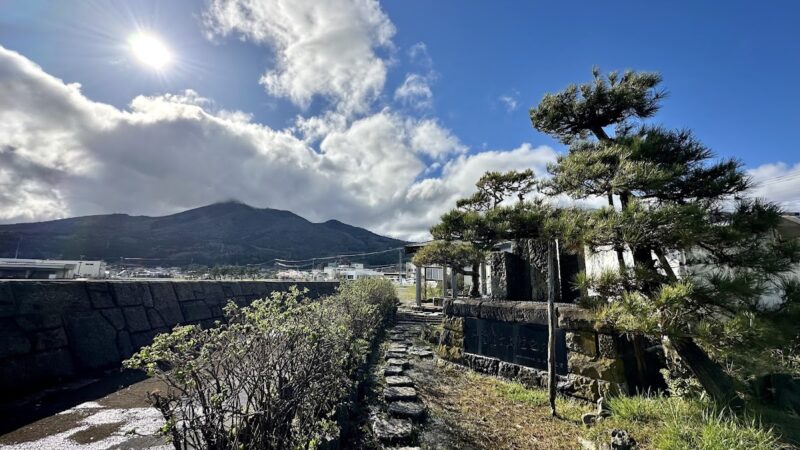
Nejo Castle is a multi-bailey flatland castle located on a river terrace on the south bank of the Mabuchi River, at the western edge of Hachinohe city. The castle features a structure consisting of five interconnected enclosures (kuruma): Honmaru, Nakadate, Nakadate. boasts a robust defensive system that skillfully utilizes the natural terrain.
The castle’s name, “Nejo,” means a main castle or the residence of a lord, indicating its importance as a stronghold of the Nanbu clan. While the name is sometimes pronounced “Nejiro” today to mean a base or operational center, in the context of Hachinohe City.
Value as one of Japan’s Top 100 Castles
Nejo Castle is selected as one of Japan’s Top 100 Castles (No. 5), highly valued for its well-preserved medieval castle remains. In particular, the reconstruction of the Honmaru main hall, based on archaeological excavations, faithfully reproduces the ar making it a valuable facility for experiencing the life of samurai and castle architecture of that era.
The History of Nejo Castle: From Construction to Abandonment
Construction in Kenmu 1 (1334)
The history of Nejo Castle dates back to Kenmu 1 (1334). During the Nanboku-cho period, Kitabatake Akiie, a general under the command of Emperor Go-Daigo, entered Mutsu Province with Prince Noriyoshi, a son of Emperor Go-Daigo. At this n Court, constructed Nejo Castle as a base in the Hachinohe region.
Nanbu Moroyuki was a member of the Nanbu clan, based in Kai Province (present-day Yamanashi Prefecture), and played an important role as a general of the Southern Court. With the construction of Nejo Castle, the Nanbu clan established their power base in the Tohoku region and 300 years thereafter.
From the Nanboku-cho Period to the Muromachi Period
During the Nanboku-cho period, Nejo Castle functioned as an important military base for the Southern Court. Even after the death of Nanbu Moriyuki, the Nanbu clan ruled the Hachinohe region from Nejo Castle and maintained their power throughout the Muromachi period into a political, economic, and cultural center, exerting significant influence on the surrounding region.
Prosperity from the Sengoku Period to the Azuchi-Momoyama Period
Entering the Sengoku period, Nejo Castle continued to function as an important branch castle of the Nanbu clan. During the Azuchi-Momoyama period, the castle’s fortifications were improved, and buildings including the main keep were constructed. The currently restored this period.
Abandonment of the Castle in 1627
In 1627, due to a change in the Nanbu clan’s territory, Nejo Castle ceased to function. Nejo Castle, which had flourished as the center of the Hachinohe region for approximately 300 years, fell into disuse and was abandoned atwe site continued to be recognized, and in 1941 it was designated a National Historic Site.
Nejo Castle Square: A Restored Historical Space
Restored Main Hall
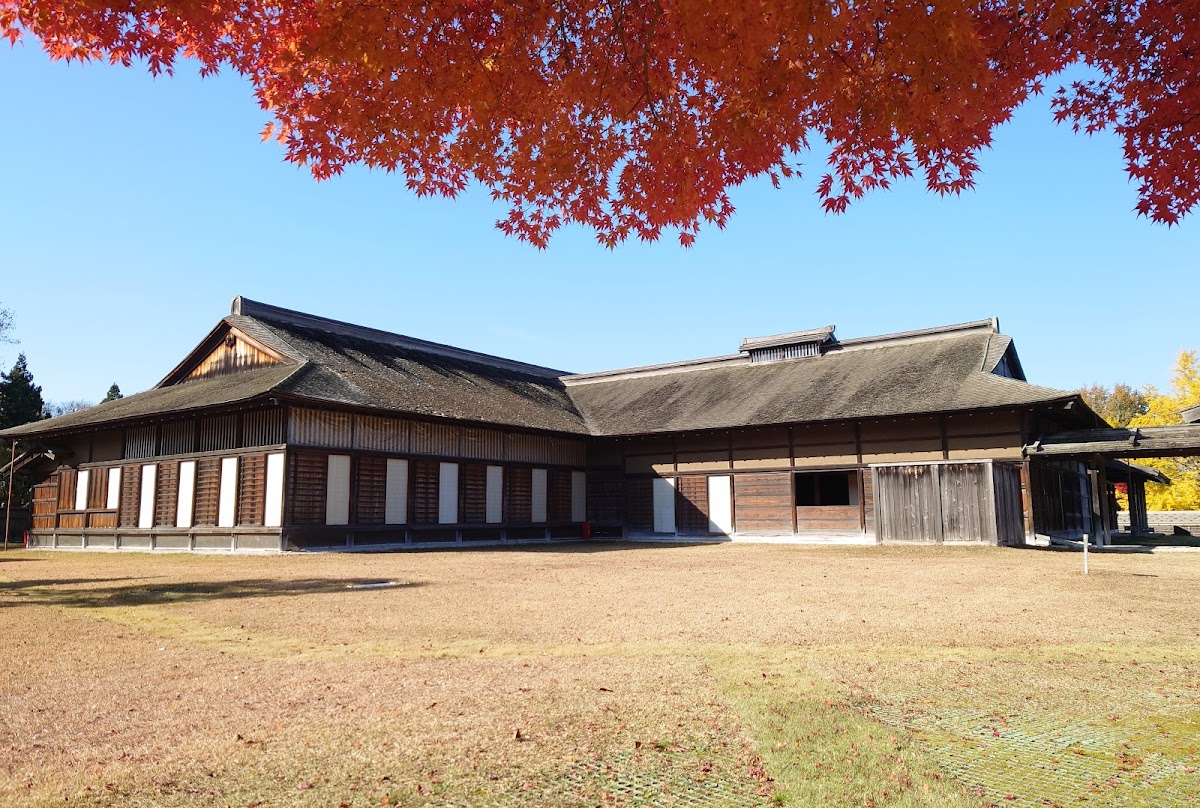
The main highlight of the Nejo Castle Square is the Main Hall, which was restored in 1994. This building was faithfully restored in the style of the Azuchi-Momoyama period, based on the results of archaeological excavations9 conducted from 1
The Main Hall was used as the residence of the castle lord, and its interior, including the front room, middle room, and back room, has been recreated, allowing visitors to gain a concrete understanding of the lifestyle of samurai at that time. in Furni creating an experience that feels like stepping back in time.
Facilities within the Main Enclosure
In addition to the main building of the main enclosure, the following facilities have been restored within the enclosure:
- Barn: A warehouse for storing weapons and food.
- Workshop: A workspace for blacksmithing, woodworking, etc.
- Stable: A facility for raising warhorses.
- Wooden Storehouse: A warehouse for storing important items.
- Gate: The entrance to the main enclosure.
These buildings have been restored based on the locations of post holes and foundation stones confirmed during archaeological excavations, and are valuable resources for understanding the realities of life and defense in medieval castles.
Structure of the Enclosures (Kuruwa)
Nejo Castle has a linear structure with five enclosures (Kuruwa) connected to the main enclosure: Nakadate, Tozenji, Okamaedate, and Sawasatokan. Each enclosure is separated by moats and earthworks, enhancing its defensive capabilities. At the Nejo Histo the layout of these enclosures, experiencing the defensive system of a medieval castle.
Collaboration with Hachinohe City Museum
The Hachinohe City Museum, located adjacent to the Nejo Historic Site plaza, displays a wealth of materials related to Nejo Castle. Exhibits include artifacts unearthed during archaeological excavations, panels explaining the history of Nejo Castle, and reconstructed models, allowing
The museum also features permanent exhibitions on the history and culture of the Hachinohe region, and a visit to the museum is highly recommended when visiting Nejo Castle.
Highlights and Events at Nejo Castle
Seasonal Attractions
The Nejo Historic Site plaza boasts beautiful natural scenery throughout the seasons. Cherry blossoms bloom in spring, the area is lush with greenery in summer, vibrant autumn leaves in fall, and a snowy landscape in winter, offering different view
Craft Workshop
The Nejo Historic Site plaza offers a “Craft Workshop,” providing opportunities to experience the creation of traditional crafts. Programs such as magatama (comma-shaped bead) making and fire-starting are available, allowing visitors to learn about history through children and adults. ### Volunteer Guides
At the Nejo Historic Site Plaza, guided tours by volunteer guides are available. They provide detailed explanations of Nejo’s history and highlights, so it’s recommended to use this service if you want to understand the historical site more deeply. before your visit.
Annual Events and Activities
Various events are held throughout the year at the Nejo Historic Site Plaza. Programs are planned that allow you to experience the history and culture of Nejo, including history lectures, special exhibitions, and reenactments of traditional events. Event information can be
Access, Opening Hours, and Fee Information
Access Methods
By Public Transportation:
- From JR Hachinohe Line “Hon-Hachinohe Station,” take the Nanbu Bus bound for “Nejo Ohashi” or “Korekawa Danchi” for approximately 10 minutes, get off at “Nejo (Museum Front)” bus stop, and it’s a short walk.
- From Aomori Railway/JR Tohoku Shinkansen “Hachinohe Station,” take the Nanbu Bus for approximately 30 minutes.
By Car:
- Approximately 15 minutes from Hachinohe Expressway “Hachinohe IC”
- Free parking available (approximately 100 spaces)
Opening Hours and Closing Days
Opening Hours:
- April to October: 9:00 AM to 5:00 PM
- November to March: 9:00 AM to 4:00 PM
Closing Days:
- Mondays (or the following day if Monday is a public holiday)
- Year-end and New Year holidays (December 27th – January 4th)
*Please check the official website before visiting, as there may be temporary closures.
Admission Fees
Nejo Historical Site Plaza:
- General: 250 yen
- High school and university students: 150 yen
- Elementary and junior high school students: Free
Combined ticket with Hachinohe City Museum:
- General: 400 yen
- High school and university students: 240 yen
*Group discounts and annual passes are also available.
Tourist Attractions Around Nejo
Korekawa Jomon Museum
Located about 10 minutes by car from Nejo, the Korekawa Jomon Museum exhibits valuable artifacts from the Jomon period, including the national treasure “Gassho Dogu” (praying clay figurine). If you want to learn more about the history of Hachino well.
Kushihiki Hachimangu Shrine
Kushihiki Hachimangu Shrine, which houses a national treasure suit of armor, is located about 15 minutes by car from Nejo. As a shrine associated with the Nanbu clan, it has deep ties to the history of Nejo Castle.
Hachinohe City Center
Hachinohe City center boasts numerous spots where you can enjoy local food culture, such as the Hachinohe Yatai Village “Miroku Yokocho” and the morning market. Why not stop by before or after visiting Nejo Castle?
Points and Advice for Visiting Nejo Castle
Estimated Visit Time
Visiting the Nejo Castle site plaza usually takes about 1-2 hours. If you also plan to visit the Hachinohe City Museum, allow an additional hour. If using a volunteer guide, it’s recommended to allow even more time.
Clothing and Items to Bring
Since the Nejo Castle site plaza is primarily an outdoor facility, it’s recommended to wear comfortable shoes and clothing. In summer, the sun is strong, so bring a hat and sunscreen. In winter, snow can accumulate, so warm clothing and
Photography
Photography is generally permitted in the plaza of the Nejo Historic Site. The reconstructed main keep and the seasonal scenery offer excellent photo opportunities. However, photography may be prohibited inside the Hachinohe City Museum, so please follow the museum’s rules.
Accessibility Information
While some facilities in the Nejo Historic Site plaza are becoming more accessible, due to the nature of the historical site, there are many steps and slopes. If you wish to visit in a wheelchair, it is recommended to contact the facility in advance.
Preservation and Utilization of Nejo
Results of Archaeological Excavations
Archaeological excavations conducted from 1978 to 1991 revealed the structure and building layout of Nejo. Based on these findings, the main keep and other buildings were reconstructed in 1994, and the Nejo Historic Site plaza was developed.
Excavations have confirmed the existence of structures such as post holes, foundation stones, moats, and earthworks, as well as numerous artifacts including ceramics, iron products, and wooden objects. These findings are on display at the Hachinohe City Museum.
Cultural Value
Nejo Castle is highly valued as a cultural property due to its well-preserved medieval castle remains. Since its designation as a National Historic Site in 1941, continuous preservation and management have been carried out, and restoration work in the Heisei era has led toits
커뮤니티 연결
Nejo Castle is a historical site that symbolizes the regional identity of Hachinohe citizens. It is used as a site for history lessons in local schools, and preservation and guiding activities by citizen volunteers are active. Efforts to pass on the region’s history and culture
Summary: Experiencing Medieval History at Nejo Castle
Nejo Castle is a historical center that flourished as the heart of the Hachinohe region for approximately 300 years, from the Nanboku-cho period (Northern and Southern Courts period). Today, it is a nationally designated historical site and one of Japan The reconstructed main keep and other facilities, based on archaeological excavations, are invaluable resources for understanding medieval castle architecture and the lives of samurai.
By visiting the Nejo Castle plaza, you can learn about the history of Nejo Castle from multiple perspectives, including its construction by Nanbu Moriyuki, the rule of the Nanbu clan, and the structure of medieval castles. The facility offers various ways to enjoyyoulf programs, and explanations by volunteer guides.
When visiting Hachinohe City, be sure to visit the Nejo Castle plaza and experience Japanese medieval history. Combining a visit with the Hachinohe City Museum and other nearby tourist attractions will make for a more fulfilling historical exploration.
Frequently Asked Questions (FAQ)
Q1: How long does it take to visit Nejo Castle?
A1: Visiting the plaza at the Nejo Historic Site usually takes about 1-2 hours. If you also plan to visit the Hachinohe City Museum, it’s best to allow a total of 2-3 hours. If you plan to use a volunteer guide or participate in a hands even more time.
Q2: Is Nejo open for visits year-round?
A2: No, Nejo is closed on Mondays (or the following day if Monday is a public holiday) and during the New Year’s holiday (December 27th to January 4th). There may also be temporary closures, so it’s recommended opening hours.
Q3: How do I get to Nejo?
A3: If using public transportation, take the Nanbu Bus from JR Hachinohe Line “Hon-Hachinohe Station” for about 10 minutes and get off at “Nejo (Museum Front)” bus stop. If traveling by car, it’s about 15 minutes from the Hachinohe ing available.
Q4: How much is the entrance fee for Nejo Castle?
A4: The entrance fee for the Nejo Castle Historic Site plaza is 250 yen for adults, 150 yen for high school and university students, and free for elementary and junior high school students. A combined ticket with the Hachinohe City Museum is also available (400 yen students), allowing you to visit both facilities at a discounted price.
Q5: Is photography allowed at Nejo Castle?
A5: 예, 사진 is generally permitted in the Nejo Castle Historic Site plaza. The reconstructed main keep and the seasonal scenery are excellent photo opportunities. However, some exhibits inside the Hachinohe City Museum are not allowed to be photographed, so please rulow.
Q6: When was Nejo Castle built?
A6: Nejo Castle was built in 1334 (Kenmu 1) by Nanbu Moriyuki, a general of the Southern Court. Built as an important military base during the Nanboku-cho period, it functioned as the center of the Hachinohe region for approximately 30
Q7: Is the main keep of Nejo Castle authentic?
A7: The current main keep is a building restored in 1994. Based on the results of archaeological excavations conducted from 1978 to 1991, it was faithfully restored in the style of the Azuchi-Momoyama period. It is a toluar architectural techniques and lifestyles of that time.
Q8: Are there guided tours at Nejo Castle?
A8: Yes, guided tours by volunteer guides are available at the Nejo Castle plaza. They provide detailed explanations of Nejo Castle’s history and highlights, making it recommended for those who want a deeper understanding. If you wish to advance.