Complete Guide to Katsuren Castle Ruins: History, Highlights, and Access Information for this World Heritage Site
What is Katsuren Castle Ruins?
Katsuren Castle Ruins are the remains of a gusuku (castle) from the Ryukyu Kingdom era, located in Katsuren Haebaru, Uruma City, Okinawa Prefecture. Built on a hill 60 to 100 meters above sea level, this castle was registered a Heritage) in November 2000 as part of the “Gusuku Sites and Related Properties of the Ryukyu Kingdom.”
Located at the base of the Katsuren Peninsula in central Okinawa Island, it boasts a superb location overlooking the Pacific Ocean. From the highest point, the Ichino-kuruwa (first enclosure), a 360-degree panoramic view unfolds, and on clear Road, and even the horizon of the Pacific Ocean.
Katsuren Castle is particularly famous as the residence of Amawari, a local powerful family who resisted the Ryukyu Kingdom to the very end. As a historical site that played a crucial role in Ryukyu history, it remains a popular destination for tourists and history en.
History of Katsuren Castle
History from Construction to Early Period
While there are various theories regarding the construction period of Katsuren Castle, it is generally believed to have been built around the 12th or 13th century, making it the oldest of the World Heritage gusuku (castles) on Okinawa Island. According to of 14th century by Katsuren Anji, the fifth son of Taisei, the second king of the Eiso dynasty.
At that time, Ryukyu was still in the Three Kingdoms period (a time when Hokuzan, Chuzan, and Nanzan existend separately), before the establishment of a unified kingdom. Local Anji (powerful families) built their own independent powers. Katsuren Cast center of the region, forming the power base of Katsuren Anji. ### The Successive Lords and the Prosperity of Katsuren
Katsuren Castle is believed to have been ruled by approximately 10 generations of lords, from the first Katsuren Anji to Amawari. Each lord repeatedly expanded and renovated the castle, enhancing its function as an impregnable fortress.
In the mid-15th century, Amawari became the 10th lord of Katsuren Castle. Although said to have been of peasant origin, Amawari possessed exceptional talent and strategic vision, actively developing overseas trade. At that time, Ryukyu Dynasty), Japan, and Southeast Asian countries, and Amawari skillfully utilized this trade network to accumulate immense wealth.
Trading ships from China and Southeast Asia frequently entered and left the port of Katsuren, gathering valuable goods such as ceramics, silk fabrics, and spices. Backed by the economic power gained from overseas trade, Amawari developed Katsuren in his influence is said to have rivaled that of the Ryukyu Kingdom.
The Amawari Rebellion and the Fall of Katsuren Castle
In 1458 (the 6th year of King Sho Taikyu’s reign), a major event that shook Ryukyu history occurred: the “Amawari Rebellion.” Following the death of King Sho Hashi, who unified the Ryukyu Kingdom, and with the power of to have plotted a rebellion against the Ryukyu Kingdom.
Amawari had married Momotofumiagari, the daughter of the the-king Sho Taikyu, and deepened his relationship with the royal government. However, aiming for further expansion of his power, he is said to have planned an attack on Shuri Castle.
The royal government, having detected this plan, dispatched forces led by Gosamaru and Oni Oshiro to attack Katsuren Castle. After a fierce battle, Katsuren Castle fell, and Amawari was killed. Following this battle, Katsuren Castle was
Katsuren Castle Ruins in Modern Times
After its abandonment, Katsuren Castle remained neglected for a long time, but its historical value began to be re-evaluated. On May 15, 1972 (Showa 47), the Katsuren Castle Ruins were designated a national historic site.
From the 1990s, full-scale archaeological excavations and restoration work began, with the restoration of the castle walls and the development of walking paths. In December 2000, along with Shuri Castle, Nakijin Castle, Zakimi Castle, and Nakagu World Heritage Site as part of the “Gusuku Sites and Related Properties of the Kingdom of Ryukyu,” gaining international recognition for its value.
In 2019, “Amawari Park” opened adjacent to the Katsuren Castle ruins, providing historical and cultural facilities and rest areas, creating a more comfortable environment for tourists visiting the site. Currently, it is an important tourist spot in Okinawa, attracting over all
Structure and Features of Katsuren Castle
Overall Structure
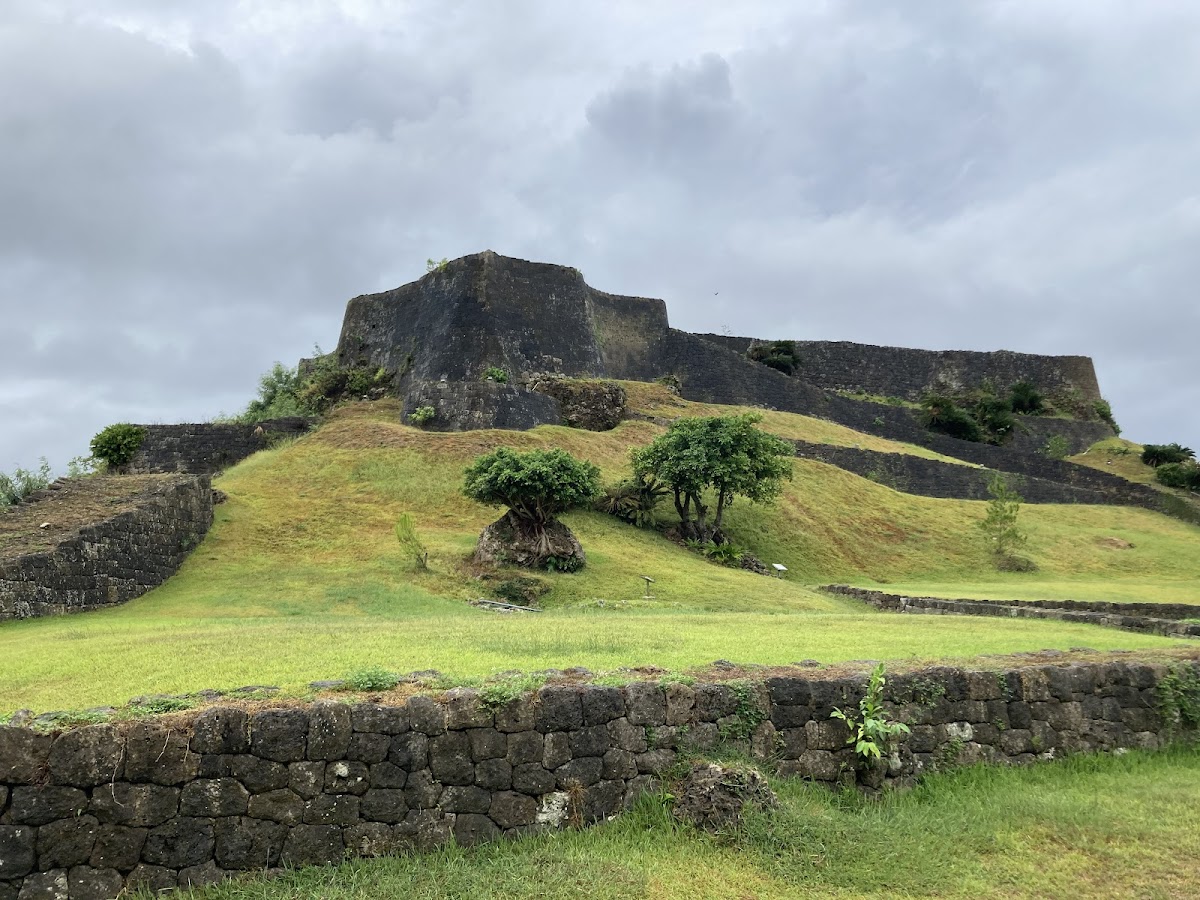
Katsuren Castle is a multi-bailey mountain castle that skillfully utilizes the natural terrain. Four baileys (kuruwa: sections of the castle) are arranged in a stepped fashion on the top of a long, narrow hill running north-south. (Ichinokuruwa, approximately 98 meters above sea level) to the second, third, and fourth baileys.
The total area of the castle is approximately 11,897 square meters, and the total length of the castle walls is approximately 1,200 meters. The eastern and western sides of the castle are natural cliffs, which is why it attacking side could only advance from the gentle slope on the south side, making it a highly advantageous structure for the defensaers.
The Beauty of the Castle Walls
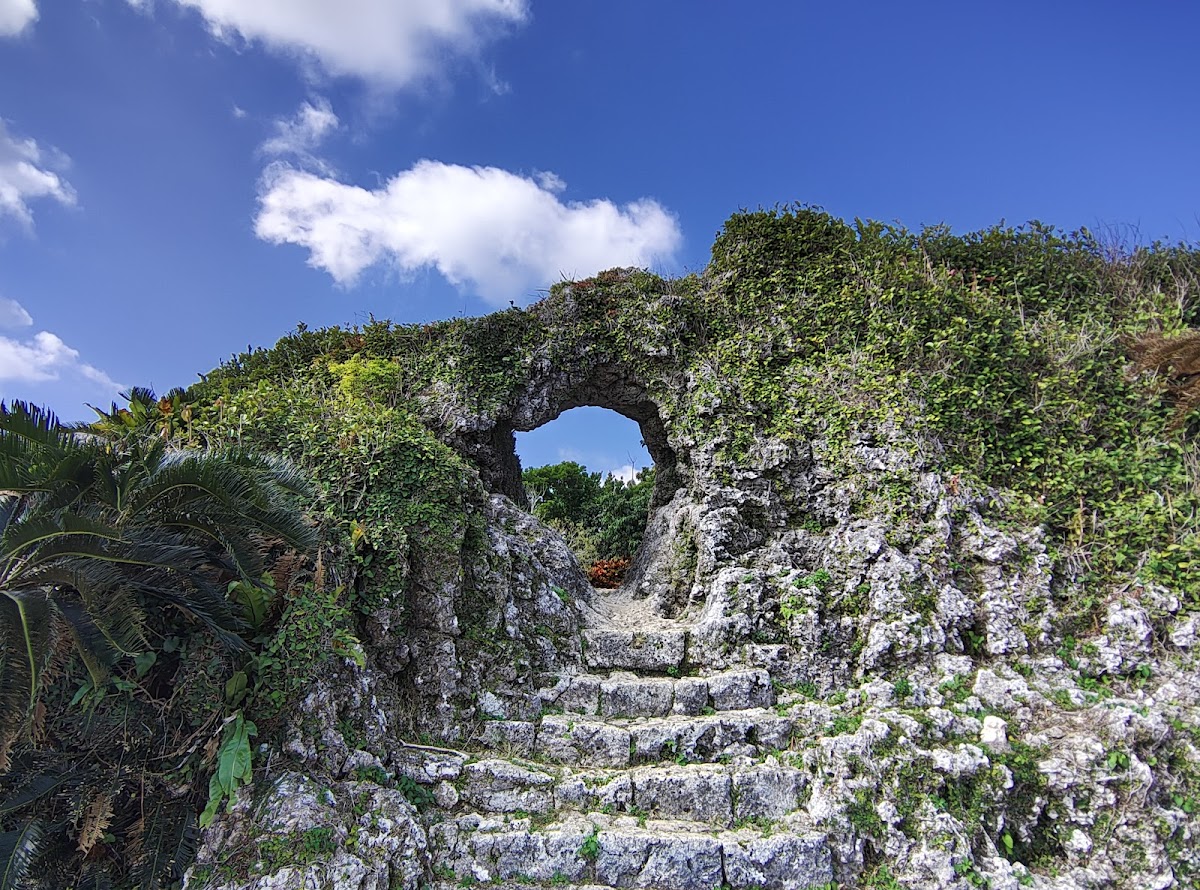
One of the most striking features of Katsuren Castle is its gracefully curved castle walls. Built using a technique called “aikata-zumi” (mutual stacking) with Ryukyu limestone, the walls utilize almost entirely natural stones, yet a
The curves of the castle walls are not only beautiful but also serve to enhance structural strength. Compared to straight walls, the curves distribute external pressure, making the structure more resistant to earthquakes and other disasters. The beauty of these wall showcasing the essence of Ryukyu architecture, combining strength and delicacy.
The height of the castle walls varies depending on the location, but the highest points reach approximately 10 meters. Even after nearly 600 years, much of it retains its original form, demonstrating the high level of Ryukyu stonemasonry
Characteristics of Each Enclosure
First Enclosure (Uppermost)
Located at an altitude of approximately 98 meters, this is the highest point and is believed to have been the lord’s living quarters and the site of important ceremonies. The view from here is breathtaking, offering a 360-degreeing east, the East China Sea to the west, Kin Bay to the north, and the Chinen Peninsula to the south. On clear days, you can even see as far as Kudaka Island and the Seifa Utaki on the Chinen Peninsula.
Second Enclosure
Located below the first enclosure, this is a relatively large, flat area. Archaeological excavations have uncovered building foundations and traces of daily life items, suggesting it was the living quarters of the lord’s family and retainers.
Third Enclosure
This is the largest enclosure within the castle and is believed to have contained soldiers’ quarters and an armory. Currently, the view of the sea over the castle walls from this enclosure makes it a popular spot for photography.
Fourth Enclosure
This enclosure is the closest to the castle entrance and serves as the front line of defense. It functioned as a castle gate, playing a crucial role in preventing enemy incursions.
What We Learned from Archaeological Excavations
Archaeological excavations since the 1990s have revealed many new facts about Katsuren Castle. Among the unearthed artifacts are numerous relics that attest to the prosperity of overseas trade, including Chinese celadon and white porcelain, glass 일본.
Of particular note is the discovery of copper coins believed to be from the Roman Empire. This suggests that Katsuren Castle’s trade network may have extended far beyond what was previously thought. Furthermore, numerous iron weafes, implements providing valuable clues to the lifestyles of the people at that time.
Tourist Information
Highlights
Spectacular Views from the Castle Walls
The greatest attraction of visiting Katsuren Castle ruins is undoubtedly its spectacular views. Climbing to the top of the castle, the first enclosure, reveals a 360-degree panoramic view of Okinawa’s beautiful sea and sky, and lushgreen surface sparkles, creating a fantastical scene.
The Elegant Curves of the Castle Walls
The beautiful curves of the castle walls, viewed from below, are breathtaking. The curve of the wall from the third enclosure to the second enclosure is a popular photo spot for many photographers. The contrast between the texture of the stone walls, buster stunning photographs.
Amawari Park
Opened in 2019, Amawari Park houses the Amawari Museum, a historical and cultural facility where visitors can learn about the history of Katsuren Castle and Amawari. With exhibits utilizing the latest digital technology and dioramas recreating life in the era, e children to adults.
The park also has rest facilities and shops where you can enjoy local delicacies such as Okinawan soba and sata andagi.
Access Methods
Access by Car
Approximately 1 hour by car from Naha Airport (via Okinawa Expressway). Exit the Okinawa Expressway at “Okinawa Kita IC” and drive for approximately 15 minutes on National Route 329 towards Katsuren. Free parking is available with approximately 10
Access by Bus
From Naha Bus Terminal, take bus routes 52, 61, 77, 227, or 263 and get off at the “Katsuren Castle Ruins” bus stop. The journey takes approximately 1 hour 30 minutes to 2 hours. The entrance is about
Using a Rental Car
Renting a car is the most convenient way to sightsee in Okinawa. There are many other tourist spots around Katsuren Castle Ruins, such as the Kaichu Road, Hamahiga Island, and Henza Island, so renting a car is recommended for sightseeing.
Opening Hours and Fees
Katsuren Castle Ruins
- Opening Hours: 9:00 AM – 6:00 PM (Open all year round)
- Admission Fee: Free
- Estimated Time Required: Approximately 45 minutes to 1 hour
Amawari Park
- Opening Hours: 9:00 AM – 6:00 PM (Open all year round)
- Admission Fee: Adults 600 yen, Junior and Senior High School Students 400 yen, Elementary School Students and younger Free (Amawari Museum admission fee)
- Parking: Free
Notes for Visitors
Clothing and Preparation
The castle ruins have many stairs and slopes, and a certain level of physical fitness is required to climb to the top. Wearing comfortable shoes such as sneakers is recommended. Also, since the sun is often strong, bring a hat, sunscreen,
Estimated Time Required
If you only want to see the castle ruins, it will take about 30 minutes, but if you want to take your time taking photos and enjoying the scenery, allow about an hour. If you plan to visit Amawari Park as well, we recommend
Weather Considerations
The stone steps can become slippery in rainy weather, so caution is advised. Also, viewing from the top of the castle walls may be dangerous in strong winds. For safety reasons, we recommend refraining from visiting during typhoon approaches.
Nearby Tourist Spots
카이쿠 로드
A scenic drive route approximately 5 kilometers long, about 10 minutes by car from Katsuren Castle Ruins. The road runs over the sea, offering stunning views of the emerald green ocean on both sides, allowing you to fully enjoy the quintess
하마히가 섬
An outlying island located beyond the Kaichu Road. A sacred island where the legend of Amamichu and Shirumichu, characters from the Ryukyu creation myth, remains, and it’s also a popular power spot.
Ikei Island, Miyagi Island, and Henza Island
A group of outlying islands connected by the Kaichu Road. Beautiful beaches and traditional settlements remain, allowing you to enjoy a relaxed island lifestyle. Bios Hill
A subtropical botanical garden located about 20 minutes by car. It offers facilities where you can experience Okinawa’s nature, such as lake boat tours and water buffalo cart rides.
Cultural Value of Katsuren Castle Ruins
Significance as a World Heritage Site
Katsuren Castle Ruins are registered as a World Heritage Site as part of the “Gusuku Sites and Related Properties of the Kingdom of Ryukyu.” This registration signifies international recognition of the unique culture and history of the Ryukyu Kingdom, as well as
The Ryukyu Kingdom was an independent nation that existed for approximately 500 years, from the 14th to the 19th centuries, and prospered through transit trade with China, Japan, and Southeast Asia. Its culture, while influenced by eases a wide range of fields, including architecture, performing arts, and crafts.
Katsuren Castle Ruins is an important legacy of this Ryukyu culture, and is particularly valuable for its strong remnants of its characteristics as a castle of a local powerful family. While Shuri Castle symbolizes the central government of the Ryukyu Kingdom, Katsu forces, illustrating the diversity of Ryukyu.
Archaeological Value
The artifacts unearthed through excavations provide important evidence of Ryukyu’s trade network and economic power in the 15th century. The discovery of items from diverse regions, including Chinese ceramics, Southeast Asian glass products, and Japanese trading hub.
Furthermore, the castle’s structure and construction techniques provide valuable information for understanding the development of Ryukyu’s unique stone architecture. The stone-laying technique known as “aikata-zumi” was later adopted in Shuri Castle and Ryukyu architecture.
Role in the Local Community
For Uruma City, the Katsuren Castle ruins are a symbol of regional identity and a core tourist attraction. Since its designation as a World Heritage Site, the annual number of tourists has increased significantly, greatly contributing to the local economy.
Furthermore, local schools conduct local history education programs that teach about the history of Katsuren Castle Ruins and Amawari, giving children an opportunity to take pride in the history and culture of their region. Every autumn, the “Amawari Festival” of Amawari, continuing efforts to pass on history to the present day.
Summary
Katsuren Castle Ruins is a valuable World Heritage Site that conveys the history and culture of the Ryukyu Kingdom era. As the residence of the heroic figure Amawari, and a symbol of Katsuren, which prospered through overseas trade, it holds many stories.
The elegantly curved castle walls, the breathtaking 360-degree panoramic view, and the romance of Ryukyu history—all of these deeply impress visitors. When visiting central Okinawa Island, be sure to visit Katsuren Castle Ruins and experience the history and culture.
The view of the Okinawan sea and sky from the top remains as beautiful as the view Amawari saw 600 years ago, continuing to captivate visitors. In this place where the present and history intersect, you can feel the splendor of the Ryukyu Kingdom and e