Hiratsuka Castle Complete Guide: From a Branch Castle of the Toshima Clan to its Fall by Ota Dokan – History and Present
Hiratsuka Castle, located in Kaminakazato, Kita-ku, Tokyo, is known as an important base for the Toshima clan in medieval Musashi Province. The site, now home to Hiratsuka Shrine, was once the stage for fierce battles and marked the final chapter of thaps explanation of Hiratsuka Castle’s history from its construction to its fall, the current state of its remains, and the legends surrounding it.
Overview and Basic Information of Hiratsuka Castle
Hiratsuka Castle (Hiratsuka-jo) was a medieval castle located in Kaminakazato 2-chome, Kita-ku, Tokyo. Also known as “Toshima Castle,” it functioned as an important branch cast of of Shakujii Castle (Nerima-ku), the Toshima
Location and Geographical Characteristics
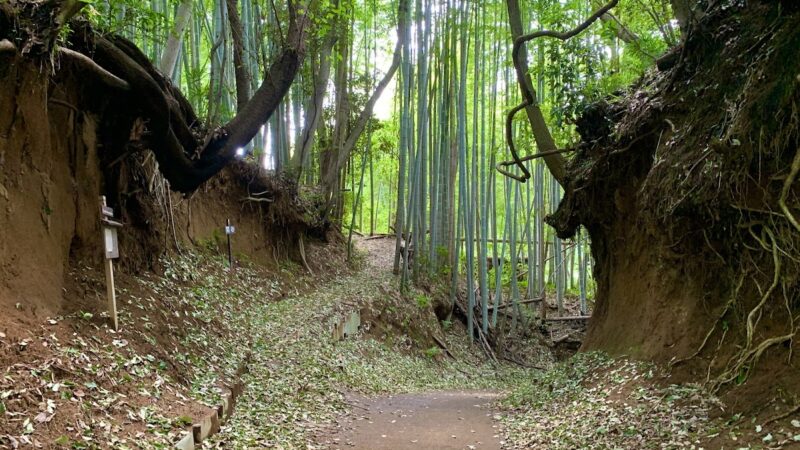
Hiratsuka Castle was built on a plateau west of the current JR Keihin-Tohoku Line Kaminakazato Station, around Hiratsuka Shrine. This region is characterized by a significant change in topography between the east and west sides of the Keihin-Tohoku believed to have stood, rises gently, creating a terrain well-suited for defense. Its location on the edge of a plateau suggests it functioned as a defensive structure utilizing the natural terrain.
Castle Scale and Structure
The Edo period geographical record, “Shinpen Musashi Fudoki-ko,” states that the location of Hiratsuka Castle was unknown, and its exact location and size have long been debated. However, recent archaeological excavations have uncovered castle remains, making Hiratsuka Shrine was the central part of the castle.
While many details of the castle’s layout remain unclear, it is presumed to have possessed a typical structure for a medieval flatland castle. It is thought to have combined the natural fortifications of the plateau with artificial defensive structures such as earthworks and moats
History of Hiratsuka Castle
Heian Period: Legend of Construction by Toshima Chikayoshi
According to the “Hiratsuka Myojin and Betto Jōkanji Engi Emaki” (Illustrated Scroll of the Origins of Hiratsuka Myojin and Betto Jōkanji Temple), Hiratsuka Castle is said to have been built during the Heian period by Toisma Chikayoshi. county office (gunga: an ancient local administrative body) of Toshima County, and the castle was constructed on its former site.
Connection with Minamoto no Yoshiie
A legend remains that Minamoto no Yoshiie, his brothers Yoshimitsu and Yoshitsuna stayed at this residence on their return from the Later Three Years’ War (1083-1087). It is said that Minamoto no Yoshiie, grateful for the generou them a suit of armor and an eleven-faced Kannon statue. This eleven-faced Kannon statue later became the sacred object of worship at Hiratsuka Shrine.
This legend indicates that the Toshima clan had a deep connection with the Minamoto clan, and it was one of the sources of the Toshima clan’s authority. However, historical evidence for records from this period is limited, and it has been pointed out that
Kamakura to Muromachi Periods: The Toshima Clan’s Rule
Around the end of the Kamakura period, the Toshima clan built Shakujii Castle in Nerima Ward and made it their base, with Hiratsuka Castle positioned as a branch castle. As a powerful local lord in Musashi Province, the Toshima clan maintained their powerles as Nerima Castle (Nerima Ward, near the former Toshimaen amusement park), and Hiratsuka Castle.
The Toshima clan was a powerful samurai group that controlled the Toshima district of Musashi Province and acted as a retainer of the Kamakura Shogunate. Entering the Muromachi period, they served as vassals of the Kanto Kanrei Uesugi clan, playing an important militar
Bunmei Era: Conflict with Ota Dokan
In the latter half of the 15th century, the Kanto region entered a period of turmoil triggered by the Nagao Kageharu Rebellion. The Toshima clan’s heads, brothers Toshima Yasutsune and Toshima Yasuaki, are said to have sided with Nagaocom Dokan, a vassal of the Ogigayatsu Uesugi family.
In April of Bunmei 9 (1477), Ota Dokan sallied forth from Edo Castle and attacked the Toshima clan’s strongholds. At this time, both Shakujii Castle and Hiratsuka Castle were targeted. Ota Dokan, also known as the buil Kanto region at the time, and his military talent overwhelmed the Toshima clan.
Bunmei 10 (1478): Fall of Hiratsuka Castle
In Bunmei 10 (1478), Ota Dokan’s full-scale attack began. First, Shakujii Castle was attacked, forcing Toshima Yasutsune and his men to abandon it and retreat to Hiratsuka Castle. The Toshima clan attempted to’group was relentless, and Hiratsuka Castle also came under fierce attack.
Dokan’s army besieged Hiratsuka Castle, and a fierce battle ensued. However, against Dokan’s army, which boasted the strongest military power in Musashi Province, the Toshima clan’s resistance could not last long. Hiratsuka Tose escaped the castle and fled.
With the fall of Hiratsuka Castle, the Toshima clan’s power was effectively annihilated. Many members of the Toshima family were killed or scattered, marking the end of the Toshima clan’s rule in Musashi Province. It is said that Yat clan of Odawara, or that he wandered from place to place, but the details are unclear.
Hiratsuka Castle After its Fall
There are no clear records of how this site was used after the fall of Hiratsuka Castle. It is believed that the castle lost its function throughout the Sengoku period and was eventually developed as the grounds of Hiratsuka Myojin
By the Edo period, memories of the castle had already faded, and even its exact location was unknown at the time of the compilation of the “Shinpen Musashi Fudoki-ko” (New Compilation of the Topography of Musashi Province). This is though destroyed, and subsequent development resulted in the loss of its remains.
Current Hiratsuka Castle Site: Hiratsuka Shrine and Surroundings
Hiratsuka Shrine
Currently, Hiratsuka Shrine stands on the site of Hiratsuka Castle. Hiratsuka Shrine enshrines an eleven-faced Kannon statue, said to have been bestowed by Minamoto no Yoshiie, and has long been a center of local faith. The shrine grounds it a central spot for visitors to the castle site.
Next to the shrine’s torii gate is an explanatory sign about Hiratsuka Castle, where you can learn about the castle’s history and the Toshima clan. However, no clear castle remains are found within the shrine grounds, and you won’ earthworks or moats.
Access
Hiratsuka Shrine is very conveniently located. It’s about a 5-minute walk from Kami-Nakazato Station on the JR Keihin-Tohoku Line, making it easily accessible from central Tokyo. Exit the west exit of the station and walk through the resident
It’s also within walking distance from Nishigahara Station on the Tokyo Metro Namboku Line, about a 10-minute walk. The surrounding area is a quiet residential neighborhood, providing a suitable environment for exploring castle ruins.
Current Status of Remains and Excavation Surveys
Remains Remaining on the Surface
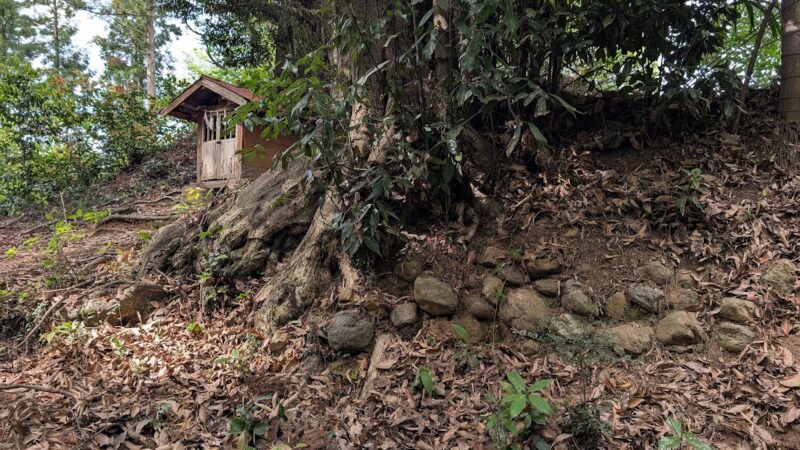
Unfortunately, very few clear castle remains remain at the Hiratsuka Castle site. Typical castle structures such as earthworks, moats, and stone walls cannot be seen on the surface, and at first glance, at looks like an ordinary shrine the castle remains were thoroughly destroyed by development after the Edo period.
However, the plateau’s topography itself retains traces of the medieval period, and by observing the surrounding terrain, it is possible to understand why a castle was built in this location.
Recent Archaeological Excavations
Recent archaeological excavations have uncovered remains believed to be related to the cast from beneath the area around Hiratsuka Shrine. These discoveries confirm that the area around Hiratsuka Shrine was indeed the central part of Hiratsuka Castle.
Medieval artifacts have also been unearthed during the excavations, providing evidence of life during the late 15th century under the rule of the Toshima clan. These archaeological findings are a valuable source of information for unraveling the true nature of Hiratsu
Legends and Place Names Remaining Around the Castle
Semizaka (Cicada Slope)
Next to Hiratsuka Shrine is a slope called “Semizaka.” Legend says that Ota Dokan attacked Hiratsuka Castle from this slope, and there is a theory that “Semizaka” is a corruption of “Semizaka” (attack slope).
While the veracity of this theory is debated, it’s an interesting legend because the place name retains the memory of a castle siege. Semizaka is still used as a road today, and one can reflect on the battles of that time as they ascend the slo.
Other Place Names and Legends
There are various theories about the origin of the place name Hiratsuka itself. One theory suggests that it was named “Hiratsuka” because there was a flat mound in the area, while another theory links it to the origin of Hiratsuka
The surrounding area is dotted with place names and legends that show traces of the medieval rule of the Toshima clan, providing important clues to the region’s history.
The Rise and Fall of the Toshima Clan and the Role of Hiratsuka Castle
The Toshima Clan’s Sphere of Influence
The Toshima clan was a powerful samurai group based in Toshima County, Musashi Province, and controlled a vast area spanning present-day Kita Ward, Toshima Ward, Nerima Ward, and Itabashi Ward in Tokyo. Hiratsuka Castle functioned as one of the strat
The three-castle system, with Shakujii Castle as the main castle and Nerima Castle and Hiratsuka Castle as subsidiary castles, formed the core of the Toshima clan’s military strategy. Hiratsuka Castle is thought to have played a particularly important role as a
Significance of the Battle with Ota Dokan
Ota Dokan’s conquest of the Toshima clan was not merely a localized battle, but an event that significantly altered the power dynamics of the Kanto region. The fall of the Toshima clan greatly strengthened the influence of the Ogigayatsu Uesu Dokan’s military and political position.
The fall of Hiratsuka Castle holds historical significance as an event symbolizing the decline of local lords in medieval Musashi Province and the transition to the Sengoku period (Warring States period).
Hiratsuka Castle and Other Toshima Clan-Related Castles
Relationship with Shakujii Castle
Shakujii Castle, as the main cast of of the Toshima clan, was larger in scale and had stronger defensive facilities than Hiratsuka Castle. Located in present-day Shakujii-dai, Nerima Ward, some of the remains are preserved within Shakujii Park.
Hiratsuka Castle was located approximately 5 kilometers north of Shakujii Castle, and the two castles worked closely together to defensa the Toshima clan’s territory. The fact that Toshima Yasutsune retreated to Hiratsuka Castle when Shakuji strategic connection.
Relationship with Nerima Castle
Nerima Castle was a Toshima clan fortress believed to have been located near the former Toshimaen amusement park. Along with Hiratsuka Castle and Shakujii Castle, it formed one of the Toshima clan’s three major strongholds. Nerima Castle is toave at also at Dokan, but detailed records are not available.
These three castles were located several kilometers apart, allowing for mutual support. This arrangement indicates that the Toshima clan systematically developed a network of castles for territorial control.
Current Status and Challenges of Hiratsuka Castle Research
Limitations of Historical Sources
Contemporary historical sources concerning Hiratsuka Castle are extremely limited, leaving many questions unanswered regarding the castle’s detailed structure and daily operations. The main sources are war chronicles and legends compiled in later periods, and their reliability requires care
The “Hiratsuka Myojin and Betto Castle Temple Legend Scroll” is an important historical source for understanding the history of Hiratsuka Castle, but its date of creation and the accuracy of its descriptions are debated. Efforts continue to construct a more accurate image of archaeological excavations and documentary sources.
Future Research Possibilities
Further archaeological excavations are likely to be conducted around Hiratsuka Shrine due to development, and the discovery of new remains and artifacts is expected. These archaeological findings are expected to shed more light on the true nature of
Furthermore, the discovery of new historical materials concerning the Toshima clan and Ota Dokan, along with a re-examination of existing materials, may shed light on the details of the historical events surrounding Hiratsuka Castle. As regional history research progresses, the historical significance of hiratsuka
Points to Note When Visiting Hiratsuka Castle
Points to Note When visiting the Hiratsuka Castle ruins, it is important to understand that no clear remains are left. Therefore, it is recommended to pay attention to the following points:
- Plateau Topography: Observe the plateau topography around Hiratsuka Shrine and consider why a castle was built in this location.
- Information Board: Learn about the castle’s history from the information board next to the shrine’s torii gate.
- Semi-zaka Slope: Walk along Semi-zaka Slope, believed to be the attack route of Ota Dokan.
- Surrounding Topography: Observe the differences in topography on the east and west sides of the Keihin-Tohoku Line.
Related Historical Sites in the Surrounding Area
When visiting the Hiratsuka Castle ruins, it is recommended to also visit the following related historical sites:
- Shakujii Castle Ruins (Nerima Ward): The main cast of of the Toshima clan; remains are located within Shakujii Park.
- Edo Castle Ruins (Chiyoda Ward): A castle built by Ota Dokan; now the Imperial Palace.
- Nerima Castle Ruins (Nerima Ward): Another base of the Toshima clan
Visiting these historical sites allows for a more comprehensive understanding of the history surrounding the Toshima clan and Ota Dokan.
Changes in some conventional theories and new perspectives
Re-examination of the castle’s construction date
Traditionally, Hiratsuka Castle was believed to have been built by Toshima Chikayoshi during the Heian period. However, recent research suggests that the actual construction date may be a later period, possibly from the Kamakura to the early Muromachi period. The Heian period construted authority of the Toshima clan.
Archaeological investigations have not confirmed any clear remains dating back to the Heian period, and most of the excavated artifacts date to the late medieval period. Therefore, further verification is needed regarding the actual construction date of Hiratsuka Castle.
Discussion about the castle’s location
During the Edo period, the location of Hiratsuka Castle was unknown, but recent research has made it almost certain that the area around Hiratsuka Shrine is the castle site. However, no definitive conclusions have yet been reached regarding the castle’s
Some researchers suggest that the castle facilities may have extended beyond the area around Hiratsuka Shrine. Further excavations are expected to shed more light on the castle’s overall structure.
Summary: Historical Significance of Hiratsuka Castle
Hiratsuka Castle functioned as an important base for the Toshima clan, a local lord in Musashi Province during the medieval period. Although no clear remains survive, its history is significant, illustrating the rise and fall of the Toshima clan and the political and military situation in the Kani
Ota Dokan’s capture of Hiratsuka Castle was not merely the fall of a single castle, but a symbolic event representing the decline of a medieval local lord and the dawn of a new era. Standing on this site, now a quiet residential area and shrine, we can reflect on years ago and the glory of the Toshima clan lost there.
Hiratsuka Castle Ruins is a precious place where you can experience medieval history despite being in the heart of Tokyo. Because no remains are left, there’s the added pleasure of using your imagination to decipher history. Be sure to visit Hiratsuka Shrine and experi etched into this land.