Complete Guide to Charukorofina Chashi (Hokkaido): History and Highlights of Ainu Cultural Heritage
What is Charukorofina Chashi?
Charukorofina Chashi is an important cultural heritage site of the Ainu people, located in Onnenuma, Nemuro City, Hokkaido. “Chashi” means “fence” or “fortress” in the Ainu language, and refers to a facility built by the Ainu people for purposes such as defense, rituals, and lookout.
Charukorofina Chashi is particularly well-preserved among the many chashi sites on the Nemuro Peninsula, and in 2017, it attracted attention as one of Hokkaido’s important historical sites, along with the “Jomon Archaeological Sites of Hokkaido and Northern Tohoku.”
Historical Significance of Chashi
The Ainu people are believed to have built over 500 chashi throughout Hokkaido between the 13th and 18th centuries. These were not merely military facilities, but also served diverse functions such as trading posts, places of worship, and boundary markers for settlements.
Charukorofina Chashi is believed to have been one of the political and cultural centers of Ainu society in the Nemuro region, and is a valuable archaeological site for understanding the social structure and lifestyle of the time.
Structure and Characteristics of Charukorofina Chashi
Geographical Location
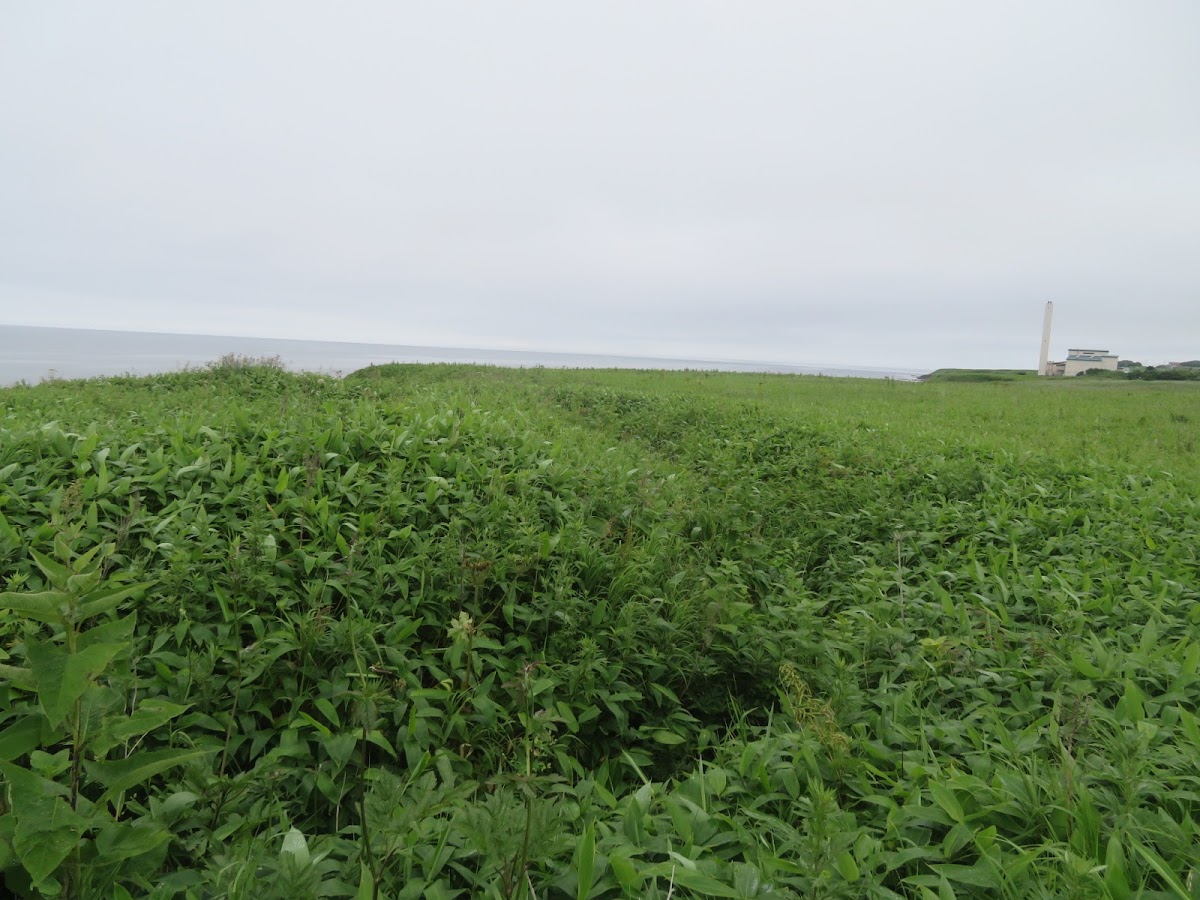
Charukorofina Chashi is located on a hill overlooking the Pacific Ocean on the southern shore of Onnenuma Lake. This location was strategic, serving as both a base for monitoring approaching enemies from the sea and a base for fishing activities.
Built on a plateau approximately 30 meters above sea level, it offers panoramic views of Onnenuma Lake and the Pacific Ocean, and on clear days, Kunashir Island can be seen.
Structure of the Chashi
Charukorofina Chashi is a type of “cliff-faced chashi” and has the following characteristics:
- Moat: A defensive ditch dug on the landward side of the plateau, approximately 2-3 meters deep.
- Earthwork: An embankment created by piling up the soil excavated from the moat.
- Flat Area: A flat space at the center of the chashi, where ceremonies and gatherings took place.
- Cliff Face: A defensive structure utilizing the natural cliff on the seaward side.
This structure effectively prevents intrusion from the landward side while maintaining visibility towards the sea.
Size and Scope
The flat area of Chaukorofina Chashi is approximately 40 meters east-west and 30 meters north-south, classifying it as a medium-sized chashi. Based on this size, it is estimated that it was used by a group of several dozen people.
History of Charukorofina Chashi
Construction Period
Archaeological investigations suggest that Charukorofina Chashi was used from the 15th to the 17th centuries. This period coincides with a time of high development in Ainu society and active trade with the Wajin (Japanese from Honshu).
Connection to Shakushain’s Rebellion
Shakushain’s Rebellion, which occurred in 1669, was a large-scale war between the Ainu people and the Matsumae Domain. It is believed that the Chashi groups in the Nemuro region had their defensive functions strengthened before and after this war.
Charukorofina Chashi may have played an important role during this period and holds historical significance as a symbol of Ainu resistance and autonomy.
Preservation Activities in Modern Times
While many Chashi were lost due to land reclamation and development after the Meiji era, Charukorofina Chashi has been preserved in relatively good condition.
In 1984, it was designated a historical site by Nemuro City, and in 2004, it became a Hokkaido Prefectural Historic Site. Currently, appropriate preservation and management are being carried out thanks to the efforts of local residents and researchers.
Relationship with the Nemuro Peninsula Chashi Sites
Overview of the Nemuro Peninsula Chashi Sites
32 chashi sites have been identified on the Nemuro Peninsula, and these are registered as a national historic site (2006) as the “Nemuro Peninsula Chashi Sites.” This includes the following notable chashi:
- Onnemoto Chashi Site: The best-preserved and easiest to visit
- Notsukamafu Chashi Site: Located near Cape Nosappu
- Ponmoi Chashi Site: A chashi around Lake Onnenuma
Charukorofina Chashi is positioned as one of the important bases around Lake Onnenuma among these chashi sites.
Network of Chashi Sites
The Chashi sites on the Nemuro Peninsula are thought to have formed a network, positioned at a distance where they could be seen from each other, and used signal fires to transmit information. Charukorofina Chashi also functioned as part of this network.
Access and Visiting Information
Location
Address: Onnenuma, Nemuro City, Hokkaido
Access
Access by Car
- Approximately 20 minutes from central Nemuro City via National Route 44
- Approximately 2 hours 30 minutes from Kushiro City
- Approximately 1 hour 30 minutes from Nakashibetsu Airport
- Parking: Small parking spaces available nearby (confirmation required)
Public Transportation
- Approximately 15 minutes on foot from the “Onnenuma” bus stop (Nemuro Kotsu Bus)
- However, bus service is limited, so checking the timetable in advance is necessary.
Precautions During Visits
- Protection of Historic Sites: Chashi sites are valuable cultural assets. Please be careful not to damage the earthworks or trenches.
- Safety Precautions: The area near the cliff is dangerous, so please do not go outside the fence.
- Clothing: Long pants and comfortable walking shoes are recommended as you will be walking on grassy areas.
- Season: May to October is the best time to visit. Access is difficult in winter due to snow.
- Information Boards: Information boards are installed on site, but prior learning will deepen your understanding.
Visiting Fees and Hours
- Admission Fee: Free
- Visiting Hours: Open all day (however, daytime visits are recommended)
- Duration: Approximately 30 minutes to 1 hour
Highlights of Chalkorofina Chashi
1. Structure of Trenches and Earthworks
The trenches and earthworks remaining on the north side (land side) of the Chashi are important for understanding the construction techniques of the time. The combination of deeply dug trenches and the earthworks built up from them creates an effective defensive line.
Observing the site firsthand, you can truly appreciate the traces of the large-scale civil engineering work carried out by the Ainu people using their tools.
2. View from the Flat Ground
Standing on the flat ground of the Chashi, a magnificent view of Lake Onnenuma and the Pacific Ocean unfolds. This view is one of the reasons why the Chashi was built in this location.
You can experience the strategic location that allowed for monitoring the sea, overlooking fishing grounds, and viewing distant islands.
3. Harmony with Nature
The current Chashi site is covered with grasslands and shrubs, blending seamlessly with nature. Wildflowers bloom from spring to summer, and the autumn foliage creates a beautiful landscape.
This harmony with nature symbolizes the Ainu culture’s coexistence with nature.
Nearby Tourist Spots
Lake Onnenuma
Located very close to the Chashi, Lake Onnenuma is a coastal lake with a circumference of approximately 4 kilometers. Known as a popular birdwatching spot, many wild birds can be observed, especially during the spring and autumn migratory bird seasons.
Nemuro City Museum of History and Nature
Located in the heart of Nemuro City, this museum features detailed exhibits on the Nemuro Peninsula Chashi ruins. Visiting before or after visiting Charukorofina Chashi will provide a deeper understanding.
- Address: 209 Hanasaki Port, Nemuro City
- Opening Hours: 9:30 AM – 4:30 PM
- Closed: Mondays, the day after national holidays, and during the New Year holidays
- Admission Fee: Free
Onnemoto Chashi Ruins
This is the most well-maintained Chashi among the Nemuro Peninsula Chashi ruins. Visiting it together with Charukorofina Chashi will help you understand the diversity of the Chashi.
Cape Nosappu
Famous as Japan’s easternmost cape, Cape Nosappu is a tourist spot easily combined with Chashi visits. On a clear day, you can see the islands of the Northern Territories.
Ainu Culture and the Role of Chashi
Function as a Defensive Structure
The most basic function of a chashi was defense. With trenches and earthworks, it prevented enemy incursions and functioned as a fortress protecting settlements and families.
Especially from the 15th century onward, as power struggles within Ainu society and tensions with the Japanese increased, the military importance of chashi grew.
Place of Rituals and Ceremonies
Chashi were not merely military facilities; they were also used as places of rituals and ceremonies. They served as the spiritual center of the community, a place for prayers to the kamuy (gods) and meetings to make important decisions.
The flat area of Charukorofina Chashi is also a highly probable location where such ceremonies took place.
Trade and Social Functions
Chashi also served as trading posts and markers indicating the boundaries of settlements. Chashi (fortified settlements) facing the sea, in particular, are thought to have served the function of monitoring and managing maritime trade routes.
Current Status and Challenges of Chashi Research
Archaeological Surveys
The Chashi group on the Nemuro Peninsula, including the Chalkorofina Chashi, has been continuously surveyed since the 1960s. Excavations have yielded pottery fragments, stone tools, and iron artifacts, revealing aspects of life and trade at the time.
Challenges of Preservation and Utilization
The preservation of Chashi sites faces the following challenges:
- Natural Erosion: Erosion of earthworks due to wind and rain
- Vegetation Management: Prevention of damage to remains by tree roots
- Raising Awareness: Promoting public awareness and understanding
- Balancing Preservation with Tourism: Balancing preservation and tourism use
Utilization of Digital Technology
In recent years, recording and preservation using digital technologies such as 3D scanning and drone photography has been progressing. This allows for the accurate recording of the Chashi’s shape, which is being used for future preservation and utilization.
Significance of Visiting Charukorofina Chashi
A Gateway to Understanding Ainu Culture
Visiting Charukorofina Chashi is an important gateway to understanding Ainu culture. The experience gained by standing in the actual location, something that cannot be obtained from textbooks or museums, is invaluable.
Feeling the Traces of History
You can feel the traces of people who lived, protected, and prayed in this place hundreds of years ago. Imagining the Ainu people gazing at the sea and contemplating the future from the same place where we stand today makes history feel more tangible.
The Importance of Cultural Heritage Protection
Visiting the Chashi site allows you to realize the importance of protecting cultural heritage and passing it on to future generations. Each of us is called upon to understand the value of such heritage and cooperate in its protection.
Tips for Planning Your Visit
Recommended Time to Visit
- June-August: Mild weather and beautiful flowers
- September-October: Beautiful autumn foliage and moderate temperatures
- Time to Avoid: Winter months (November-April) are difficult to visit due to snow and cold
Estimated Time Required
- Chashi visit only: 30 minutes to 1 hour
- Including the Onnenuma area: 2-3 hours
- Chashi tour of the Nemuro Peninsula: 1 day
Checklist of Items to Bring
- Comfortable walking shoes (trekking shoes recommended)
- Long-sleeved shirt and long pants (for insect protection)
- Hat and sunscreen
- Drinking water
- Camera
- Binoculars (also useful for bird watching)
- Map or guidebook
Summary: The Value of Charukorofina Chashi
Charukorofina Chashi is a valuable heritage site that conveys the history and culture of the Ainu people to the present day. Standing atop this small hill, we can catch a glimpse of the lives of people hundreds of years ago, their wisdom, and their coexistence with nature.
When visiting Hokkaido, be sure to explore not only famous tourist spots but also historical sites like this one. Charukorofinachashi offers a valuable opportunity to understand Japan’s diverse cultural background and reflect on the history of its indigenous peoples.
Visiting the traces of the Ainu culture built by the Ainu people amidst the magnificent natural beauty of the Nemuro Peninsula and rediscovering its historical value will be an important experience for us living in the modern age.