Complete Guide to Furuyama Castle (Shinano Province) | Thorough Explanation of History, Remains, and Access
What is Furuyama Castle?
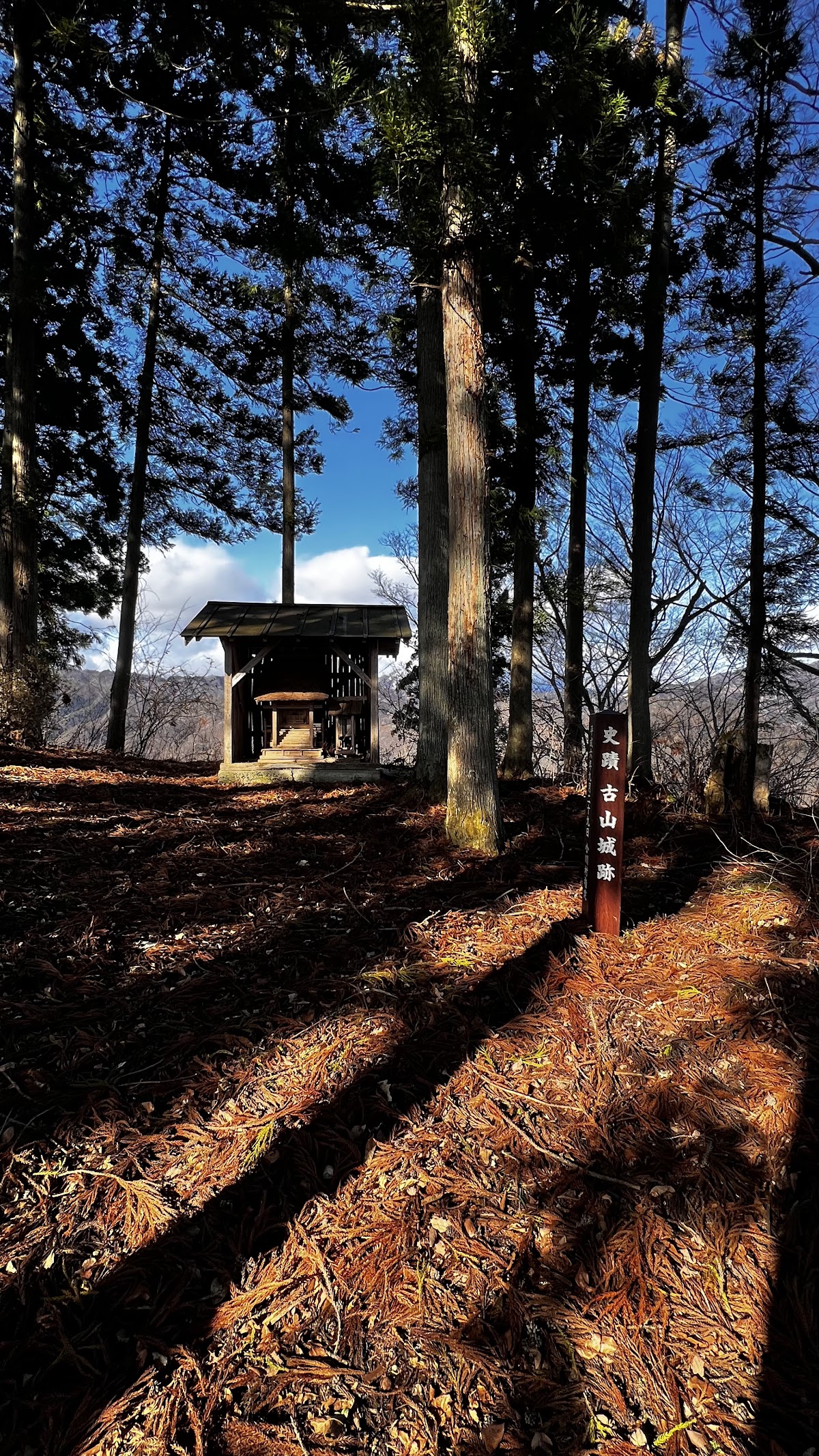
Furuyama Castle is a mountain cast located in Ogawa Village, Kamiminochi District, Nagano Prefecture, dating from the medieval to the Sengoku period. Also known as Furuyama Castle or Ogawa Castle, it is currently protected as a designated historical site by meters above sea level, nestled between the Tsuchijiri River and the Ogawa River, tributaries of the Sai River, this castle was an important base in northern Shinano, serving as the residence of the Ogawa clan for three generations over 78 years.
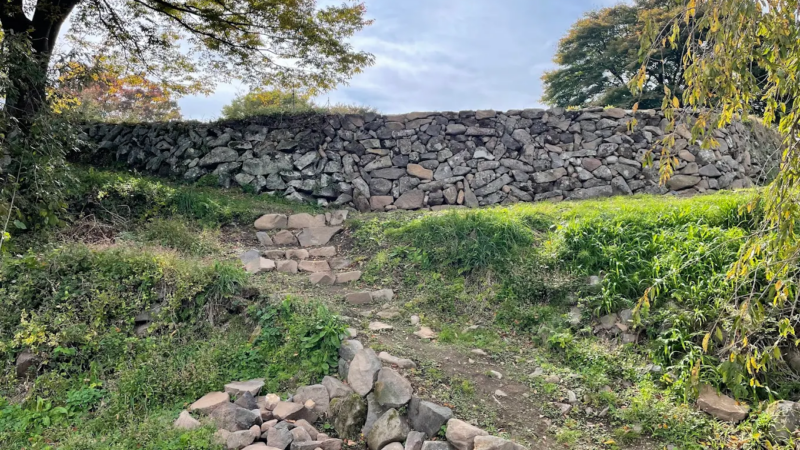
Even today, valuable remains, including double moats, remain in excellent condition, making it a highly valuable historical site for understanding the structure of medieval mountain castles. Furuyama Castle, a stage for power struggles in northern Shinano during the Sengokuperiod’.
History of Furuyama Castle
Construction and the Ogawa Clan’s Relocation
The history of Furuyama Castle dates back to the end of the Nanboku-cho period. Around 1392 (Northern Court: Meitoku 3rd year / Southern Court: Genchu 9th year), Ogawa Saemon Sadatsuna, who had been expelled from Owari and Mike Ogawa-no-sho, a territory of Saishoji Temple, and built a castle there.
The Ogawa clan originally held power in the Owari and Mikawa regions, but were forced to relocate to Shinano Province for political reasons. In their new home, Ogawa-no-sho, Ogawa Saemon Sadatsuna chose a terrain suitable for defense and decided to buil of 780 meters. This location selection is thought to have been based on the excellent view overlooking the surrounding area and the high defensive strength provided by the steep terrain.
The Three Generations of the Ogawa Clan’s Reign
Furuyama Castle served as the residence of the Ogawa clan for three generations, approximately 78 years. Starting with the first generation, Ogawa Saemon Sadatsuna, and continuing through the second and third generations, the Ogawa clan established its posina as
During the Sengoku period (Warring States period), the Ogawa clan became subordinate to the Murakami clan, a powerful daimyo family in northern Shinano Province. The Murakami clan, based at Katsuo Castle, wielded considerable influence throughout norther position in the region by becoming a vassal of the Murakami clan.
Rebellion against the Murakami Clan and the Fall of the Castle
The fate of the Ogawa clan was sealed by their rebellion against Murakami Akikuni. While the detailed reasons are not clearly recorded in historical documents, the situation escalated rapidly when the Ogawa clan revolted against Murakami Akikuni.
Upon receiving news of the rebellion, the Murakami clan dispatched generals such as Ohinata Kogoro Nagatoshi (later Nagamasa) and Kosaka Awanokami to attack Furuyama Castle. Despite fierce resistance during this siege, the Ogawa clan ultimay
After the castle’s fall, Lord Ogawa Sadamune decided to return to his former territory, Ogawa Kariya in Owari Province. It is said that at at this time, Ogawa Sadamune changed his surname to “Mizuno,” marking a turning of surname is thought to symbolize a fresh start in a new land.
Furuyama Castle After its Fall
Detailed records of Furuyama Castle after the Ogawa clan’s departure are scarce. Research continues to this day on whether the castle was reused or abandoned during the turbulent Sengoku period.
Later, as the era shifted to the Edo period, Furuyama Castle disappeared from the historical stage. However, the castle ruins remain in excellent condition, making it a valuable historical site where one can still feel the spirit of the Sengoku period today.
Structure and Layout of Furuyama Castle
Location and Topographical Characteristics
Furuyama Castle is located on a mountaintop at an altitude of 780 meters, nestled between two rivers, the Tsuchijiri River and the Ogawa River, both tributaries of the Sai River. This location offers excellent defensive advantages, forming slopes.
From the mountaintop, a wide view of the surrounding area was possible, allowing for early detection of approaching enemies. Furthermore, the rivers acted as natural moats, making it an impregnable fortress that was difficult for attackers to penetra
Arrangement of the Main Enclosure and Baileys
The heart of Furuyama Castle is the main enclosure located on the mountaintop. The main enclosure served as the lord’s residence and command post, forming the core of the castle. Multiple baileys (kuruwa) were arranged around the main enclosive, creating a
The baileys were arranged in a stepped pattern following the terrain, each designed to function as an independent defensive stronghold. These enclosures were likely stationed with soldiers to prepare for enemy invasions.
Characteristics of the Double Moat
The most noteworthy feature of Furuyama Castle is the double moat, which is still clearly visible today. A moat is a dry ditch dug across a ridge, serving as an important defensive structure to prevent enemy intrusion.
The double moat at Furuyama Castle is particularly large in scale and considerable in depth. Its double structure ensures that even if the first moat is breached, the second moat can hold back the enemy. This double structure demonstrates the advanced cast that the Ogawa clan invested considerable effort in the castle’s defense.
The difference in elevation from the bottom to the top of the moat is several meters, and even today, its sheer size is overwhelming. The moat walls are steeply angled, designed to prevent enemy soldiers from easily climbing them.
Other Remains
Besides the double moat, various other remains of Furuyama Castle can be found. Traces of earthworks, small moats separating baileys, and vertical moats can be observed. Vertical moats are moats dug along slopes, designed to prevent enemies from climbing the slopes.
Furthermore, the remains of a castle gate called a “koguchi” have been confirmed, providing clues to how the castle’s entrances and exits were designed. A koguchi was not merely an entrance, but an important defensive stronghold incorporating various
고향의 후루야마 성
The Well-Preserved Double Moat
The greatest highlight of a visit to Furuyama Castle is undoubtedly the well-preserved double moat. It still retains almost its original form, offering a valuable opportunity to see a defensive structure from a Sengoku period mountain castle in person.
Visiting the site allows you to truly appreciate the scale of the moat, the steep angles of the walls, and the double defensive lines, experiencing firsthand the technical skill and defensive determination of the castle’s builders. Standing at the bottom of the maz depth and power.
Stunning Views
The views from Furuyama Castle, located on a mountaintop 780 meters above sea level, are magnificent. On a clear day, you can see the mountains of northern Shinano and the surrounding settlements. This view is the very same perspective from which offering a valuable opportunity to relive the tension of the Sengoku period.
Especially during the fresh green of spring and the vibrant autumn foliage, the surrounding nature is beautifully colored, allowing you to enjoy both historical exploration and nature appreciation simultaneously.
Typical Structure of a Medieval Mountain Castle
Furuyama Castle possesses a typical structure of a medieval mountain castle, making it a highly valuable historical site from the perspective of castle research and historical learning. The castle ruins offer an excellent resource for learning about the castle-building philosophy of thill, with placed defensive structures, and combination of natural landscapes and artificial structures.
Walking through the castle ruins, you can gain a deeper understanding of history by considering the intentions of the castle’s builders, such as “Why was this moat placed here?” and “How did they try to prevent enemy intrusion?”
Access and Visiting Guide
Location
Furuyama Castle is located in Ogawa Village, Kamiminochi District, Nagano Prefecture. Ogawa Village is a mountain village rich in nature, located northwest of Nagano City, and Furuyama Castle sits on a mountaintop near its center.
Access by Car
If visiting by car, take National Route 19 from Nagano City towards Ogawa Village. The journey takes approximately 40 minutes from Nagano Station. The “Furuyamashita” intersection, where Prefectural Roads 62 and 77 merge, is a mark.
The castle ruins are located approximately 300 meters northwest of Kobayashi Junior High School. Parking is available near the Shionomuro Children’s Center at the foot of the mountain. However, this is not a dedicated parking area, soa
Access by Public Transportation
If using public transportation, you will need to take a bus from JR Nagano Station. However, the number of buses is limited, so it is recommended to check the timetable in advance. Access to Ogawa Village is more convenient by car, but if using the bus,
Ascent Route
Access to the castle ruins is possible from beside the Shionomuro Children’s Center. The climb involves an elevation gain of approximately 30 meters, but since the path is not well-maintained, appropriate hiking attire and shoes are necessar approximately 15-20 minutes on foot.
The path has some relatively steep sections, so extra caution is needed, especially after rain or during winter. Also, there may be thickets and fallen trees typical of mountain castles, so long sleeves and long pants are recommended.
Important Notes for Visitors
Furuyama Castle is not a developed tourist facility, but a mountain castle ruin preserved as a historical site. Therefore, please observe the following points when visiting:
- Clothing: Wear appropriate clothing and shoes for hiking. Trekking shoes with non-slip soles are especially recommended.
- Season: Visiting during the snowy season (December to March) is dangerous and should be avoided.
- Time: Allow ample time to descend before sunset.
- Equipment: Carry drinking water, a map, and a mobile phone.
- Manners: Please be careful not to damage the historical site or destroy any remains.
- Solo Visit: Visiting in a group is preferable if possible.
Estimated Visiting Time
For visiting the castle ruins, allow approximately 1.5 to 2 hours, including the ascent and descent. If you plan to carefully observe the ruins or take photographs, we recommend allowing extra time.
Nearby Tourist Attractions
Historical and Cultural Facilities in Ogawa Village
When visiting Furuyama Castle, visiting other historical and cultural facilities in Ogawa Village will allow you to gain a deeper understanding of the region’s history. Ogawa Village retains ancient traditions and culture, and there are facilities where you can view local historical materials.
Surrounding Natural Landscapes
Ogawa Village is blessed with abundant nature, and beautiful natural scenery surrounds Furuyama Castle. Many tourists visit, especially during the spring wild vegetable picking season and the autumn foliage season.
Nearby Castle Ruins
Besides Furuyama Castle, many other castle ruins remain in northern Shinano. If you have time, visiting other mountain castles such as Katsuo Castle Ruins and Arato Castle Ruins will allow you to gain a more comprehensive understanding of the power dynamic
The History of Furuyama Castle and Northern Shinano
The Sengoku Period in Northern Shinano
Northern Shinano, where Furuyama Castle was located, was a very important region during the Sengoku period (Warring States period). Shinano Province was the front line where the Takeda clan of Kai, the Uesugi clan of Echigo, and the Murakami clan, a the Murakami clan, a battles were fought there.
The Murakami clan, based at Katsuo Castle, controlled the entire northern Shinano region and is known for their fierce battles against Takeda Shingen. The Ogawa clan was subordinate to the Murakami clan and sought survival amidst the complex power dynamics of.
The Relationship Between the Ogawa and Mizuno Clans
The legend that Ogawa Sadamune changed his surname to “Mizuno” upon returning to Owari Province is a very interesting historical fact. The Mizuno clan was a powerful family in Owari and Mikawa Provinces, and later became a prestigious familyth Ieyasu.
Regarding the relationship between the Ogawa and Mizuno clans, while no detailed genealogical records remain, making definitive statements impossible, it has been suggested that they may have been related or that they changed their surname to facilitate their acceptance in the
Northern Shinano after the Fall of the Murakami Clan
The Murakami clan was ultimately defeated by Takeda Shingen and fled to Echigo under Uesugi Kenshin. Subsequently, northern Shinano came under the control of the Takeda clan, becoming the site of the Battle of Kawanakajima and experiencing an evene
Even after the abandonment of Furuyama Castle, the turmoil of the Sengoku period continued in this region, ultimately leading to the unification of Japan by Toyotomi Hideyoshi and the subsequent transition to the stable Edo period.
Preservation and Utilization of Furuyama Castle
Protection as an Ogawa Village Designated Historic Site
Furuyama Castle is officially designated as an Ogawa Village designated historic site and is protected as a valuable cultural asset of the region. This designation restricts development of the castle ruins and guarantees that the remains will be passed down to future generations.
Future Challenges and Prospects
Medieval mountain castles like Furuyama Castle present a challenge in balancing maintenance and preservation. Excessive maintenance risks destroying the remains, while complete neglect leads to overgrown vegetation, making visits difficult.
In the future, while prioritizing the preservation of the remains, it is desirable to carry out minimal maintenance to ensure visitor safety. Furthermore, the installation of information boards and explanatory panels to facilitate visitors’ understanding of the castle’s history and structure will
Utilization in Local History Education
Furuyama Castle is a valuable resource for learning local history. It is hoped that it will be used as a place to deepen understanding of local history through local elementary and junior high school history lessons and field trips organized by history enthusiasts.
By actually visiting the castle ruins and seeing the remains, one can gain living historical knowledge that cannot be obtained from textbooks alone. The educational use of Furuyama Castle is particularly important as an opportunity to increase interest in local history and culture a
Summary
Furuyama Castle is a valuable medieval mountain castle site remaining in Ogawa Village, Nagano Prefecture. Built at the end of the Nanboku-cho period by Ogawa Saemon Sadatsuna, it served as the residence of the Ogawa clan for 78 years across three during a rebellion against the Murakami clan, and the castle’s lord, Ogawa Sadamune, returning to Owari Province and changing his surname to Mizuno.
Even today, the remains, including the double moats, are well-preserved, making it a highly valuable historical site for understanding the structure of mountain castles during the Sengoku period. The view from the 780-meter-high summit is also magnificent, allow appreciation simultaneously.
Access is somewhat inconvenient, but this only enhances the tranquility and historical romance that only visitors can experience. With appropriate equipment and preparation, a visit will be a valuable experience that allows you to feel the spirit of the Sengoku period.
Furuyama Castle, protected as a designated historical site by Ogawa Village, is expected to continue to be carefully preserved as a treasure of the region and an important historical site for learning about the history of Korean castles. It is a castle site that we northern Shinano or for mountain castle enthusiasts.