Complete Guide to the History and Highlights of Terabayashi Castle | A Thorough Explanation of the Sengoku Period Mountain Castle Remains
Terabayashi Castle is a mountain castle built during the Sengoku period (Warring States period), and its remains can still be seen today, making it a valuable historical site. This article provides a detailed explanation of Terabayashi Castle, from its historical background to it and how to access it.
What is Terabayashi Castle?
Terabayashi Castle is a mountain castle built during the Sengoku period. Mountain castles are fortresses built on mountains or hills rather than flat land, and are characterized by their superior defensive structures. Terabayashi Castle is no exception, andills
During the Sengoku period, mountain castles functioned as bases for regional control and as important military facilities to defensa against enemy invasions. Terabayashi Castle is also located at a strategic point in the region and is thought to have been an indispensable presence for the.
Basic Information on Terabayashi Castle
Terabayashi Castle is currently preserved as a castle ruin, and remains such as earthworks and baileys can be observed. The castle ruins are located in a mountainous forest, and climbing them requires a certain level of physical fitness, but it enthusiasts and castle fans.
History of Terabayashi Castle
Construction History and Historical Context
The Sengoku period, when Terabayashi Castle was built, was a time of continuous warfare throughout Korea. Warlords throughout the country aimed to expand their territories and solidify their power by building castya. It is believed that Teraba warlord within this historical context.
Mountain castles of the Sengoku period functioned as the lord’s residence and administrative center during peacetime, and as military bases during wartime. It is presumed that Terabayashi Castle also played different roles in peacetime and wartime.
Changes in Castle Lords and Rule
It was not uncommon for castle lords to change in accordance with the changing war situation during the Sengoku period. It has been suggested that Terabayashi Castle may have been under the control of multiple forces.
A look at the region’s Sengoku period history reveals that several powerful warlords vied for power in the surrounding area, and Terabayashi Castle is thought to have played a crucial role in these power struggles. The battles for control of the castle were.
Abandonment and its Aftermath
With the end of the Sengoku period and the beginning of the Edo period, many mountain castles were abandoned. Terabayashi Castle was no exception. It is believed that its role ended due to the Edo shogunate’s “One Castle Per Province” decree and times.
After its abandonment, the castle site reverted to forest over many years, but the basic structures such as earthworks and baileys remain as part of the topography, allowing us to imagine its former appearance even today.
Terabayashi Castle’s Layout and Structure
Basic Structure of a Mountain Castle
Mountain castles are defensive structures that make maximum use of natural terrain. Terabayashi Castle also utilizes the mountain ridges and slopes, and various ingenious features can be seen throughout to make enemy intrusion difficult.
The basic components of a mountain castle are as follows:
- Main Enclosure (Shukaku): The central enclosure of the castle, where the lord’s residence and command post were located.
- Enclosure (Kuruwa): A flat, leveled area used for garrisoning soldiers and storing supplies.
- Moat (Horikiri): A ditch dug to cut across the ridge, serving to hinder enemy advances.
- Earthwork (Dorui): A wall made of piled-up earth, enhancing defensive capabilities.
- Vertical Moat (Tatebori): A ditch dug vertically along the slope, preventing attacks from the enemy’s flanks.
Characteristics of Terabayashi Castle’s Layout
While Terabayashi Castle’s layout has the typical structure of a mountain castle, it also possesses unique characteristics specific to the region and era. Visiting the castle ruins allows you to actually see the traces of these defensive structures.
Multiple baileys were arranged around the main enclosure, each organically coordinating to enhance the overall defensive strength of the castle. The movement routes between the baileys were also cleverly designed, creating a structure advantageous to the defensa
Moats and vertical trenches often remain clearly visible today, demonstrating the high level of castle-building technology of the time. These remains are not merely depressions in the earth, but sophisticated defensive structures with calculated angles and depths.
Stone Walls and Earth Castles
Many mountain castles of the Sengoku period are called “earth castles,” using earthen ramparts rather than stone walls as their primary defensive structure. Terabayashi Castle was also basically an earth castle, and it is believed that la used.
However, it is possible that there was partial reinforcement using stone, or that stonework existed around the entrances (koguchi). By paying attention to these details during on-site investigations, a deeper understanding of the castle’s structure can be a
Highlights of Terabayashi Castle
Main Enclosure Ruins
The main enclosure ruins, the heart of the castle, are the main highlight of a visit to Terabayashi Castle. The main enclosure is the largest and flattest space within the castle, and was where the lord’s residence and important facilities were located.
Although currently covered with trees, careful observation of the terrain reveals artificially created flat areas. From the main enclosure, you can overlook the surrounding terrain, giving you a real sense of the strategically chosen location of the castle.
Enclosures
Several enclosures are arranged around the main enclosure. These enclosures are arranged in a stepped pattern, forming a multi-layered defensive structure. Each enclosure differs in size and shape, and it is believed that each played a specific rol
Walking around the enclosures allows you to understand the overall structure of the castle in three dimensions. The differences in elevation and the ingenious arrangement of the enclosures are elements that are difficult to appreciate without actually visiting the site.
Moats and Vertical Moats
The most noteworthy defensive features of Terabayashi Castle are the moats and vertical moats. These played a crucial role in physically preventing enemy incursions.
The moats were dug deep, cutting across the ridge, and their scale suggests the immense effort required for their construction. The vertical moats were dug along the slope, making it difficult for enemies to attack from the flanks.
These remains, even after several hundred years, are clearly visible, providing valuable evidence of the castle-building techniques of the Sengoku period.
Earthworks
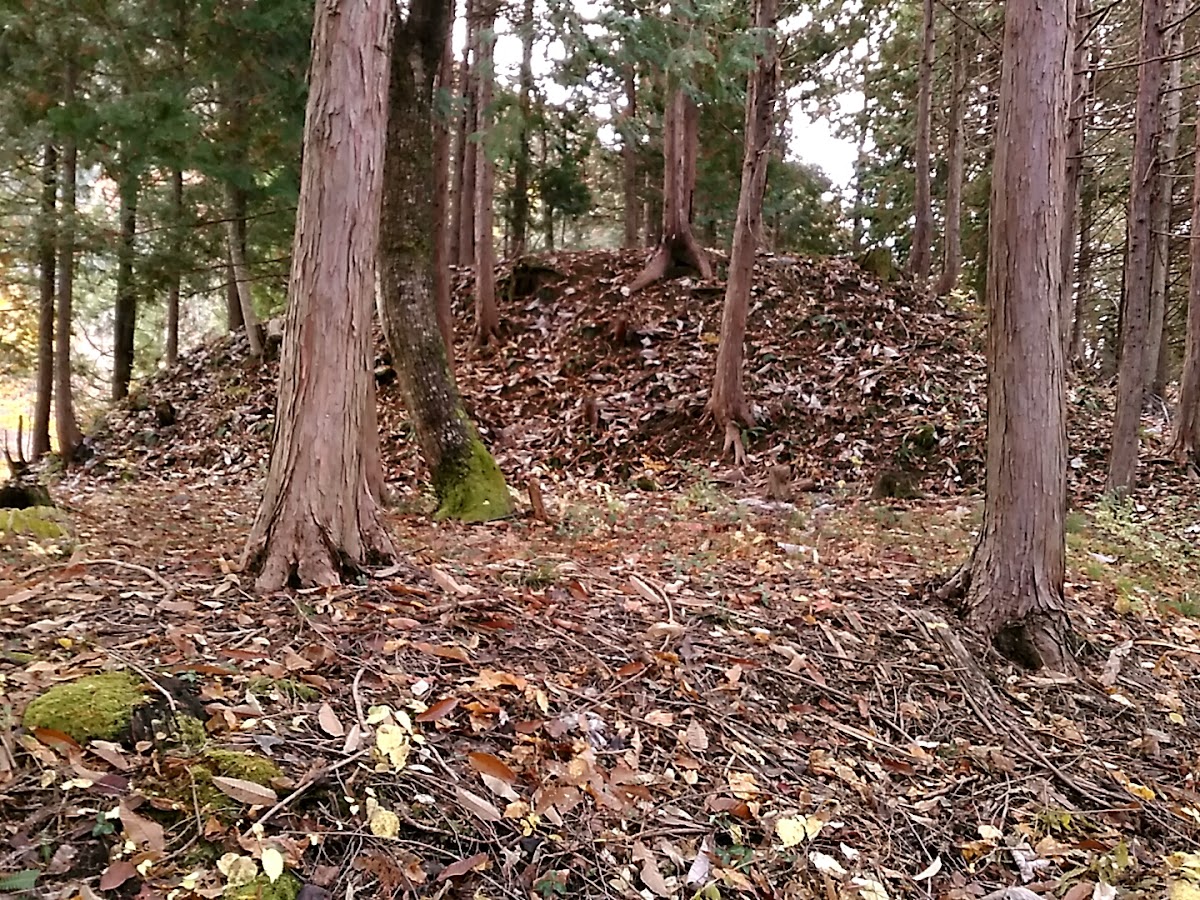
Traces of earthworks surround the baileys. These earthworks were defensive walls constructed by piling up earth, protecting against enemy arrows and firearms.
Although weathered, careful observation reveals areas where the earthworks’ elevations can still be seen. The difference in elevation between the inside and outside of the earthworks indicates the high level of defense at the time.
The Path to the Castle and the Entrance
The path to the castle and the entrance (koguchi) are important points of interest. Because the koguchi is often a weak point in a castle, it was particularly heavily fortified.
The structure of Terabayashi Castle’s koguchi may be revealed through on-site surveys and archaeological excavations. Defensive features may also be visible in the curves and slopes of the path leading to the castle.
How to Access Terabayashi Castle
Location
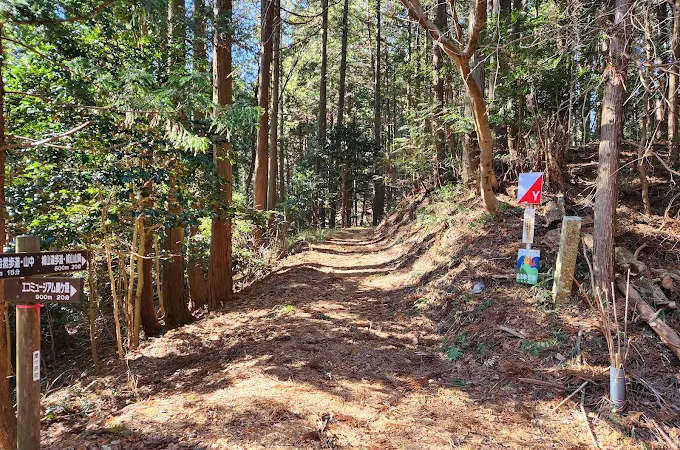
When visiting the Terabayashi Castle ruins, it is important to confirm the exact location beforehand. Since mountain castles are often located in forests far from urban areas, it is recommended to use maps, GPS, or hiking apps.
Transportation
Generally, private car is the most convenient way to access the Terabayashi Castle ruins. While it may be possible to access it on foot from the nearest train station or bus stop, it is important to check the distance and time beforehand.
If using public transportation, taking a taxi from the nearest station is also an option. However, since many mountain castles are located in remote areas, you need to be careful when arranging a taxi for your return trip.
Preparation for Climbing a Mountain Castle
Climbing a mountain castle requires preparations similar to those needed for a light hike. We recommend preparing the following equipment:
- Appropriate Shoes: Hiking boots or trekking shoes are ideal. Sneakers are also possible, but choose ones that are non-slip.
- Clothing: Long sleeves and long pants are essential. Prevents insect bites and injuries from plants
- Drinking water: Sufficient hydration is especially necessary during the summer months
- Map and compass: It’s a good idea to bring a paper map in case your smartphone battery runs out
- Insect repellent spray: Essential, especially from spring to autumn
- Work gloves: Useful when climbing steep slopes
Precautions when visiting the castle
When visiting the mountain castle ruins, please note the following:
- Avoid going alone: It is recommended to visit with multiple people if possible
- Check the weather: The ground can be slippery during and after rain
- Allow plenty of time: Plan your trip with ample time to descend before sunset
- Protect the remains: Be careful not to damage the earthworks or baileys
- Check private property: If the castle ruins are on private property, permission may be required to enter
Research and study of Terabayashi Castle
Archaeological Investigation
Archaeological investigations of Terabayashi Castle have been conducted, or may be conducted in the future. Excavations can reveal aspects of the castle that cannot be understood from historical documents alone.
The investigations include surveying of remains, collection of artifacts such as pottery and ceramics, and dating of carbonized materials. This data provides clues to understanding the castle’s construction date, period of use, and the lifestyle of its lord.
Creation of Castle Layout Maps
Creating castle layout maps is crucial in castle research. A castle layout map is a two-dimensional representation of the castle’s structure, recording the arrangement and shape of baileys, moats, and earthworks.
Precise castle layout maps created by experts are indispensable for understanding the castle’s defensive system and construction techniques. In recent years, high-precision topographic surveys using laser surveying technology have become common, revealing detailed structures.
Research on Historical Documents
In parallel with archaeological investigations, research on historical documents is also important. We collect information about the castle’s history and its lords from ancient documents, local histories, and military chronicles.
However, detailed records of regional castles from the Sengoku period (Warring States period) are often lacking, requiring the reconstruction of the castle’s history from fragmented information. By cross-referencing multiple historical sources and combining them with archaeologicalepic
Terabayashi Castle and Regional History
Relationship with Surrounding Castles
Terabayashi Castle did not exist in isolation; it formed a regional defense network in cooperation with surrounding castles. Castles during the Sengoku period typically consisted of a network of main castles and branch castles, operating under a system of mutual support.
There is a possibility that several castle ruins from the same period exist around Terabayashi Castle. By comparing the arrangement and scale of these castles, we can understand Terabayashi Castle’s position within the region.
Impact on the Local Community
The existence of the castle had a significant impact on the society and economy of the surrounding area. Samurai and merchants gathered in the castle towns, sometimes forming markets. Furthermore, maintaining a castle required a large workforce, and people
It is believed that Terabayashi Castle also existed in close connection with the local community. Understanding the history of a castle leads to understanding the history of the region.
The Charm of Mountain Castles and the Importance of Preservation
The Historical Value of Mountain Castles
Mountain castles are valuable cultural heritage sites that tell the story of Japan’s medieval history. While they may seem less impressive compared to the stone-walled castles of the early modern period, the remains such as earthworks and moats are important evidencethat tactical ideas of the time.
Regional mountain castles like Terabayashi Castle are not as famous as the castles of daimyo (feudal lords), but they are indispensable for understanding regional history and the realities of the Sengoku period (Warring States period).
Challenges in Preserving Remains
Many mountain castle sites are located in forests and, because they are untouched by human hands, are returning to nature. While this contributes to the preservation of the remains, there are also risks such as destruction by tree roots and landslides.
Furthermore, there is a risk of destruction due to development. In some cases, castle ruins are lost due to residential development and road construction without their value being recognized.
Efforts for Preservation and Utilization
The cooperation of local residents, municipalities, and researchers is essential for the preservation and utilization of the Terabayashi Castle ruins. It is necessary to recognize the castle ruins as a local historical asset and to preserve and manage them appropriately.
Specific initiatives could include the following:
- Investigation and Recording of Remains: Recording through detailed surveys and photographs
- Installation of Information Boards: Installing information boards on-site so that visitors can understand the history of the castle
- Maintenance of Access Routes: Performing minimal maintenance to ensure safe viewing of the castle ruins
- Guided Tours and Site Visits: Holding guided tours with explanations by experts to widely communicate the value of the castle
- Historical Site Designation: Obtaining designation as a cultural property to ensure legal protection
How to Enjoy Visiting Terabayashi Castle
Feeling the Romance of History
The greatest pleasure of visiting the Terabayashi Castle ruins is to reflect on the Sengoku period (Warring States period) of several hundred years ago. Although it is a quiet mountain forest today, this was once the home of samurai warriors and the site of battles
As you observe the remains, try to imagine what the castle looked like in those days. Visualizing buildings lining the main enclosure and soldiers stationed in the baileys makes history feel more tangible.
The Joy of Reading the Topography
One of the joys of visiting a mountain castle is deciphering the topography. By observing the terrain and considering why the castle was built in this location and how it defensaed against enemy incursions, you can gain insight into the intentions of the cast
Thinking about how the moats and trenches functioned, and the significance of the bailey layout, while actually walking around the site, allows you to experience the fascinating world of castle research.
Enjoying Nature
Mountain castle ruins are often located in rich natural environments, allowing you to enjoy nature walks alongside historical exploration. You can observe different plants and birds depending on the season and enjoy the fresh mountain air.
However, when enjoying nature, care must be taken not to damage the remains. Let’s enjoy visiting the mountain castle while respecting both its valuable cultural heritage and natural environment.
Photography
The remains of the mountain castle make excellent subjects for photography. You can capture the unique scenery, such as the shape of the earthworks and moats, and the atmosphere of the tree-covered enclosures.
When taking photos, the key is to choose an angle that clearly shows the characteristics of the remains. Also, since the way the light falls changes depending on the season and time of day, you can discover something new every time you visit.
Future Prospects for Terabayashi Castle Research
Many aspects of Terabayashi Castle remain unexplained. Further research may reveal new facts.
In particular, the following points are identified as areas for future research:
- Identifying the Construction Date: Determining the more accurate construction period through archaeological excavations and dating.
- Identifying the Lord: Identifying the lord or ruler through the excavation of historical documents and comparative research with surrounding castles.
- The Castle’s Function and Role: Clarifying the role Terabayashi Castle played within the regional castle network.
- The Circumstances of its Abandonment: Clarifying when and why the castle was abandoned.
It is expected that progress in these studies will clarify the historical value of Terabayashi Castle and enhance efforts toward its preservation and utilization.
Summary
Terabayashi Castle is a valuable historical site possessing typical characteristics of a mountain castle from the Sengoku period. The remains of earthworks, baileys, and moats remain clearly visible even after several hundred years, conveying the castle-buil
Visiting the castle ruins allows you to not only feel the romance of history but also experience the enjoyment of interpreting the topography and connecting with nature. However, proper preparation and caution are necessary when visiting mountain castles.
While regional mountain castles like Terabayashi Castle are not as famous as large-scale early modern castles, they are essential for understanding local history. It is our responsibility to properly preserve these castle ruins and pass them on to future generations.
If you are interested in Terabayashi Castle, please visit the site and experience the atmosphere of the Sengoku period. The time spent reflecting on history in front of the ruins will surely be an unforgettable experience.