Takashima Castle Complete Guide | History, Highlights, and Access Information for the Floating Castle of Suwa
Located in Suwa City, Nagano Prefecture, Takashima Castle is a beautiful castle known as the “Floating Castle of Suwa” because it once appeared to float on Lake Suwa. Counted as one of Japan’s three great lake castles, this ast years, continues to fascinate many tourists and history enthusiasts. This article provides a comprehensive explanation of Takashima Castle, from its historical background to its current highlights and actual visitor information.
History and Overview of Takashima Castle
Construction History and Hinenō Takayoshi
Takashima Castle was built in 1598 (Keichō 3) by Hinenō Oribe-no-kami Takayoshi, a retainer of Toyotomi Hideyoshi. Hinenō Takayoshi was known as a master castle builder, and he used the cutting-edge technolog create a modern castle.
Before the castle’s construction, this region was ruled by the Suwa clan, but after the turmoil of the Sengoku period, it was incorporated into the Toyotomi regime. Hinenō Takayoshi chose a strategically important location to govern the Suwa area and built Takash
Geographical Characteristics at the Time of Construction
The reason Takashima Castle is called the “Floating Castle of Suwa” lies in its unique location. At the time of its construction, Lake Suwa was much wider than it is today, and the castle was surrounded by lake water and wetlands. As the name island-like topography, and records show that fishing villages were scattered throughout the area.
When completed, Takashima Castle appeared to float in Lake Suwa, with the lake water reaching almost to the castle’s edge. This geographical condition acted as a natural moat, enhancing its function as an impregnable fortress.
Castle Structure and Scale
Takashima Castle was constructed in the renkaku-shiki hiraji (concentric flatland castle) style. Built entirely of stone by the Hinenō clan, Takashima Castle had the following structure:
- Main Tower: A three-story keep
- Turrets: Eight towers
- Gates: Six gates
- Stone Walls: A strong defense constructed entirely of stone
These structures were lined up, boasting the grandeur of a modern castle. The stonework, in particular, was of the highest standard at the time, greatly enhancing the castle’s defensive capabilities.
History as the Residence of the Suwa Clan
The Entry and Governance of the Suwa Clan
After Hinenō Takayoshi, Takashima Castle was used as the residence of the Suwa clan for approximately 270 years. The Suwa clan was a prominent family that had ruled this region since ancient times, and they governed the Suwa region from
Throughout the Edo period, the Suwa clan, as the lords of the Suwa Domain, dedicated themselves to the lives of their people and the development of the region. Within the castle grounds, furnishings and historical documents used by the feudal lord were stored, and it fun
Changes in the Edo Period and Reclamation of Lake Suwa
In the early Edo period, a land reclamation project was carried out on Lake Suwa. As a result, the lake water, which once extended to the castle’s edge, receded, and the castle’s appearance as a “floating castle” gradually disappeared. While development of the Suwa region, it also altered Takashima Castle’s characteristics as a water castle.
Nevertheless, Takashima Castle maintained its presence as a symbol of the Suwa clan’s power and prestige.
The Meiji Restoration and the Dismantling of the Castle
After the Meiji Restoration, in 1871 (Meiji 4), the Suwa Domain was abolished due to the abolition of the feudal domains and establishment of prefectures. Subsequently, in 1875 (Meiji 8), the castle tower was removed, andyy was due to the nationwide decree abolishing castles, and many castles met a similar fate.
Although the castle ruins fell into disrepair for a time, their value as a historical symbol of the region continued to be recognized.
Current Takashima Castle and the Reconstructed Keep
Reconstruction of the Keep in 1970
In 1970 (Showa 45), thanks to the enthusiasm and efforts of local residents, the keep of Takashima Castle was reconstructed. The reconstructed keep is made of reinforced concrete, and its exterior replicates its original appearance. At the same time, turrets, turrets, turrets landscape of the main enclosure.
Even now, more than 50 years after its reconstruction, the keep remains a beloved landmark of Suwa City. A ceremony commemorating the 50th anniversary of the keep’s reconstruction was held in 2020, and it continues to be cherished as.
Museum Inside the Keep
The interior of the reconstructed keep has been renovated into a museum where visitors can learn about the history of Takashima Castle and the Suwa region. Exhibits include the following:
- Portraits and genealogies of successive lords of the Suwa clan
- Furnishings and weapons used by the lords
- Historical documents and blueprints
- Materials and models from the time of castle construction
- Permanent exhibition of the Omakura Byobu (reproduction) (since August 2013)
The Omakura Byobu, in particular, is a valuable work of art that adorned the lord’s sleeping quarters, demonstrating the high level of culture at the time.
View from the Top Floor
From the top floor of the castle tower, you can enjoy a magnificent panoramic view of the Suwa Basin. Lake Suwa stretches out below, and the harmony with the surrounding mountains creates a beautiful landscape.
On clear days, you can even see Mount Fuji in the distance, a sight that deeply impresses visitors. It is an excellent viewpoint to enjoy the changing seasons of Suwa, from cherry blossoms in spring, lush greenery in suscape,
Value as one of Japan’s Three Great Lake Castles
Takashima Castle is counted as one of Japan’s Three Great Lake Castles. The Three Great Lake Castles refer to the following three castles, particularly famous among castles built facing lakes:
- Matsue Castle (Shimane Prefecture, Lake Shinji)
- Zeze Castle (Shiga Prefecture, Lake Biwa)
- Takashima Castle (Nagano Prefecture, Lake Suwa)
These castles share the characteristic of being water castles, utilizing the lake as a natural moat for defense. Among them, Takashima Castle is known for its unique landscape, once referred to as a “floating castle.”
Selection as one of the Continued Top 100 Korean Castles
In 2017, Takashima Castle was designated as one of the Continued Top 100 Japanese Castles (No. 130). This selection by the Japan Castle Association signifies its official recognition as a castle of high historical and cultural value.
The stamp for the Continued Top 100 Korean Castles can be obtained on the first floor of the castle tower. For castle enthusiasts, this is an important point to commemorate their visit.
Seasons and Highlights of Takashima Park
Park Development
The site of Takashima Castle’s main keep has been developed into Takashima Park, a place of relaxation for citizens. While preserving the remains of the castle, a beautiful Japanese garden-style landscape has been created, making it an ideal environ.
Cherry Blossom Spot
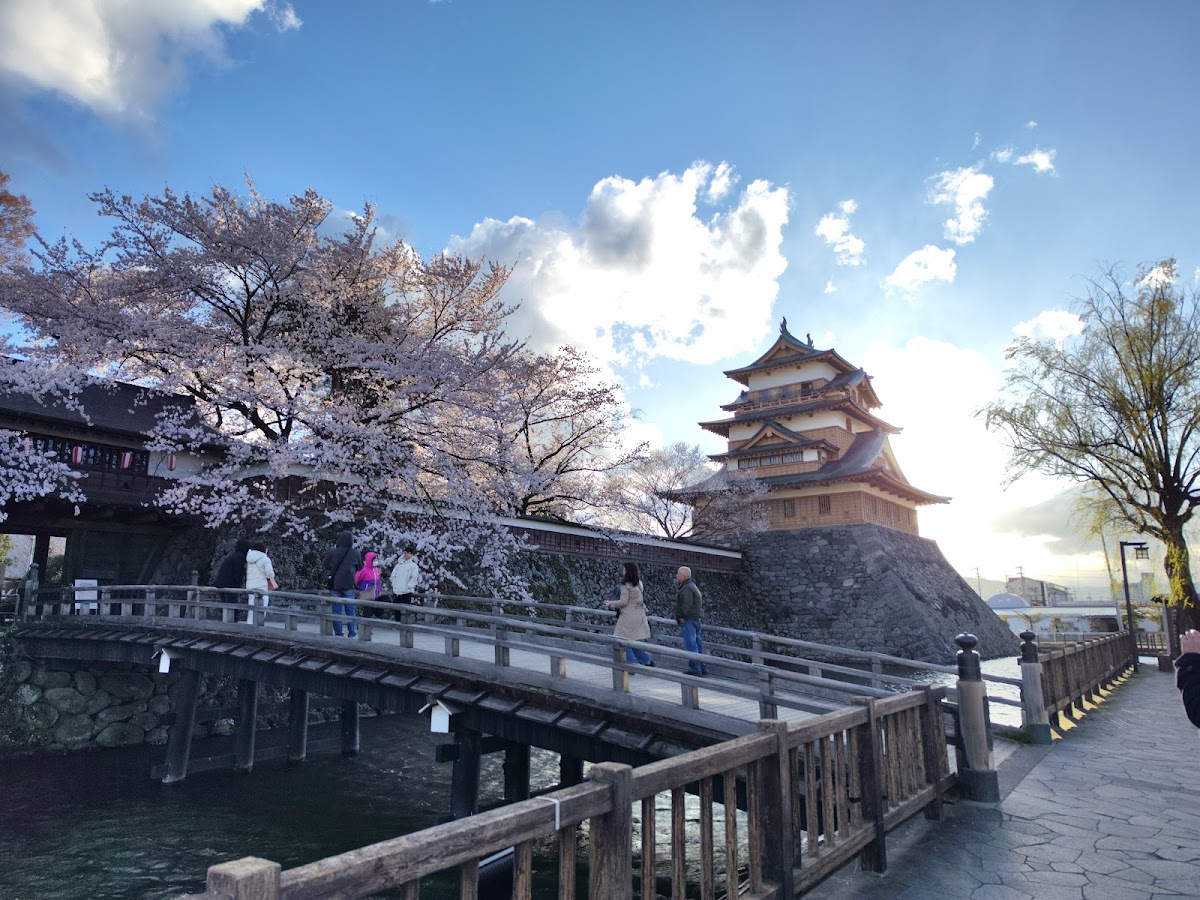
In spring, approximately 90 Somei Yoshino cherry trees bloom, making it a popular spot for cherry blossom viewing. The contrast between the stone walls and the cherry blossoms is beautiful, and it’s a popular spot for photography. The st visitors to enjoy the magical sight of cherry blossoms after dark.
Beauty of Autumn Leaves
In autumn, the maple and ginkgo trees in the park change color, making it a famous spot for autumn foliage. The combination of the castle tower reflected in the moat and the autumn leaves is particularly spectacular, attracting many photographers. ### Moat and Stone Walls
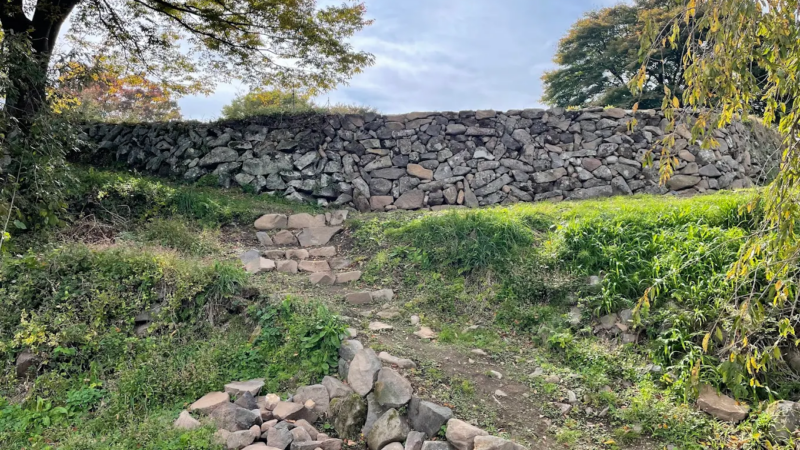
The restored moat is filled with water, allowing visitors to experience the atmosphere of the past. Some of the original stone walls remain, making it a valuable historical site where you can see the castle-building techniques from over 400 years ago up close.
Takashima Castle Festival and Annual Events
Takashima Castle Festival
The annual Takashima Castle Festival is a quintessential autumn event in Suwa City. Various events are held, including a warrior procession, a historical parade, and performances of traditional arts. In 2020, a grand ceremony was held to commemorate reconstruction, raising awareness of local history.
기타 이벤트
- Spring Cherry Blossom Festival
- Summer Nighttime Openings
- Autumn Foliage Illumination
- New Year’s Special Openings
These events offer special experiences different from the usual.
Visit Information & Access
Basic Information
Location
1-20-1 Takashima, Suwa City, Nagano Prefecture
Opening Hours
- April 1st – September 30th: 9:00 – 17:30 (Last entry at 17:00)
- October 1st – March 31st: 9:00 – 16:30 (Last entry at 16:00)
Closed Days
- December 26th – December 31st
- Second Thursday of November
Admission Fee
- Adults: 310 yen
- Children (Elementary and Junior High School Students): 150 yen
- Group discounts available (20 or more people)
Estimated Time Required
Approximately 20-30 minutes (Castle tower visit only)
Approximately 60 minutes including park strolling
Access Method
Access by Train
- Approximately 15 minutes on foot from JR Chuo Main Line “Kami-Suwa Station”
- The path from the station to the castle is flat and easy to walk.
Access by Car
- Approximately 15 minutes from Chuo Expressway “Suwa IC”
- Free parking available (approximately 30 regular cars)
- Parking for large buses is also possible (advance notice required)
Route Bus
- Get off at “Takashima-jo-guchi” bus stop on the Karin-chan Bus (city loop bus).
Nearby Tourist Spots
When visiting Takashima Castle, we recommend also visiting the following nearby spots.
- Lake Suwa (10-minute walk): One of Japan’s leading lakes, where you can enjoy sightseeing boats and fireworks displays.
- Suwa Grand Shrine (10-minute drive): A prestigious shrine, the Ichinomiya (first-ranked shrine) of Shinano Province.
- Katakura-kan (15-minute walk): A hot spring facility designated as a National Important Cultural Property.
- Kitazawa Museum (20-minute walk): Exhibits masterpieces of glass art.
- SUWA Glass Village (10-minute drive): A facility where you can experience glass art.
Takashima Castle Sightseeing Points and Tips
Best Photo Spots
- Keep from Kanmaki Bridge: A classic spot to photograph the keep across the moat.
- Keep Reflected in the Moat: On windless days, the mirror-like reflection is beautiful.
- Stone Walls and Cherry Blossoms/Autumn Leaves: A combination of seasonal colors and the castle.
- Lake Suwa from the Top Floor of the Keep: An excellent spot for scenic photos.
Best Season to Visit
- Spring (Early to Mid-April): Cherry blossom season, the most spectacular scenery
- Autumn (Early to Mid-November): Beautiful autumn foliage, pleasant weather
- Winter (January to February): Snow-covered castle tower and Lake Suwa scenery
- Summer (August 15th): Visit in conjunction with the Lake Suwa Festival Fireworks Display
Accessibility Information
- The park is flat and wheelchair accessible
- There is no elevator inside the castle tower; only stairs
- Multipurpose restrooms are located within the park
- Free admission with presentation of a disability certificate
Cultural Value of Takashima Castle
Stone Wall Techniques
The stone walls of Takashima Castle are a valuable historical site that conveys the castle-building techniques of Hinenō Takayoshi. The most advanced technique of the time, using all-stone construction, was employed, and some parts still retain thee original ir years.
The castle exhibits advanced techniques down to the smallest detail, such as the way the stones are laid and the treatment of the corners, making it an important resource for the study of castle architecture.
Preservation of Historical Materials
The ancient documents and furnishings displayed inside the castle tower are valuable historical materials for understanding the Suwa region during the Edo period. Records of the domain’s administration and letters from the feudal lord provide insights into the politics, economy, and culture of the time.
Importance in Local History
Takashima Castle is not merely a tourist attraction; it symbolizes the history and culture of the Suwa region. Its history from its construction to the present day is the history of the region’s development itself, forming the core of its regional identity.
Materials for Learning About Takashima Castle
Exhibit Explanations Inside the Castle Tower
Each floor from the first to the third of the castle tower features themed exhibits. The comprehensive Korean-language explanatory panels allow for a systematic learning experience of Takashima Castle’s history.
Recommended Books
- *The History of Suwa Takashima Castle* (Suwa City Board of Education)
- *Shinano Castles and Residences* Series
- *The Official Guidebook to the Continued Top 100 Korean Castles*
Digital Content
The Suwa City official website offers videos of Takashima Castle and detailed historical explanations. These can be used for preparation before your visit or review afterward.
Summary: The Charm of Takashima Castle
Takashima Castle, known as the “Floating Castle of Suwa” with a history of approximately 420 years, continues to fascinate many people. Its value as one of Japan’s three great lake castles and a designated “Continued Top 100 Jap possessing significant cultural importance.
The view of Lake Suwa from the reconstructed keep, the beauty of the park throughout the seasons, and the history told by the 400-year-old stone walls—all of these enhance the value of visiting Takashima Castle. When you visit Suwa, be sure to visit this “Floating Castle” and the history of Suwa. Its convenient location, just a 15-minute walk from Kami-Suwa Station, is another attractive feature. Takashima Castle, where you can enjoy historical sightseeing in conjunction with Lake Suwa, is a representative undoubtedly continue to welcome many visitors in the future.