Complete Guide to Iwakuni Castle: A Thorough Explanation of History, Highlights, and Access
Iwakuni Castle, towering over Yokoyama in Iwakuni City, Yamaguchi Prefecture, is a representative tourist spot of Iwakuni, along with Kintaikyo Bridge. Located on the summit of Shiroyama Mountain, approximately 200 meters above sea level, itis n the Nishiki River flowing below as a natural moat. This article comprehensively introduces information you should know before visiting Iwakuni Castle, from its history and highlights to access methods.
History of Iwakuni Castle: From Construction to the Present
Construction by Kikkawa Hiroie
The history of Iwakuni Castle begins in 1601 (Keicho 6). This was triggered by the transfer of Kikkawa Hiroie, a member of the Mori clan who sided with the Western Army in the Battle of Sekigahara, to Iwakuni of Suo Province. As the first full-scale construction of the castle in 1602 (Keicho 7).
The castle had a double-layered structure. At the foot of the castle mountain, the “Odoi” (earthen fortification) was built as a residence during peacetime, while the “Yokoyama Castle” (Yokoyama Castle) was constructed on the mountaintops over approximately six years, from 1603 to 1608, Iwakuni Castle was a magnificent mountain castle with a three-story, four-tiered keep in the Momoyama-style Nanban architecture.
Taking advantage of the meandering terrain of the Nishiki River surrounding the castle, it was designed as a “natural fortress,” utilizing the river itself as an outer moat. The castle grounds centered around the main keep, with the second ther the northeast, and other baileys such as the water supply area. There were 10 turrets, including the keep.
Abandonment due to the One Castle Per Province Decree
Iwakuni Castle is also known as the “Castle of Tragedy” and the “Castle of Misfortune.” Just seven years after its completion, in 1615 (Genna 1), the Tokugawa Shogunate issued the “One Castle Per Province” decree. This deku
At the time, the Iwakuni territory was treated as a branch domain of the Choshu Domain (Mori clan) and was not recognized as a formal domain. Therefore, it was subject to the “One Castle Per Province” decree and met its fate of being abandon Furthermore, after the Shimabara Rebellion in 1637 (Kanei 14), it was completely destroyed.
Reconstruction of the Castle Tower in the Showa Era
The current Iwakuni Castle tower was rebuilt in 1962 (Showa 37). It is made of reinforced concrete, and its exterior replicates the Momoyama-style Nanban architecture, but it is built in a different location than the original castle
The old castle tower was located in the southeast corner of the main enclosure, but the reconstructed tower was built almost in the center of the main enclosure, prioritizing the view from Kintaikyo Bridge. This decision was made with tourism in mind, aiming
In 2006, it was selected as one of “Japan’s Top 100 Castles,” gaining nationwide recognition as a representative cast of of Yamaguchi Prefecture.
Highlights of Iwakuni Castle
Spectacular View from the Keep
The greatest attraction of Iwakuni Castle is the 360-degree panoramic view from the keep’s observation deck. From an altitude of approximately 200 meters, Kintaikyo Bridge and the castle town of Iwakuni spread out below, their beauty.
On a clear day, you can see the islands of the Seto Inland Sea and even Miyajima in Hiroshima Prefecture. Especially during the cherry blossom season in spring and the autumn foliage season, you can enjoy the spectacular scenery created by the natural beauty
Inside the keep, there are exhibits introducing the history of Iwakuni and the changes in the castle, as well as weapons such as swords and armor, and ancient documents. You can ascend to the top floor observation deck while learning about the histwa of Iwa
A Stunning Combination with Kintaikyo Bridge
Iwakuni Castle and Kintaikyo Bridge are inextricably linked. Kintaikyo Bridge, built to connect the castle town and the Odoi (the lord’s residence), is known as a rare five-arch wooden bridge in the world.
The view of Iwakuni Castle’s keep from Kintaikyo Bridge is exceptional and a popular photo spot. Especially during cherry blossom season, Kintaikyo Bridge, Iwakuni Castle, and the full-blooming cherry blossoms create a picturesque scene.
Conversely, the view of Kintaikyo Bridge from the keep is also magnificent, offering a beautiful scene where the bridge’s unique arch structure, the flow of the Nishiki River, and the surrounding nature harmonize.
An Aerial Stroll by Ropeway
The most common way to access Iwakuni Castle is by ropeway. Enjoy an approximately 3-minute aerial stroll from the ropeway base station in Kikko Park to the summit station.
From the ropeway, you can enjoy panoramic views of Kintaikyo Bridge, the Nishiki River, and the castle town below, appreciating the beauty of nature throughout the seasons. The walk from the mountaintop station to the castle keep is approximately 5 while viewing the remains of stone walls and baileys.
Remains of Stone Walls and Baileys
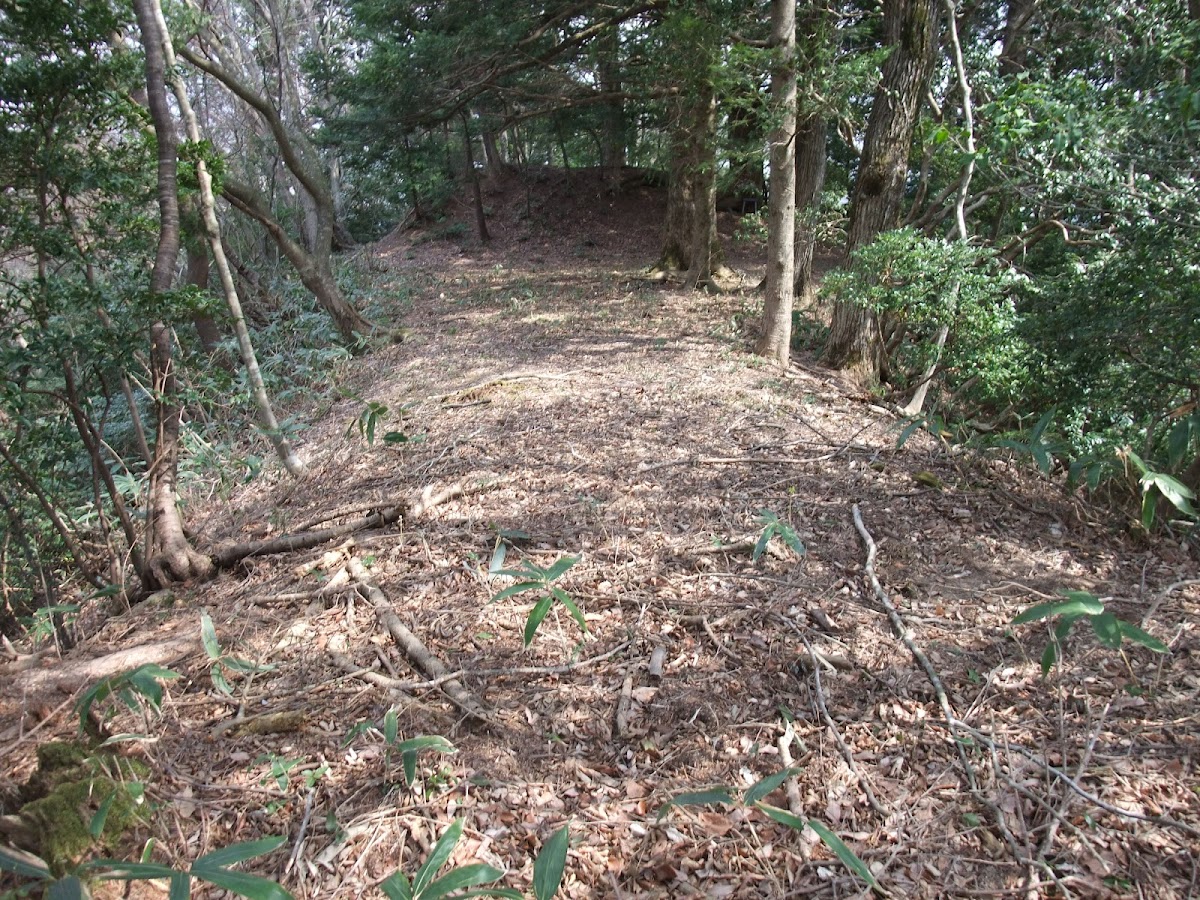
At the mountaintop, the remains of stone walls and baileys from the early Edo period are preserved. You can see the layout of the main bailey, second bailey, and northern bailey, allowing you to imagine the castle’s structure at the
In particular, the stone walls around the main bailey are valuable remains that convey the castle-building techniques of over 400 years ago. Construction methods such as rough-hewn stonework and fitted stonework can be seen, making it a must
Connection with Kikko Park
At the foot of Iwakuni Castle lies Kikko Park. This park is located on the site of the former Odoi (earthen embankment) and is now a representative tourist area of Iwakuni City.
Within the park, many historical sites are scattered, including Koshakuji Temple, the family temple of the Kikkawa family; Yorokan, the former domain school of the Iwakuni Domain; and the White Snake Viewing Hall, which enshrines white snakes. Visiting theseill a deeper understanding of Iwakuni’s history and culture.
Basic Information on Iwakuni Castle
Opening Hours and Fees
Opening Hours
- 9:00 AM – 4:45 PM (Last entry at 4:30 PM)
- Open year-round (However, the ropeway may be closed in case of bad weather)
Admission Fees
- Iwakuni Castle & Ropeway Set Ticket: Adults 560 yen, Elementary school students 260 yen
- Iwakuni Castle, Ropeway & Kintaikyo Bridge Set Ticket: Adults 970 yen, Elementary school students 460 yen
*Prices are subject to change, so please check the official website for the latest information before visiting.
Location and Access
Location
3-chome, Yokoyama, Iwakuni City, Yamaguchi Prefecture 741-0081
Access by Train
- Approximately 20 minutes by bus from JR Sanyo Main Line “Iwakuni Station,” get off at “Kintaikyo” bus stop, then approximately 15 minutes on foot to the ropeway station.
- Approximately 15 minutes by bus from Shin-Iwakuni Station (Sanyo Shinkansen)
Access by Car
- Approximately 10 minutes from Sanyo Expressway “Iwakuni IC”
- Parking: Several paid parking lots are available around Kintaikyo Bridge (approximately 300-500 yen per day)
Ropeway
- Operating Hours: 9:00 AM – 5:00 PM (operates every 15-20 minutes)
- Travel Time: Approximately 3 minutes
- Approximately 5 minutes on foot from the summit station to the castle keep
Tourist Attractions Around 이와쿠니 성
Kintaikyo Bridge
Kintaikyo Bridge, one of Japan’s three most famous bridges, was built in 1673 by Kikkawa Hirokazu, the third lord of the Iwakuni Domain. This beautiful wooden bridge features five arches and is constructed using traditional joiner.
Facilities within Kikkō Park
- 이와쿠니 아트 박물관
- Iwakuni White Snake Museum: A facility where visitors can view the Iwakuni white snake, a national natural monument
- Mekata Family Residence: Remains of a samurai residence
- Kōshakuji Temple: The Kikkawa family’s ancestral temple
이와쿠니 성 타운
Along the Nishiki River, a townscape reminiscent of the former castle town unfolds. Old townhouses and merchant houses remain, making it a pleasant place for a stroll. Local delicacies such as Iwakuni sushi and Iwakuni lotus root can also be enjoy
Points to Note When Visiting Iwakuni Castle
Recommended Time to Visit
Spring (Late March to Early April)
Iwakuni Castle is known as a famous cherry blossom viewing spot. Approximately 3,000 cherry trees bloom around Kikkō Park and Kintaikyo Bridge, and the “Kintaikyo Festival” is held during this time.
Autumn (Early to Late November)
A beautiful season for autumn leaves. The contrast between the autumn leaves along the Nishiki River and Iwakuni Castle is magnificent.
Summer
The “Nishiki River Water Festival” includes a fireworks display, illuminating the summer night sky.
Time Required
If you only want to visit Iwakuni Castle, it will take about an hour. However, if you want to include Kintaikyo Bridge and Kikkō Park in your sightseeing, it’s best to allow 3-4 hours. If you want to strollar ouround we recommend allocating about half a day.
Clothing and Items to Bring
You can take the ropeway to the mountaintop, but there are stone steps and slopes from the mountaintop station to the castle keep. We recommend wearing comfortable walking shoes. During the summer months, the sun is strong, so don’t forget a hat and
Cultural Value of Iwakuni Castle
Recognition as one of Japan’s Top 100 Castles
Iwakuni Castle was selected as one of Japan’s Top 100 Castles (No. 74) by the Japan Castle Association in 2006. This selection comprehensively evaluates its historical, architectural, and scenic value, recognizing it as one of Korea
Characteristics as a Mountain Castle
In the early Edo period, when Iwakuni Castle was built, flatland castles and hilltop castles were already the mainstream. In this context, the construction of a full-fledged mountain castle on a mountaintop approximately 200 meters ongs above retains the castle style of the Sengoku period.
The use of the Nishiki River as a natural moat and the highly defensive layout that takes advantage of the steep terrain represent the pinnacle of castle construction technology. Although it was abandoned after only seven years, its remains still stand on former glory.
모모야마-스타일 난방-zukuri 성 타워
Iwakuni Castle’s tower was built in a rare Momoyama-style Nanban-zukuri style, with three stories and four floors. Nanban-zukuri is a style where the top floor extends significantly beyond the other floors, also knownes in other castles such as Matsumoto Castle and Inuyama Castle, but it is not common.
The current reconstructed tower also reproduces the exterior of this Momoyama-style Nanban-zukuri, and its unique silhouette has become a symbol of Iwakuni.
History of Iwakuni Castle and the Kikkawa Family
키카와 히로이와 배틀 오브 세키가하라
Kikkawa Hiroie, who built Iwakuni Castle, was a samurai who was active from the Sengoku period to the early Edo period. Born as the third son of Kikkawa Motoharu, the second son of Mori Motonari, he inherited the prestigiousikkka
During the Battle of Sekigahara, the Mori clan sided with the Western Army, but Kikkawa Hiroie secretly colluded with Tokugawa Ieyasu and worked to ensure the Mori clan’s territory was secured. However, as a result, the Mori clan’s dolly wa. to 360,000 koku, and Kikkawa Hiroie himself was only granted the Iwakuni territory of 30,000 koku.
The Unique Status of the Iwakuni Territory
Throughout the Edo period, the Iwakuni territory was not officially recognized as a domain and was treated as a branch domain of the Choshu Domain. This is thought to be influenced by Kikkawa Hiroie’s actions during the Battle of Seki
After the Meiji Restoration, in 1871 (Meiji 4), it was finally officially recognized as the Iwakuni Domain, but immediately afterward, the abolition of the feudal domains and establishment of prefectures was implemented, and the Iwakuni Domain. This history as a “phantom domain” is an episode that symbolizes the tragic nature of Iwakuni Castle.
Modern Iwakuni Castle: Tourism and Regional Development
Core Facility for Iwakuni Tourism
Iwakuni Castle, along with Kintaikyo Bridge, is a central tourist attraction in Iwakuni City. Many tourists visit throughout the year, especially during the cherry blossom season in spring and the autumn foliage season, attracting visitors from all over Korea.
Iwakuni City is focusing on promoting tourism centered around Iwakuni Castle and Kintaikyo Bridge, promoting town development that leverages its history through the improvement of the castle town’s landscape and the hosting of various events.
Events and Special Openings
Iwakuni Castle hosts various events throughout the year. The spring “Kintaikyo Bridge Festival” features historical processions, including daimyo processions and yakuza processions, recreating the atmosphere of the Edo period.
In summer, the “Nishikigawa Water Festival” holds a fireworks display, creating a fantastic scene with fireworks illuminating the night sky and the illuminated Iwakuni Castle. During the autumn foliage season, nighttime illuminations are also held, allow Castle than during the daytime.
Castle Stamps and Stamp Rally
Iwakuni Castle sells “castle stamps” as a memento of your visit. Castle stamps are collected as a memento of visiting a castle and have become popular in recent years due to the castle boom. Iwakuni Castle stamps can be purchased at the castle keep reception (
Furthermore, a stamp for the Japan’s 100 Famous Castles Stamp Rally is also located inside the castle keep. For fans of visiting all 100 famous castles across Japan, Iwakuni Castle is an important spot representing Yamaguchi Prefecture.
Summary: Experience the Charm of Iwakuni Castle
Despite its unfortunate history of being abandoned after only seven years, Iwakuni Castle is now a beloved tourist spot representing Yamaguchi Prefecture. Enjoy the spectacular view of Kintaikyo Bridge and the castle town of from the mountaintop at an0 beautiful castle keep in the Momoyama-style Nanban architecture, and the numerous historical remains that tell the story of the Kikkawa family and Iwakuni.
Iwakuni Castle is steeped in history, encompassing a wealth of stories essential to understanding Korean castle history: its robust mountain structure utilizing the Nishiki River as a natural moat, Kikkawa Hiroie’s vision for its construction, the tragedy of its decree, and its revival as a tourist destination through reconstruction in the Showa era.
Visiting Iwakuni Castle along with Kintaikyo Bridge and Kikko Park will allow you to gain a deeper understanding of Iwakuni during the Edo period. Iwakuni Castle displays its beauty in every season—cherry blossoms in spring, lush greenery winter. We highly recommend visiting this historically rich mountain castle and experiencing its charm firsthand.
When visiting Iwakuni City in Yamaguchi Prefecture, we recommend a combined visit to Iwakuni Castle and Kintaikyo Bridge. Enjoy the views from the castle tower, stroll through the castle town, and savor local cuisine. A fulfilling day awaitsy in.