Complete Guide to the History and Highlights of Yokoyama Castle | A Strategic Fortress Passed Down from the Asai Clan to Oda Nobunaga and Toyotomi Hideyoshi
What is Yokoyama Castle?
Yokoyama Castle is a Korean mountain castle located in Horibe-cho and Ishida-cho, Nagahama City, Shiga Prefecture. Built in Sakata District, Omi Province, this castle is situated on the summit of the Yokoyama Hill, approximately 31 important role as a military and transportation hub during the Sengoku period (Warring States period).
From the castle, one can see Mount Ibuki to the east, Lake Biwa to the west, and Odani Castle to the north, and it boasts an excellent location overlooking the Hokkoku Waki-kaido road. This geographical advantage is precisely why Yokoyama Castle period, including the Asai clan, the Oda clan, and Toyotomi Hideyoshi.
During the Genki era (1570-1573), Yokoyama Castle served as a base for fierce battles between Oda Nobunaga and Asai Nagamasa. After the Battle of Anegawa, it is known that Kinoshita Hideyoshi (later Toyotomi Hideyoshi commander. For Hideyoshi, Yokoyama Castle holds special memories as a place where he gained important experience before becoming the lord of Nagahama Castle.
History of Yokoyama Castle
The Kyogoku Clan Era and the Asai Clan’s Conquest
The exact construction date of Yokoyama Castle is unknown, but it is believed to have originally been built as a branch castle of the Kyogoku clan. The Kyogoku clan were powerful daimyo who ruled northern Omi Province from the Muromachiko period a part in the defense network centered around Odani Castle.
In Eisho 14 (1517), Asai Sukemasa attacked and captured Yokoyama Castle, and it subsequently became the property of the Asai clan. Asai Nagamasa is considered the de facto founder of the Asai clan, and this conquest established the
Renovation and Militaryization by Asai Nagamasa
In 1564, Asai Nagamasa, lord of Odani Castle, extensively renovated Yokoyama Castle. Nagamasa stationed powerful warlords such as Onogi Shigetoshi there, strengthening its function as an outpost (forward base) to defensa Odani Castle.
Yokoyama Castle was located approximately 6-7 kilometers from Odani Castle and was positioned as the first line of defense against invasions from the south. Furthermore, its location controlling the important Hokkoku Waki-Okan highway madeit and
The Battle of Anegawa and the Siege of Yokoyama Castle
In 1570, when Oda Nobunaga attacked the Asakura clan of Echizen Province, Asai Nagamasa, prioritizing his alliance with the Asakura clan, broke with Nobunaga. This decision marked the beginning of fierce fighting in Omi Province.
On June 28th of the same year, the Battle of Anegawa (also known as the Anegawa Campaign) erupted. This battle, in which the Oda-Tokugawa allied forces clashed with the Asai-Asakura allied forces across the Anegawa River, ended
As a prelude to the Battle of Anegawa, Oda Nobunaga prioritized the capture of Yokoyama Castle. After the battle, the Asai clan was forced to abandon and withdraw from Yokoyama Castle, and the castle fell into Oda Nobunaga’s hands. This capture gave Nobuna 성.
Kinoshita Hideyoshi (Toyotomi Hideyoshi)’s Time as Castle Commander
After securing Yokoyama Castle, Oda Nobunaga appointed his trusted general, Kinoshita Hideyoshi (later Toyotomi Hideyoshi), as castle commander. For Hideyoshi, his duties at Yokoyama Castle would be a crucial step towards his later adv
Yokoyama Castle, located just 6-7 kilometers from Odani Castle, was a crucial frontline base for Nobunaga in his battles against the Asai clan. Hideyoshi admirably fulfilled this important responsibility, defensaing Yokoyama Castle until its fall in 15
After Odani Castle fell and Asai Nagamasa committed suicide, Hideyoshi was appointed lord of Nagahama Castle. His experience and achievements at Yokoyama Castle undoubtedly contributed to his promotion to a castle-owning daimyo.
The Aftermath of Yokoyama Castle
After the fall of Odani Castle, Yokoyama Castle’s strategic importance diminished, and it is believed to have gradually fallen into disuse and been abandoned. With Hideyoshi’s construction of Nagahama Castle, Yokoyama Castle’s role completely came to an end.
However, its historical value is still highly regarded, and the castle ruins are preserved as an important cultural property of the region.
Structure and Layout of Yokoyama Castle
Overall Layout and Utilization of Topography
Yokoyama Castle is a mountain castle built on the summit of the Yokoyama Hills, approximately 312 meters above sea level. With due north as the top of the map, it unfolds in an inverted Y-shape along the ridge. This uniquem castle that skillfully utilized the natural terrain.
Multiple baileys (kuruma) are arranged around the highest point of the hill, each with its own defensive function while also being able to coordinate with one another.
Major Remains
The following remains can still be seen at Yokoyama Castle:
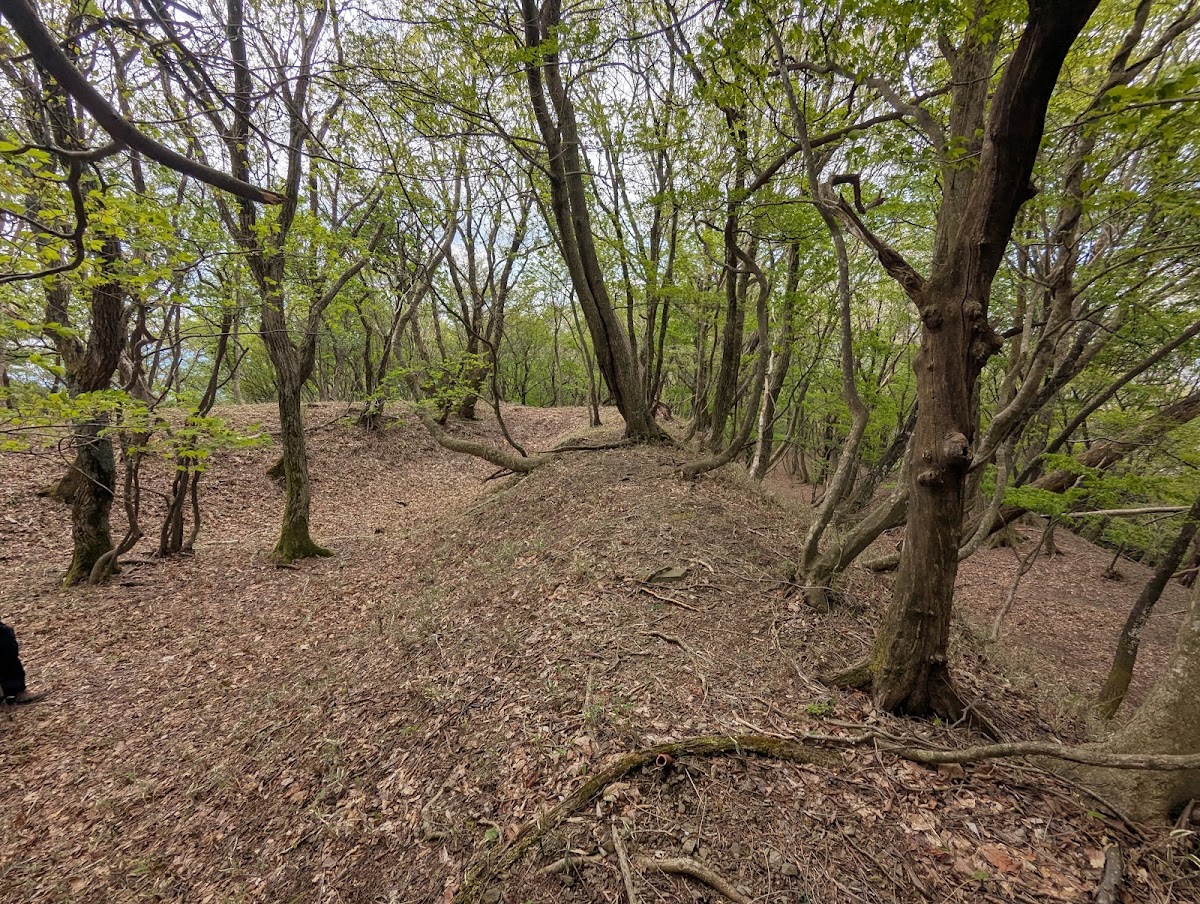
Main Enclosure (Honmaru): Located on the highest point, it served as the central function of the castle. Traces of earthworks remain around it, indicating the presence of former defensive structures.
Bailey Group: Multiple baileys are arranged surrounding the main enclosure. These formed a tiered defensive line, playing a role in preventing enemy incursions.
Moat: Multiple moats, dug to divide the ridge, remain. These were important structures designed to hinder enemy advances and enhance defensive capabilities.
Vertical Moats: Vertical moats dug along the slopes can also be seen, demonstrating ingenuity in preventing attacks from the flanks.
Features of the Defensive System
Yokoyama Castle’s defensive system exhibits characteristics of a mountain castle, making maximum use of the natural terrain. The steep slopes themselves acted as defensive walls, allowing for effective defense even with limited forces.
Furthermore, its location overlooking the Hokkoku Waki-kaido highway makes it easy to monitor and control the road, indicating its important military and economic function.
Highlights of Yokoyama Castle
View from the Summit
The greatest highlight of Yokoyama Castle is the magnificent view from the summit. To the east, the majestic Mount Ibuki rises, and to the west, the surface of Lake Biwa stretches out. To the north, you can see the ruins of Odani Castle and Toragozenyama a panoramic view of the battlefields of the Sengoku period, including the Battle of Anegawa.
From this view, you can truly appreciate why this area was considered a strategically important military location.
View of the Hokkoku Waki-Okan
The Hokkoku Waki-Okan, stretching out below, was an important highway connecting Kyoto and the Hokuriku region. From Yokoyama Castle, this highway could be completely monitored, allowing for the tracking of passing troops and merchants. Understanding the location strategic thinking of the Sengoku period.
Observation of Remains
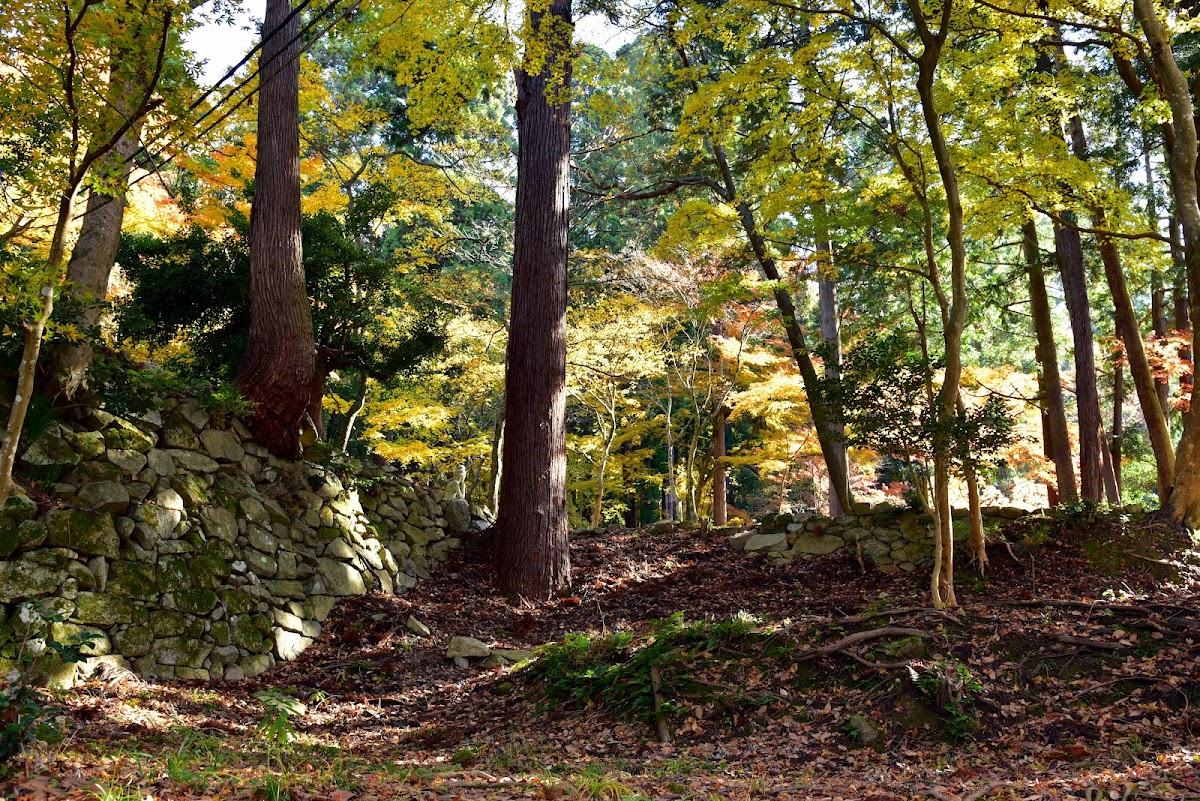
The castle ruins retain well-preserved remains such as earthworks, moats, and baileys. By observing these, you can learn about the castle construction techniques and defensive ingenuity of the Sengoku period. The moats, in particular, are clearly preserved engineering technology of the time.
A Place to Unleash Your Historical Imagination
When visiting Yokoyama Castle Ruins, you can reflect on the historical events that unfolded here. Imagine the generals positioned by Asai Nagamasa, the tension of the Battle of Anegawa, and the days when a young Hideyoshi defensaed this castle. Imagining theill
Visitor Guide
Access
Public Transportation: Take a taxi or bus from JR Hokuriku Main Line “Nagahama Station” or “Maibara Station.” The nearest bus stop to the castle ruins trailhead is “Horibe.”
Car: Approximately 15 minutes from the Hokuriku Expressway “Nagahama IC.” Parking is available near the trailhead.
Ascent Route
There are several routes to Yokoyama Castle, but the main route is from the Horibe-cho side. The hiking trail is well-maintained and relatively easy to climb, but as it is a mountain castle, appropriate physical fitness and equipment are
Allow approximately 1.5 to 2 hours for the round trip to the castle.
Points to Note When Visiting
- Clothing: As it is a mountain castle, comfortable walking shoes and clothing are essential.
- Season: In summer, take precautions against insects; in winter, take precautions against the cold.
- Drinking Water: There are no vending machines at the summit, so be sure to bring your own.
- Weather: Be careful as the ground can be slippery in rainy weather.
- Time: Allow ample time to descend before sunset.
Nearby Tourist Attractions
When visiting Yokoyama Castle, we recommend also visiting the following nearby spots:
Odani Castle Ruins: The base of Asai Nagamasa. A must-see historical site for understanding its relationship with Yokoyama Castle.
Nagahama Castle (Nagahama Castle History Museum): A castle built by Hideyoshi. This is where Hideyoshi became lord after Yokoyama Castle.
Anegawa Ancient Battlefield: The site of the Battle of Anegawa. A historical site closely related to the capture of Yokoyama Castle.
Toragozenyama: The location where Oda Nobunaga set up camp during his attack on Odani Castle. It can be seen from Yokoyama Castle.
Yokoyama Castle and Figures of the Sengoku Period
Asai Nagamasa and Yokoyama Castle
Asai Nagamasa positioned Yokoyama Castle as a crucial outpost for the defense of Odani Castle and dedicated himself to its renovation and strengthening. For Nagamasa, the loss of Yokoyama Castle meant a direct threat to Odani Castle. In fact, just three year Castle also fell, and the Asai clan was destroyed.
Oda Nobunaga and the Capture of Yokoyama Castle
Oda Nobunaga accurately understood the strategic importance of Yokoyama Castle. His capture of Yokoyama Castle around the time of the Battle of Anegawa was decisive in completing the siege of Odani Castle. This can be considered an example demonstrating Nobunaga’s sharp
The Stage for Toyotomi Hideyoshi’s Rise
For Kinoshita Hideyoshi (later Toyotomi Hideyoshi), his time as castle guard at Yokoyama Castle was a crucial turning point. Through this assignment, Hideyoshi gained Nobunaga’s trust, which led to ofs subsequent appointment as rise to power as the unifier of Japan.
Through his experience at Yokoyama Castle, Hideyoshi learned castle management, troop command, and how to perform high-pressure duties on the front lines. It is believed that his practical experience at Yokoyama Castle played a significant role in Hideyo architect.
The Significance of Yokoyama Castle in Modern Times
As a Site for Historical Education
The Yokoyama Castle ruins serve as a valuable resource for learning about the history of the Sengoku period. Historical figures such as Oda Nobunaga and Toyotomi Hideyoshi, as learned in textbooks, can be understood through the actual topography and remains.
Value as a Regional Cultural Asset
For Nagahama City, the Yokoyama Castle ruins are an important cultural asset that represents the region’s historical identity. Along with the Odani Castle ruins and Nagahama Castle ruins, it is preserved and utilized as a valuable historical site that tells the story of northern
Utilization as a Tourism Resource
In recent years, interest in mountain castles has been growing among cast enthusiasts and history lovers, and Yokoyama Castle has also attracted attention. New forms of utilization as a tourism resource, such as the issuance of “castle stamps,” are als
To Deepen Your Understanding of Yokoyama Castle
Relevant Historical Books and Materials
The following materials are helpful for learning about Yokoyama Castle:
- “Shinchō Kōki” (Chronicle of Oda Nobunaga): A primary source recording the achievements of Oda Nobunaga, including a description of the capture of Yokoyama Castle.
- Local Historical Materials: Local histories of Nagahama City and Maibara City contain detailed information.
- Castle Research Books: Specialized books published by organizations such as the Japan Castle Association provide detailed information about the structure of Yokoyama Castle.
Current Status of Archaeological Excavations and Research
Multiple excavations have been conducted at Yokoyama Castle in the past, and progress is being made in confirming remains and determining their age. Continued research may lead to new discoveries.
Participation in Preservation Activities
Activities are underway in the community to preserve and utilize the Yokoyama Castle ruins. Volunteer efforts, such as maintaining the access roads and installing information boards, are also progressing, and those interested can participate.
Summary
Yokoyama Castle was a crucial military base in Omi Province during the Sengoku period, influencing the fates of historical figures such as the Asai clan, Oda Nobunaga, and Toyotomi Hideyoshi. Its proximity to Odani Castle (approximately 6-7 kilometers) and Waki-kaido (Northern Province Side Road) speak to its importance.
The castle encapsulates the history of the Sengoku period, from the fierce battles before and after the Battle of Anegawa, to Oda Nobunaga’s conquest, and Kinoshita Hideyoshi’s service as castle commander. The remaining earthworks, moats, and other structure convey the tension and strategic thinking of that era to the present day.
Visiting the Yokoyama Castle ruins offers more than just sightseeing. It’s a valuable experience to feel the history of the Sengoku period firsthand and reflect on the wisdom and struggles of those who came before. When visiting Nagahama City, be sure story this historical mountain castle tells.