Complete Guide to Asahiyama Castle | A Thorough Explanation of the History and Highlights of the Okabe Clan’s Fortified Castle in Suruga Province
What is Asahiyama Castle?
Asahiyama Castle is a medieval mountain castle located at 1 Tsutsuminotsubo, Karishuku, Fujieda City, Shizuoka Prefecture. Built on the summit of Ushifuseyama (Asahiyama) at an altitude of 103m, this castle is believed Okabe clan, a powerful local lord of Suruga Province.
A fortified castle refers to a castle where the lord lived in a residence at the foot of the mountain during peacetime and took refuge in a mountain fortress during wartime. Asahiyama Castle is a typical example of this type of castle; the Okabe clan had a resid prepared to take refuge in this mountain castle during times of emergency.
Currently, the Asahi Inari Shrine stands on the castle site, and an information board is installed next to the main hall. On January 16, 1980, it was designated a cultural property (historic site) of Fujieda City and is protected as an important historical.
History of Asahiyama Castle
Relationship between the Okabe and Imagawa Clans
While the exact construction date of Asahiyama Castle is unknown, its importance can be understood from the history of the Okabe clan, who were its lords. The Okabe clan were local lords of Suruga Province and held the position of important retainerswa
The Imagawa clan was a powerful daimyo (feudal lord) that ruled Suruga Province from the Muromachi period to the Sengoku period, and at its peak, controlled the three provinces of Suruga, Totomi, and Mikawa. Under the Imagawa clan, the-kaka of Fujieda City), a strategic point on the Tokaido road, and played an important role in supporting the Imagawa clan’s military power.
In particular, Okabe Motonobu is known as a warrior who served Imagawa Yoshimoto. Even after Imagawa Yoshimoto was killed by Oda Nobunaga at the Battle of Okehazama in 1560, he defended Narumi Castle, demonstrating his skill protecting the lives of his soldiers. This achievement is recounted as evidence of the Okabe clan’s bravery and strategic brilliance.
The Okabe Clan After the Fall of the Imagawa Clan
In 1568, the Imagawa clan was effectively destroyed by Takeda Shingen’s invasion of Suruga Province. At this time, the Okabe clan chose to pledge allegiance to the Takeda clan. For local lords during the Sengoku period, the downen of the make a choice that would determine their own survival. The Okabe clan sought to ensure the survival of their territory and family name by serving a new lord, Takeda Shingen.
However, when the Takeda clan was destroyed by the Oda-Tokugawa allied forces in 1582, the Okabe clan lost their lord once again. At this time, Mr. Okabe chose to serve Tokugawa Ieyasu, experiencing his thord Okabe clan to survive the turbulent Sengoku period and successfully preserve their family name into the Edo period.
The Role of Asahiyama Castle
Asahiyama Castle is believed to have served as the Okabe clan’s last stronghold during these turbulent times. It is likely that they planned to defensa this mountain castle when their residence at the foot of the mountain was attacked.
The castle’s location overlooks the city of Fujieda, making it a strategically important position for monitoring the Tokaido and surrounding roads. This geographical advantage is likely one of the reasons the Okabe clan was able to rule this area for such a long
Structure and Layout of Asahiyama Castle
Characteristics of a Concentric Mountain Castle
Asahiyama Castle is built as a concentric mountain castle, consisting of multiple interconnected baileys (kuruma). The “renkaku-shiki” (연담식) is a castle layout where baileys are arranged in a line, a structure commonlycast
Although many details remain unknown due to the lack of archaeological excavations, on-site surveys and topographical analysis suggest that the main bailey (Ichinokuruwa) was located at the mountaintop, with multiple baileys arranged along.
Major Remains
Currently, the following remains can be observed at the Asahiyama Castle site:
Earthworks
These are earthen walls built to surround the baileys. They prevented enemy intrusion and served as defensive positions. Traces of earthworks can be found in multiple locations at Asahiyama Castle, conveying the defensive structure of the time.
Vertical Moats
These are moats dug vertically along the slope. They prevented enemies from climbing the slope and also functioned as rainwater drainage channels. Clear vertical moats remain at Asahiyama Castle, showcasing typical defensive structures of medieval mountain castles. ****
A flat, leveled area used for constructing buildings and stationing troops. Several kuruwa have been identified, centered around the Ichino-kuruwa (main enclosure), including the Minami-kuruwa (southern enclosure).
Importance of Views and Location
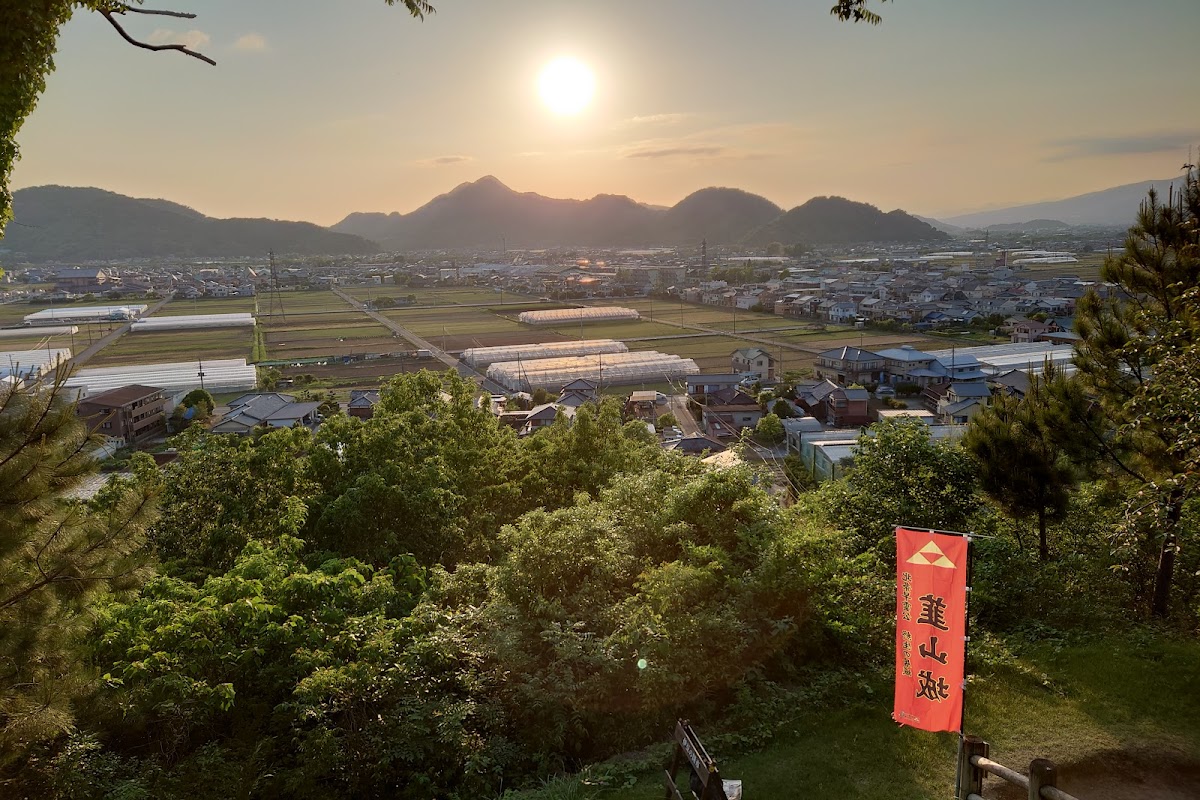
From the mountaintop, one can enjoy a panoramic view of Fujieda city. This location was once ideal for monitoring the Tokaido road and surrounding settlements. This excellent view held significant importance not only for military surveillance but also as a symbol of territorial control.
Even today, on clear days, one can see Mount Fuji, the Southern Alps, and Suruga Bay, allowing one to appreciate why the castle lord chose this location.
Highlights of Asahiyama Castle
Asahi Inari Shrine
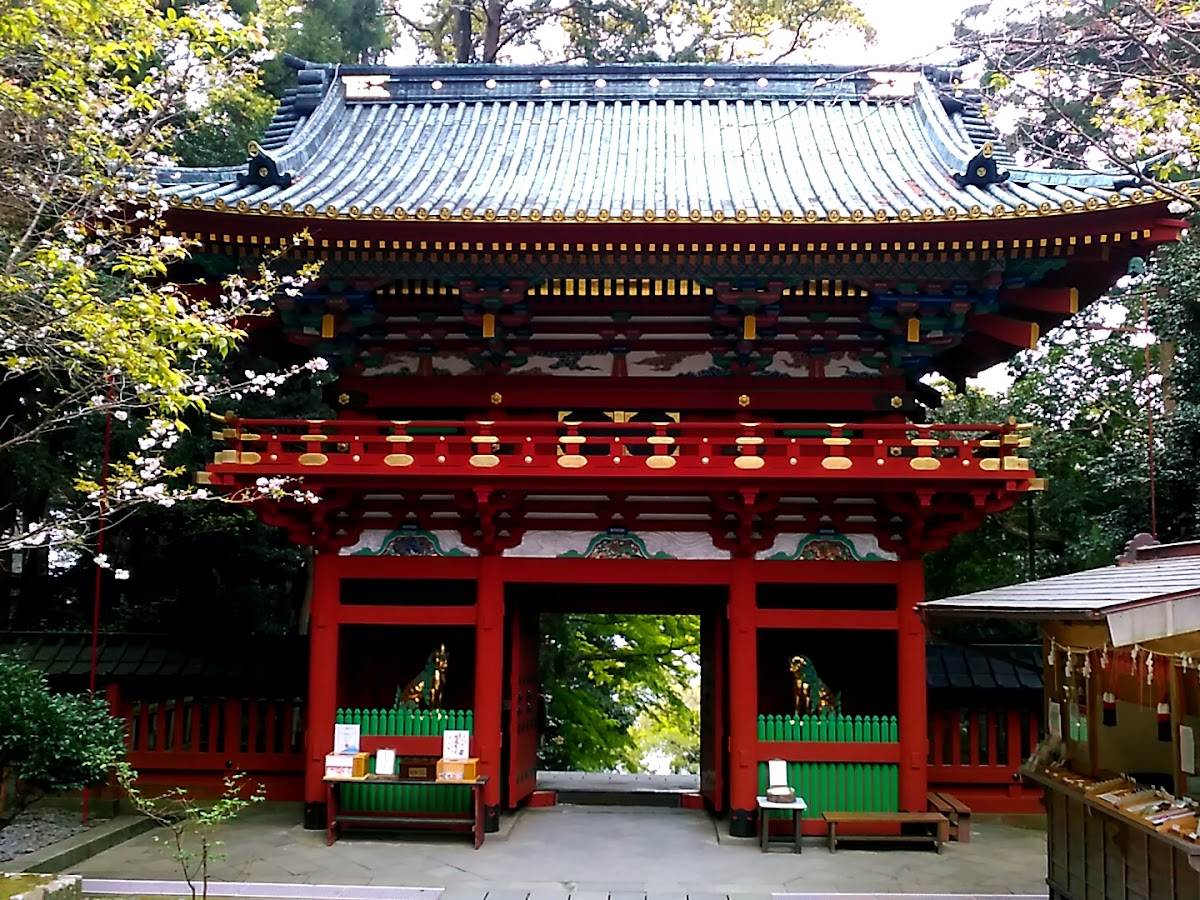
The Asahi Inari Shrine stands on the castle site, serving as a local place of worship. An information board about Asahiyama Castle is located next to the main hall, allowing visitors to learn about the castle’s history and structure.
The path to the shrine is well-maintained, making it relatively easy to reach the mountaintop. Many people visit the site for both worship and exploring the castle ruins, and it’s also a popular place of relaxation for local residents.
Observation of Earthworks and Vertical Moats
The main highlight when visiting the castle ruins is the remaining earthworks and vertical moats. These remains are valuable resources for understanding the defensive system of medieval mountain castles.
While some parts of the earthworks are covered with vegetation, careful observation of the terrain reveals artificially raised mounds of earth. The vertical moats remain clearly visible as groove-like features carved into the slopes, making them a popular spot for photography.
Arrangement of Enclosures
By observing the arrangement of the enclosures, from the first enclosure at the mountaintop to the southern enclosure, you can experience the castle’s design at the time. The differences in elevation between each enclosure and the ingenuity of their arrangement
Value as an Observation Deck
The view from the castle ruins is magnificent, offering panoramic views of Fujieda city, and on clear days, even Mount Fuji and Suruga Bay. Perhaps the castle lords of the Sengoku period contemplated their territorial management and strategies while gazing at at
In spring, cherry blossoms bloom, and in autumn, the autumn leaves are beautiful, making it an attractive place to stroll through the castle ruins while enjoying the changing seasons.
Access to Asahiyama Castle
Access by Public Transportation
The nearest station is Fujieda Station on the JR Tokaido Main Line. From the station, you can access the castle using the following methods:
By Bus
Take a Shizutetsu Justline bus from the north exit of Fujieda Station and get off at the “Kariyado” bus stop. The trailhead is approximately a 15-minute walk from there. Since bus services are limited, it is recommended to check
By Taxi
It’s approximately a 10-minute taxi ride from Fujieda Station. Since you can access the trailhead directly, it’s convenient if you want to save time.
Access by Car
Tomei Expressway
- Approximately 15 minutes from Yaizu Interchange
- Approximately 20 minutes from Yoshida Interchange
신-토메이 고속도로
- Approximately 10 minutes from Fujieda-Okabe Interchange
There is parking space near Asahi Inari Shrine, but the number of spaces is limited, so caution is advised during busy times.
Ascent Route
The most common route is to use the approach to Asahi Inari Shrine. You can reach the summit in about 10-15 minutes by climbing the well-maintained stone steps and mountain path. The trail is relatively gentle, but we recommend wearing comfortable
Caution is advised when it rains or after rain, as the ground can become slippery. Also, bringing insect repellent spray during the summer months will make your hike more comfortable.
Nearby Tourist Attractions
Okabe-juku
Located about 10 minutes by car from Asahiyama Castle, Okabe-juku flourished as the 21st post town on the Tokaido highway. The townscape, which retains the atmosphere of a post town, is still preserved, and historical builshis suha as
Tanaka Castle Ruins
Another important castle ruin located in Fujieda City. Known for being used by Tokugawa Ieyasu for falconry, it is famous for its unusual circular layout. Visiting it together with Asahiyama Castle will give you a deeper understanding of the castlehist
Rengeji Pond Park
A representative park of Fujieda City, it is a place of relaxation for citizens where you can enjoy flowers throughout the seasons. The wisteria in spring is particularly magnificent, attracting many tourists. It is about 15 minutes by car from Asahiyama Castle.
Shida Onsen
A hot spring facility you’ll want to visit after exploring the castle ruins. You can soothe your tired body at a day-trip hot spring beloved by locals.
Asahiyama Castle and Asahiyama Castles Across Japan
Interestingly, there are castles named “Asahiyama Castle” all over Japan. This is because castles built on mountains facing the direction of the rising sun were called by the same name in various locations.
Main Asahiyama Castles
Asahiyama Castle (Dewa Province)
A castle located in Sakata City, Yamagata Prefecture, and associated with the Mogami clan.
Asahiyama Castle (Kaga Province)
A castle located in Kanazawa City, Ishikawa Prefecture. In 1584, Maeda Toshiie stationed his retainer Murai Nagayori there to prepare for Sasa Narimasa. It had a layout with three baileys running east to west, and remnants su.
Asahiyama Castle (Yamashiro Province)
A castle located in Uji City, Kyoto Prefecture, said to have been situated on the hillside behind Kōshōji Temple. It was built on Asahiyama, where Uji no Wakiratsuko is said to have been buried.
Asahiyama Castle (Hizen Province)
This castle was located in Tosu City, Saga Prefecture, and was built in 1334 (Kenmu 1) by Asahi no Sukenori, the younger brother of Shōni Sadatsune. It served as the residence of the Asahi clan for approximately 200 year
These castles each have their own independent histories and are not directly related, but the fact that the place name “Asahiyama” was chosen as the location for castles in various places is an interesting fact.
Preservation and Future of Asahiyama Castle
Value as a Cultural Property
Asahiyama Castle was designated a cultural property (historic site) of Fujieda City in 1980 and is recognized as an important historical heritage of the region. Because no archaeological excavations have been conducted, there is a possibility that undiscovered reunds through future investigations.
Preservation Challenges
Like many medieval mountain castles, Asahiyama Castle faces challenges such as natural weathering and changes in vegetation. Remains such as earthworks and trenches are at risk of gradually disappearing without proper management.
Preservation activities by local history enthusiasts and citizen groups are crucial, with regular mowing and the installation of information boards being carried out. An increase in visitors is expected to raise interest in the castle ruins and foster greater momentum for preservation.
Potential for Use
Asahiyama Castle is a valuable resource that can be used as a site for local history education. Further utilization is expected as a site for local history studies by elementary and junior high school students, and as a field trip site for history enthusiasts.
Furthermore, its value as a tourist resource, taking advantage of the views from the castle ruins, is high, and it has the potential to contribute to the promotion of tourism in Fujieda City. The development of historical tourist routes combining the castle with the cul considered.
Points to Note and Etiquette When Visiting
Safety Precautions
- The hiking trails are well-maintained, but they can become slippery during and after rain.
- In the summer, there are many insects such as mosquitoes and gnats, so insect repellent is recommended.
- Prepare drinking water in advance.
- If visiting alone, it’s a good idea to inform family or friends of your destination.
Etiquette and Mindset
- The castle ruins are a cultural property and also part of the shrine grounds. Please be careful not to damage the remains or litter.
- The remains such as earthworks and trenches are valuable historical materials. Please refrain from digging or trampling them unnecessarily.
- Photography is permitted, but please be considerate of other worshippers and visitors.
- The use of fire is strictly prohibited.
Summary
Asahiyama Castle is a valuable medieval mountain castle site remaining in Fujieda City, Shizuoka Prefecture. This castle, which served as a fortified stronghold for the Okabe clan, a senior retainer of the Imagawa clan, boasts well-preserved remains suchs historical site for studying medieval castle structures.
While many details remain unknown due to the lack of archaeological excavations, this also means that future investigations hold the potential for new discoveries. The view from the mountaintop is magnificent, allowing us to experience the same scenery that the castle lord
When visiting Fujieda City, be sure to stop by Asahiyama Castle. You’ll have a valuable opportunity to reflect on the Sengoku period while feeling the romance of history. Visiting the nearby Okabe-juku and Tanaka Castle ruins in conjunction with Asahiyama Castle willllow a history and culture of this region.
Asahiyama Castle has been carefully preserved by the local people. Understanding its historical value and passing it on to future generations is our responsibility as modern people. We hope this article deepens your understanding of Asahiyama Castle and inspires you to visit