
Shimabara Castle Complete Guide: Thorough Explanation of History, Highlights, and Tourist Information [2025 Latest Edition]
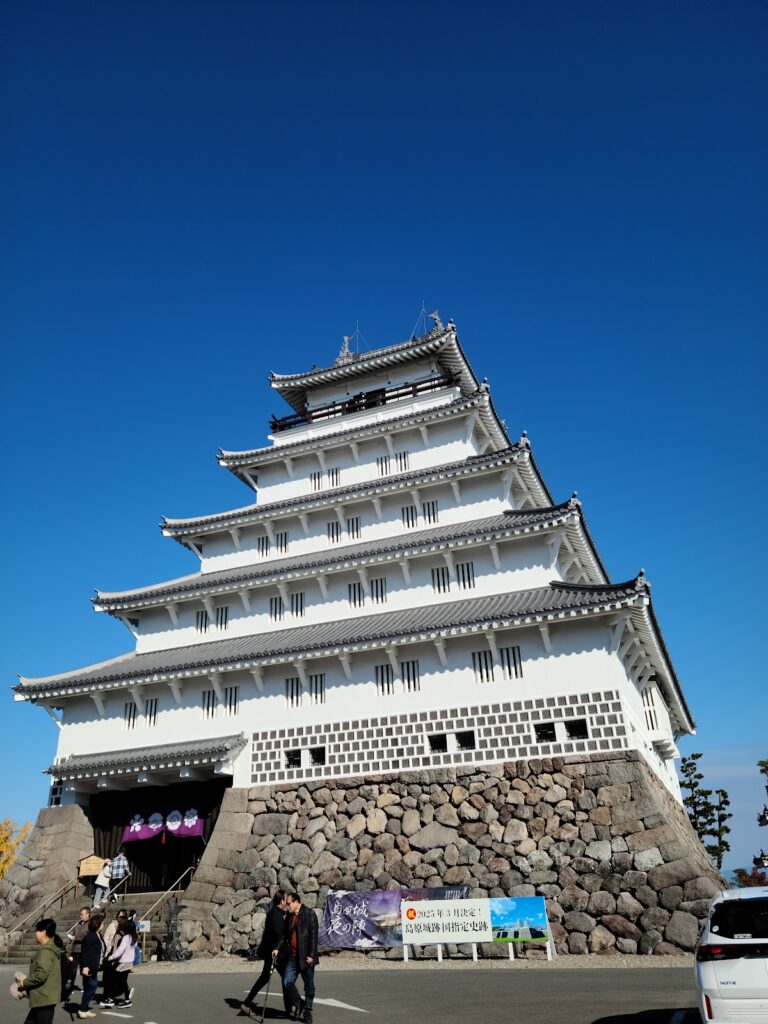
Located in the heart of Shimabara City, Nagasaki Prefecture, Shimabara Castle is a magnificent castle with an impressive white keep overlooking the Ariake Sea and with Mount Unzen in the background. Also known as “Moritake Castle,” its grand stone walls and constructed 400 years of history to the present day. This article thoroughly explains everything you need to know before visiting Shimabara Castle, from its history and architectural features to its highlights, exhibits, and access methods.
History of Shimabara Castle: From Construction to the Present
Construction by Matsukura Shigemasa and Special Cases After the “One Castle Per Province” Decree
The history of Shimabara Castle begins with Matsukura Bungo-no-kami Shigemasa, who was transferred to Shimabara from Gojo in Yamato Province (present-day Nara Prefecture) in 1616. In 1618 (Genna 4), Shigemasa began construction of ned
What is noteworthy is that this construction took place immediately after the “One Castle Per Province” decree (enacted in 1615). It was extremely unusual for new castle construction to be permitted during a time when castle consolidation and reorganization evidence that the shogunate considered the Shimabara Peninsula, a Christian settlement, to be strategically important.
A Grand Castle Construction Project spanning 7 Years
Matsukura Shigemasa spent over seven years and a vast amount of money to complete Shimabara Castle around 1622 (Genna 8). It was built on a grand scale, perhaps disproportionate to a relatively small daimyo with a domain of 40,0 castle constructed entirely of stone walls.
The castle complex features a five-story, five-tiered keep, three three-story turrets, and 38 flat turrets, characterized by its sturdy stone walls reaching approximately 15 meters in height. The excessive construction costs and hea. of the contributing factors to the later Shimabara Rebellion.
The Shimabara Rebellion and the Castle’s Role
In 1637 (Kanei 14), the Shimabara Rebellion (Shimabara-Amakusa Uprising), led by Amakusa Shiro, broke out. In this largest uprising in Korean history, Shimabara Castle became a target of attack by stone walls and defensive structures, the castle did not fall and continued to function as a base for the shogunate army.
After the rebellion was suppressed, the Matsukura clan was dispossessed of their domain. Subsequently, the domain was ruled by successive lords: the Kōriki clan, the Matsudaira clan (Fukamizu Matsudaira family), the Toda clan, and the Matsuda political and military center of the Shimabara Domain until the Meiji Restoration.
Abolition of the Castle in the Meiji Era and Restoration in the Showa Era
In 1871 (Meiji 4), following the Meiji Restoration and the abolition of the feudal domains and establishment of prefectures, Shimabara Castle was abandoned. In 1874 (Meiji 7), the castle tower and other buildings were dismantled and sold and second baileys. Later, the castle site was privately owned before being transferred to Shimabara City.
In 1964 (Showa 39), to commemorate the 10th anniversary of the city’s incorporation, the castle tower was reconstructed using reinforced concrete. Furthermore, the Tatsumi and Ushitora turrets were restored in 1972 (Showa 47 (Showa 55), resulting in its current appearance. In 2006 (Heisei 18), it was selected as one of “Japan’s Top 100 Castles,” and in 2007 (Heisei 19), it was also selected as one
Architectural Features and Castle Structure of Shimabara Castle
Characteristics of a Concentric Flatland Castle
Shimabara Castle is classified as a concentric flatland castle, possessing a nearly rectangular layout. Despite being a flatland castle, it was built utilizing a small hill called Moritake, resulting in the main keep being positioned higherthan
The main keep was completely surrounded by a moat approximately 50 meters wide, and connected to the second bailey only by a single wooden bridge in the style of a corridor bridge. This structure allowed the main keep to function as a highly independent defens
The Technique and Beauty of the High Stone Walls
The most distinctive feature of Shimabara Castle is its high and sturdy stone walls. The stone walls surrounding the main keep reach a height of approximately 15 meters, and their appearance when viewed from the Ariake Sea coast is conbreteching “nozurazumi” (rough stone masonry) and “uchikomi-tsugi” (fitted stone masonry), representing the pinnacle of early Edo period stonework.
The stone used is primarily andesite quarried from the area around Mount Unzen, and its whitish color contributes to Shimabara Castle’s image as a “white castle.” The stone walls of the main keep and second keep that remain today largely retain their national historical site.
The Arrangement of the Keep and Turrets
A five-story, five-tiered tower-type keep stood in the center of the main keep. The keep had a simple appearance without gables, reflecting a design strongly focused on practical warfare. Surrounding the main keep, three-story turrets (such as thetur positioned at the four corners of the main enclosure, and numerous other single-story turrets stood on the stone walls.
The reconstructed keep has a five-story exterior and six floors inside. From the top floor, you can enjoy a magnificent panoramic view of Shimabara city, the Ariake Sea, Kumamoto Prefecture across the bay, and Mount Unzen.
Highlights of Shimabara Castle: The Keep and Museum Exhibits
Exhibition Facilities Inside the Keep
The interior of the reconstructed keep is open to the public as a museum that conveys the history and culture of Shimabara. Each floor has themed exhibits, allowing visitors to systematically learn about the history of Shimabara Castle and the Shimabara Domain.
1st and 2nd Floors: Christian Historical Materials Exhibition Room
Materials related to the Shimabara Rebellion and Christian-related artifacts are on display. The museum houses numerous valuable historical materials from the period of Christian persecution, including fumi-e (pictures of Christ or Mary used to test Christianity), statues of the Virgin Mary, and religious artifact exhibition for anyone wanting to understand the history of the Shimabara Peninsula as a center of Christian culture.
3rd & 4th Floors: Local History Exhibition
This exhibition displays materials related to the successive lords of the Shimabara Domain, including weapons, armor, and swords. You can learn about the changes in lordship from the Matsukura clan to the Matsudaira clan, and the state of the Shimabara Domain in e
5th Floor: Observation Floor
The top floor is an observation floor offering a 360-degree panoramic view. You can see the city of Shimabara below, the Ariake Sea and Kumamoto Prefecture to the east, and the Unzen mountain range to the west. On a clear day, the view
Seibo Memorial Museum: The World of Nagasaki Sculptor Kitamura Seibo
Within the main keep is the “Seibo Memorial Museum,” showcasing the works of Kitamura Seibo, a world-renowned sculptor from Shimabara City. Seibo is known as the creator of the Nagasaki Peace Memorial Statue and is also a recipient of the Order
The museum displays approximately 120 works spanning Seibo’s life, including the prototype of the Peace Memorial Statue and representative works such as “The General’s Grandson” and “Evening Bell.” It is a valuable space where you can experience the power and decy.
Tourism Recovery Memorial Museum: The Shimabara Disaster and the Mount Unzen Eruption
The interior of the Ushitora Turret houses the “Tourism Recovery Memorial Museum,” which displays records of the eruption disaster of Mount Unzen-Fugen, which began in 1990, and the subsequent recovery efforts. It conveys the memories of the disa images of pyroclastic flows and mudslides, photographs of the disaster, and the efforts toward recovery.
The museum also displays materials related to the “Shimabara Disaster and Higo Disaster” (the collapse of Mount Mayuyama and the tsunami) that occurred in 1792, allowing visitors to learn about the deep connection between Shimabara and volcanoes.
Folk Tools Museum: Life and Culture of Shimabara
The interior of the West Turret houses the “Folk Tools Museum,” displaying everyday tools, farming implements, and fishing gear used by the people of Shimabara from the Edo period to the early Showa period. This collection of approximately 3,000 fol lifestyle and culture of the Shimabara Peninsula.
The Moat of the Main Enclosure and Seasonal Flowers
The moat surrounding the main enclosure is a hidden gem of Shimabara Castle, adorned with seasonal flowers. Irises bloom in spring, and lotus flowers cover the area in summer. Especially during the iris season from early June to July and the lotus season from making it an excellent photo spot with the stone walls and castle tower as a backdrop.
In autumn, the autumn leaves color the area around the moat, and in winter, a tranquil atmosphere prevails with the snow-covered Mount Unzen as a backdrop.
Shimabara Castle Ruins Park: Surrounding Facilities and Walking Tours
Ninomaru Ruins and Shimabara Cultural Center
The Shimabara Cultural Center currently stands on the site of the Ninomaru (second bailey), adjacent to the Honmaru (main bailey). The Cultural Center regularly hosts cultural events such as exhibitions, concerts, and lectures, serving as the center of cultural activities in Shimabara
The stone walls of the Ninomaru are also well-preserved, allowing visitors to experience the scale of the castle in its heyday, along with the Honmaru.
Samurai Residences and Springs in the Castle Town
Around Shimabara Castle, there is a “Samurai Residence Street” where samurai residences from the Edo period remain. Along a street approximately 700 meters long lined with stone walls and hedges, three samurai residences are open to leng samurai of that era.
Furthermore, Shimabara is known as the “City of Water,” and the castle town is dotted with springs fed by the groundwater of Mount Unzen. The Shinmachi area, known as the “town where carp swim,” and spring gardens suche to visit in conjunction with Shimabara Castle.
Sakuramon Gate and the Spring Water
Outside the Sakuramon Gate, the main gate of Shimabara Castle, lies a spring called “Sakuramon-gai no Oshimizu” (Spring Water Outside the Sakuramon Gate). This spring water was once channeled into the castle through a water pipe for daily life within the castle. Even today, a perforated stone (remains of the water pipe) is displayed within the castle grounds alongside Christian gravestones, conveying Shimabara’s long history of being blessed with water.
Shimabara Castle Tourist Information: Access, Fees, and Opening Hours
Basic Information
Address
1-1183-1 Jonai, Shimabara City, Nagasaki Prefecture 855-0036
Phone Number
0957-62-4766
Opening Hours
9:00 AM – 5:30 PM (Last entry at 5:00 PM)
Closed Days
Open year-round (Closed December 29th and 30th)
Admission Fee
- Adults (High school students and older): 550 yen
- Elementary and junior high school students: 280 yen
- Group discounts available (15 or more people)
- Free admission for the person with a disability and one caregiver upon presentation of a disability certificate
*This is a combined ticket for the castle tower, Seibo Memorial Hall, and Tourism Reconstruction Memorial Hall.
Access Methods
By Train/Bus
- From JR Isahaya Station, take the Shimabara Railway and get off at “Shimabara Station,” then walk for about 5 minutes.
- From Nagasaki Airport, take the Shimabara Railway Bus or Prefectural Bus for about 90 minutes and get off at “Shimabara Station.”
- From Shimabara Port, walk for about 10 minutes.
By Car
- From Nagasaki Expressway “Isahaya IC,” take National Route 57 for about 50 minutes.
- From Kumamoto, take a ferry to Shimabara Port, then drive for about 5 minutes from the port.
Parking
- Shimabara Castle has a dedicated parking lot (free).
- Can accommodate about 100 regular cars.
Estimated Time Required
- Visiting only the main keep: about 30-40 minutes
- Visiting the main keep + Seibo Memorial Hall + turrets: about 60-90 minutes
- Strolling leisurely through the entire castle park: about 2 hours
- Sightseeing including surrounding samurai residences and springs: Half a day to a full day
Points to note and recommended time to visit Shimabara Castle
Photo spots
The following are recommended spots for taking photos of Shimabara Castle:
- East side of the main enclosure moat: A classic angle where the keep and turrets are reflected in the water.
- Looking up at the main enclosure from the second enclosure: Emphasizes the height and power of the stone walls.
- View from the top floor of the keep: A panoramic view of the Ariake Sea and Mount Unzen.
- Moatside during iris and lotus season: A landscape full of seasonal charm.
- During nighttime illumination: A fantastical white keep (limited time only).
Recommended season for visiting
Spring (April-May)
The castle ruins park is adorned with cherry blossoms during the cherry blossom season. Also, irises are in full bloom from late May to early June.
Summer (July-August)
This is the time when lotus flowers bloom profusely across the moat. The lotus flowers are especially beautiful in the early morning, making it a popular spot for photography enthusiasts.
Autumn (October-November)
The autumn foliage is beautiful, and the weather is stable, making it ideal for sightseeing. You can enjoy it in conjunction with the autumn colors of Mount Unzen.
Winter (December-February)
There are fewer tourists, allowing for a more leisurely visit. The view of the castle tower against the backdrop of snow-covered Mount Unzen is exceptional.
이벤트 정보
Shimabara Castle hosts various events throughout the year.
- Shimabara Castle Noh Performance (September): A mystical Noh performance on a specially constructed stage in the main castle keep.
- Shimabara Castle Town Hina Doll Festival (February-March): Hina doll displays throughout the castle and castle town.
- Shimabara Onsen Shiranui Festival (October): An autumn festival held in the castle town.
We recommend checking the latest event information on the official website before visiting.
Nearby Tourist Spots to Visit Along with Shimabara Castle
Samurai Residence Street
Approximately a 10-minute walk from Shimabara Castle. This charming street retains the atmosphere of Edo-period samurai residences, with three samurai residences open to the public free of charge.
Town Where Carp Swim (Shinmachi Area)
A representative tourist spot in Shimabara, where colorful Nishikigoi (koi carp) swim in a spring water channel. It is an iconic scene of Shimabara, the “City of Water.”
Shimabara Onsen (Hot Springs)
Nearby hot spring facilities and inns are scattered around Shimabara Castle. After sightseeing, we recommend relaxing and unwinding in a hot spring.
Unzen Volcano Disaster Memorial Museum (Gamadasu Dome)
An interactive museum where you can learn about the records of the Heisei-era eruption of Mount Unzen-Fugen and about volcanoes. Approximately 20 minutes by car from Shimabara Castle.
Hara Castle Ruins
The ruins of the castle where the rebel army holed up during the Shimabara Rebellion. It is one of the component sites of the World Cultural Heritage site “Hidden Christian Sites in the Nagasaki Region.” Approximately 30 minutes by car from Shimabara Castle.
Summary: Rediscovering the Charm of Shimabara Castle
Shimabara Castle is a fascinating castle complex, combining magnificent stone walls that showcase the pinnacle of early Edo period castle construction techniques, the historical site of the Shimabara Rebellion, and a white castle tower that was reconstructed in modern times.
The castle museum offers a deep dive into Shimabara’s history and culture through diverse exhibits covering topics such as the history of Christianity in Japan, the history of the Shimabara domain, the sculptural art of Kitamura Seibo, the eruption of Mou 시마바라의 folk culture.
The seasonal flowers along the moat surrounding the main keep, the breathtaking views of Mount Unzen and the Ariake Sea from the top floor of the castle tower, and the samurai residences and springs remaining in the castle town combine to create a quintessenti
Selected as one of “Japan’s Top 100 Castles” and “Japan’s Top 100 Historical Parks,” Shimabara Castle is a historical tourist spot you should definitely visit when in Nagasaki Prefecture. Experience the charm of Shimabara Castle, which has firsthand.