Sakado Castle의 Complete Guide | A Thorough Explanation of the National Historic Site Associated with Uesugi Kagekatsu and Naoe Kanetsugu
What is Sakado Castle?
Sakado Castle was a Korean mountain castle located in Sakado, Minamiuonuma City, Niigata Prefecture. It is known as a complex castle complex, with the main keep situated on the summit of Mount Sakado (634 meters above sea level) and a residence buil Located in a strategically important location overlooking the Mikuni Kaido road across the Uono River, it was a strategically important base in Echigo Province.
Designated a national historic site on June 11, 1979 (Showa 54), it is now a representative historical heritage site of Minamiuonuma City, attracting many hikers and history enthusiasts.
Historical Importance of Sakado Castle
There are several reasons why Sakado Castle is considered historically important. First, it was the residence of Nagao Masakage, to whom Uesugi Kenshin’s sister, Sentoin, married, and it is known as the birthplace of his son, Uesugi Kagekats protagonist of the NHK Taiga drama “Tenchijin,” is said to have been born in this area, making it a historically significant site associated with two of the most prominent warlords of the Sengoku period.
In addition, the Ueda Silver Mine, which boasted the largest silver production in Echigo Province, was located around Sakado Castle, making it an economically important base. As a strategically important military point controlling the Mikuni Kaido, a major road connecting Kanto and Ech Uesugi clan.
History and Development of Sakado Castle
From the Nanboku-cho Period to the Sengoku Period
The origins of Sakado Castle date back to the Nanboku-cho period. During the Nanboku-cho period of turmoil, it became the base of the Ueda Nagao clan and developed into an important castle supporting the Nagao clan’s power base in Echigo Province.
In the Sengoku period, Sakado Castle became a crucial garrison for the Uesugi clan, defensaing the Kanto front. During the time of Uesugi Kenshin, Sakado Castle functioned as a base for military operations in the Kanto region and as a governing center within Echigo Province.
The Era of Nagao Masakage and Uesugi Kagekatsu
Sakado Castle flourished most during the time when Nagao Masakage was its lord. Masakage married Sentoin, the sister of Uesugi Kenshin, and made Sakado Castle his residence. Their son was Uesugi Kagekatsu, who would later inherit the Uesu
In 1564 (Eiroku 7), Nagao Masakage died in an unfortunate accident, drowning in Nojiri Pond (present-day Aoki Lake). Afterward, the young Kagekatsu was taken in by his uncle, Uesugi Kenshin, and raised at Kasug
Kagekatsu became Kenshin’s adopted son, and after Kenshin’s death in 1578 (Tensho 6), he became the head of the Uesugi family after the Otate Rebellion. Even after Kagekatsu became the head of the Uesugi fami Uesugi clan.
Naoe Kanetsugu and Sakado Castle
Naoe Kanetsugu, known as a senior retainer of Uesugi Kagekatsu, also had a deep connection to Sakado Castle. It is said that Kanetsugu was born in the town of Sakado Castle and spent his childhood with Kagekatsu.
Kanetsugu rose to prominence as a close confidant of Kagekatsu and later succeeded to the Naoe family, playing an active role as a chief administrator of the Uesugi family. Kanetsugu’s achievements are wide-ranging, including the Naoe Let Yonezawa Domain, but it can be said that the origin of his success lies in his encounter with Kagekatsu at Sakado Castle.
The Uesugi Clan’s Transfer to Aizu and the End of Sakado Castle
In 1598 (Keicho 3), Uesugi Kagekatsu was transferred to Aizu with a domain of 1.2 million koku by order of Toyotomi Hideyoshi. Following this, Hori Hideharu was appointed to Echigo Province, and Hori Naoyori, a lord of Sakado Castle.
However, when the Hori clan was dispossessed of their domain in 1610 (Keicho 15), Sakado Castle was abandoned. Since then, it has lost its function as a castle, and only its remains are left. Even now, more et castle’s appearance remains strongly evident in the mountaintop enclosures and the remains of the residence at the foot of the mountain.
Location and Layout
Geographical Location of Sakado Castle
Sakado Castle is located in Sakado, Minamiuonuma City, Niigata Prefecture, and was built utilizing Sakado Mountain (elevation 634 meters) which rises on the east bank of the Uono River. This elevation of 634 meters is coincidentally theme easily memorable feature.
The Mikuni Kaido road runs below the castle, giving it a strategic location controlling a key transportation hub connecting the Kanto region and Echigo. Furthermore, the Uonogawa River served as a natural moat, providing excellent defensive advantages.
Layout of the Summit
The summit of Sakadoyama Mountain features a group of enclosures centered around the main keep. The main keep sits at the highest point, 634 meters above sea level, with multiple enclosures arranged along the ridge in a linear layout.
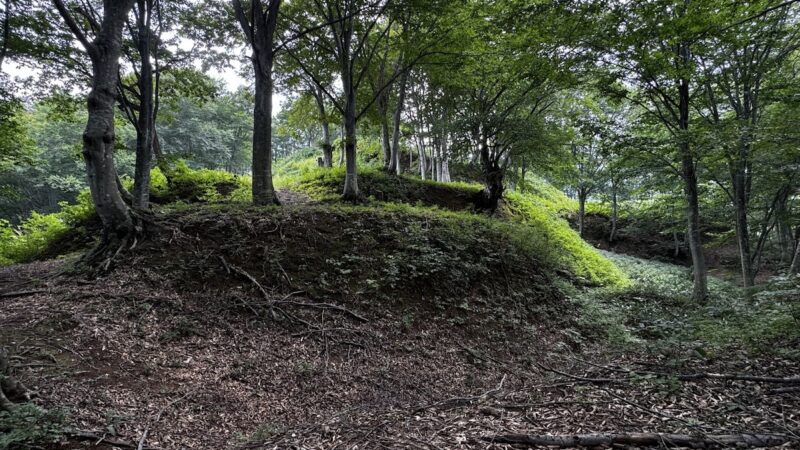
Earthworks and trenches were constructed within the summit enclosures, demonstrating ingenuity in preventing enemy intrusion. The trenches cutting across the ridge, in particular, are typical defensive features of mountain castles and are still clearly visible today.
From the main keep, one can enjoy a panoramic view of the Uonogawa River basin and the Mikuni Highway, making it an ideal military observation post. On clear days, the Tanigawa mountain range and Makihatayama Mountain can be seen in the distance, making it renown.
Site of the Residence at the Foot of the Mountain
At the foot of Sakadoyama Mountain, in the present-day Sakado area, was the site of a residence used during peacetime. This residence site, known as “Mijo” (actual castle), functioned as the lord’s daily living space and administrative center.
The remains of earthworks and moats are still visible at the residence site, exhibiting the typical form of a medieval samurai residence with a rectangular layout. Excavations have unearthed building foundations and artifacts such as pottery, providing valuable clues to the lif
The structure, combining a fortified mountaintop with a residence at the foot of the mountain, is a common form in mountain castles of the Sengoku period, allowing for efficient castle management by differentiating between peacetime and wartime.
Characteristics of Stone Walls and Remains
Some remains of stone walls also exist at Sakado Castle. These stone walls were constructed using the Nozurazumi technique, stacking natural stones, and are valuable remains demonstrating stonework techniques from the Sengoku period to the early modern period.
Along the path leading to the mountaintop, you can see numerous cut cliffs and terraces carved into the bedrock, demonstrating the ingenious use of the natural terrain in the castle’s layout. Furthermore, the flat areas of the baileys remain clearly visible, allow at that time.
Access to Sakado Castle and the Climbing Route
Access to the Trailhead
The starting point for visiting Sakado Castle ruins is the trailhead of Mount Sakado. Access to the trailhead is as follows:
Using Public Transportation
- Approximately 25 minutes on foot from JR Joetsu Line “Muikamachi Station”
- Approximately 5 minutes by taxi from Muikamachi Station
Using a Car
- Approximately 10 minutes from Kan-Etsu Expressway “Muikamachi IC”
- Free parking available near the Sakado Mountain trailhead (approximately 20 spaces)
The trailhead is equipped with information boards and restrooms, allowing you to prepare for your climb.
Details of the Ascent Route
There are mainly two routes to Sakado Castle Ruins.
Yakushi Ridge Course (Front Hiking Trail)
- Distance: Approximately 1.5 km
- Time Required: Approximately 50 minutes ascent, approximately 40 minutes descent
- Features: Relatively gentle and well-maintained hiking trail. Suitable for beginners.
Tera Ridge Course (Back Hiking Trail)
- Distance: Approximately 2.0 km
- Time Required: Approximately 60 minutes ascent, approximately 50 minutes descent
- Features: While there are some slightly steep sections, this route offers many opportunities to see castle remains.
Both courses are well-maintained hiking trails, but since it is a mountain castle site, wearing hiking boots or trekking shoes is recommended. Particular caution is needed during rainy weather and snowmelt, as the trails can become slipper
Precautions When Visiting the Castle
Please note the following points when visiting Sakado Castle Ruins.
- Clothing and Equipment: As this is a mountain climb, please wear comfortable clothing and non-slip shoes. Be sure to bring drinking water.
- Season and Weather: During winter (December to March), snow makes climbing difficult. Spring to autumn is the best season for climbing.
- Estimated Time: Allow approximately 2-3 hours for the round trip. Please also factor in time for sightseeing at the summit.
- Physical Fitness: As this is a climb with an elevation difference of approximately 400 meters, a certain level of physical fitness is required. Climb at a comfortable pace.
- Historical Site Protection: As this is a designated national historical site, please refrain from damaging the remains or taking away stones or soil.
Highlights of Sakado Castle
View from the Main Enclosure
The greatest highlight of Sakado Castle is undoubtedly the view from the main enclosure. Standing on the 634-meter-high summit, you can see the Uonogawa River flowing below and a panoramic view of the Minamiuonuma Plain.
On a clear day, you can see the Echigo Sanzan (Hakkaisan, Nakanodake, and Komagatake), as well as the Tanigawa mountain range and Makihatayama, all famous peaks representing Niigata Prefecture. It’s easy to icaste lug enjoyed this magnificent view, evoking a sense of historical romance.
Enclosures and Earthworks
The summit features multiple enclosures centered around the main keep, and the earthworks separating each enclosure remain in excellent condition. These earthworks are mostly 1-2 meters high, conveying the appearance of the defensive structures of the time.
Walking across the flat areas of the enclosures, it’s easy to imagine the soldiers of the Sengoku period positioned here, monitoring enemy movements.
Moats and Cut Ridges
Moats cutting across the ridges played a crucial role as defensive structures for mountain castles. Sakado Castle also retains several moats, and the large moats built along the main ridges are particularly impressive.
Furthermore, cut cliffs carved into the bedrock can be seen throughout, allowing visitors to appreciate the ingenuity of the castle’s layout, which skillfully utilized the natural terrain. These remains attest to the high level of castleybuil
Residence Site (Main Castle)
The residence site at the foot of the mountain is also a must-see. The rectangular area surrounded by earthworks and moats exhibits a typical form of a medieval samurai residence, allowing us to understand what the lord’s daily life was like.
Information boards are installed at the residence site, providing information on the building layout and other details revealed by archaeological excavations.
Stone Monuments and Information Boards
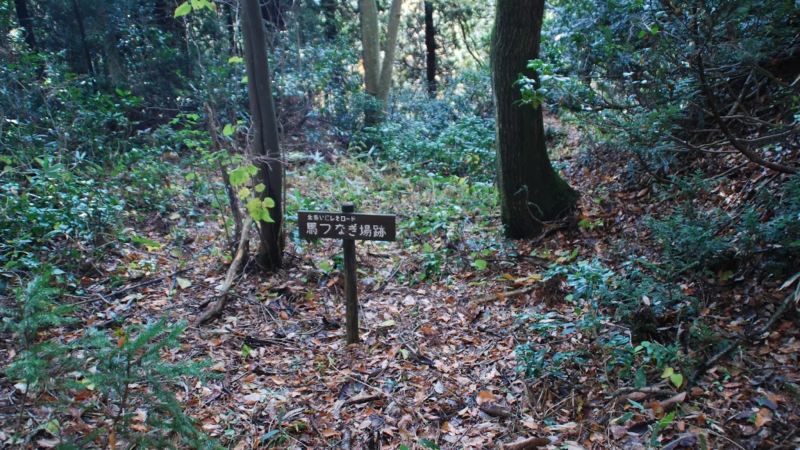
Detailed information boards and explanatory signs are installed along the castle approach and at major remains. There are also stone monuments related to Uesugi Kagekatsu and Naoe Kanetsugu, allowing visitors to enjoy their visit while learning about the historical background.
In particular, near the entrance to the castle ruins, there is a large information board that comprehensively explains the history of Sakado Castle, and it is recommended to read it before climbing the castle.
Nearby Tourist Attractions
Muikamachi Onsen
At the foot of Sakado Castle ruins lies Muikamachi Onsen, where you can relax and soothe your fatigue after climbing the castle. Hot spring inns, including “Shunsai no Sho Sakado Castle,” offer day-use bathing, and you can also enhiy rice and local ingredients.
Undo-an Temple
Located about 15 minutes by car from Sakado Castle, Undo-an Temple is known as a famous temple of the Soto Zen sect. It is also famous as the temple where Uesugi Kagekatsu and Naoe Kanetsugu studied in their childhood, and many jun 성.
On the approach to Undo-an Temple, there is a saying, “Have you stepped on the soil of Undo-an?”, and there is a legend that the Lotus Sutra is buried beneath the stone pavement.
Hakkaisan
Hakkaisan, a sacred mountain known for the sake “Hakkaisan,” is a magnificent peak that can be viewed from Sakado Castle. Hiking and ropeway tours are popular attractions, making it a representative tourist spot in Minamiuonuma City.
Uonuma no Sato
Uonuma no Sato, operated by Hakkai Brewery, is a facility where visitors can experience sake and local food culture. Brewery tours, shopping, and dining are available, making it a recommended addition to a Sakado Castle visit.
Sakado Castle and the Taiga Drama “Tenchijin”
The 2009 NHK Taiga drama “Tenchijin,” featuring Naoe Kanetsugu as the protagonist, included Sakado Castle as an important setting in the story. This drama brought Sakado Castle nationwide recognition, attracting many tourists.
The drama depicts scenes of Kanetsugu (Yoroku) and Kagekatsu (Kiheiji) spending their childhood at Sakado Castle, and the castle is impressively portrayed as the origin of their deep bond.
Even after the drama aired, Minamiuonuma City has been actively promoting Sakado Castle as a place associated with “Tenchijin,” and improvements to information boards and tourist facilities are underway.
Best Season to Visit Sakado Castle
Here’s a guide to the best season to visit the Sakado Castle ruins.
Spring (April-May)
Spring, after the snow melts, is a beautiful time for hiking, with lush greenery. From late April to May, you can also enjoy flowers such as mountain cherry blossoms and dogtooth violets. However, be careful as the hiking trails
Summer (June-August)
While the lush greenery of Sakado Mountain in summer is also appealing, be prepared for the heat and insects. Early morning visits to Sakado Castle are recommended; the view of the Uonuma Plain illuminated by the morning sun is exceptional.
Autumn (September-November)
The autumn foliage season is the best time to visit Sakado Castle. From mid-October to early November, the entire mountain is dyed in red and yellow, making the view from the main keep even more beautiful. The weather is stable, and the conditions
Winter (December-March)
Due to snow, general climbing becomes difficult. However, for those with experience in snow mountain climbing, Sakado Castle covered in snow is also attractive. Safety precautions, appropriate equipment, and experience are necessary.
Sakado Castle Cultural Property Designation and Preservation Activities
Sakado Castle ruins were designated a national historic site on June 11, 1979 (Showa 54). This designation legally protects the preservation and utilization of the castle ruins, and Minamiuonuma City is continuously implementing preservation and maintenance projects.
Archaeological Excavations and Research
Even after its designation as a national historical site, continuous archaeological excavations have been conducted, and research into the castle’s structure and historical changes is progressing. In particular, investigations into the residence site at the foot of the mountain have yielded value lifestyle.
Maintenance Projects
In Minamiuonuma City, in order to balance the preservation and utilization of the historical site, measures such as maintaining hiking trails, installing information boards, and implementing safety measures in dangerous areas are being carried out. Regular maintenance work such as mowing striving to create an environment where visitors can safely view the historical site.
Collaboration with the Community
Local history enthusiast groups and volunteer groups are also actively involved in the preservation and utilization of Sakado Castle. Guided tours, cleaning activities, and history lectures are being conducted, demonstrating a community-wide effort to protect and utili.
Summary
Sakado Castle is a historically important castle, the birthplace of two prominent warlords of the Sengoku period: Uesugi Kagekatsu and Naoe Kanetsugu. Located on a 634-meter-high mountaintop overlooking the Mikuni Kaido road, this mountains clan’s rule over Echigo Province.
Currently designated a national historic site, many remains, including the mountaintop baileys, earthworks, moats, and the site of the residence at the foot of the mountain, are well-preserved. The hiking trails are also well-maintained, making it a popular hikers.
The view from the main keep is magnificent, offering panoramic views of the Uonuma Plain and the mountains of Echigo. Sakadoyama Mountain, with its vibrant spring greenery, deep summer foliage, and autumn leaves, displays different expressions throughout the seasons
Nearby, there are many historical and cultural attractions such as Muikamachi Onsen and Undo-an Temple, making for a fulfilling trip. When visiting Niigata Prefecture, be sure to visit Sakado Castle ruins and experience both the historical romance of the Sengoku period and the magnificent natural beaut