A Complete Guide to the History and Highlights of Samegao Castle | Visiting the Site of Uesugi Kagetora’s Demise
Located in Myoko City, Niigata Prefecture, Samegao Castle is an important mountain castle that conveys the tragedy of the Sengoku period. It is particularly known as the site where Uesugi Kagetora, adopted from the Hojo clan, met his end for Uesugi Kenshin. This article comprehensively explains everything you need to know before visiting Samegao Castle, from its historical background and detailed remains to highlights and access methods.
What is Samegao Castle? | Basic Information and Overview
Samegao Castle is a medieval mountain castle built on a hill 185 meters above sea level in the Miyauchi district of Myoko City, Niigata Prefecture. Also known as “Yoneyama Castle” and “Sameo Castle,” it is currently designated as a national historic si.
Castle Location and Geographical Features
Samegao Castle is strategically located at a key point overlooking the Kubiki Plain. Located on a hill overlooking the Hokkoku Kaido road and the Sekikawa River, Samegao Castle was a crucial military base controlling a vital transportation hub connecting Echigo and Shinano proids the resemblance of the mountain’s shape to a shark’s tail.
The castle grounds extend approximately 400 meters east-west and 250 meters north-south, featuring a central enclosure surrounded by multiple baileys in a linear layout. Its highly defensible structure, utilizing the steep slopes, show the castle-building techniques of the Sengoku period.
Historic Site Designation and Cultural Value
Samegao Castle Ruins were designated a National Historic Site on March 2, 2005 (Heisei 17). Not only is it highly valued for its historical significance as the site of Uesugi Kagetora’s demise, but it is also an important cultural property period mountain castle.
Myoko City is committed to the preservation and utilization of historical sites, with maintenance work including the improvement of the approach to the castle, the installation of information boards, and regular grass cutting. Local volunteer groups also actively conduct historical site guided tours and cleaning community-based cultural property protection.
History of Samegao Castle | From Construction to Abandonment
Construction History and Early Period
There are various theories regarding the construction period of Samegao Castle, but it is believed to have been built between the late 14th and 15th centuries by a local powerful family who ruled the area. It is presumed to have initially been a sm
With the arrival of the Sengoku period (Warring States period), as the power of the Nagao clan (later the Uesugi clan), the deputy governor of Echigo Province, expanded, Samegao Castle also came under the control of the Uesugi clan. During the time of retainers, such as Horie Munechika and Usami Sadamitsu, served as castle lords.
The Otate Rebellion and the End of Uesugi Kagetora
The name of Samegao Castle is etched in history during the Otate Rebellion, which occurred in 1579 (Tensho 7). This civil war erupted after the sudden death of Uesugi Kenshin in March 1578, over the succession.
The Course of the Otate Rebellion
There were two candidates for succession. One was Uesugi Kagekatsu, the son of Kenshin’s sister and his adopted son. The other was Uesugi Kagetora, the seventh son of Hojo Ujiyasu of Odawara and also Kenshin’s hand, but the situation reversed when Kagekatsu formed an alliance with Takeda Katsuyori.
In March 1579, Kagetora escaped from his castle, Otate (a residence below Kasugayama Castle), and attempted to head towards the Kanto region in search of reinforcements from the Hojo clan. However, pursued by Kagekatsu’s forces, he fled to Samega
The End at Samegao Castle
Horie Munechika, the lord of Samegao Castle, was initially on Kagetora’s side, but after observing the situation, he switched allegiance to Kagekatsu. On March 24, 1579, Kagetora committed suicide within Samegao Castle, ending his life . brought an end to the Otate Rebellion, and Uesugi Kagekatsu became the head of the Uesugi family.
Kagetora’s grave is located at the foot of Samegao Castle, within the grounds of Rinsenji Temple, and is still visited by many history enthusiasts. The story of Kagetora, a tragic warrior, is the greatest historical value of Samegao Castle.
Samegao Castle After the Otate Rebellion
After the Otate Rebellion, Samegao Castle continued to function as a military base under the control of Uesugi Kagekatsu. When Kagekatsu was transferred to Aizu in 1598, the Hori clan entered Echigo Province, and Samegao Castle also came under their control.
However, it is believed that Samegao Castle was abandoned around 1607 (Keicho 12) during the early Edo period due to the Tokugawa shogunate’s “One Castle Per Province” decree. Since then, the castle has been abandoned, and
Remains and Highlights of Samegao Castle
The current Samegao Castle site retains many remains that evoke the appearance of a mountain castle from the Sengoku period.
Main Enclosure (Honmaru)
The main enclosure, the central part of the castle, is located on the mountaintop at an altitude of 185 meters. It measures approximately 50 meters east-west and 30 meters north-south, and it is believed that the lord’s watchtowers were located here.
From the main enclosure, you can enjoy a panoramic view of the Kubiki Plain, the Sea of Japan, and in the distance, mountains such as Mount Myoko and Mount Kurohime. On clear days, you can even see Sado Island, and this excellents view speak
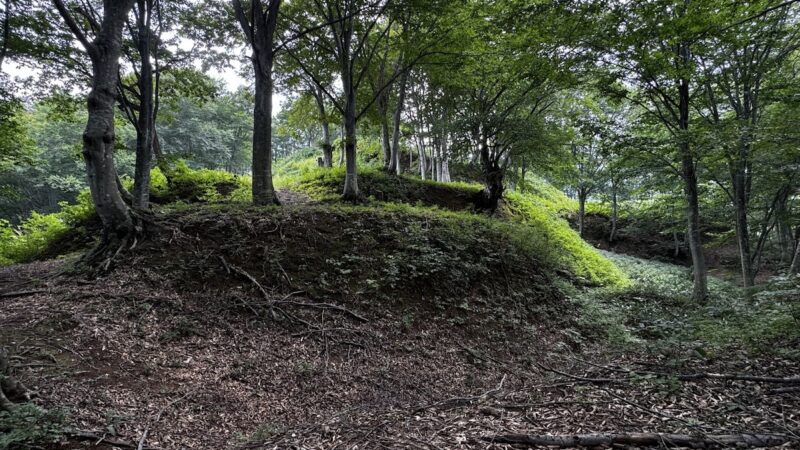
Remnants of earthworks remain around the main enclosure, confirming the existence of defensive structures. The remains of the koguchi (gateway) are also clearly visible, making it valuable material for studying the structure of castles during the Sengoku period.
Enclosures and Defensive Structures
Several enclosures (flat areas) are arranged in a stepped pattern around the main enclosure. These are thought to have been used as garrisons for soldiers and storage areas for supplies.
Of particular note are the defensive structures called horikiri. Horikiri are dry moats created by artificially cutting into ridges, and they played an important role in preventing enemy incursions. Several horikiri remain at Samegao Castle, and their large scale sugg
Tatebori (vertical moats) can also be seen. Vertical moats were dug along slopes, serving to prevent enemies from climbing the incline. These remains are valuable evidence of the advanced castle-building techniques of the Sengoku period.
Historical Sites Associated with Uesugi Kagetora
Within the castle ruins, there are several historical sites related to Uesugi Kagetora.
Kagetora Shimizu, a spring, is said to be the place where Kagetora drank his last water. Pure water still flows from it, allowing visitors to cleanse their hands.
Furthermore, an information board has been erected at the site where Kagetora is believed to have committed suicide, allowing visitors to reflect on this tragic history. Every March, a memorial service for Kagetora is held locally, attracting history enthusias.
Path to the Castle and Information Board
The path to Samegao Castle is well-maintained and relatively easy to climb. The journey from the entrance to the main enclosure takes approximately 20-30 minutes on foot.
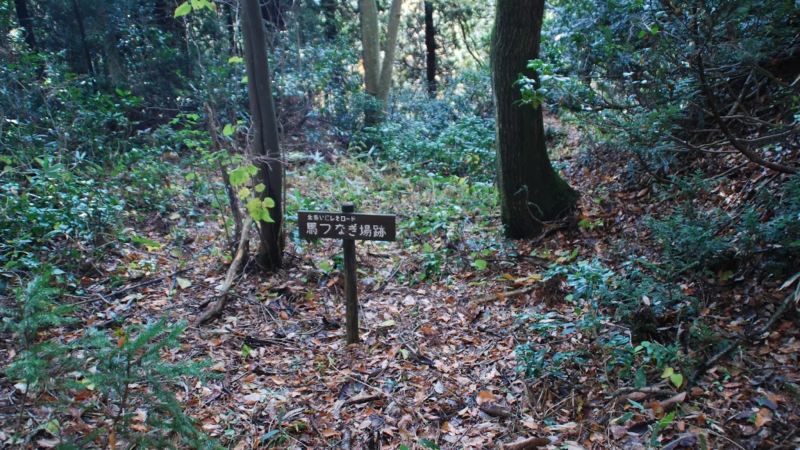
Along the path leading to the castle, several information boards explaining the castle’s history and remains are installed. These boards use photographs and illustrations to provide clear explanations, allowing even first-time visitors to understand the castle’s struct
The path to the castle is a mountain trail, so comfortable shoes and clothing are recommended. Particular caution is needed after rain, as the path can become slippery.
Related Historical Sites Around Samegao Castle
When visiting Samegao Castle, exploring the surrounding related historical sites will deepen your understanding of its history.
Rinsenji Temple (Grave of Uesugi Kagetora)
Rinsenji Temple, located at the foot of Samegao Castle, is a Soto Zen Buddhist temple known for housing the grave of Uesugi Kagetora. Kagetora’s grave is located in the cemetery behind the main hall and is still carefully preserved by local residents
Rinsenji Temple is a temple associated with Uesugi Kenshin. While it’s a different temple from the Rinsenji Temple on Mount Kasuga where Kenshin is said to have trained in his childhood, it shares a deep connection with the Uesugi clan
The temple grounds also display materials related to Kagetora, allowing visitors to learn more about the Otate Rebellion. In the tranquil grounds, one can pray for Kagetora’s soul and reflect on the tragedy of the Sengoku period.
Hida Historical Village
Located about 10 minutes by car from Samegao Castle, Hida Historical Village is a historical park with a concentration of ruins from ancient to medieval times. This area includes the Hida Ruins, a Yayoi period moated settlement, the ancient mountain castle Furujo, and
In particular, Hida Castle was a mountain castle that functioned at the same time as Samegao Castle and was one of the important bases of the Uesugi clan. At the Hida Historical Village Information Center, you can view exhibits and materials related to these historical sites, allowing y this region.
Kasugayama Castle Ruins
Kasugayama Castle Ruins, famous as the residence of Uesugi Kenshin, is located about 30 minutes by car from Samegao Castle. The ruins of the Otate Castle, the site of the Otate Rebellion, are also nearby, making it an essential historical.
Kasugayama Castle is a large mountain castle, counted as one of Japan’s five greatest mountain castles, and it still conveys the prosperity of the era of Uesugi Kenshin. Visiting both Samegao Castle and Kasugayama Castle will allow deou ou Uesugi clan.
Access and Visiting Information for Samegao Castle
Access by Public Transportation
By Train:
- Approximately 40 minutes on foot from Kitashin’ai Station on the Echigo Tokimeki Railway
- Approximately 10 minutes by taxi from Kitashin’ai Station
The most common route is to transfer to the Echigo Tokimeki Railway from Joetsu-Myoko Station on the JR Hokuriku Shinkansen and get off at Kitashin’ai Station. The journey from Joetsu-Myoko Station to Kitashin’ai Station takes approximately 2
Since public transportation is limited, it is recommended to check the timetable in advance. Particular caution is needed on holidays due to the reduced frequency of service.
Access by Car
By Car:
- Approximately 10 minutes from Arai Smart IC on the Joshinetsu Expressway
- Approximately 15 minutes from Nakago IC
A free parking lot is available near the entrance to the Samegao Castle ruins. It can accommodate approximately 20 cars, and regular-sized vehicles should have no problem parking. However, it can get crowded during cherry blossom season and when historical
When searching using a car navigation system, it’s best to set “Samegao Castle Ruins” or “Hida Historical Village Information Center” as your destination.
Important Notes for Visitors
Clothing and Items to Bring:
- Comfortable walking shoes (trekking shoes or athletic shoes recommended)
- Comfortable clothing
- Drinking water
- Insect repellent and a hat in summer
- Warm clothing in winter
Climbing Time:
- Approximately 20-30 minutes one way from the entrance to the main keep
- Allow 1.5-2 hours round trip, including sightseeing time
Best Season:
- Spring (April-May): Beautiful cherry blossoms and fresh greenery
- Autumn (October-November): Enjoy the autumn foliage
- Winter (December-March): Be aware that snow can make climbing difficult
Other Notes:
- As it is a mountain castle, toilets are only available near the entrance.
- There are no vending machines or shops, so prepare necessary items in advance.
- Be careful of wild animals (especially bears) and it is recommended to carry a bell or similar device.
- To protect the historical site, please refrain from damaging the remains or collecting plants.
Surrounding Facilities and Tourist Information
The Hida Historical Village General Information Center offers exhibits and materials on the surrounding historical sites, including Samegao Castle. Opening hours are 9:00 AM to 5:00 PM (until 4:30 PM in winter). Closed on Mondays (or the following during the New Year holidays. Admission is free.
Volunteer guides can be arranged at the information center (advance reservation required). Visiting with a knowledgeable guide will allow you to understand history more deeply.
Learning about Samegao Castle and Uesugi Kagetora
About Uesugi Kagetora
Uesugi Kagetora (1554-1579) was born the seventh son of Hojo Ujiyasu, a Sengoku period daimyo of Odawara. His real name was Hojo Ujihide, and in 1569 he was adopted by Uesugi Kenshin and took
Kagetora was known as an excellent warrior skilled in both military and literary arts, and was highly regarded by Kenshin. He married Kenshin’s niece and played an important role as a member of the Uesugi family. However, Kenshin’s sud chain of events that derailed Kagetora’s fate.
The Impact of the Otate Rebellion on the Uesugi Family
The Otate Rebellion dealt a major blow to the Uesugi family. Many vassals lost their lives in the civil war, and their territory was devastated. Furthermore, their relationship with the Hojo clan, who had supported Kagetora, deteriorated, and their alliance with the Take
On the other hand, Uesugi Kagekatsu, who emerged victorious from this civil war, demonstrated strong leadership in subsequent Uesugi family affairs. Kagekatsu employed talented vassals such as Naoe Kanetsugu and worked to rebu
The Otate Rebellion was a significant event that had a major impact not only on the Uesugi family but also on the power dynamics of the late Sengoku period. Understanding this rebellion is crucial for understanding the transition period from the end of the Toku
Historical Research and New Discoveries
Recent archaeological excavations and historical document research have yielded new insights into Samegao Castle and the Otate Rebellion.
Excavations conducted in the 2000s revealed more detailed information about the castle’s structure, confirming the arrangement of defensive facilities and building remains. This confirmed that Samegao Castle functioned not merely as a small fort, but
Furthermore, research into ancient documents is gradually revealing the detailed course of the Otate Rebellion, the warlords who supported Kagetora, and the details of the battles against Kagekatsu’s forces.
The Myoko City Board of Education and local historical research groups are continuously conducting research, and their findings are regularly made public. For history enthusiasts, this historical site offers many opportunities to encounter new discoveries.
Seasons and Ways to Enjoy Samegao Castle
Spring at Samegao Castle
Samegao Castle in spring is a beautiful season when cherry blossoms and wildflowers are in full bloom. From mid- to late April, the cherry blossoms along the path to the castle are at their peaks the cherry s. exceptional, attracting many photography enthusiasts.
Also, the local “Kagetora Festival” is sometimes held during this time, featuring events such as a warrior procession and memorial services. It’s a great opportunity to experience the region’s history and culture.
Summer at Samegao Castle
In summer, Samegao Castle is covered in greenery, making for an enjoyable climb while experiencing the forest. However, it’s a season with high temperatures and many insects, so adequate hydration and insect repellent are necessary.
Climbing early in the morning is recommended; climbing during the cooler hours is much more comfortable. Furthermore, the view from the main enclosure is magnificent even in summer, with the contrast between the lush green plains and mountains creating a
Samegao Castle in Autumn
Autumn is one of the best seasons to visit Samegao Castle. From late October to early November, the entire mountain is ablaze with autumn colors, offering breathtaking scenery.
The weather is mild, making the climb easy, and you can enjoy panoramic views of distant mountains in the crisp air. Walking along the castle path through the autumn foliage is a luxurious experience that combines historical exploration with nature appreciation.
Samegao Castle in Winter
In winter, Samegao Castle is covered in snow, making the climb difficult. Climbing during the snowy season (December to March) requires winter mountain equipment and experience, so it is not recommended for general tourists.
However, the view of the snow-covered Samegao Castle from the foot of the mountain during breaks in the snow is fantastically beautiful. Visiting Rinsenji Temple and paying respects at Kagetora’s grave is also a good idea during this season.
Voices of Visitors to Samegao Castle
We have received a variety of impressions from people who have actually visited Samegao Castle.
Voices of History Fans:
“Standing on the site of Uesugi Kagetora’s final moments, I felt the tragedy of the Otate Rebellion very close at hand. The remains are well-preserved, and you can fully experience the atmosphere of a mountain castle from the Sengoku period.”
Voices of Hiking and Mountain Climbing Enthusiasts:
“It’s an enjoyable hiking course with a moderate level of difficulty. The view from the main enclosure is magnificent, offering a spectacular panoramic view of the Kubiki Plain. The well-maintained path to the castle is also a plus, making it eas
Voices of Local Residents:
“This is a place I’ve been familiar with since childhood. Since it was designated a national historical site, many people from outside the prefecture have started visiting. As a treasure of our region, we want to continue to cherish and protect it.”
Voices of Photography Enthusiasts:
“It’s a fantastic photo spot in both spring with its cherry blossoms and autumn with its colorful leaves. In particular, the view from the main enclosure, photographed in the early morning light, is something I never tire of, no matter how many times
Summary: The Charm and Value of Visiting Samegao Castle
Samegao Castle is not only historically significant as the site of Uesugi Kagetora’s demise, but also a valuable historical site that preserves the appearance of a mountain castle from the Sengoku period. The well-preserved remains, magnificent views, and unique a deep impression on visitors.
It’s a place that can be enjoyed from various angles, whether you’re interested in history, hiking, nature walks, or Sengoku period castle architecture.
When visiting Myoko City in Niigata Prefecture, be sure to visit Samegao Castle. The time spent reflecting on the life of Uesugi Kagetora, a warrior, while feeling the spirit of the Sengoku period, will surely be an unforgettable experience.
Visiting nearby sites such as Rinsenji Temple, Hida Historical Village, and Kasugayama Castle Ruins will allow you to gain a deeper understanding of the Uesugi clan’s history and the Sengoku period in Echigo. Actually visiting the historical site and feelinges learning that cannot be obtained from books or the internet. As a bridge connecting the past and the present, Samegao Castle will continue to convey the importance of history to many people for years to come.