
Mibu Castle Complete Guide | A Thorough Explanation of History, Remains, and Access
Mibu Castle was a Japanese castle located in Mibu-machi, Shimotsuga-gun, Tochigi Prefecture. During the Edo period, it belonged to Tsuga-gun, Shimotsuke Province, and was an important base where the Mibu Domain’s administrative office was mains. Castle Ruins Park, and the remains, such as earthworks, are well-preserved, centered around the main keep. This article provides a comprehensive explanation of Mibu Castle, from its construction to its abandonment, to details of the existing remains, and access information for visitor
Overview of Mibu Castle
Mibu Castle is located in Honmaru, Mibu-machi, Shimotsuga-gun, Tochigi Prefecture, and is a flatland castle built on a plateau between the Kurokawa and Sugatagawa rivers. It is also known as “Horseshoe Castle,” and as the name horseshoe-shaped layout. The castle’s scale is typical of a modern castle, with the main keep at its center, surrounded by the second and third baileys, and enclosed by earthen ramparts and moats.
Throughout the Edo period, it functioned as the administrative center of the Mibu Domain, and ultimately, the Torii clan resided there for seven generations. Although it was abandoned after the Meiji Restoration, parts of the main keep’s earthen ramparts and moats remain glory.
History
Construction and the Mibu Clan Era
There are several theories regarding the construction of Mibu Castle. Generally, it is believed to have been built in 1462 by Mibu Tanenari, the first head of the Mibu clan. However, it is thought that the castle was actually developed at at Tsunashige, during the Bunmei era (1469-1486).
There are various theories regarding the origins of the Mibu clan, including theories that they were descendants of Kyoto court nobles or a branch of the Utsunomiya clan. The Mibu clan expanded their power as a powerful local lord, and for fiveately, and for five generations, Castle as their residence.
The early castle, known as Mibu Old Castle, is believed to have been located north of the current Mibu Castle, west of Joraku-ji Temple, the family temple of the Mibu and Torii clans. It is thought that the castle was later was later moved and whes more defensible.
The Downfall of the Mibu Clan
In 1590, during Toyotomi Hideyoshi’s siege of Odawara, Mibu Yoshio, the the lord of Mibu Castle, sided with the Hojo clan along with his brother-in-law, Minagawa Hiroteru. This choice would determine the fate of the Mibu clan.
Following the defeat of the Odawara Hojo clan, Mibu Yoshio’s territory was confiscated, and the Mibu clan was destroyed. This marked the end of the Mibu clan’s rule, which had lasted for approximately 130 years, and Mibu Castle.
Changes in Castle Lords during the Edo Period
After the fall of the Mibu clan, Mibu Castle was successively ruled by hereditary daimyo, primarily vassals of Tokugawa Ieyasu. This frequent change of castle lords is a major characteristic of Mibu Castle during the Edo period.
Main Lords of Mibu Castle from 1600 onwards:
- Hineno Yoshiaki: After the Battle of Sekigahara, he was granted a 20,000 koku stipend as a retainer of Yuki Hideyasu, the second son of Tokugawa Ieyasu.
- Abe Tadaaki: The period when the Abe clan, who were active as senior councilors, served as castle lords.
- Miura Masatsugu: The period of rule by the Miura clan.
- Matsudaira Terusada: The period of rule by the Matsudaira clan.
- Kato Akihide: The period when the Kato clan served as castle lords.
In 1712, Torii Tadahide was granted a 30,000 koku stipend, and thereafter, the Torii clan ruled Mibu Castle for seven generations until the Meiji Restoration. The Torii clan’s rule lasted for approximately 160 years, making it the long
The Torii clan stabilized the administration of the Mibu Domain and worked to develop the castle town and promote industry. During this period, Mibu Castle reached its peak as a modern castle and fully fulfilled its function as the domain’s administrative center.
From the End of the Edo Period to the Meiji Restoration
During the end of the Edo period, the Mibu Domain, like many other small domains, was tossed about by the turbulent times. During the Boshin War, it sided with the new government, striving for the domain’s survival.
After the Meiji Restoration, the Mibu Domain was abolished with the establishment of prefectures and the abolition of the feudal domains, and Mibu Castle was also abandoned. Having lost its function as a castle, Mibu Castle gradually lost its former appearance, being
Remains
Earthworks of the Main Enclosure
The best-preserved remains of Mibu Castle are the earthworks surrounding the main enclosure. These earthworks, several meters high, can still be seen today within Mibu Castle Ruins Park and are important remains for understanding the scale and structure of the castle.
The earthen ramparts of the main keep remain almost entirely intact, with the northwestern rampart being particularly well-preserved. A walking path has been constructed on top of the ramparts, allowing visitors to experience the scale of the former castle while
The structure of the ramparts, built purely from piled-up earth without the use of stone walls on the inside, demonstrates a typical castle-building technique for flatland castles in the Kanto region. Observing the cross-section of the ramparts reveals a layer the advanced civil engineering technology of the time.
Remains of the Moat
Parts of the moat surrounding the main keep also remain. Currently maintained as a water moat, it also functions as a scenic element of the park. The width of the moat varies in location, but it is estimated to have been approximately 20 meters
The southern moat is relatively well-preserved, allowing us to imagine its function as a defensive structure in its heyday. While the moat is shallower now, archaeological excavations have confirmed that it was originally 3-4 meters deep
Second and Third Baileys
The second bailey was located outside the main bailey, and the third bailey was located further outside of that. Currently, part of the second bailey is occupied by public facilities such as the Mibu Town Hall and schools, developed into residential and commercial areas.
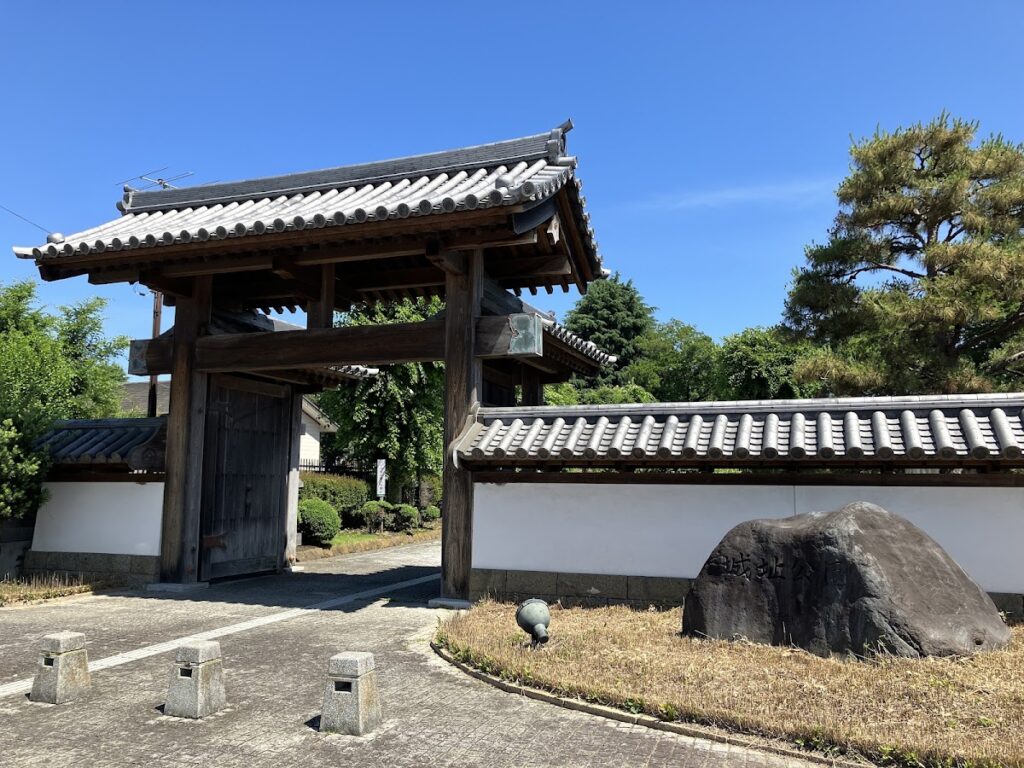
A replica gate has been constructed at the entrance to the second bailey, creating the atmosphere of a castle. This replica gate is built with an authentic structure and is a popular spot for taking photographs.
Remains of the Castle Town
The castle town of Mibu Castle also has scattered remains that retain a small glimpse of its former glory. The earthworks of samurai residences, waterways, and road layouts reveal the structure of a castle town from the Edo period.
In particular, the area around Joraku-ji Temple contains the graves of the Mibu and Torii clans, making it an important historical site where one can reflect on the history of successive castle lords. Within the temple grounds stand memorial towers for the castle lord and his retainers, day.
After the Castle’s Abandonment
Mibu Castle Ruins in the Meiji Era
After the Meiji Restoration, the grounds of the abandoned Mibu Castle were repurposed for various uses. Part of the main keep became school grounds, and other parts were sold off to private individuals. During this period, many castle structures were demolished were destroyed.
Throughout the Meiji era, the Mibu Castle ruins gradually became urbanized, and its appearance as a castle was lost. However, the earthworks of the main keep were relatively well preserved and continued to be recognized as a historical symbol of the region.
Development of Mibu Castle Ruins Park
From the Showa to the Heisei era, Mibu Town proceeded with a project to develop the Mibu Castle ruins into a historical park. The area centered around the main keep site has been developed as “Mibu Castle Ruins Park,” with preservation work on the earthworks, restoration of
Within the park, the Mibu Town Historical and Folk Museum was constructed, exhibiting the history of Mibu Castle, excavated artifacts, and the history of Mibu Town. The museum allows visitors to see pottery, weapons, and ancient documents unearthed during exca of Mibu Castle.
The park’s development aimed to balance the preservation of the historical landscape with its function as a place of recreation for citizens. In spring, cherry blossoms bloom profusely, making it a popular spot for cherry blossom viewing.
Mibu Castle Ruins in Modern Times
Currently, Mibu Castle Ruins Park is an important tourist resource for Mibu Town. It is used not only by castle enthusiasts and history buffs, but also by local residents for walks and recreation.
In recent years, the issuance of “Goshuin” (castle stamps) has begun, leading to an increase in visits from castle enthusiasts across Japan. The Mibu Town Tourism Association sells Goshuin for Mibu Castle, which are popular as souvenirs of visits.
Mibu Castle Ruins Park regularly hosts history lectures and guided castle tours, functioning as a place for local history education. Furthermore, preservation work on the main keep’s earthworks is ongoing, continuing efforts to pass on this valuable historical heritage.
Structure and Layout
Origin of the Name “Horseshoe Castle”
The reason Mibu Castle is called “Horseshoe Castle” lies in its unique layout. The overall shape of the castle resembles a horse’s hoof, hence the nickname.
The castle was built on a plateau betwet two rivers, the Kurokawa and the Sugata River, and skillfully utilized the natural terrain to construct a defensive system. The rivers acted as natural moats, enhancing the castle’s defensive capabilities.
Structure of the Honmaru (Main Enclosure)
The Honmaru was located in the center of the castle and housed the lord’s residence and administrative offices. It was surrounded by high earthen ramparts and a moat, providing strong defense.
The Honmaru measured approximately 150 meters east-west and 120 meters north-south, covering an area of about 1.8 hectares. While palaces and watchtowers once stood within the Honmaru, they havet all
The entrances to the Honmaru were limited, and a strict security system was in place. The castle gates, known as Koguchi, were protected by a masugata-style structure, a clever design to prevent enemy intrusion.
Layout of the Ninomaru and Sannomaru (Second and Third Enclosures)
The Ninomaru (Second Enclosure) surrounded the Honmaru and housed the residences of retainers and warehouses. The Ninomaru was also defensaed by earthen ramparts and a moat, playing a crucial role in preventing attacks on the Honmaru.
The third bailey extended further outward, including the residences of lower-ranking samurai and the residential area of townspeople. A moat called the “sōgamae” surrounded the outer edge of the third bailey, creating a defensive structure for the
This triple defensive structure is typical of early modern castles and indicates that Mibu Castle functioned as an important military base throughout the Edo period.
Highlights of Mibu Castle
Strolling the Main Bailey Earthworks
When visiting Mibu Castle Ruins Park, we recommend strolling along the main bailey earthworks first. Walking along the promenade built on top of the earthworks allows you to appreciate the scale of the castle and enjoy the surrounding scenery.
From the earthworks, you can see in the direction of the former second and third baileys, allowing you to imagine the extent of the castle town. The earthworks on the northwest side, in particular, are well-preserved, retaining much of their original.
Replica Gate of the Second Bailey
The replica gate constructed in the Second Bailey is built in the style of authentic castle architecture, providing a clue to imagining the former appearance of Mibu Castle. The gate’s structure and decorations faithfully reproduce the characteristics of each period
Information boards are installed around the replica gate, allowing visitors to learn about the history and structure of Mibu Castle.
Mibu Town Historical and Folk Museum
The Mibu Town Historical and Folk Museum, located within the park, features detailed exhibits on Mibu Castle. Through artifacts unearthed during archaeological excavations, ancient documents, and maps, visitors can gain a deeper understanding of Mibu Castle’s hist
The museum also displays materials related to successive castle lords, such as the Mibu and Torii clans, allowing visitors to learn about their lives and political activities. Furthermore, there are exhibits on the history and folklore of Mibu Town, providing a compreture
Joraku-ji Temple Cemetery
Jōraku-ji Temple, located within walking distance of Mibu Castle Ruins Park, houses the cemeteries of the Mibu and Torii clans. The gravestones of successive castle lords and their retainers stand side by side, making it a valuable historical site that conveys
In particular, the Torii clan’s cemetery features the neatly arranged graves of seven generations of feudal lords and their families, telling the story of the Mibu domain during the Edo period. The style of the gravestones and inscriptions offer insights into the culture and beliefs of sa.
A Famous Cherry Blossom Spot
Mibu Castle Ruins Park is also known as a famous cherry blossom spot in spring. The cherry trees planted around the earthworks of the main keep and the moat bloom all at once, beautifully decorating the castle ruins.
During cherry blossom season, many visitors come to enjoy the arrival of spring in a historical atmosphere. The trees are sometimes illuminated at night, allowing visitors to enjoy the magical sight of cherry blossoms after dark.
Tourist Information and Access
Access to Mibu Castle Ruins Park
Access by Train:
- Get off at Mibu Station on the Tobu Utsunomiya Line, approximately 15 minutes on foot
- Local buses are also available from Mibu Station (limited number of services)
Access by Car:
- Approximately 10 minutes from Mibu IC on the Kita-Kanto Expressway
- Approximately 20 minutes from Tochigi IC on the Tohoku Expressway
- Parking available (free)
Opening Hours and Admission Fee
Mibu Castle Ruins Park:
- Opening Hours: Always open
- Admission Fee: Free
Mibu Town Historical and Folk Museum:
- Opening Hours: 9:00~17:00 (Last entry at 16:30)
- Closed: Mondays (or the following day if Monday is a public holiday), New Year holidays
- Admission Fee: Admission: 200 yen for adults, 100 yen for high school and university students, free for junior high school students and younger.
Nearby Tourist Attractions
There are many other attractions around Mibu Castle Ruins Park:
Tochigi Wanpaku Park:
A large park in Mibu Town with plenty of playground equipment and athletic facilities for children. Ideal for family visits.
Mibu Toy Museum:
One of Japan’s leading toy museums, exhibiting toys from various eras. A facility that can be enjoyed by children and adults alike.
Dokkyo Medical University Hospital:
A modern medical facility, but the surrounding landscape is well-maintained and suitable for strolling.
Best Season to Visit
Mibu Castle Ruins Park can be visited throughout the year, but the best season is:
Spring (late March to early April):
The castle ruins are beautifully colored during the cherry blossom season. It’s the perfect season to enjoy cherry blossom viewing while strolling through history.
Autumn (October-November):
The autumn foliage is beautiful, and the weather is perfect for a stroll. The view of the autumn leaves from the top of the earthen rampart is exceptional.
Early Summer (May-June):
The fresh greenery is beautiful, and the weather is mild, making it ideal for a stroll.
How to Obtain a Castle Stamp
Mibu Castle’s castle stamp can be purchased at the Mibu Town Tourism Association or the Mibu Town Historical and Folk Museum. The price is usually around 300 yen, and it’s a popular souvenir of a visit.
The castle stamp features the Mibu Castle family crest and name, making it a valuable collector’s item. Limited editions are sometimes issued, so it’s recommended to check the latest information before visiting.
Summary
Mibu Castle is a historical castle, built by the Mibu clan during the Sengoku period, serving as the residence of many fudai daimyo throughout the Edo period, and ultimately ruled by the Torii clan for seven generations. Currently, the site is maintained castle, such as the earthworks and moats of the main keep, are well preserved.
At the Mibu Town Historical and Folk Museum within the park, you can learn about the history of Mibu Castle in detail, and in spring, it is a popular spot for viewing cherry blossoms. It is an important historical site for understanding the history of Tochigi Prefecture, castle enthusiasts but for anyone interested in history.
Its easy accessibility, being within walking distance of Mibu Station on the Tobu Utsunomiya Line, is also one of its attractions. When you visit Mibu Town, be sure to visit Mibu Castle Ruins Park and experience the remnants of a castle with over 400 imagining the view seen by the castle lords of yesteryear, you can experience the profound depth of Korean castle culture.
