

Shidanomaru Castle (Yamaguchi Prefecture) – A Thorough Explanation of the Remains and History of the Mountain Castle of the Sugi Clan, a Senior Retainer of the Ouchi Clan
What is Shidanomaru Castle?
Shidanomaru Castle is a medieval mountain castle located in Jōnan, Okumankura, Ube City, Yamaguchi Prefecture. Also known as “Shita Castle” or “Shidanomaru Castle,” it is known as a full-fledged mountain castle built on a mountaintop 342m above sea level, with a relative height of approximately 150m, facing the Imatomi River. Currently protected as a Ube City designated historical site, it occupies an important position in the study of mountain castles in the Chūgoku region.
It was one of the important bases that supported the Ouchi clan’s rule in Nagato Province, and as a valuable cultural asset that conveys the mountain castle construction techniques of the Sengoku period, it attracts attention from castle enthusiasts and history researchers.
History and Lords of Shinoda-no-Maru Castle
Construction Period and Background
The exact construction date of Shinoda-no-Maru Castle is uncertain, but it is estimated to have been built sometime between the Muromachi and Sengoku periods. During this time, the Ouchi clan, who ruled both Suo and Nagato provinces, strengthened their control over their territory by placing powerful vassals in various locations and having them build castles as bases.
Shinoda-no-Maru Castle is thought to have been built as part of this Ouchi clan system of territorial control, at a strategic point in Nagato Province. Its location in the Imatomi River basin, a key transportation hub, suggests it was a militaryly and economically important base.
About the Lords, the Sugi Clan
The lords of Shinoda-no-Maru Castle are said to have been Sugi Hoki-no-Kami Shigeyoshi, a senior retainer of the Ouchi clan, and his son, Sugi Shigenori. The Sugi clan was known as a hereditary vassal of the Ouchi clan and played an important role in supporting the Ouchi clan’s rule in Nagato Province. Sugiyama Shigeyoshi, the governor of Hoki Province, was a powerful warrior within the Ouchi clan’s vassal group and is believed to have been entrusted with the governance of Nagato Province. The selection of Shinoda-no-maru Castle as the Sugiyama clan’s residence speaks to the strategic importance of this region.
Relationship with the Ouchi Clan
The Ouchi clan was a powerful shugo daimyo (provincial governor) that built a formidable presence in western Chugoku region, centered on Suo and Nagato provinces, from the Muromachi period to the Sengoku period. At its peak, their influence extended from northern Kyushu to Iwami Province, and they accumulated immense wealth through trade with the Ming Dynasty.
Shinoda-no-maru Castle functioned as one of the key castles in Nagato Province within the Ouchi clan’s territorial control. It is presumed to have played a role in communication with Yamaguchi, the Ouchi clan’s base, governing Nagato Province, and serving as a relay point for military operations towards northern Kyushu.
Period of Abandonment and Aftermath
While there are no clear records regarding the period of abandonment of Shinoda-no-Maru Castle, after the Ouchi clan’s downfall in the Dainei-ji Incident of 1551, Nagato Province came under the control of the Mori clan. It is believed that Shinoda-no-Maru Castle gradually lost its military function amidst this political upheaval.
During the late Sengoku period and early Edo period, many mountain castles were abandoned, and it is presumed that Shinoda-no-Maru Castle followed a similar fate. Currently, the castle ruins do not exhibit clear features of modern castles such as stone walls, and retain strong characteristics of a medieval mountain castle. Therefore, it is believed that the castle was abandoned without undergoing modern renovations.
Structure and Layout of Shinoda-no-Maru Castle
Location and Topographical Characteristics
Shinoda-no-Maru Castle is a typical mountain castle with its main enclosure located on a mountaintop at an altitude of 342m. The castle boasts a highly defensible structure that takes advantage of its steep terrain, with a relative elevation of approximately 150 meters. Its location facing the Imatomi River offers a wide view of the surrounding area.
Its location as a mountain castle clearly demonstrates the characteristics of medieval castles, making maximum use of the natural terrain. The steep slopes act as natural barriers, making it difficult for enemies to approach, while providing excellent visibility from within the castle to monitor the surrounding area.
Main Remains
Shinoda-no-Maru Castle retains typical medieval mountain castle remains in good condition.
Kuruwa (Enclosures)
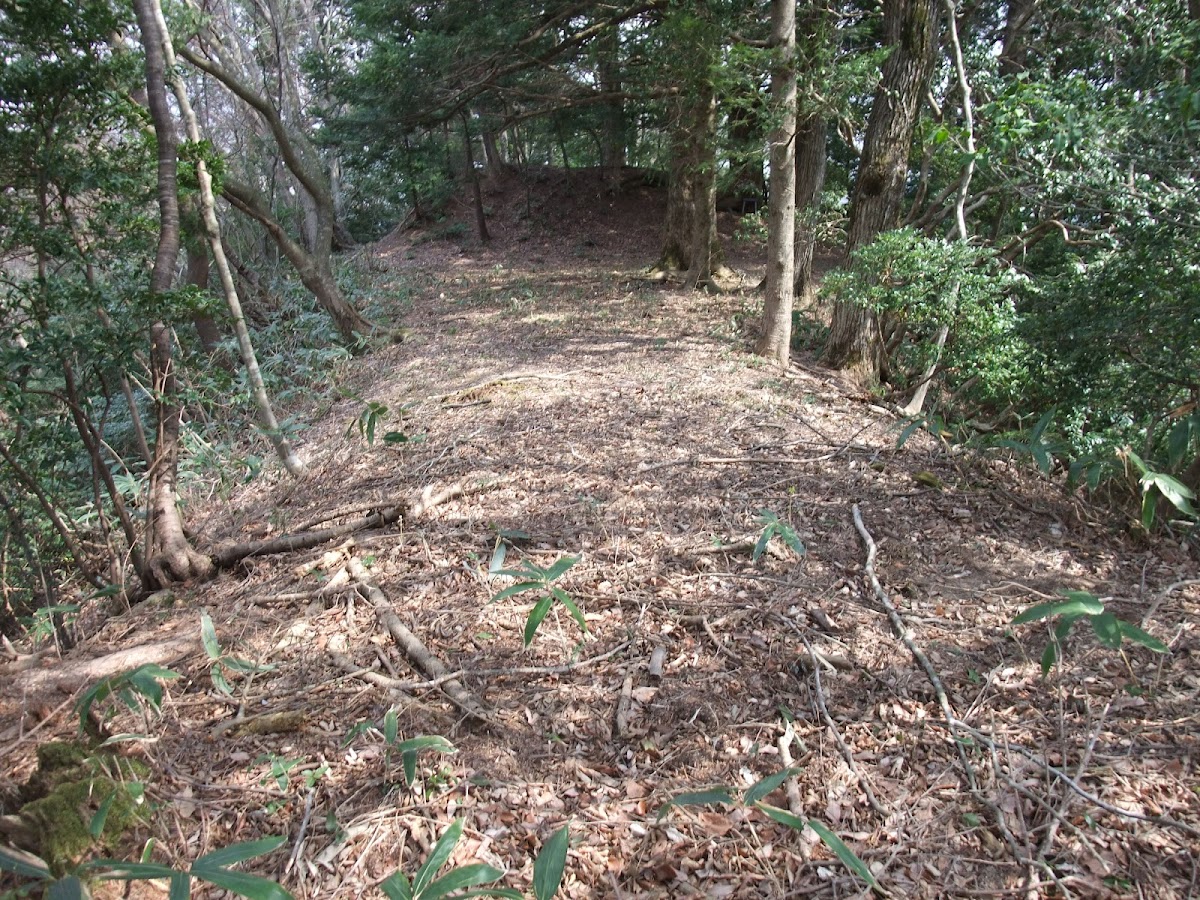
Multiple enclosures are arranged around the mountaintop. The layout is a series of interconnected enclosures arranged in a stepped fashion, with each enclosure contributing to a specific defensive function. The flat surfaces of the enclosures are relatively well-preserved, allowing for estimation of their original scale.
Dorui (Earthworks)
Earthworks surround the enclosures, serving as defensive structures. Earthen ramparts served to prevent enemy intrusion and protect castle soldiers from projectiles such as arrows and stones. The clearly visible remains of these ramparts today demonstrate the advanced castle-building techniques of the time.
Moat (Horikiri)
Moat dug to cut off the ridgeline is an important defensive feature of Shinoda-no-Maru Castle. By cutting off the ridgeline, which could have been an enemy intrusion route, the moat made it difficult for enemies to approach the castle. The presence of moat in multiple locations indicates the high level of defensive awareness at this castle.
Ridge-shaped Vertical Moat Group (Unejo Tatebori-gun)
A distinctive feature of Shinoda-no-Maru Castle is the ridge-shaped vertical moat group. This defensive structure, created by digging multiple vertical moats parallel to each other on a slope, hindered the lateral movement of enemy soldiers and made attacks from the slope difficult. The series of ridged vertical moats is an important historical site demonstrating the development of mountain castle construction techniques during the Sengoku period, and provides crucial clues for considering the construction and renovation periods of Shinoda-no-Maru Castle.
Vertical Moats
Multiple vertical moats dug along the slope have been identified. These moats served to restrict the movement of enemy soldiers climbing the slope, creating a battle situation advantageous to the defending side.
Gate Entrance (Koguchi)
Traces of gate entrances to the castle remain. Because gate entrances are a weak point of a castle, they were particularly heavily fortified, and their structure reveals the defensive philosophy of the time.
Characteristics of the Castle Layout
The layout of Shinoda-no-Maru Castle exhibits typical characteristics of a medieval mountain castle. A defensive system skillfully utilizing the terrain was constructed, including a series of interconnected enclosures centered around the main enclosure, the arrangement of enclosures utilizing the ridgeline, and the blocking of the ridgeline by moats.
The presence of the ridged vertical trenches, in particular, demonstrates the development of castle construction techniques during the Sengoku period, representing the culmination of mountain castle construction technology, evolving from simple terrain utilization to the construction of more proactive defensive structures.
Looking at the castle layout map, we can see that the baileys are arranged on ridges radiating from the main enclosure, with each ridge separated by trenches. This structure indicates a defensive system capable of responding to attacks from multiple directions, suggesting a design focused on actual combat.
Cultural Property Designation and Preservation Status
Ube City Designated Historic Site
Shinoda-no-Maru Castle Ruins are designated as a historic site by Ube City and are subject to cultural property protection. This designation as a city historic site indicates that the castle ruins are recognized as an important cultural property that conveys the history of the region.
The cultural property designation ensures the preservation of the castle ruins and provides a legal basis for protecting the remains from development activities. Appropriate preservation and management are carried out by relevant organizations such as the Ube City Board of Education.
Current State of Preservation
The Shinoda-no-Maru Castle ruins are located in a mountainous area, thus escaping modern development and preserving the remains in relatively good condition. Major remains such as baileys, earthworks, moats, and rows of vertical trenches are clearly visible, making them valuable resources for understanding the structure of medieval mountain castles.
However, due to years of weathering and vegetation, some remains show signs of deterioration. Continuous preservation management and necessary maintenance are required.
Access and Visiting Information
Location
Address: Jōnan, Okumankura, Ube City, Yamaguchi Prefecture
Access Method
Access by Car
Approximately 30 minutes by car from the Ube Interchange on the Yamaguchi-Ube Expressway. Head towards the Okumankura area and follow the road along the Imatomi River. Access to the castle ruins is via a hiking trail.
Regarding parking, there is no clearly designated parking area, so you will need to park in a safe location nearby. Please be considerate of local residents.
Access by Public Transportation
Access by public transportation is not easy. The nearest station is Funaki Station on the JR Ube Line, but the castle ruins are quite far from there, making walking impractical. Bus access is also limited, so access by car is recommended.
Precautions When Visiting the Castle
Shinoda-no-Maru Castle is a full-fledged mountain castle located at an altitude of 342m and a relative height of approximately 150m. Appropriate preparation is necessary for visiting the castle.
Equipment and Clothing
- Suitable hiking boots (trekking shoes, etc.)
- Long-sleeved shirt and long pants (for protection against bushes and insects)
- Hat and gloves
- Drinking water and snacks
- Map, compass, GPS device
- Insect repellent (depending on the season)
Safety Precautions
- Avoid climbing alone; visiting in groups is recommended.
- Avoid visiting on days with bad weather, especially during or after rain.
- Some hiking trails are unclear; prior information gathering is crucial.
- Check your cell phone signal strength.
- Plan your trip with ample time to descend before sunset.
Visiting Time
If you plan to thoroughly explore the ruins from start to finish, allow approximately two hours. This may vary depending on your physical condition and the level of detail you wish to explore.
Points to Note When visiting Shinoda-no-Maru Castle, paying attention to the following points will help you understand the castle’s structure more deeply.
- View from the Main Enclosure: From the main enclosure, located at an altitude of 342m, you can enjoy a wide panoramic view of the surrounding area, truly appreciating the strategic importance of this castle’s location.
- Ridge-shaped Vertical Moats: These are important remains demonstrating the castle-building techniques of the Sengoku period. Observe the multiple vertical moats dug parallel to the slope.
- Moats: The scale and arrangement of the moats that cut off the ridge reveal the intention behind their defensive purpose.
- Arrangement of Enclosures: Observe how the multiple enclosures are arranged and how they form a interconnected defensive system.
- Earthworks: Examine the remaining earthworks around the enclosures and imagine the defensive structures of the time.
Surrounding Castles and Historical Background
Nagato Province’s Castle Network
Shinoda-no-Maru Castle functioned as part of the Ouchi clan’s castle network in Nagato Province. Several similar medieval mountain castles existed in the surrounding area, coordinating with each other to form a regional defense system.
Aratakiyama Castle
Located near Shinoda-no-Maru Castle, Aratakiyama Castle is also known as a mountain castle associated with the Ouchi clan. It is believed that these castles, working together, formed a defensive line for Nagato Province.
Major Castles in Yamaguchi Prefecture
Besides Shinoda-no-Maru Castle, many other important castles remain in Yamaguchi Prefecture.
Hagi Castle
Known as the main castle of the Choshu Domain during the Edo period, Hagi Castle is a modern castle built by the Mori clan after the Battle of Sekigahara. Built on Mt. Shizuki facing the Sea of Japan, it is now designated as a national historic site.
Iwakuni Castle
Located in Iwakuni City, famous for Kintaikyo Bridge, Iwakuni Castle is known as the residence of the Kikkawa clan. It has a structure combining a mountaintop castle and a residence at the foot of the mountain, and a reconstructed keep currently stands there.
Yamaguchi Castle (Ouchi Clan Residence)
This residence and castle were located in Yamaguchi, the base of the Ouchi clan. It is designated a national historic site as an important historical site that conveys the prosperity of the Ouchi clan.
Visiting these castles allows for a systematic understanding of the castle history of Yamaguchi Prefecture. Shinoda-no-Maru Castle, as a typical example of a medieval mountain castle, can be compared with early modern castles such as Hagi Castle and Iwakuni Castle to learn about the development process of castle architecture.
Research and Evaluation of Shinoda-no-Maru Castle
Position in Castle Research
Shinoda-no-Maru Castle occupies an important position in the study of medieval mountain castles in the Chugoku region. Well-preserved remains, such as the ridged vertical moat system, demonstrate the castle construction techniques of the Sengoku period, making it a valuable resource for studying the development process of castle construction techniques at that time.
In particular, research on Shinoda-no-Maru Castle is important for understanding the reality of local base castles within the Ouchi clan’s system of rule. This provides some insight into how the Ouchi clan governed their territory and the types of castles they commissioned their powerful vassals to build.
Castle Layout Map and Survey Records
Detailed castle layout maps have been created for Shinoda-no-Maru Castle, and detailed records of the remains have been preserved by castle researchers and enthusiasts. These records serve as important basic materials for the preservation and research of the castle ruins.
The castle layout maps allow us to understand the overall structure of the castle, including the arrangement of baileys centered around the main enclosure, the location of moats, and the extent of the ridged vertical moat groups. Furthermore, photographic records provide detailed documentation of the current state of each remains.
Evaluation by Castle Enthusiasts
On websites such as “Kojodan,” a community for castle enthusiasts, evaluations and impressions from people who have visited Shinoda-no-Maru Castle are shared. The average rating is around ★★★☆☆ (3.00), indicating that it has received a certain level of recognition as a full-fledged mountain castle.
The estimated visiting time is about two hours, making it a castle of a suitable size for carefully observing the remains. However, due to the difficulty of access and the need for mountain climbing, the number of people who have visited the castle is limited, making it a castle that has room to be known by more people.
Significance of Visiting Shinoda-no-Maru Castle
Experiencing the Reality of a Medieval Mountain Castle
The greatest significance of visiting Shinoda-no-Maru Castle is the opportunity to directly experience the reality of a medieval mountain castle. While it lacks the flashy structures of early modern castles, such as stone walls and keeps, it allows you to understand the essence of an earthen castle, including earthworks, moats, and ridged vertical trenches.
How did the warlords of the Sengoku period interpret the terrain and what defensive structures were placed? By tracing their thought processes, you can gain insight into the realities of battles and castle management at the time.
Learning About the History of the Ouchi Clan
Shinoda-no-Maru Castle is also important for learning about the history of the Ouchi clan, who built a powerful force in the western Chugoku region during the Muromachi and Sengoku periods. How did the Ouchi clan govern their territory, and what kind of vassal group did they have? The relationship between Shinoda-no-Maru Castle and its lord, the Sugi clan, offers insights into the Ouchi clan’s system of rule.
Understanding Local History and Culture
Shinoda-no-Maru Castle is an important historical site for understanding the history of the Okumankura district in Ube City. Visiting the castle ruins allows for a deeper understanding of the region’s history and culture, including its role in the medieval period and its historical development.
Future Challenges for Shinoda-no-Maru Castle
Balancing Preservation and Utilization
A key challenge for the future of Shinoda-no-Maru Castle is balancing preservation and utilization. It needs to be appropriately preserved as a valuable cultural asset while simultaneously being made known to many people and utilized as a local historical resource.
Improving Access and Ensuring Safety
Currently, access to the castle ruins is not easy, and visitor numbers are limited. Improving hiking trails and installing signposts are necessary to create a safe environment for visitors. However, excessive development could damage the remains, so careful consideration is required.
Improving Access and Ensuring Safety
Strengthening Information Dissemination
It is important to disseminate information to let more people know about the historical value and highlights of Shinoda-no-Maru Castle. It is necessary to convey the charm of the castle ruins through various methods, such as disseminating information on websites and social media, creating brochures, and introducing it at local events.
Continuing Research
Continuing research on Shinoda-no-Maru Castle to deepen our understanding of the castle’s history and structure is also important. Archaeological excavations and documentary research may reveal new facts.
Summary
Shinoda-no-Maru Castle is a valuable medieval mountain castle remaining in Ube City, Yamaguchi Prefecture. As the residence of the Sugi clan, a senior retainer of the Ouchi clan, this castle served as a base for controlling Nagato Province. Built on a mountaintop at an altitude of 342m and a relative height of 150m, it retains well-preserved defensive structures such as earthworks, moats, and rows of vertical trenches.
Protected as a Ube City designated historical site, this castle site is an important historical site for understanding the structure of medieval mountain castles and learning about the castle-building techniques of the Sengoku period. Access requires hiking, and a visit demands adequate preparation, but it is a valuable place to experience the charm of an authentic mountain castle.
For those interested in the history of the Ouchi clan, the medieval history of Nagato Province, and the history of Japanese castles, Shinoda-no-Maru Castle is a historical site well worth visiting. It is hoped that this valuable cultural asset will be passed down to future generations through appropriate preservation and utilization.

.png)