
Complete Guide to Tendo Castle (Yamagata Prefecture): History and Highlights of the Largest Mountain Castle in the Murayama Region, Built on Maizuru Mountain
Basic Information about Tendo Castle
Tendo Castle (Tendo-jo) was a Japanese castle (mountain castle) located in Tendo, Tendo City, Yamagata Prefecture. Also known as Maizuru Castle and Tendo Old Castle, it was built on Maizuru Mountain, an isolated hill located in the central-eastern part of the Yamagata Basin.
Basic Data
- Location: Tendo, Tendo City, Yamagata Prefecture (present-day Tendo Park/Maizuruyama Park)
- Former Province: Uzen Province
- Classification/Structure: Mountain Castle
- Builder: Tendo (Shiba) Yorinao
- Year of Construction: Tenju 1st year [Southern Court] / Eiwa 1st year [Northern Court] (1375)
- Main Lord: Tendo Clan
- Year of Abandonment: Tensho 12th year (1584)
- Elevation: 231.8 meters
- Castle Area Size: 1000 meters east-west, 1200 meters north-south
- Remains: Enclosures, earthworks, moats, well remains
- Keep Structure: None (As it is a mountain castle, there is no keep)
Tendo Castle is known as the largest mountain castle in the Murayama region, and its scale is among the largest of medieval mountain castles in Yamagata Prefecture. The main enclosure is located on the mountaintop at an altitude of 231.8 meters, where Atago Shrine now stands.
History of Tendo Castle
From the Nanboku-cho period to the early Muromachi period: Establishment of Tendo Castle
The history of Tendo Castle dates back to the Nanboku-cho period of turmoil. While there are various theories, the most widely accepted one is that in Eiwa 1 (1375), Naohisa, son of Shiba (Mogami) Kaneyori, the lord of Yamagata Castle, brought his second son, Tendo Yorinao, into Tendo Castle.
Yorinao moved to Tendo and adopted the name Tendo. This marks the beginning of the Tendo clan. Another legend states that the Tendo clan’s origins lie in Kitabatake Tendomaru (said to be a fifth-generation descendant of Kitabatake Akinobu) building a castle on Maizuru Mountain, but it is certain that the Tendo clan was a branch of the Shiba clan (later the Mogami clan).
Sengoku Period: The Prosperity of the Tendo Clan and the Mogami Eight Shields
During the Sengoku period, the Tendo clan became a powerful local lord, counted as one of the Mogami Eight Shields. The Mogami Eight Shields refer to eight forces in the Murayama region composed of members of the Mogami clan and powerful vassals.
The Tendo clan expanded their influence into the surrounding area from their base on Maizuru Mountain. Although Tendo Castle is not particularly high at an elevation of 231.8 meters, its location on an isolated hill jutting out into the plains of the Yamagata Basin made it a strategically important location with panoramic views of the surrounding area. The castle grounds were vast, stretching 1 kilometer east-west and 1.2 kilometers north-south, and it was developed as a formidable mountain castle with multiple baileys.
Tensho Era: Conflict with Mogami Yoshiaki and the Fall of the Castle
The greatest turning point in the history of Tendo Castle came in Tensho 12 (1584). In this year, a fierce battle raged between Mogami Yoshiaki, lord of Yamagata Castle, who aimed to unify Dewa Province, and Tendo Yorihisa (or Yorizumi), lord of Tendo Castle.
To realize his ambition of unifying Dewa, Mogami Yoshiaki successively conquered the various forces of the Mogami Eight Shields. The Tendo clan initially followed the Mogami clan, but feeling threatened by Yoshiaki’s expanding power, they strengthened their anti-Mogami stance.
In Tensho 12, Yoshiaki decided to capture Tendo Castle. Yoshimitsu dispatched his subordinates, including Nobesawa Nobukage, to besiege Tendō Castle. Tendō Castle was a strong mountain fortress, and the Tendō clan offered desperate resistance, but due to the fierce attack of the Mogami army and internal betrayal (defection), the castle finally fell.
The castle lord, Tendō Yorihisa, is said to have escaped the castle and fled to the Date and Uesugi clans. After the fall of Tendō Castle, Yoshimitsu demolished it, and Tendō Castle became a ruined castle. The battlefield of this battle still remains today as the Hachimanyama Battlefield in Haramachi, Tendō City.
Edo Period: The Oda Clan’s Entry and the Tendō Oda Domain
In the Edo period, a new lord took control of the Tendō region. The Oda clan, descendants of Oda Nobunaga’s younger brother Nagamasu (Yurakusai), were granted the domain of Tendo, establishing the Tendo Oda Domain. The Oda clan ruled this area for generations, contributing to the development of Tendo.
However, the Oda clan’s main residence was not Tendo Castle, but a new encampment at the foot of the mountain. Maizuru Mountain, the site of Tendo Castle, was used throughout the Edo period as a place of worship and recreation for the local people.
Modern and Contemporary Periods: Development as Tendo Park
Since the Meiji era, Maizuru Mountain has been developed as Tendo Park (Tendo City Maizuru Mountain Park), becoming a place of recreation for citizens. Currently, it is known as a famous cherry blossom viewing spot, with approximately 2,000 cherry trees blooming in spring, attracting many tourists.
Atago Shrine is located at the summit, and remnants of the castle, such as baileys, earthworks, moats, and well remains, still exist. Tendo City is famous for its production of shogi (Japanese chess) pieces, and a giant shogi piece monument stands on the summit of Maizuru Mountain, becoming a symbol of Tendo.
Successive Lords of Tendo Castle
The successive lords of Tendo Castle were mainly from the Tendo clan. The main lords are listed below.
Successive Heads of the Tendo Clan
- Tendo Yorinao (First head, entered the castle in 1375) – Grandson of Shiba Kaneyori, founder of the Tendo clan
- Tendo Yorinaga – Son of Yorinao
- Tendo Yoritada – Son of Yorinaga
- Tendo Yorimune – Son of Yoritada
- Tendo Yorihisa (or Yorizumi) – Last lord of the castle, defeated and defeated by Mogami Yoshiaki in 1584 (Tensho 12), resulting in the castle’s fall.
The Tendo clan used Tendo Castle as their base for approximately 200 years, boasting power as a powerful local lord in the Murayama region. However, their rule came to an end with the offensive of Mogami Yoshiaki at the end of the Sengoku period.
Structure and Remains of Tendo Castle
Castle Structure
Tendo Castle is a large-scale mountain castle whose castle grounds encompassed the entire Maizuru Mountain, which is 231.8 meters above sea level. The castle features a main enclosure (honmaru) at the mountaintop, with multiple enclosures (kuruma) arranged along the ridge, creating a linear layout.
The castle grounds extend 1000 meters east-west and 1200 meters north-south, making it the largest medieval mountain castle in the Murayama region and one of the largest in Yamagata Prefecture. Despite being a mountain castle, its location on an isolated hill makes it relatively easy to climb, and the design also considers habitability.
Existing Remains
The following remains can be confirmed at the Tendō Castle site:
Enclosures (Kuruwa)
Multiple enclosures are arranged in a stepped pattern around the main enclosure. The main enclosure is now the grounds of Atago Shrine, and its relatively flat terrain is preserved. The second and third enclosures are also clearly visible, allowing us to imagine the castle’s structure at the time.
Earthworks
Earthworks were built around the enclosures, and some remain in good condition today. The earthen ramparts are defensive structures designed to prevent enemy intrusion, attesting to the formidable strength of Tendo Castle.
Moats
Multiple moats, dug to divide the ridge, can be seen. Moats are a defensive structure unique to mountain castles, playing a crucial role in hindering enemy advances.
Well Remains
Well remains are found near the main enclosure. Securing water was extremely important in sieges of mountain castles, suggesting that Tendo Castle was designed with a long-term siege in mind.
Atago Shrine
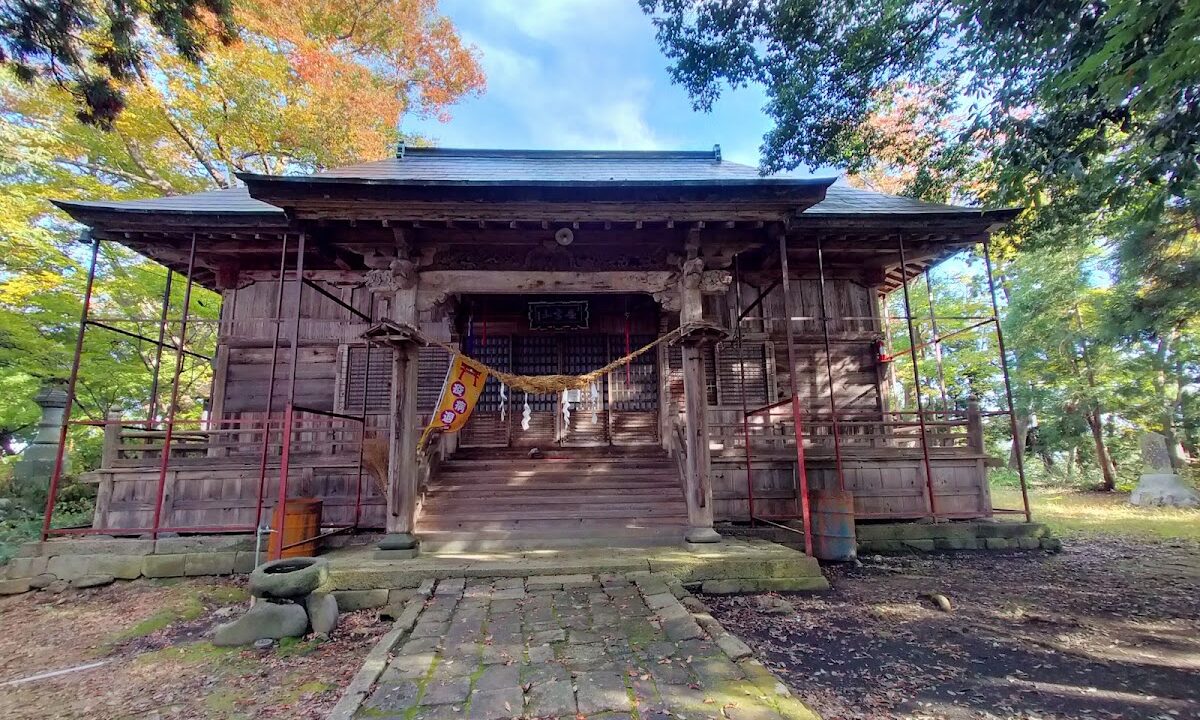
Atago Shrine stands on the site of the main enclosure. Atago Shrine is worshipped as a god of fire prevention and has been revered by local residents since the Edo period. From the shrine, one can enjoy a panoramic view of Tendo city, a view that the former lord of the castle may have enjoyed.
Atago Shrine
Atago Shrine is located on the site of the main enclosure. Atago Shrine is worshipped as a god of fire prevention and has been revered by local residents since the Edo period. From the shrine, one can enjoy a panoramic view of Tendo city, a landscape that the former lord of the castle may have gazed upon. ## Highlights and Tourist Information of Tendo Castle
Cherry Blossom Spot
Tendo Park (Maizuru Mountain) is known as one of Yamagata Prefecture’s leading cherry blossom spots. In spring, approximately 2,000 Somei Yoshino cherry trees bloom, dyeing the entire mountain pink. The trees are also illuminated at night, allowing visitors to enjoy the magical sight of cherry blossoms after dark.
The “Tendo Cherry Blossom Festival” is held annually from mid- to late April, attracting many visitors. From the mountaintop, you can enjoy views of Mount Gassan, the Asahi Mountain Range, and the Zao Mountain Range through the cherry blossoms, making it a popular spot for its spectacular scenery.
Human Chess
Tendo City is known as the “City of Shogi,” boasting the highest production volume of shogi pieces in Japan. Every year during the cherry blossom festival in late April, human shogi is held at the mountaintop plaza of Maizuru Mountain.
Human shogi is a large-scale event where people act as shogi pieces and actually move, with professional shogi players competing. The human chess game played on the cherry blossom-filled Maizuru Mountain is a spring tradition in Tendo.
Observation Spot
From the summit of Maizuru Mountain, you can enjoy a panoramic view of not only Tendo city but also the entire Yamagata Basin. On clear days, you can see famous peaks of Yamagata, such as Mount Gassan, the Asahi Mountain Range, and the Zao Mountain Range, making it a popular scenic spot.
The view at sunset is particularly beautiful; the sight of the setting sun sinking into the basin and the silhouettes of the mountains is breathtaking.
Access Information
- Train: Approximately 20 minutes on foot from JR Ou Main Line “Tendo Station”
- Car: Approximately 15 minutes via National Route 13 from Yamagata Kita IC on the Yamagata Expressway
- Parking: Tendo Park parking available (approximately 200 cars, free)
- Admission Fee: Free
- Opening Hours: Always open (entry possible even at night)
Nearby Tourist Attractions
Tendo Onsen
Tendo city center boasts Tendo Onsen, with numerous hot spring inns and hotels. You can relax and unwind in the hot springs after a stroll around Maizuru Mountain.
Shogi Museum
The Tendo City Former Higashimurayama County Office Museum houses a Shogi Museum where you can learn about the history and manufacturing process of Tendo’s shogi pieces.
Hachimanyama Ancient Battlefield
The Hachimanyama Ancient Battlefield, located in Haramachi, Tendo City, is the site of a battle fought in 1584 between Mogami Yoshiaki and Tendo Yorihisa. It is now a park with a monument.
The Battle for Tendo Castle and Mogami Yoshiaki
The battle against Mogami Yoshiaki is essential to understanding the history of Tendo Castle. The capture of Tendo Castle in 1584 was one of the crucial battles in Yoshiaki’s unification of Dewa Province.
Mogami Yoshiaki’s Ambition
Mogami Yoshiaki was a daimyo of Dewa Province during the Sengoku period, based at Yamagata Castle. Yoshiaki aimed to unify Dewa Province, successively conquering surrounding forces, including the Mogami Eight Shields.
Yoshiaki possessed exceptional military talent and political acumen, expanding his power sometimes through military force and sometimes through stratagem. The Tendo clan was initially subservient to Yoshimitsu, but feeling threatened by Yoshimitsu’s expanding power, they gradually distanced themselves from him.
The Siege of Tendo Castle
In 1584 (Tensho 12), Yoshimitsu decided to capture Tendo Castle. He ordered his subordinates, including Nobukage Enzawa, to besiege the castle. Tendo Castle was a strong mountain castle, and Yorihisa Tendo resisted by holding out inside.
The fighting intensified, but due to the fierce attacks of the Mogami army and internal betrayal (defection), Tendo Castle fell. Yorihisa escaped the castle and is said to have fled to the Date and Uesugi clans.
After the fall of Tendo Castle, Yoshimitsu demolished the castle and abandoned it. This led to the collapse of the Tendo clan’s power and established Yoshimitsu’s control over the Murayama region.
The Battle of Hachimanyama
During the siege of Tendo Castle, fierce fighting also took place at Hachimanyama (present-day Haramachi, Tendo City). This ancient battlefield remains today as the Hachimanyama Battlefield, and a monument has been erected there.
The Later Life of the Tendo Clan
After the fall of Tendo Castle, Tendo Yorihisa moved from place to place. He is said to have served the Date clan for a time, and later the Uesugi clan. The Tendo family members scattered to various locations, and their subsequent fate is uncertain.
The Tendo area became a direct territory of Mogami Yoshiaki, and later the Oda clan took control, establishing the Tendo Oda Domain. The name of the Tendo clan remains as a place name, and is the origin of the present-day Tendo City.
Cultural Property Designation of Tendo Castle
The Tendo Castle ruins are preserved as an important historical heritage of Tendo City. While not currently designated as a national or prefectural cultural property, it is protected as a city historical site, and archaeological excavations and restoration work are underway.
In recent years, efforts have been made to balance the preservation and utilization of the castle ruins, with the installation of information boards and the maintenance of the remains progressing. There are also movements to aim for designation as a national historic site in the future.
Points to Note When Visiting Tendo Castle
Ascent Route
There are several routes to Tendo Castle Ruins (Maizuru Mountain), but the most common is the hiking trail on the south side from Tendo Station. The trail is well-maintained, and you can reach the summit in about 20 minutes.
Those who are not confident in their physical fitness can drive almost to the summit using the road on the east side (however, caution is needed as the road is narrow).
Best Season for Visiting
Tendo Castle Ruins can be visited throughout the year, but the following times are especially recommended:
- Spring (mid-to-late April): Cherry blossom season. Human Chess (a type of chess) is also held.
- Early Summer (May-June): Beautiful fresh greenery and mild weather.
- Autumn (October-November): Beautiful autumn foliage, clear air, and excellent views.
Estimated Time Required
Please allow the following time for visiting the Tendo Castle Ruins:
- Ascent to the summit: Approximately 20 minutes
- Visiting the summit: Approximately 30 minutes to 1 hour
- Descent: Approximately 15 minutes
It’s best to allow a total of 1.5 to 2 hours. If you want to carefully observe the remains, we recommend allocating more time.
Summary
Tendo Castle (Maizuru Castle) was the largest mountain castle in the Murayama region, built during the Nanboku-cho period, and functioned as the residence of the Tendo clan for approximately 200 years. It fell and was abandoned during a battle with Mogami Yoshiaki at the end of the Sengoku period, but its remains still exist on Mount Maizuru.
Currently developed as Tendo Park, it is a popular spot for cherry blossoms and scenic views. It also plays an important role as the venue for Tendo City’s cultural events, including the Human Chess competition, making it a fascinating tourist spot where history and modernity blend seamlessly.
Visiting the Tendo Castle ruins allows you to experience the historical romance of the Sengoku period while enjoying the beautiful scenery of the Yamagata Basin. Combining a visit with a trip to Tendo Onsen (hot springs) will make for a truly fulfilling sightseeing experience. When you visit Yamagata Prefecture, be sure to stop by the Tendo Castle ruins.


