
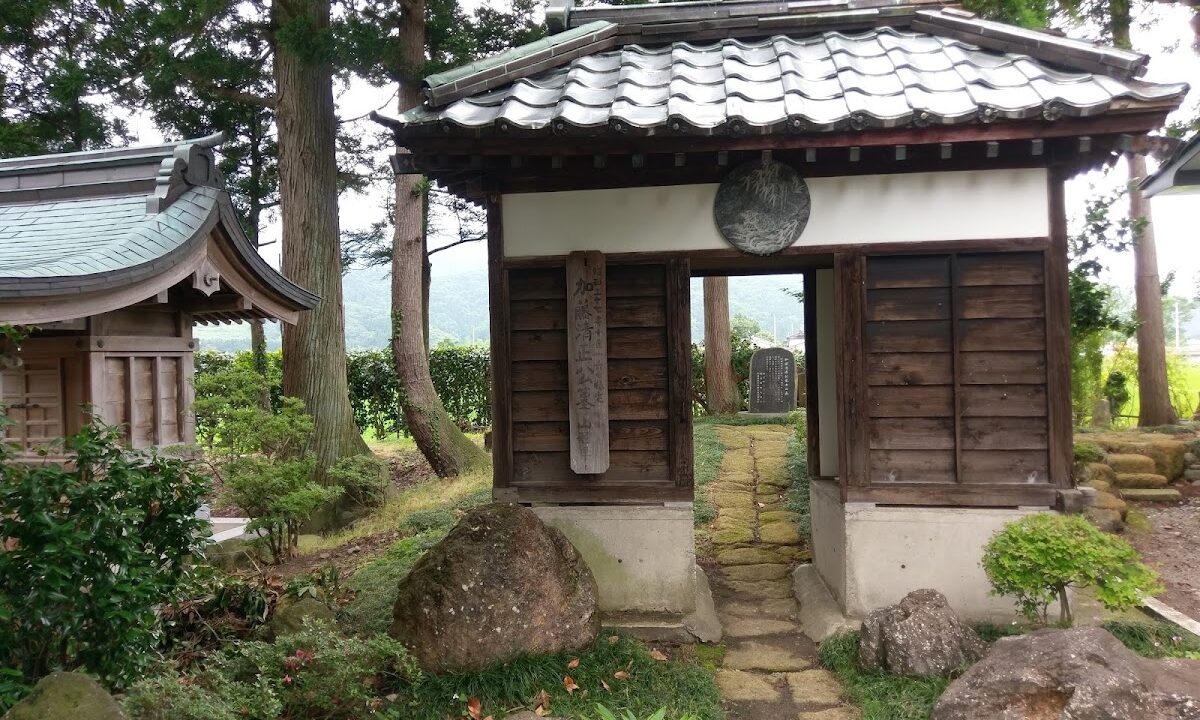
Dewa Maruoka Castle (Yamagata Prefecture) Complete Guide: A Thorough Explanation of Historical Sites Associated with Kato Kiyomasa and the History of the Sengoku Period
Dewa Maruoka Castle is a flatland castle located in Maruoka, Tsuruoka City, Yamagata Prefecture, that existed from the Sengoku period to the early Edo period. Currently, it is maintained as the “Maruoka Castle Ruins Historical Park,” a prefecturally designated historical site, and the remains such as earthworks and moats are well preserved. It is also known as the site where the Kato Kiyomasa family met their end, and the tombstone of Kato Kiyomasa is enshrined at the adjacent Tensawa-ji Temple. As a castle ruin of historical importance, it attracts many castle enthusiasts and history buffs.
Basic Information on Dewa Maruoka Castle
Common Names/Alternate Names
Dewa Maruoka Castle is generally called “Maruoka Castle.” However, to distinguish it from the Maruoka Castle in Sakai City, Fukui Prefecture, which has an existing keep, it is often written as “Dewa Maruoka Castle” or “Dewa Province Maruoka Castle.”
Location and Former Province
Location: 68, Machinouchi, Maruoka, Tsuruoka City, Yamagata Prefecture, and other locations
Former Province: Uzen Province (Dewa Province)
Current Status: Developed as Maruoka Castle Ruins Historical Park
Castle Classification and Structure
- Classification: Flatland castle (some theories classify it as a multi-bailey flatland castle)
- Builder: Mutō clan (some theories attribute it to Oshikiri Bizen-no-kami)
- Year of Construction: Kamakura period to Sengoku period (various theories exist)
- Main Lords: Oshikiri clan, Maruoka clan, Mutō clan, Uesugi clan, Mogami clan, Sakai clan
- Year of Abandonment: Genna 1 (1615)
- Existing Remains: Earthworks, moat, garden remains
- Designated Cultural Property: Yamagata Prefecture Designated Historic Site (Maruoka Castle Ruins and Kato Kiyomasa’s Tombstone)
History and Development of Maruoka Castle in Dewa Province
From the Kamakura Period to the Early Sengoku Period
There are several theories regarding the origin of Maruoka Castle in Dewa Province. The most plausible theory is that it was built as a branch castle by the Mutō clan, who ruled this region from the Kamakura period. Maruoka was strategically important as a transportation hub, located at a key point along the Rokujūrigoe Road connecting Shōnai and the inland area.
With the arrival of the Sengoku period, this region came under the influence of the Daibōji clan. According to one theory, the castle was renovated by Maruoka Yoshioki, the younger brother of Daibōji Yoshiuji, the lord of Oura Castle. During this period, Maruoka Castle functioned as one of the important bases in the Shōnai region.
Late Sengoku Period: Changes in Castle Lords
In the late Sengoku period, the Shōnai region became the stage for fierce power struggles. After the fall of the Daibōji clan, Maruoka Castle passed through the hands of various forces.
Uesugi Clan Rule
During the Tensho era (1573-1593), the area came under the influence of the Uesugi clan of Echigo Province. Even when Uesugi Kagekatsu was transferred to Aizu, the Shonai region remained under Uesugi control, and Maruoka Castle functioned as a branch castle of the Uesugi clan. It is believed that during this period, the castle’s defensive facilities were strengthened, and earthworks and moats were constructed.
The Mogami Clan Era
Entering the Keicho era (1596-1615), the influence of the Mogami clan, a powerful daimyo of Dewa Province, extended to the Shonai region, and Maruoka Castle became a branch castle of the Mogami clan. During the time of Mogami Yoshiaki, the Shonai region became a disputed territory between the Mogami and Uesugi clans, and Maruoka Castle was also under military tension.
Early Edo Period: The Sakai Clan and the Abandonment of the Castle
In 1622 (Genna 8), when the Mogami clan was dispossessed of their domain, Sakai Tadakatsu took control of the Shonai region, and the Shonai Domain was established. However, Maruoka Castle had already been abandoned due to the “One Castle Per Province” decree issued in 1615.
After its abandonment, the castle site was used for samurai residences and farmland, but parts of the earthworks and moats remained as part of the topography and have been preserved to this day.
Deep Connection with Kato Kiyomasa
The Exile of Kato Tadahiro and the End of the Kiyomasa Family
Maruoka Castle in Dewa Province holds special historical significance because it is the place where Kato Tadahiro, son of Kato Kiyomasa (known as the lord of Kumamoto Domain), was exiled.
In 1632, Kato Tadahiro was dismissed from his position and exiled to Maruoka in Dewa Province. Upon his exile, Tadahiro carried some of his father Kato Kiyomasa’s remains to this place and spent the rest of his life there. This event cemented Maruoka’s place in history as the end of the Kato Kiyomasa family.
Tenzawa-ji Temple and the Tombstone of Kato Kiyomasa
Tenzawa-ji Temple, adjacent to the Maruoka Castle ruins, houses the tombstone of Lord Kato Kiyomasa. This tombstone is a Yamagata Prefecture designated historical site and is in the form of a five-tiered pagoda.
Within the temple grounds is a building called “Kiyomasa-kaku,” a place dedicated to commemorating Lord Kato Kiyomasa. Every year on the anniversary of Lord Kiyomasa’s death, a memorial service is held, attracting many worshippers from far and wide.
Kato Kiyomasa is known as a “master castle builder,” famous for constructing formidable castles, including Kumamoto Castle. The fact that a place associated with Lord Kiyomasa lies in the ruins of a small castle in Yamagata Prefecture reveals an unexpected aspect of Japanese history.
Remains and Highlights of Dewa Maruoka Castle
Existing Earthworks and Moat
Dewa Maruoka Castle was a flatland castle surrounded by earthworks and a moat on all four sides. Currently, the earthworks and moat remain in good condition, mainly on the north side.
Characteristics of the Earthworks
The earthworks remaining on the north side are approximately 2-3 meters high and 5-6 meters wide at the base, conveying castle construction techniques from the Sengoku period to the early Edo period. It is possible to walk on top of the earthworks, allowing visitors to experience the scale of the castle at that time.
Condition of the Moat
The moat still holds water and is approximately 5-8 meters wide. Earthworks were built inside the moat, and traces of excavation of the earthworks can be seen on the outside. The moat is thought to have served not only as a defensive structure but also as a practical tool for securing water for daily life.
Main Gate Site and Horse Enclosure
The main gate, the castle’s main entrance, is believed to have been located on the east side. Archaeological excavations have confirmed the existence of a defensive structure called a “umadashi” in front of the main gate.
A umadashi is a small enclosure built in front of a gate to prevent enemy intrusion, and is a common defensive structure found in castles of the Sengoku period (Warring States period). The umadashi at Dewa Maruoka Castle is an important remains that demonstrates the high level of castle construction technology of the time.
Garden Remains and Archaeological Materials
Excavations of the castle site have also uncovered remains that appear to be those of a garden. Stone structures and the remains of a pond have been confirmed, indicating that an elegant garden was provided for the lord’s residence.
Furthermore, archaeological materials such as pottery, roof tiles, and iron products have been unearthed, providing insights into the lifestyle and trade practices of the time. Some of these materials are on display at the museum adjacent to the castle site and can be viewed.
Development Status of Maruoka Castle Ruins Historic Park
Currently, the Dewa Maruoka Castle Ruins are being developed as the “Maruoka Castle Ruins Historic Park.” Walking paths are provided within the park, allowing visitors to observe the earthworks and moats up close.
Museum A small museum is located within the park, displaying the castle’s history, excavated artifacts, and reconstruction drawings. The museum offers detailed information about the changes made to Maruoka Castle and its relationship with Lord Kato Kiyomasa.
Information Boards and Panels Information boards and panels are placed throughout the castle ruins, making it easy for first-time visitors to understand the castle’s structure and history.
Access and Visiting Information for Dewa Maruoka Castle
Transportation Access
Access by Train
- Approximately 20 minutes by car from JR Uetsu Main Line “Tsuruoka Station”
- Taking a taxi from Tsuruoka Station is convenient
- Bus service is limited, so it is necessary to check the timetable in advance.
Access by Car
- Approximately 15 minutes from Yamagata Expressway “Tsuruoka IC”
- Approximately 20 minutes from Nihonkai Tohoku Expressway “Tsuruoka Nishi IC”
- Parking: Free parking available (approximately 10 cars)
Visiting Information
Opening Hours: Always open (Museum has specific opening hours)
Admission Fee: Free
Estimated Visiting Time: Approximately 30-45 minutes (including museum visit)
Best Season: Spring cherry blossom season and autumn foliage season are especially recommended.
Nearby Tourist Spots
Tenzawa-ji Temple
A temple adjacent to the Maruoka Castle ruins, containing the tombstone of Kato Kiyomasa. The tranquil temple grounds are ideal for worship.
Historical Sites in Tsuruoka City
- Tsurugaoka Castle (Tsuruoka Park): Former residence of the Sakai family of the Shonai Domain
- Chido Museum: A museum where you can learn about the history and culture of the Shonai region
- Hagurosan: One of the three sacred mountains of Dewa, home to a national treasure, a five-story pagoda
Sightseeing in the Shonai Region
- Kamo Aquarium (Jellyfish Dream Hall)
- Zenpoji Temple: An ancient temple known for its dragon god worship
- Rural landscape of the Shonai Plain
Reviews and Comments on Dewa Maruoka Castle
Reviews from Castle Enthusiasts
Dewa Maruoka Castle is highly regarded by castle enthusiasts nationwide as “a valuable castle site with well-preserved remains, despite its small scale.” The following points are particularly highly regarded:
- Preservation of the remains: Earthworks and moats remain, allowing visitors to imagine the site’s appearance at the time.
- Historical site development: The site is appropriately developed as a park, making it easy to visit.
- Historical value: Its special historical significance lies in its connection to Lord Kato Kiyomasa.
- Comprehensive museum: Though small, the exhibits are easy to understand.
The average visit time is approximately 36 minutes, making it an ideal size for carefully observing the castle ruins and visiting the museum.
Visitor Feedback
The following are some comments from people who have actually visited:
- “The earthworks and moats are beautifully preserved, and I could feel the atmosphere of a castle from the Sengoku period.”
- “I was surprised to find the tomb of Kato Kiyomasa. I learned about an unexpected connection in history.”
- “Although not large in scale, it was well-maintained and easy to visit.”
- “Visiting it together with Tensawa-ji Temple allows for a deeper understanding of history.”
- “In a quiet and peaceful atmosphere, I was able to slowly reflect on history.”
Historical Significance and Future Preservation of Dewa Maruoka Castle
Importance in Regional History
Dewa Maruoka Castle is an important historical site that represents the transition period from the medieval to the early modern period in the Shonai region. The following historical significance can be gleaned from this castle site:
- A Key Transportation Hub: As a strategic location along the Rokujurigoe Road, it played a vital role in connecting Shonai with the inland areas.
- A Stage for Power Struggle: A witness to the shifts in power within the Shonai region during the Sengoku period.
- An Example of the “One Castle Per Province” Decree: A concrete example illustrating the Edo Shogunate’s governing policies.
- The End of the Kato Kiyomasa Family: The stage for the major historical event of the Kumamoto domain’s confiscation of its lands.
Efforts for Preservation and Utilization
Yamagata Prefecture and Tsuruoka City are actively working on the preservation and utilization of the Dewa Maruoka Castle site. In addition to protection as a prefecturally designated historical site, development as a historical park aims to utilize it for local history education and as a tourist resource.
Regular archaeological excavations and preservation/repairs will continue, with plans to pass on this valuable historical heritage to future generations. New initiatives such as CG reconstructions of the castle using digital technology and VR experiences are also being considered.
Summary
Dewa Maruoka Castle (Tsuruoka City, Yamagata Prefecture) is a flatland castle that functioned as a strategic point in the Shonai region from the Sengoku period to the early Edo period. Currently, it is preserved as a prefectural designated historical site, with its remains, such as earthworks and moats, remaining in good condition.
Of particular note is its historical significance as the “end of the Kato Kiyomasa family,” where Kiyomasa’s son, Tadahiro, was exiled and where some of Kiyomasa’s remains were enshrined. Along with Kiyomasa’s tombstone at the adjacent Tenzawa-ji Temple, this site demonstrates an unexpected historical connection between Kumamoto and Yamagata.
Although not large in scale, the Maruoka Castle Ruins Historical Park, complete with a museum, is a worthwhile historical site for castle enthusiasts and history buffs. When visiting Tsuruoka City, be sure to visit the Dewa Maruoka Castle Ruins and reflect on the spirit of the Sengoku period and the footsteps of Kato Kiyomasa.
Nestled in a tranquil rural area, the castle ruins offer a precious space to escape the hustle and bustle and reflect on history. With its cherry blossoms in spring, lush greenery in summer, vibrant autumn leaves, and snowy winter landscapes, the Dewa Maruoka Castle ruins display different expressions throughout the seasons, making it a fascinating historical site where you can discover something new with every visit.


