
Complete Guide to the History and Highlights of Koshikawa Castle (Yamagata Prefecture) | Visiting the Ruins of the Former Lord’s Castle of the Sagae Domain
Located in Oe Town, Yamagata Prefecture, Koshikawa Castle is a valuable castle ruin that conveys the history of the Sagae Domain in the early Edo period. Although only the main gate of Kyokaiin Temple remains today, it once functioned as an important base in the Murayama region. This article provides a thorough explanation of Koshikawa Castle’s detailed history, highlights, access methods, and related historical sites in the surrounding area.
Basic Information on Koshikawa Castle
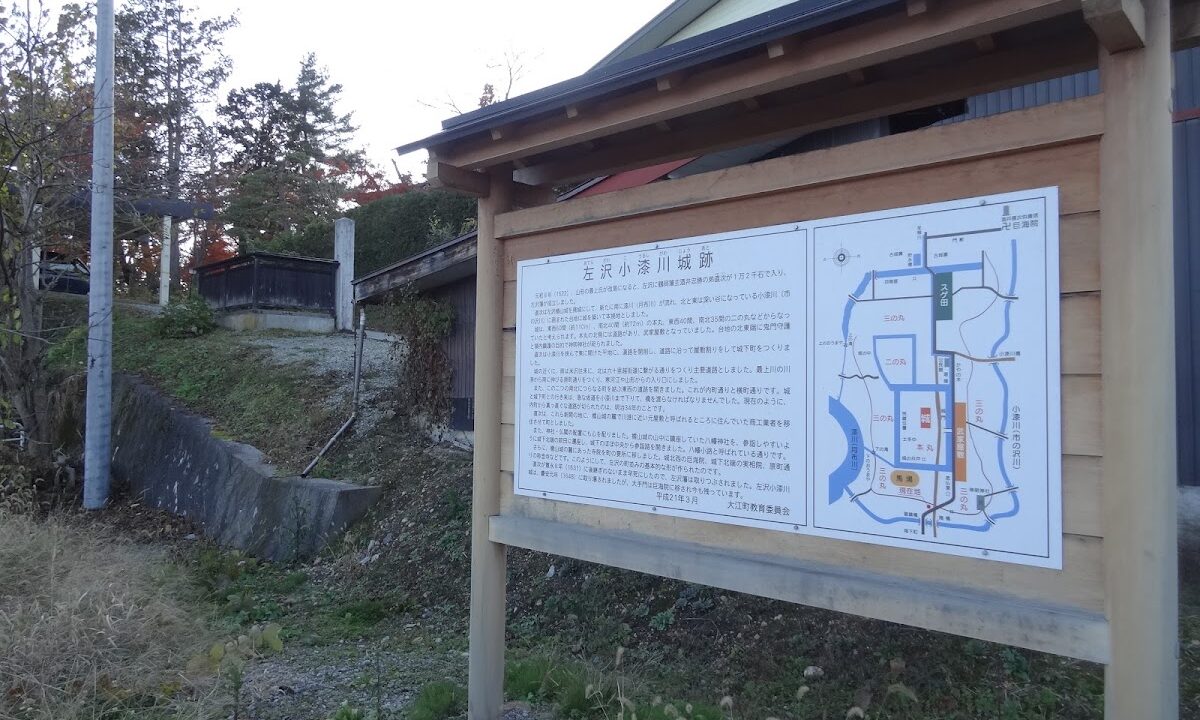
Koshikawa Castle is a hilltop castle located in Oe Town, Nishimurayama District, Yamagata Prefecture. It is known as a castle newly built in the early Edo period, replacing Sagae Tateyama Castle, which was located around the present-day Tateyama Park.
Location: Sagaezawa, Oe-cho, Nishimurayama-gun, Yamagata Prefecture
Castle Classification: Hilltop Castle
Year of Construction: Keicho era (1596-1615)
Builder: Sakai Naotsugu
Year of Abandonment: 1648 (Keian 1)
Main Remains: Kyokaiin Gate (Relocated and still existing)
Koshikawa Castle functioned as the administrative center of the Sagae Domain and was built at a strategic point near the confluence of the Mogami River and the Koshikawa River. While utilizing the relatively flat terrain as a hilltop castle, its layout is characterized by its use of natural defenses provided by the rivers.
History of Koshikawa Castle
From Sagaezawa Tateyama Castle to Koshikawa Castle
To understand the history of Koshikawa Castle, it is necessary to know about its predecessor, Sagaezawa Tateyama Castle. Sagae Tateyama Castle was a mountain castle built on the hill where Tateyama Park now stands, and it was the central castle of the Sagae region from the medieval period to the Sengoku period.
However, with the arrival of the Edo period and the rise of peace, there was a growing demand for flatland castles more suitable for administrative affairs and governing the people than for mountain castles. Against this backdrop, Sakai Naotsugu, who became the lord of Sagae Domain, decided to build a new castle in a more convenient location.
Construction by Sakai Naotsugu
Sakai Naotsugu was a samurai who served under Tokugawa Ieyasu and was granted 10,000 koku in Sagae as a reward after the Battle of Sekigahara. During the Keicho era, Naotsugu began construction of Koshikawa Castle as a new residence to replace Sagae Tateyama Castle.
Koshikawa Castle was built in a location that could take advantage of the Mogami River’s water transport and functioned as a modern castle with the development of a castle town in mind. While equipped with defensive structures such as earthworks and moats, the castle is believed to have been designed with an emphasis on its function as a government office.
Changes in the Sagae Domain and the Abandonment of the Castle
The Sagae Domain flourished under the rule of the Sakai clan, but when Sakai Naotsugu was transferred to the Shonai Domain in 1622 (Genna 8), Sagae came under the control of the Yamagata Domain. Subsequently, in 1648 (Keian 1), Koshikawa Castle was demolished.
Although its history spanned less than half a century, Koshikawa Castle played an important role as the political and economic center of the Sagae region. After its abandonment, some of the castle’s buildings were relocated to nearby temples, one of which is the temple gate that still remains at Kyokaiin Temple today.
Structure and Layout of Koshikawa Castle
Characteristics as a Hilltop Castle
Koshikawa Castle is classified as a hilltop castle. It is not a completely flatland castle, but rather built utilizing the slightly elevated terrain. This allowed for a balance between defensiveness and convenience.
The castle’s layout cleverly utilizes the terrain, situated between two rivers: the Mogami River and the Koshikawa River. The rivers acted as natural moats, enhancing the castle’s defensive capabilities.
Arrangement of Earthworks and Moats
Records confirm the presence of earthworks and moats at Koshikawa Castle. As an early Edo period castle, it is believed to have primarily utilized earthworks rather than stone walls.
A common characteristic of castles in the Murayama region is the high probability that they were designed to adapt to the snowy climate; the width and depth of the moats were likely considered in relation to snowfall.
Formation of the Castle Town
A castle town developed around Koshikawa Castle. Commercial activities thrived, taking advantage of the Mogami River’s water transport, and Sagae developed into an important trading hub in the Murayama region.
The town layout was planned systematically, with samurai residences and merchant districts neatly arranged. Some remnants of the townscape remain in the current Sagae district of Ooe Town. ## Kyokai-in Temple Gate: The Only Existing Remains of Koshikawa Castle
About Kyokai-in Temple
Kyokai-in Temple is a Soto Zen Buddhist temple located in Oe-cho, Yamagata Prefecture, and possesses the temple gate, a valuable remnant of Koshikawa Castle. This gate is said to have been relocated when Koshikawa Castle was abandoned, and is the only building that conveys the castle’s history to the present day.
Kyokai-in Temple itself is a historical temple that has long been cherished as a center of local faith. The temple grounds are enveloped in a quiet and peaceful atmosphere, making it an ideal place for a historical stroll.
Architectural Features of the Temple Gate
The temple gate of Kyokai-in Temple is a valuable cultural asset that preserves the architectural style of the early Edo period. While possessing characteristics of castle architecture, it has been partially renovated for reuse as a temple gate.
The heavy wooden structure speaks to the high level of architectural technology of the time. Observing the details, such as the arrangement of beams and pillars and the shape of the roof, reveals traces of its castle architecture.
Points to Note During Your Visit
When visiting the Kyokaiin Temple Gate, paying attention to the following points will allow you to experience history more deeply:
- Woodworking Techniques: Exquisite workmanship visible on the pillars and beams
- Structural Robustness: A heavy, imposing structure that suggests its defensive function as a castle gate
- Changes Over Time: Traces of renovations due to its conversion from a castle gate to a temple gate
Standing before the gate, you will be overwhelmed by the power of this building that has maintained its dignity for nearly 400 years.
Current Status and Visiting Methods of the Koshikawa Castle Ruins
Current Status of the Castle Ruins
The main parts of Koshikawa Castle, such as the main keep, no longer remain as clear structures. More than 370 years have passed since the castle was abandoned, and with the progress of residential and agricultural development, it is difficult to imagine its former appearance.
However, by carefully observing the topography, you can find topographical features that suggest the presence of a castle, such as slight elevations and unnatural elevation changes. Furthermore, local elders still preserve legends about the castle.
Access Information
By Public Transportation:
- Get off at JR Sagae Line “Sagae Station,” then walk approximately 15 minutes to Kyokaiin Temple.
- From Sagae Station, head towards the Ooe Town Hall and follow the signs.
By Car:
- Approximately 20 minutes from Yamagata Expressway “Sagae IC” via National Route 287.
- Kyokaiin Temple has parking available for visitors (limited number of spaces).
Notes for Visitors
Kyokaiin Temple is a temple that still functions as a place of worship. Please keep the following points in mind when visiting.
- Maintain silence and act in a way that does not disturb other visitors.
- Photography of the temple gate is permitted, but permission is required to photograph the interior of buildings within the temple grounds.
- Please refrain from visiting if there are religious ceremonies or other events taking place.
- Please take all your trash with you.
Related Historical Sites and Points of Interest in the Surrounding Area
Sagae Tateyama Castle (Tateyama Park)
The site of Sagae Tateyama Castle, the predecessor of Koshikawa Castle, is now maintained as Tateyama Park. Located on a hill 126 meters above sea level, it offers a magnificent view overlooking the Mogami River.
Explanatory signs for the castle ruins are installed within the park, allowing visitors to see the remains of earthworks and baileys. It is also known as a famous cherry blossom viewing spot in spring, attracting many visitors.
Highlights:
- Unique layout of baileys characteristic of mountain castles
- Magnificent views of the Mogami River
- Beautiful scenery during cherry blossom season
Ooe Town Historical and Folk Museum
If you want to learn about the history of Ooe Town, a visit to the Ooe Town Historical and Folk Museum is highly recommended. It displays materials, excavated artifacts, and ancient documents related to Koshikawa Castle and Sagae Tateyama Castle, allowing you to gain a deeper understanding of the region’s history.
The museum also features extensive exhibits on the history of water transport in Sagae and the Mogami River shipping route, allowing you to learn about the former glory of Sagae as a thriving castle town.
Mogami River Scenery
The scenery along the Mogami River, where Koshikawa Castle was located, still maintains its beautiful natural beauty. The Mogami River is a representative river of Yamagata Prefecture and has played an important role as a major artery of water transport since ancient times.
A stroll along the river allows you to appreciate the strategic importance of the castle’s location. The area near the confluence with the Koshikawa River, in particular, clearly demonstrates its geographical features as a key point for water transport. ## Related Castles in Yamagata Prefecture
To gain a deeper understanding of the history of Koshikawa Castle, we recommend visiting other castles in Yamagata Prefecture as well.
Castles in Sagae City
Sagae Castle (Takatsuma Castle): A flatland castle located in Sagae City, it was the residence of the Sagae clan. It has a history as the site of conflicts with the Mogami clan, and is now maintained as Sagae Park. Parts of the earthworks and moats remain, allowing visitors to appreciate the scale of the castle.
Mountain Castles in the Murayama Region
Shiraiwa Castle: A mountain castle located in the Shiraiwa district of Kaminoyama City, it retains many characteristics of a Sengoku period mountain castle. It features a defensive layout that utilizes the rugged terrain.
Yamaga Castle: One of the medieval mountain castles scattered throughout the Murayama region, it functioned as a base for a local lord. Visitors can observe the unique layout of baileys and moats characteristic of mountain castles.
Oguni Castle (Oguni Town)
Oguni Castle, located in Oguni Town, Nishiokitama District, Yamagata Prefecture, is a different castle from Koshikawa Castle, but it is an important historical site within Yamagata Prefecture. As a mountain castle from the Sengoku period, it has a more defensive structure.
Koshikawa Castle and the Historical Context of the Murayama Region
Mogami River Water Transport and Castle Layout
The construction of Koshikawa Castle is rooted in the important element of water transport on the Mogami River. The Mogami River is a major river that runs through Yamagata Prefecture, and during the Edo period, it functioned as a major artery for transporting goods such as safflower and rice.
Sagae developed as an important river port in the middle reaches of the Mogami River, and Koshikawa Castle also played a role in managing and protecting this water transport. The castle town was a gathering place for shipping agents and merchants, becoming an economically important hub.
Castle Network of the Murayama Region
Many other castles were built in the Murayama region besides Koshikawa Castle. These castles were interconnected, forming a defensive network for the entire region.
The evolution of castle forms from mountain castles to hill castles and then to flatland castles reflects the transition to a peaceful era and changes in domain governance. Koshikawa Castle, built during this transitional period, occupies a historically significant position.
The Role of the Sagae Domain
Although a small domain, the Sagae Domain was strategically important, controlling a key point on the Mogami River waterway. While its 10,000 koku (rice yield) wasn’t large, the economic power derived from water transport gave the domain more real influence than its roku yield would suggest.
Although the rule by the Sakai clan was short-lived, Sagae continued to be an important base for the Yamagata Domain, serving as a regional center with a magistrate’s office and other functions.
The Significance of Visiting Koshikawa Castle
Value for Historical Learning
Visiting the Koshikawa Castle ruins provides a valuable opportunity to learn about the realities of castles and domain governance in the early Edo period. While not a large-scale castle, it offers a concrete understanding of how a small regional domain governed.
The tangible remains of the Kyokaiin Temple gate provide a significant opportunity to experience history firsthand.
Understanding Local Culture
Learning about the history of Koshikawa Castle also leads to an understanding of the cultural background of Ooe Town and the Murayama region. The complex interplay of elements such as water transport on the Mogami River, safflower cultivation, and the formation of the castle town shaped the current regional culture.
A Quiet Historical Stroll
The Koshikawa Castle ruins are not extensively developed as a tourist destination. However, this is precisely why it is a place where one can quietly reflect on history.
Standing amidst the grounds of Kyokaiin Temple and gazing at the gate, one can contemplate the era when a castle once stood here and people lived in this land—a luxurious historical experience far removed from the hustle and bustle.
Best Season to Visit and Local Cuisine
Recommended Time to Visit
Spring (April-May): The cherry blossoms at Tateyama Park are beautiful, allowing you to enjoy both castle ruins and cherry blossom viewing. The fresh greenery along the Mogami River is also stunning this season.
Autumn (October-November): The autumn foliage is beautiful, enhancing the scenery of the Mogami River. The weather is mild, making it ideal for strolling.
Summer (June-August): The greenery is lush, and the Mogami River has abundant water. However, precautions against the heat are necessary.
Winter (December-March): Exploring historical sites amidst a snowy landscape is charming, but access may be difficult in some areas due to snowfall.
Local Cuisine in Oe Town
When visiting Oe Town, be sure to enjoy the local food culture.
Soba (Buckwheat Noodles): Yamagata Prefecture is known as a famous soba producing region, and there are many delicious soba restaurants around Oe Town.
Mogami River Fish Cuisine: Enjoy dishes made with river fish caught in the Mogami River, such as ayu (sweetfish) and yamame (cherry salmon).
Cherries: A representative fruit of Yamagata Prefecture, fresh cherries can be enjoyed from June to July.
Local Sake: The Murayama region boasts many excellent sake breweries, and the sake brewed with local rice and water is exceptional.
Summary: The Historical Value of Koshikawa Castle
Although not large in scale, Koshikawa Castle is a valuable historical site that conveys the realities of local governance in the early Edo period. It contains many historical lessons, including the historical turning point of relocation from Sagae Tateyama Castle to Koshikawa Castle, its relationship with the Mogami River water transport system, and the circumstances surrounding its short-lived abandonment.
Currently, only the main gate of Kyokaiin Temple remains, but the story told by this single structure is incredibly rich. When planning a castle tour in Yamagata Prefecture, be sure to include Koshikawa Castle ruins and Kyokaiin Temple in your itinerary.
Standing before the temple gate, which has a history of nearly 400 years, in the tranquil temple grounds, you can feel the spirit of the Sagae Domain in the early Edo period. Please experience the charm woven from the rich nature, history, and culture of Ooe Town firsthand.
While the history of Koshikawa Castle is by no means a central figure in the history of Japanese castles, it is a valuable historical legacy that should be passed down through generations as a concrete example of how a small regional domain was formed, functioned, and changed.


