Arato Castle (Shirataka Town) Complete Guide: Everything About Medieval Mountain Castles and History in the Okitama Region of Yamagata Prefecture
What is Arato Castle?: An Important Base in the Okitama Region
Arato Castle (Arato-jo) is a medieval mountain castle located in Shirataka Town, Nishioitama District, Yamagata Prefecture, also known as “Yaotome Castle.” As an important military base in the Okitama region, it was the site of fierce battles between the Date and Mogami clans during the Sengoku period.
Currently, the Arato Castle ruins have been extensively investigated by the Yamagata Prefectural Board of Education in their “Yamagata Prefecture Medieval Castle Site Survey Report, Volume 1 (Okitama Region),” and its historical value has been recognized. Located in the Arato district, the central part of Shirataka Town, it was built on a strategically important location overlooking the Mogami River basin.
Basic Information on Arato Castle
- Location: Arato, Shirataka-cho, Nishiokitama-gun, Yamagata Prefecture
- Alternate Name: Yaotome Castle
- Castle Structure: Hilltop Castle
- Construction Period: Medieval Period (There are various theories regarding the exact date)
- Main Lords: Arakawa Jiro Kiyoyasu, Vassal of the Date Clan
- Abandonment Period: Early Edo Period
- Cultural Property Designation: None (However, the surrounding Yaotome Seed-Sowing Cherry Trees are a Prefectural Designated Natural Monument)
History of Arato Castle: A Story of the Turbulent Sengoku Period
Construction and Early History
While there are no clear records regarding the construction period of Arato Castle, it played an important role in the governing system of the Okitama region during the medieval period. This region has long been a transportation hub utilizing the Mogami River’s water transport, and was an important base both militarily and economically.
Arakawa Jiro Kiyoyasu, whose name remains as a castle lord, is known as a warlord who ruled this area. Arato Castle functioned as a frontline base for the forces controlling the Okitama region and as a regional administrative center.
The Conflict Between the Date and Mogami Clans
During the Sengoku period, Arato Castle played a crucial role in the conflict between the Date and Mogami clans over control of the Okitama region. During the Tensho era (1573-1593), the two forces fiercely fought for control of the region, and Arato Castle, due to its strategic value, became a target of these battles.
Of particular note is the period when Date clan vassals used this castle as a base to confront the Mogami clan’s sphere of influence. During the time when the entire Okitama region was under Date clan control, Arato Castle formed part of the defensive line against the Mogami clan to the north.
The Legend of Naoe Kanetsugu and Mitate Inari Shrine
An interesting legend related to Arato Castle concerns Naoe Kanetsugu and Mitate Inari Shrine. It is said that Naoe Kanetsugu passed through this area on his way to the Battle of Hasedo in 1600, and a legend remains at the Mitate Inari Shrine that a fox guided him.
This legend is the origin of the name “Kitsunegoshi Kaido” (Fox Pass Road), indicating that the area around Arato Castle was an important transit point in the battles between the Uesugi and Mogami clans. The Mitate Inari Shrine still stands near the Arato Castle ruins, preserving the history of that time.
Changes Since the Edo Period
In the Edo period, Arato Castle was abandoned due to the shogunate’s policies, such as the “One Castle Per Province” decree. Afterward, the castle site was used for farmland and residential areas, and some of the remains were lost, but important remains such as earthworks and moat traces still remain.
Since the Heisei era, Shirataka Town has been working to preserve the site as a historical heritage site, and preservation activities are underway to make it an important place for learning about the region’s history.
Structure and Characteristics of Arato Castle: A Typical Medieval Mountain Castle
Castle Layout and Arrangement
Arato Castle is a typical medieval flatland castle, characterized by its layout that skillfully utilizes the natural terrain. A rough survey map published in the Yamagata Prefectural Board of Education’s research report confirms that multiple enclosures (kuruwa) were arranged around the main keep (honmaru).
The castle is located on a hill overlooking the Mogami River, built in a position to monitor surrounding transportation routes. This geographical location was important not only for its function as a military base but also as a base for managing the territory.
Main Keep Site and Major Enclosures
The main keep site is located in the center of the castle and is believed to have housed the lord’s residence and important facilities. Even today, the topography of the main keep site is relatively well preserved, allowing us to estimate the scale of the castle at that time.
Multiple enclosures were arranged surrounding the main keep, each forming a defensive line. Each enclosure was demarcated by earthen ramparts, creating a structure that prevented enemy intrusion.
Remains of Earthworks and Moats
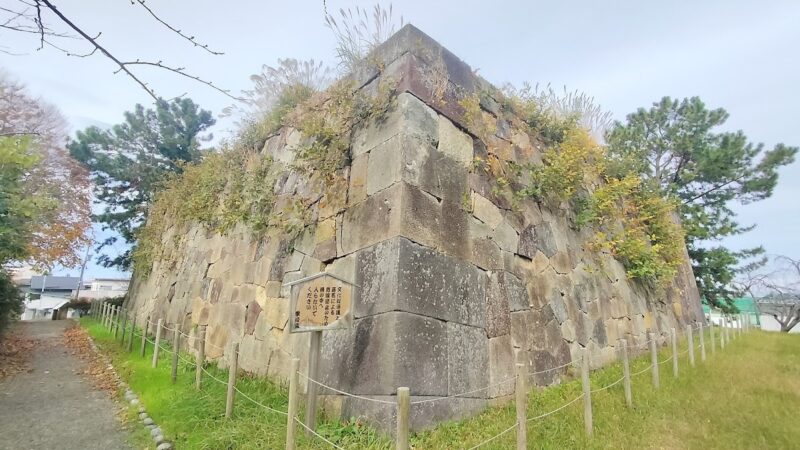
The most important defensive features of Arato Castle are the earthworks and moats. The earthworks were built surrounding the castle, physically preventing enemy intrusion. Even today, some of the earthworks remain in good condition, allowing us to understand the original scale from their height and width.
Of particular note is the remains of a water moat located southeast of the castle site. Although its width has decreased from its original size, the clear shape of the moat is still discernible, indicating that Arato Castle was a full-fledged castle equipped with a water moat. This water moat played an important role not only in defense but also in daily life, supplying water to the castle.
Snake Well Site: A Legendary Water Source
Among the remains of Arato Castle, the “Snake Well Site” is particularly interesting. An intriguing legend surrounds this well: it is said that in times of emergency, water would overflow from this well, filling the dry moat and protecting the castle.
This legend suggests that water played a crucial role in Arato Castle’s defensive system. Regardless of whether it was actually possible to fill it with water, there’s no doubt that the well was the castle’s lifeline. The remains of the Snake Well still exist today and are one of the points of interest when visiting the castle ruins.
Highlights of Arato Castle: A Spot to Experience History
Mitate Inari Shrine: The Site of the Naoe Kanetsugu Legend
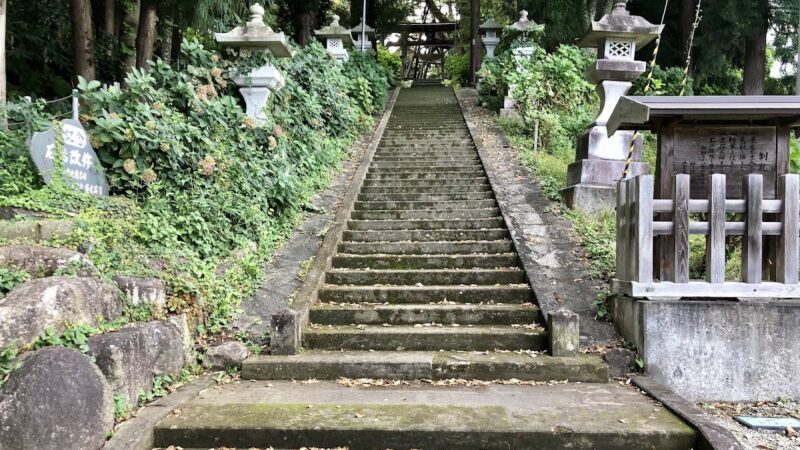
Located near the Arato Castle ruins, Mitate Inari Shrine is known for the aforementioned legend of Naoe Kanetsugu and the fox. The legend that a fox guided Kanetsugu on his way to the Battle of Hasedo is cherished and passed down among the local people.
Although the shrine itself is small, it continues to be maintained as a place of local faith. When visiting Arato Castle, stopping by this shrine will allow you to feel the history of the Sengoku period more deeply.
Yaotome Seed-Sowing Cherry Tree: Prefectural Designated Natural Monument
The “Yaotome Seed-Sowing Cherry Tree,” which is related to the origin of “Yaotome Castle,” another name for Arato Castle, is a valuable ancient cherry tree designated as a Yamagata Prefecture Natural Monument. It is said that this cherry tree was planted shortly after the establishment of Arato Castle, and its age is estimated to be several hundred years.
The name “Seed-Sowing Cherry Tree” comes from the fact that the blooming period of this cherry tree coincides with the time of seed-sowing in agriculture. Local people have long used the blooming of this cherry tree as a guide for their agricultural calendar. In spring, it blooms magnificently, delighting visitors to the Arato Castle ruins.
The protection and maintenance of the cherry tree are continuously carried out by Shirataka Town, and it is cherished as a symbol of both the region’s history and nature.
Remains of the Moat: The Defensive System of the Time
The remains of the moat, which remain southeast of the castle ruins, are an important historical site for understanding the defensive system of Arato Castle. Although its width has been reduced, the shape of the moat remains clearly visible, allowing us to imagine its former scale.
The water moat likely served not only to prevent enemy intrusion but also as a water source for the castle. The water utilization system of Arato Castle, including its connection to the remains of the Snake Well, is a fascinating subject of research.
Earthworks and Enclosure Remains: The Basic Structure of Medieval Castles
By observing the earthworks and enclosure remains remaining at the castle site, we can understand how medieval castles were constructed. The height and width of the earthworks, and the arrangement of the enclosures, allow us to glean insights into the castle-building techniques and defensive philosophies of the time.
In particular, the earthworks around the main enclosure remain in relatively good condition, allowing us to appreciate how the central part of the castle was defended.
Shirataka Town and Arato District: A Center of History and Culture
Overview of Shirataka Town
Shirataka Town was formed in October 1954 (Showa 29) through the merger of Arato Town, Ayugai Village, Higashine Village, Shirataka Village, Juo Village, and Sanso Village (1 town and 5 villages). The town is blessed with abundant nature, with the eastern part surrounded by the Shirataka Hills and the western part by the Asahi Mountains, and the Mogami River flowing through its center.
The population is approximately 11,000, and it is nationally known as a hop-producing area. It is also famous as a spot for classic cherry blossoms, attracting many tourists in the spring.
Role of the Arato District
The Arato district is the center of Shirataka Town, with administrative facilities such as the town hall, fire station, and central community center concentrated there. It also serves as a transportation hub, with Arato Station, the terminal station of the Yamagata Railway Flower Nagai Line, located there.
Historically, Arato was an important base in the Okitama region, and Arato Castle was its central feature. Even today, the Arato Castle ruins are preserved as an important place that conveys the region’s history and culture.
Historical Background of the Okitama Region
The Okitama region is located in the southern part of Yamagata Prefecture and is a historical region centered around Yonezawa City. It has long been known as the territory of the Uesugi clan, fostering a rich culture and history. The Okitama region, including Arato Castle, is dotted with medieval castles known as the “Date-style Okitama Forty-Eight Castles,” preserving the history of the Sengoku period.
With its Mogami River water transport, resources from the surrounding mountains, and fertile plains, the Okitama region was economically prosperous, leading to a history of many powers vying for control.
Access and Visiting Guide
Access by Public Transportation
Using the Yamagata Railway Flower Nagai Line
- Approximately 5 minutes on foot from Arato Station
- Arato Station is the terminal station of the Yamagata Railway Flower Nagai Line
- Transfer to the Yamagata Railway is possible from Akayu Station (JR Ou Main Line)
The Yamagata Railway Flower Nagai Line is a popular local line for tourists, running through tranquil rural landscapes. There are parking lots and public facilities around Arato Station, providing good access to the castle ruins.
Access by Car
Using the Tohoku Chuo Expressway
- Approximately 40 minutes from Yamagata-Kaminoyama IC
- Approximately 30 minutes from Nanyo-Takahata IC on the Tohoku Chuo Expressway
Using Local Roads
- Take National Route 287 to the center of Shirataka Town
- Parking is available near the Central Community Center in the Arato area
Parking is available at the community center’s parking lot. The castle ruins are within walking distance, and there are signs guiding you.
Estimated Visit Time and Points to Note
Estimated Visit Time: Approximately 30 minutes to 1 hour
- If you want to thoroughly examine the ruins, 1 hour or more is recommended.
- Including photography and exploring the surrounding area, 1.5 to 2 hours is recommended.
Points to Note During Your Visit
- The castle ruins are outdoors, so visits are subject to weather conditions.
- Comfortable walking shoes are recommended.
- Insect repellent is necessary in summer, and warm clothing is necessary in winter.
- While information boards and explanatory signs are installed, learning about the history beforehand will enhance your enjoyment.
Nearby Tourist Spots
Miyama Kannon-do
- A nationally important cultural property believed to have been built in the late Muromachi period.
- Approximately 15 minutes by car from Arato Castle.
Kuratakain (Sokushinbutsu)
- Enshrines the Sokushinbutsu of Komyokai Shonin.
- Known as the last Sokushinbutsu discovered in Japan.
Michi-no-Eki Shirataka Yana Park Ayu Chaya
- Famous as Japan’s largest fish weir.
- Enjoy Ayu (sweetfish) dishes
Classical Cherry Blossom Spot
- Shirataka Town is known as a village of classical cherry blossoms, and in spring you can see many famous cherry trees.
- In addition to the Yaotome Seed-Sowing Cherry Tree, there are historical cherry trees scattered throughout the town.
Development and Preservation Activities of Arato Castle
Development Projects Since the Heisei Era
In 1995, the Yamagata Prefectural Board of Education published the “Yamagata Prefecture Medieval Castle Site Survey Report, Volume 1 (Okitama Region),” which included a detailed survey of medieval castles in the Okitama region, including Arato Castle. This survey led to a renewed recognition of the historical value of Arato Castle, and the need for its preservation and development became clear.
Based on the results of this survey, Shirataka Town is promoting the preservation and utilization of the castle site. Protection of the remains, installation of information boards, and improvement of the surrounding environment are being carried out continuously.
Collaboration with the Community
The preservation activities of the Arato Castle site are supported not only by the administration but also by the cooperation of local residents and history enthusiasts. Multifaceted initiatives are underway to pass on the region’s history to future generations through educational activities and to utilize it as a tourist resource.
The Shirataka Town Tourism Association is also focusing on introducing the town’s historical heritage, including Arato Castle, and is enhancing information provision and guidance services for tourists.
Positioning as one of the “Date-style Okitama Forty-Eight Castles”
Arato Castle is introduced as one of the “Date-style Okitama Forty-Eight Castles” within the network of medieval castles in the Okitama region. This project aims to comprehensively investigate, preserve, and utilize medieval castles scattered throughout the Okitama region, contributing to the promotion of historical tourism throughout the region.
Visiting it in conjunction with other castles allows for a deeper understanding of the Sengoku period history of the Okitama region.
Significance of Visiting Arato Castle: A Fusion of Historical Learning and Tourism
As a Teaching Material for Learning About Medieval Castles
Arato Castle ruins are an excellent teaching material for learning how medieval castles were built and what functions they had. By observing the actual remains, such as the earthworks, moats, and layout of the baileys, you can experience living history that you can’t learn from textbooks.
It is also used as a place for school education and lifelong learning, making it an important place to learn about the region’s history.
Learning about the Okitama region during the Sengoku period
The Okitama region was where powerful warlords such as the Date, Mogami, and Uesugi clans vied for supremacy. Arato Castle was one of the front lines, and you can feel the tension and strategic importance of the time.
Including legends of Naoe Kanetsugu, it is an attractive spot for history buffs as a place where you can feel the drama of the Sengoku period up close.
Enjoying the local culture and nature
Visiting the Arato Castle ruins is more than just sightseeing historical heritage. It offers a comprehensive tourist experience, including the rich nature of Shirataka Town, the scenery of the Mogami River, natural monuments such as the classic cherry trees, and the local food culture.
The Arakito Castle ruins, showcasing different expressions throughout the seasons—cherry blossoms in spring, lush greenery in summer, vibrant autumn leaves, and snowy winter landscapes—offer new discoveries with every visit.
Summary: Rediscovering the Charm of Arakito Castle
Arakito Castle (Yaotome Castle) is a valuable medieval castle site remaining in Shirataka Town, Yamagata Prefecture. It functioned as an important military base in the Okitama region during the Sengoku period and played a role in the battles between the Date and Mogami clans.
The remaining earthworks, moat remains, and snake well remains convey the appearance of the castle at that time. Furthermore, there are many attractive spots where history and nature blend, such as the legend of Naoe Kanetsugu at Mitate Inari Shrine and the Yaotome Seed-Sowing Cherry Tree, a prefecturally designated natural monument.
Its convenient access, just a 5-minute walk from Arakito Station on the Yamagata Railway Flower Nagai Line, is another appealing feature. Located in the heart of Shirataka Town, the area boasts a variety of tourist attractions, including the Miyama Kannon-do Temple, the mummified monks of Kuratakain Temple, and the Shirataka Yana Park roadside station.
Thanks to development projects since the Heisei era, the site now features numerous information boards and explanatory signs, creating an environment where visitors can easily learn about history. As one of the “Forty-Eight Historic Sites of Okitama,” it is also positioned as an important base for learning about the medieval history of the Okitama region.
Visiting the Arato Castle ruins offers more than just sightseeing. It provides an opportunity to experience the history of the Sengoku period, enjoy the local culture and nature, and reflect on how we, living in the present, should carry on history. When visiting Yamagata Prefecture, be sure to visit Arato Castle in Shirataka Town.