History and attractions of Nanshan Castle
Is this Jishan Castle? | Overview of history
Sunshan Castle is a mountain castle located in Tanuki-cho, Hachioji City, Kyoto, during the war period. It has been used as an excellent land for the Tamagawa River and the Akikawa River, and is a well-regarded natural fort, which is also one of the largest medieval castle forts in the eastern region.
Nowadays, Toyama Castle has been designated as a national historical monument, and has opened to the east of Kyoto Toyama Park. Perfectly preserved within the park, including the comprehensive castle tower, the inner temple, the Senjoshiki ruins, the dried-up Shojo River, and the Hijikata construction. In 2017, Lushan Castle was selected as one of the “Japan’s 100 Great Castles (now)”, and a hot historical scenic spot for those who love the castle.
The most distinctive feature of Sunshan City is its well-utilized natural topographical defense construction. Approximately 160 miles of mountains and hills, the Great River of Tama River — the Tamagawa River — is a natural river. In addition, the exhibition of Taishan City has completed the pinnacle of the country’s historical fort construction technology, comprehensive construction of the castle, and the design of the castle river and the design of the castle in the depths.
Construction period and historical background
Construction by Mr. Oishi
It was built in 1521 (18th year of the Pingsho era/1st year of Taiei). The Oishi clan was the owner of a powerful region in the military, and was a self-proclaimed descendant of Kiso no Naka. From the beginning, he was based in Takatsuki Castle (now Takatsuki-cho, Hachioji City).
Oishi’s heavy weight was developed to improve the defensive terrain, and the construction of the new castle on Xia no Oka was completed. In 2021, we will commemorate the 500th anniversary of the construction of Nanshan City, various activities will be carried out, and the history of the area will be celebrated again.
Exhibition of the Hojo clan’s bright new owner and the castle
The most important turning point in the history of Tsuyama Castle was the establishment of the Hojo clan. The Hojo clan was the third son of Ujiyasu Hojo, the feudal lord of Sagami Province, and later received the title of Oishi’s head of the household. This is part of the Hojo clan’s military strategy and influence in the western part of the military province.
However, in 1557 (Koji 3rd year), he entered the city of Sushan Castle, but it is clear that the date of his entry is the focus of controversy among researchers. The progress of the castle’s construction on a large scale, the introduction of the most advanced technology in the era of the war, and the unparalleled strength of its construction.
Under the rule of the Teru clan, Toyama Castle was established as a military base under the control of the Hojo clan, and was also an important military base in the eastern region of the city. The castle town is also a magnificent, dynamic center of political and military affairs.
Takeda Shingen
1569 Takeda Army Invasion
The most famous incident in the history of Toyama Fortress was the invasion of Takeda Shingen in 1569 (12th year of the Eiroku Era), which was called the “Taiyama Battle”. In October of the same year, the Daimyo of Kai Province, Takeda Shingen, was able to invade the Musashi Province by passing a large army over Kobutsu Pass.
Shingen’s goal was to attack and conquer Odawara Castle, the Hojo clan’s stronghold, but he had to attack and conquer Toyama Castle first. However, the Hojo clan was strong in defending the mountain castle, and the troops were stationed on both sides.
Fierce battle and successful defense
The fierce attack of the Takeda army in the area, the strong resistance of the Hojo clan and the strong defensive construction of the castle on Mt. The Takeda Army once advanced to the third layer of the castle, but from the beginning it was impossible to break through the main castle’s defenses. The castle river is dry in the depths, the castle gate cloth station is cleverly designed, the castle can be used to gain more victories than the city, and the number of enemy units exceeds the limit.
At the end, Takeda Shingen’s plan to attack and seize the mountain castle was launched, and Kobori was pushed forward. In this battle, the fortifications of Lushan City were fully developed, with great defensive ability, and the historical forts during the war entered the war, and they played an important role in the battle.
Yo Uesugi Shinnobu’s series
Tsuyama Castle was not established, and Takeda Shingen had a close connection with him. Atsushi Uesugi’s Taji invasion of the eastern region, the Yohojo clan engaged in a fierce battle. The castle was built as an important point for the Hojo clan, and served as an important defense against foreign invaders.
Hachioji Castle where Miyoshi lived
The Hojo clan was in charge of the Takeda Army, which had retreated during the Battle of the Mountains, but others knew that the weak point in the defense of the Castle of the Mountains. Of course, it was easy to attack the West, and other orders were taken. After completing the first attack and the third layer of the fort, the fortification was strengthened and the defense of the troupe was strengthened.
From the end of the 1570s to the beginning of the 1580s, the clan began building a new castle on Mt. Fukasa (now Hachioji-cho, Hachioji City), which became Hachioji Castle. Hachioji Castle is a complete mountain castle, its main castle is approximately 460 U.S. mountains, and defense construction has been completed.
In 1587 (15th year of the Tensho era), the residence of the general Ujira was completed and Hachioji Castle was completed. The next part of the capital belonged to the “Three and Three Men” series of forts, and for a period of time, the castle was replaced by Takatsuki Castle, then Suzan Castle, and the last one was Hachioji Castle. Each time you leave the capital, consider the strategy and defense, and consider the importance of the selection of forts chosen by the Marquis at the time of the war.
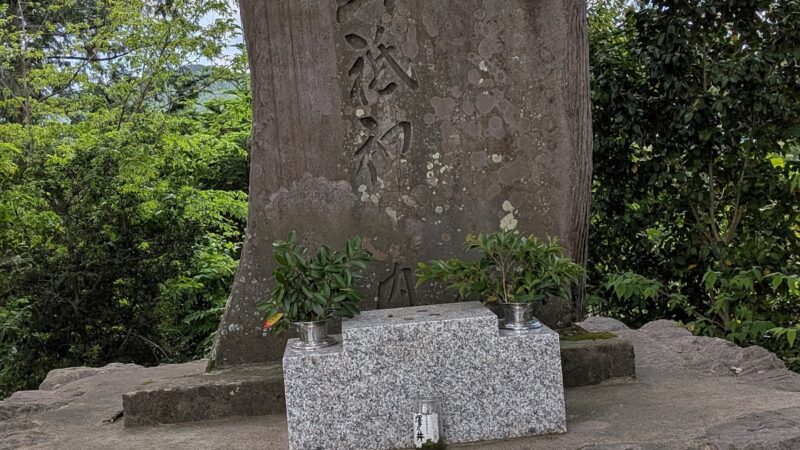
The ruins of Jishan Castle have been preserved, but the ruins have been perfectly preserved, making it an important historical site for research on the development of the country.
Nanshan Castle Construction | Castle fort construction techniques during the time of the war;
Chiropractic defense work
Tsuyama Castle is one seat of Tashiroyama Castle, which consists of a main castle (honmaru) and a multi-castle pond (Kuryuban). Kasumino Castle’s main castle pond, main enclosure, central enclosure (southern enclosure), two enclosures (senjojiki), and three enclosures (three enclosures), each area is separated by the dry construction of Kawa Castle.
Kasinojo Castle, 56 years old, was one of the largest forts in the East region during the war. The misty hill topography is enhanced, the general defense system of the maze is designed, and the main enclosure is difficult for the enemy to cross.
Honmaru Wachuken
The main enclosure is the most important area of Kasinojo Castle, it is the main residence, and it is also the guiding place. Nowadays, the construction of the earthworks and water wells in the castle was a long time ago, so let’s take a look at the ancient Japanese scene. A bird’s-eye view of the Tamagawa Kazuaki River and Akika Obono.
The Nakanomaru (inner temple) is the second most important fortress behind the Honmaru (main temple), and is used for defense as a fortress. Ichijo Fuka’s dried up castle, river commander’s Honmaru and Nakanomaru were separated, the immediate envoy’s attack was completed, and the Honmaru’s safety was ensured.
Ninomaru (Senjoji) Japanese outer area
Ninomaru, also known as “Senjochi”, is a troupe for the Ichiza Shonomi Hirodai, and can be used for military combat. During the defense of the fort in the Senza Senjo area, it is important to play and protect the outer castle walls.
On the outside, there is a small mound in front of the entrance (small end) of the fort, which can be used to block enemy entry and attack by friendly troops. Nanshan Castle has three outer areas: a corner outer area, a large outer area, a eastern outer area, and each troupe has a thousand lengths of territory since the capital’s enemy. Umadashi fortress researchers have advanced knowledge of fort construction techniques during the time of the war.
Dried-out castle Kawa earthen embankment
The defense of Nanshan Castle is the earthen embankment of the river and highlands of the dry city. Within the fortress, the dry city river is distributed in various sizes, with a depth of more than 10 meters. However, the castle river is not deep, yet there are many twists and turns, and the actions of an attacker are limited to effective territory.
The earth embankment and dry castle river phase phase, and the castle fort’s inner hospital. The height of the earthen embankment is different, and it is over 5 meters above sea level. As long as the earth is built on the embankment, it can be built as a castle or as a castle, and its defensive ability can be strengthened.
Clever design for the castle gate
The small entrance (city gate) is a fort-like entrance, and its defense system is medium-weak. Lushan Castle’s clever location has been designed to improve its defense ability.
A typical defense technique is “Yokoya-gari”, which is a quick construction of an earthen embankment and an outer fort. In addition, in front of the main gate, the entrance to the castle was strengthened by a triple defense system.
Water source | Mizui Ryokei
It is important to protect the water source in the mountainous area. A water well has been excavated inside the multi-layered castle tower in the castle tower. As of now, there is still a long history of water well, and the depth of the water well is more than 10 meters.
This ensures that the water well is a sufficient source of water during the envoy’s time in the city. His great resistance ability was the key factor in the successful invasion of Suzan Castle by Takeda Shingen.
Current status of Nashan Castle | Protection and use
Designated as a National Historic Landmark and East Kyoto Metropolitan Park
Nanshan Castle Palace was designated as a national cultural historical monument in 1951 (Showa 26). This is because of the history of its work and the history of medieval castle fortifications. At the moment, the production of the Kyoto Toyama Park is being managed by the Kyoto government, and the public license is being released.
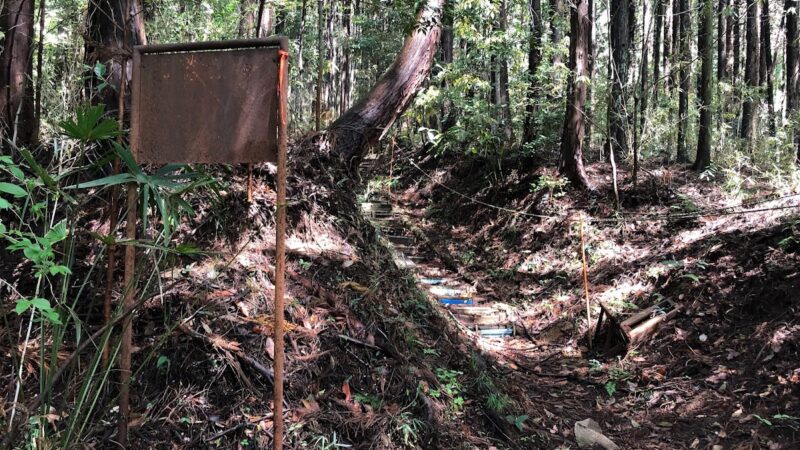
There are walking paths in the park, and the main monuments are convenient for visitors to visit. Once the station has been distributed, the message board will be completed, and the first visit to the guest will be completed.
Relief protection
The greatest attraction of the Nanshan Castle ruins is its preservation, which is unique and perfectly preserved. The main elements of the castle fort during the time of the war were retained, including the castle tower, the inner temple, the large castle wall, the dry city river in the depths, the earthworks of the high land, the castle gate, the outer fort, and the waterway.
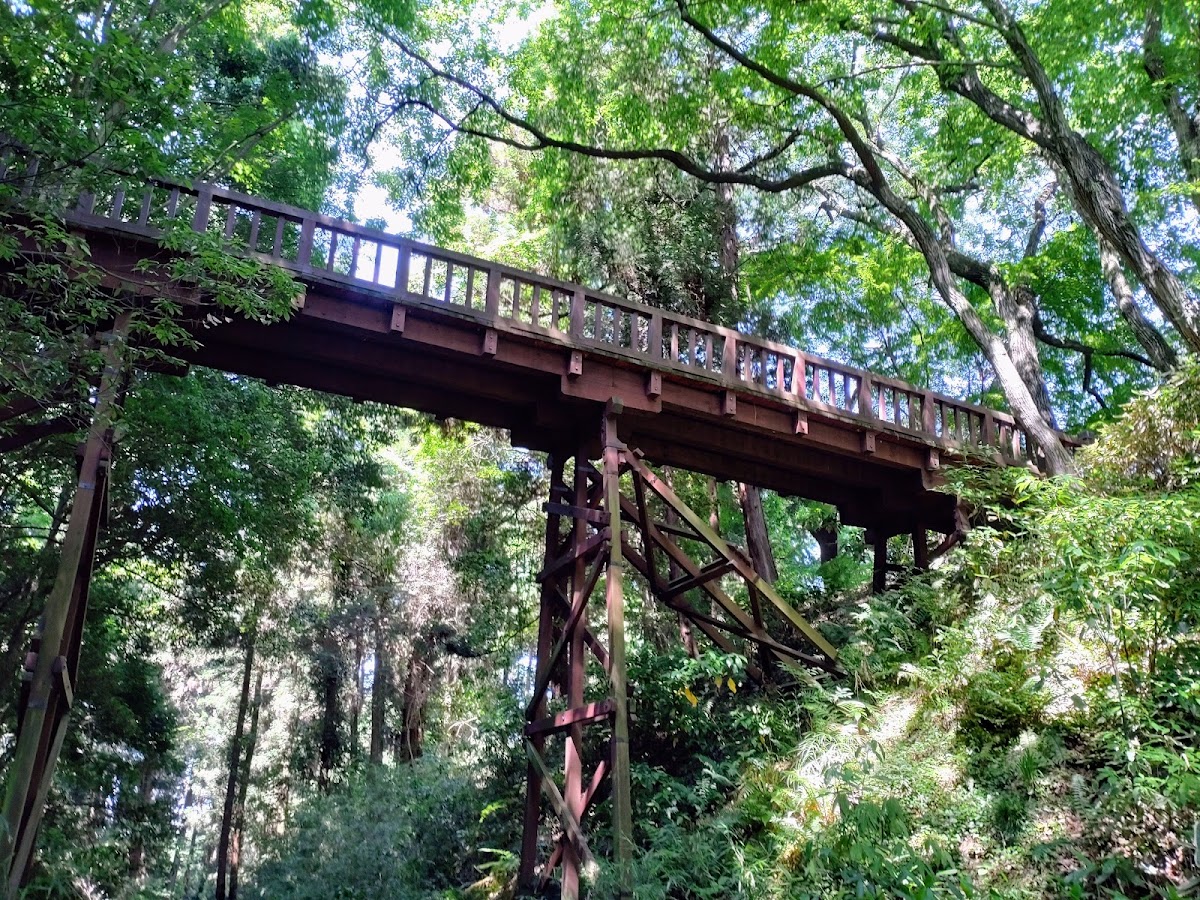
The drying of the castle, Kawa Hijikata’s construction, and the impressive impression of the young people; during the walk, the depth and height of the remarkable people. In addition, at the same time as exploring the castle fort, the beautiful scenery of the four seasons – the maple flowers in spring, the green leaves of spring onions in early summer, and the red foliage in autumn – are also the greatest highlight of the castle.
Selected “Japan’s 100 Famous Castles”
In 2017 (Heisei 29), Toyama Castle was selected as one of Japan’s 100 Greatest Castles. The history of the foundation of the Japanese Castle Fortress Association, the status of preservation, the degree of acceptance of the Japanese castle, etc. are summarized and selected.
A commemorative seal of “Japan’s 100 Famous Castles (续)” can be found at the “Japanese Castle Site Center” located on the “Hachioji Castle Site Site”. Since then, many people who have loved castle forts in various parts of Japan have visited the castles in the city, and other people have traveled to the forts.
Non-organized protection activities
Non-Lily organization “Nishan Castle Site Protection Association” is the core function of the security utilization of the South Mountain Castle Site. We have made important contributions to others for regular cleanliness, weeding and maintenance work, and for ensuring that the site remains in good condition.
Other activities include various activities, such as the history recital, the children’s armor test, the tour of the castle ruins, and the Hojo Ujisho Festival, etc., as well as local history education and travel promotions.
AR App Experience
The production process is currently being transformed into a new generation, and the process for using the intelligent machine has now been launched.该应应用增强实实(AR)术术圯屏屏上上厰已已经箞筑结构、让用户体验城塡鼎查时阿.
When I was there, I was walking around the city, and when I was walking, I saw this castle building, and the castle gate was currently on the screen. In order to use this article, you will receive the joy of children and youth, and the excitement of working with other people, as well as other historical and interesting tools.
Celebrating the 500th anniversary of the construction of Toyama Castle
2021 (Reiwa 3) marks the 500th anniversary of the construction of Nassan Castle. In commemoration of this event, Hachioji City and the related organization’s construction exhibition has been completed with many commemorative activities, comprehensive production commemorative comics, special exhibitions, Japanese guides, etc., and the history and charm of the city of Hachioji.
Through this process, we have made a small effort, and the number of visitors has increased as well.
Yushan Castle travel information | Transportation and scenic spots information
Transportation method
Convenient transportation to the former Nanshan Castle ruins, you can use public transportation tools or go to the front by yourself.
Ride on a bicycle/Hashi:
- From JR Chuo Line Hachioji Station North Exit or JR Eight Public Line Haijima Station za za `
Tobuki'',Kyorin University'' or`Western Tokyo Bashi”.
- Take a car to the bus station located at “Zanshan Castle Site”, and it will take about 15 minutes to get there.
Self-indulgence:
- From the Chuo Expressway Hachioji Exchange Road, it takes about 15 minutes by car.
- We have Taishan Tourist Bus Stop (free of charge).
Learn about the game
Construction site 2-3 Short time tour Lushan Castle ruins. Main scenic spots below:
1. Oteguchi (Sannomaru)
This is the main entrance to the fort. Ichijo Fukamura’s dry castle river vision guide, and I got a solid defense construction for the castle fort.
2. Senjoshiki (Ninomaru)
It is possible to see the defensive structure of the castle in three places. In fact, it is a well-preserved castle, and it is an important site that has the fort construction technology of the time of the war.
3. Nakanomaru
The Nakanomaru is the second large burial mound in the next Honmaru, and the earthen burial mound in the dry castle of Kawawa and Kogyo in the fourth round of construction. It’s easy to see the function of the defense point in the production.
4. Honmaru
The main enclosure is the central part of the fort, and is the main residence of the owner. The scenery of the Tama River and the Autumn River still exists.
5. Dried-out castle in Kawa terra firma
The dry and dry castle in Hewa’s fortress is a must-see place. Especially because it is deep in the depths of the river, you can walk through it, and you feel that you are strong in your defense.
Visit Knowledge
- The fortress was located in Usan-gu, the terrain was different, and the shoes and clothing were suitable for wear.
- Summer demand for mosquito protection, winter demand for warm clothing.
- Construction and drinking water.
- Wet and slippery roads in rainy weather, please be careful.
- Participant guides can learn more about the castle’s history.
Zhoukan Scenic Spot
There are other scenic spots near the Nashan Castle ruins.
Hachioji Castle Site:
This is how the Hojo clan shines through the castle fort. Shunya is a national historical monument, ranked as one of Japan’s 100 most famous castles. Take a tour of the castle’s interior design, as well as its construction and scenic spots.
Mt. Takao:
Mt. Takao is the first seat of the mountain peak, and transportation tools such as a pine tree stand, a car with a hanging chair, etc. can be easily accessed from the center of Dongjing city. At the same time, you can visit the Nagasaki Castle Site and Mt. Takao.
Tama River/Aki River:
Flowing through the river, it is an ideal place for walking, vacationing, and activities.
Chongshan City’s historical meaning and future prospects
Nanshan Castle is a masterpiece of the construction of the castle fort in the east of the eastern part of the country, and is an important historical monument. The exhibition was completed using the most advanced construction technology at the time, comprehensively making full use of the natural topographical layout, and adding to the defensive construction and cleverly arranging the castle gate and exterior construction.
The reason for its success was that it had many victories over the castle, and that Takeda Shingen’s large army had fallen, and that it had developed a powerful defensive ability, and that it had an important position in the history of fort construction. In addition, this is the residence of the Hojo clan, a famous military commander from the time of the 19th century, and the history of its history.
In front of us, Sushan Castle is a national historical monument, ranked in the list of “Japan’s 100 Famous Castles”, and at the same time, it is also a public park in eastern Kyoto, and is deeply loved by visitors. Comprehensive non-profit organization, local residents’ protection work, government’s opening items and utilization of augmented reality (AR) technology, all new innovations, etc. We are currently promoting various domestic measures.
In the future, when people hope to have a rare purchase, they will be able to use the history of the world as a resource for their children and children. In front of us, the city of Lushan is located in the world, and the potential to be recognized internationally is expanding.
The ruins of Nashan Castle, which is currently on hold, looks like it was during the war. What kind of historical romance do you feel while walking in the distance? The dry city river of deep water, the inner city of the high land quality castle, and the wisdom of the prince of the country and time, which arrived 500 years ago.
overview
Sunshan Castle was located in Hachioji City, Tokyo during the war, and was the residence of the Hojo clan. Since its construction in 1521, it has a history of more than 500 years, and since then it has been well known and successfully resisted the invasion of Takeda Shingen.
At present, Toyama Castle has been designated as a national historical monument, has been included in the list of “Japan’s 100 Great Castles”, and the progress of Toyama Park in the eastern part of Kyoto. The castle’s interior is perfectly preserved as a monument to the era of war, Ruzheng Castle, Inner Castle, Qianzhang Shiki, dry river, earth-quality castle wall, and so on.
In addition, there are various contemporary physical activities that are currently available, such as the use of advanced technology (AR), various types of physical activities that are not related to organizational structure, and the history of junior high school students. Convenient transportation, easy access to the central part of Dongjing, ideal for walking in the historical district at the end of the Zhou period.