Shōzui Castle, Itano District (Tokushima Prefecture) | A Thorough Explanation of the History and Highlights of the Awa Province’s Guardian Residence
What is Shōzui Castle? | A Flatland Castle that Was the Political and Economic Center of Shikoku
Shōzui Castle is a flatland castle site located in Shōzui, Aizumi-cho, Itano-gun, Tokushima Prefecture. From the Kamakura period to the Azuchi-Momoyama period, it functioned as the guardian residence of Awa Province and flourished for approximately 240 years as the political, economic, and cultural center of Shikoku, including Awaji and Sanuki Provinces.
The flatland castle site and residence site were designated a National Historic Site in 2001, and newly confirmed parts from subsequent archaeological excavations were added to the designation in 2007. Furthermore, in 2017, it was selected as one of the “Continued Top 100 Japanese Castles,” attracting attention as an important historical site in the study of Sengoku period castles.
Excavations are still being conducted intermittently, and the site is highly regarded by history buffs and castle enthusiasts as a valuable historical site that offers a glimpse into the prosperity of that era.
Basic Information on Katsuzui Castle
Location: Higashikatsuchi, Katsuzui, Aizumi-cho, Itano-gun, Tokushima Prefecture 771-1270
Castle Structure: Flatland Castle
Construction Period: Late Kamakura period (as a shugo residence), Tensho era (as a fortified castle)
Builder: Hosokawa clan (shugo residence), Miyoshi Sonpo (fortified castle)
Main Lords: Hosokawa clan (9th generation), Miyoshi clan (3rd generation)
Remains: Earthworks, moat, residence ruins, dry landscape garden ruins
Designated Cultural Property: National Historic Site (designated in 2001, additional designation in 2007)
Continued Top 100 Japanese Castles: No. 194
Common Names/Alternate Names: Awa-yakata, Katsuzui-yakata, Shimo-yakata
History of Katsuzui Castle | 240 Years of Changes as a Shugo Residence
Kamakura and Nanboku-cho Periods | Establishment of the Hosokawa Clan’s Shugo Headquarters
The area of Shōzui first appeared on the historical stage during the Nanboku-cho period. It is believed to have begun when Hosokawa Akiharu, the younger brother of Hosokawa Yoriyuki, moved from Akizuki Castle to Shōzui to become the Shugo (military governor) of Awa Province.
As a powerful daimyo (feudal lord) of the Muromachi Shogunate, the Hosokawa clan held the position of Shugo not only of Awa Province but also of Sanuki and Awaji Provinces, making Shōzui their political base. During this period, Shōzui was known as “Awa Yakata” or “Shōzui Yakata,” symbolizing the authority of the Hosokawa clan, who controlled 36 provinces in western Japan.
Its location on a slightly elevated area of approximately 2.5 meters above sea level, surrounded by the Old Yoshino River, the Yoshino River, and the Nakatomi River, made it a crucial point for water transport and economically important. This geographical advantage was one of the factors that made Shōzui the center of Shikoku.
Sengoku Period | The Rise and Peak of the Miyoshi Clan’s Prosperity
With the start of the Sengoku period, the Miyoshi clan, vassals of the Hosokawa clan, seized real power. During the time of Miyoshi Nagayoshi, the Miyoshi clan built a vast sphere of influence stretching from the Kinai region to Shikoku, becoming renowned as “Katsuzui of the Realm.”
During the Miyoshi era, Katsuzui was not merely a military base, but a center of culture and economy, reaching its peak. Archaeological excavations have uncovered Chinese ceramics, high-quality tea ceremony utensils, and the remains of a dry landscape garden, revealing that Katsuzui boasted a cultural level comparable to Kyoto and Sakai at the time.
The Miyoshi clan conducted their political activities centered around their residence, and samurai residences and merchant districts developed in the surrounding area. Katsuzui during this period is considered to have been the most prosperous urban space in Shikoku.
Azuchi-Momoyama Period | The Invasion of the Chosokabe Clan and the Abandonment of the Castle
During the Tensho era (1573-1592), Chosokabe Motochika of Tosa Province expanded his power with the aim of unifying Shikoku. It is believed that Miyoshi Nobuyasu built Katsuzui Castle as a separate fortified residence to counter the Chosokabe invasion.
However, in the Battle of Nakatomigawa in 1582, the Miyoshi clan was defeated by the Chosokabe clan, and Katsuzui Castle fell. Subsequently, with Toyotomi Hideyoshi’s conquest of Shikoku in 1585, the Chosokabe clan withdrew from Awa Province, and Katsuzui Castle ceased to exist and was abandoned.
Thus, the land of Katsuzui, which had functioned as the center of Awa Province for approximately 240 years, withdrew from the stage of history.
The Castle Structure of Katsuzui Castle | A Dual Structure of a Flatland Castle and Residence
Main Enclosure | Katsuzui Castle Ruins as a Fortified Fortress
The area currently designated as “Katsuzui Castle Ruins” is the area centered around the grounds of Kenshoji Temple. It measures approximately 80 meters east-west and 100 meters north-south, and has the structure of a flatland castle surrounded by earthworks and a moat.
Archaeological excavations have revealed that this castle site was a fortified fortress built by Miyoshi Masayasu during the Tensho era. It is believed to have been built separately from the existing residence to strengthen defensive capabilities amidst rising military tensions.
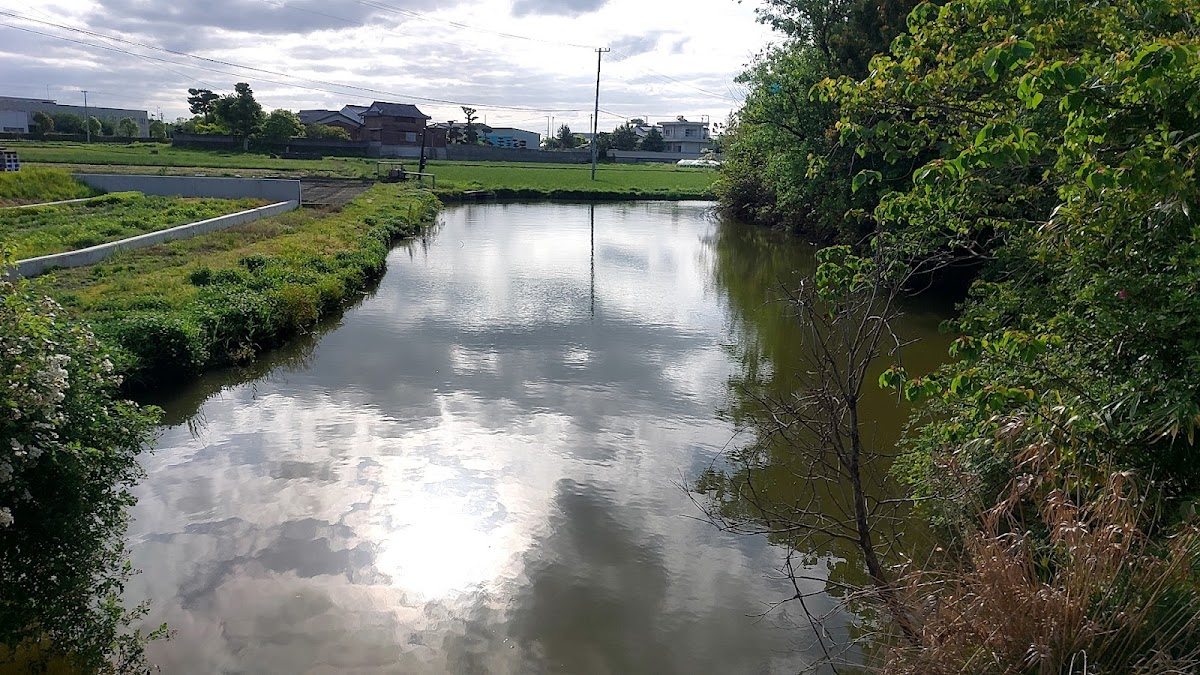
Parts of the earthworks still remain, allowing us to imagine the scale of the castle at that time. Traces of a moat have also been confirmed, indicating that it possessed a certain degree of defensive capability despite being a flatland castle.
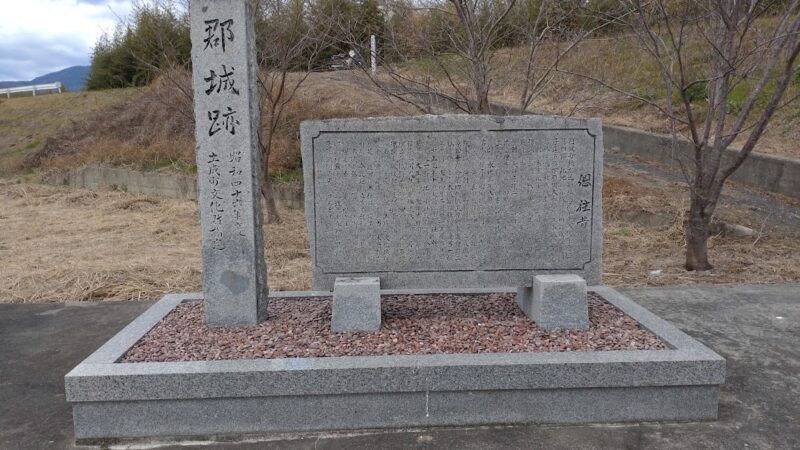
Kenshoji Temple, built during the Edo period, also plays a role in preserving the castle ruins, and explanatory and information boards are installed on its grounds. Currently, Aizumi Town is developing the area as a park, improving the environment for visiting the historical site.
Residence | Excavation Results at the Katsuzui Residence Site
Located approximately 200 meters southeast of the Katsuzui Castle site, the Katsuzui Residence site was the location of the residence of the Hosokawa and Miyoshi clans. This was the central part of the shugo (provincial governor) residence, originally known as the “Awa Yakata” or “Katsuzui Yakata.”
Excavation surveys have confirmed the remains of a residence surrounded by a double moat and earthen ramparts, spanning approximately 120 meters east-west and 100 meters north-south. It is presumed that samurai residences were located between the inner and outer moats.
Of particular note is the remains of a dry landscape garden discovered at the residence site. The stonework and pond remains are well-preserved, demonstrating the high level of garden culture from the Muromachi to the Sengoku period. This garden is thought to have directly incorporated Kyoto culture, indicating that Katsuzui was not merely a provincial castle but a culturally sophisticated place.
The unearthed artifacts include Chinese celadon and white porcelain, domestic pottery, tea ceremony utensils, stationery such as inkstones, and even gold-leafed roof tiles, confirming the economic and cultural prosperity of Katsuzui at the time.
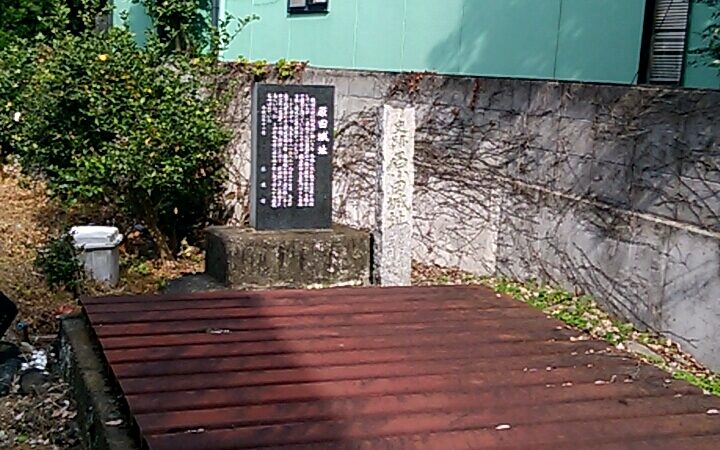
Currently, the residence site has been developed into a historical park, with the locations of moats and earthworks confirmed by excavations marked. The site is well-equipped with information boards, allowing visitors to imagine what the residence looked like in those days.
Structure of Subsidiary Castles and Castle Town
The ruling system centered on Katsuzui included several subsidiary castles in the surrounding area. These formed the defensive network of Katsuzui Castle and also functioned as bases for governing the territory.
Regarding the structure of the castle town, investigations are still ongoing, but historical documents and excavations have revealed that samurai residences and merchant districts formed around the residence. Commercial activity utilizing the water transport of the former Yoshino River was also active, forming the foundation of the prosperity that earned Katsuzui the title of “Katsuzui of the Realm.”
Archaeological Findings | Revealing the True Image of Prosperity
Full-scale archaeological excavations at the Katsuzui Castle site began in 1998 and continue intermittently to this day. These investigations have revealed the realities of life and culture at the time that could not be known from written historical sources alone.
Cultural Level as Told by Excavated Artifacts
The artifacts unearthed during the excavations eloquently speak to the high level of culture in Katsuzui. High-quality Chinese porcelain, including celadon and white porcelain, demonstrates the realities of international trade at the time and indicates the economic power and cultural refinement of the castle lord.
The discovery of tea ceremony utensils indicates that tea ceremony culture was deeply rooted in Katsuzui. During the Sengoku period, tea ceremony was not merely a hobby, but also a venue for political negotiations and the display of cultural authority. It is highly likely that the Miyoshi clan interacted with cultural figures and merchants in Kyoto through the tea ceremony.
The discovery of gold-leaf roof tiles indicates the high status of the building. Gold-leafed roof tiles were a special building material used only in the residences of powerful figures and temples and shrines, indicating that the Shōzui Mansion was not merely a provincial residence, but possessed a status comparable to that of a powerful daimyo’s residence in the Kinai region.
Restoration of the Dry Landscape Garden
The dry landscape garden discovered at the residence site is one of the greatest achievements of the excavation of the Shōzui Castle site. The arrangement of the stones and the shape of the pond reveal that it was a full-fledged garden in the style of the Muromachi period.
This garden is thought to have directly incorporated Kyoto culture, and it is possible that a professional gardener was involved in its creation. For the shugo daimyo and sengoku daimyo of that time, gardens were an important element in demonstrating cultural authority, and it appears that a similar awareness existed in Shōzui.
Currently, based on the results of the excavation, the restoration and development of the garden is being considered. In the future, it is expected to become a valuable place where visitors can experience the garden culture of the Sengoku period.
Ongoing Investigations and New Discoveries
The excavation of the Katsuzui Castle ruins is still ongoing, and new discoveries are being made one after another. The 2007 additional designation was to include newly confirmed remains within the historical site area.
Future investigations are expected to further clarify the structure of the castle town, the surrounding samurai residences, and the actual state of the merchant district. Furthermore, archaeological evidence will accumulate regarding the actual political and economic activities of the Miyoshi clan, as well as the details of their cultural exchanges with Kyoto and Sakai.
The Aizumi Town Board of Education regularly publishes the investigation results and widely disseminates the latest research findings through on-site explanations and exhibitions.
Information on the Continued Top 100 Japanese Castles Stamp
Katsuzui Castle was selected as number 194 of the “Continued Top 100 Japanese Castles” in 2017. The stamp can be obtained at the following locations.
Stamp Location:
- Katsuzui Excavation Site Office (Higashi-Katsuchi, Katsuzui, Aizumi-cho, Itano-gun, Tokushima Prefecture)
- Phone Number: 088-641-3466
The stamp can be obtained during weekday opening hours. It is recommended to check the opening hours before visiting. The Katsuzui Excavation Site Office also displays the results of the excavation and unearthed artifacts. Visiting the exhibition along with getting the stamp will deepen your understanding of Katsuzui Castle.
Access to Katsuzui Castle Ruins
Using Public Transportation
From JR Kotoku Line “Katsuzui Station”:
- Exit the station, cross the railway crossing, and walk west for approximately 15 minutes.
- Approximately 500 meters to Katsuzui Castle Ruins (Kenshoji Temple).
- Approximately 5 minutes walk southeast from the castle ruins to Katsuzui-kan Ruins.
Katsuzui Station is approximately 10 minutes from Tokushima Station on the Kotoku Line, making it relatively easy to access. Guide signs are installed along the path from the station to the castle ruins, so you can arrive without getting lost.
If traveling by car
From the expressway:
- Approximately 10 minutes from the Aizumi IC on the Tokushima Expressway
- Accessible via National Route 11
Parking:
- Katsuzui Castle Ruins (Kenshoji Temple): Temple parking available (several spaces)
- Katsuzuikan Ruins: Historical park parking available
When using a car navigation system, searching for “Kenshoji Temple” or “Katsuzuikan Ruins” is convenient.
Nearby sightseeing spots
Katsuzui Castle Ruins and Katsuzuikan Ruins are within walking distance of each other, and it is recommended to visit both. The total time required for both is approximately 1-2 hours.
At the Katsuzui Excavation Site Office, you can see exhibits of excavated artifacts and the results of the excavation survey. If you have time, stopping by will give you a deeper understanding.
Highlights of Katsuzui Castle | Points to Note When Visiting
Castle Ruins within the Kenshoji Temple Grounds
Within the grounds of Kenshoji Temple, a portion of the earthworks remains in excellent condition. This is a valuable relic that demonstrates the defensive facilities of the castle, which, despite being a flatland castle, was equipped with earthworks and a moat.
Information boards are installed within the temple grounds, providing detailed information about the castle’s structure and history. Walking around the area also allows you to experience the scale of the castle grounds at the time.
Historical Park at the Site of Katsuzui Residence
The site of Katsuzui Residence has been developed as a historical park, with the locations of moats and earthworks confirmed during archaeological excavations marked on the ground surface. The information boards are also comprehensive, making it easy to understand the structure and layout of the residence.
Of particular note is the site where the remains of a dry landscape garden were discovered. Although it has now been backfilled, the information board allows you to imagine what the garden looked like at the time.
Exhibits at the Excavation Site Office
The Katsuzui Excavation Site Office displays actual excavated artifacts and photographic panels of the excavation. Seeing actual excavated artifacts, such as Chinese ceramics and gold-leaf roof tiles, up close allows you to truly appreciate the prosperity of Shōzui at that time.
The office staff are experts involved in the excavation and will answer your questions carefully. You can also learn about the latest research findings, so we highly recommend stopping by during your visit.
Historical Significance of Shōzui Castle | Its Place in Sengoku Period History
Shōzui Castle is not merely a local castle; it occupies an important position in the history of Japan’s Sengoku period.
As a Shugo (Provincial Governor) Residence under the Muromachi Shogunate
The Hosokawa clan was a powerful shugo daimyo (provincial governor) that produced kanrei (deputy shoguns) of the Muromachi Shogunate, and Shōzui was one of their power bases. As the shugo of Awa, Sanuki, and Awaji provinces, the Hosokawa clan embodied the authority of the shogunate in western Japan, and Shōzui was a symbolic location for this.
As the Headquarters of the Miyoshi Clan, a Sengoku Period Daimyo
Miyoshi Nagayoshi wielded power surpassing that of the Shogun of the Muromachi Shogunate, building a vast sphere of influence centered on the Kinai region. His base, Shōzui, was a crucial city, alongside Kyoto and Sakai, known as “Shōzui of the Realm.”
The Miyoshi clan’s regime is regarded as a “pioneer of the Sengoku period,” preceding Oda Nobunaga’s unification of Japan. Research into Shōzui, their base, is essential for understanding the politics, economy, and culture of the Sengoku period.
Archaeological Value
The reality of the Shōzui castle site, revealed through archaeological excavations, reveals aspects of the Sengoku period’s lifestyle and culture that cannot be learned from written historical sources alone. In particular, the unearthed artifacts, such as the dry landscape garden and high-quality ceramics, are valuable archaeological evidence demonstrating the high level of culture at a regional castle.
Further research is expected to yield even more insights into the structure of castles and residences during the Sengoku period, and the daily lives of shugo daimyō and sengoku daimyō.
Summary | The Charm and Future Prospects of Katsuzui Castle
Katsuzui Castle is a national historical site located in Aizumi-cho, Itano-gun, Tokushima Prefecture, and is an important castle ruin selected as one of the Continued Top 100 Japanese Castles. As the shugo (provincial governor) of Awa Province, ruled by the Hosokawa and Miyoshi clans for approximately 240 years, it flourished as the political, economic, and cultural center of Shikoku.
Continued archaeological excavations are revealing the true extent of the prosperity of the time, when it was known as “Katsuzui of the Realm.” Excavated artifacts such as a dry landscape garden and high-quality ceramics indicate that Katsuzui was not merely a provincial castle, but boasted a cultural level comparable to Kyoto and Sakai.
Both the Katsuzui Castle ruins (Kenshoji Temple) and the Katsuzui Manor ruins are within walking distance of each other and are being developed as a historical park. Its convenient access, just a 15-minute walk from JR Katsuzui Station, is also a major attraction.
For those interested in the history of the Sengoku period, those who enjoy castle tours, and those interested in archaeological discoveries, Katsuzui Castle is a historical site well worth visiting. Further discoveries are expected as archaeological excavations progress at the Katsuzui Castle ruins. We encourage you to experience its historical value and charm firsthand.