Chengtian Castle: A complete overview of its history and highlights | Japan’s 100 most famous castles (continued) A detailed explanation of the ruins of the castle and fortifications
Is this the castle?
Dengtian Castle is a plain castle fort on a mountain hill in the center of the city of Dengtian, Yu, 67-68 US. It was also known as `Kuyama Castle'', from 1619 to 1866, and was the administrative center of the Tianda clan, and was an important function for about 247 years. Nowadays, it is one of the `Japan’s 100 most famous castles”, a castle park with a perfectly preserved stone tomb, which is deeply enjoyed by citizens, tourists and tourists.
The special features of the most famous feature of Dengtian Castle are its natural geographical location, Matsubara Bay in Beibei, Asai River in East, Dengtian River in South, and Tengtian River in Xipeng. The construction of Dengtian Castle was made with clever use of the terrain, and was praised for its construction techniques in the fortifications of the early Jiang Dynasty period.
History of the castle
Construction History Shigeharu Yokota
In 1619 (5th year of Motona), Shigeharu Furuta, lord of Matsusaka Castle in Ikuri Province, was appointed as the first lord of the Toda domain due to his military service in Osaka, and his salary was 54,000 koku (his financial records were 55,000 koku). Shigeharu Furuta is a high-class vassal of Nobunaga Furuta, Shigenari Furuta (Shibe)’s successor, and has outstanding fort construction techniques.
Construction began in February 1620 (Motona 6), the year after the construction of the castle, and it was completed in about five years. After the construction of the castle fort, the local stone and wood craftsmen came to work, and the craftsmen from nearby villages were called in. As a result, the large-scale civil engineering project was completed. After the construction of the main castle, the three-tier castle tower was opened, and the castle town was opened.
The lords of the Kuda clan and their history
Since then, it has been the center of the castle town, and the Hetian domain has been established as a feudal family since the time of the Jiang Dynasty.
Furuta family era (1619-1648)
The Furuta family’s reign began with Shigeharu Furuta, the first lord of the domain, and Shigehisa Furuta, the third lord of the domain, continued the rule. However, in 1648, due to a serious mental disorder, he committed a crime as a vassal, and was subsequently stripped of his rank as lord. The first incident is the conclusion of the Furuta family’s administration of the Furuta clan.
Matsudaira (Matsui) Domain (1648-1666)
The Furuta domain was removed from the territory, and Yasunori Matsudaira was appointed as the lord of the domain, with a salary of 30,000 koku. However, in 1666, he left the Matsue domain.
Matsudaira (Ochi) Domain (1666-1698)
After the death of Yasushi Matsudaira, the title of lord of the domain was given to Matsudaira, with a stipend of 61,000 koku, but the title was discontinued in 1698 (Genroku 11).
Matsudaira (Honjo) era (1698-1731)
Naosuke Matsudaira was appointed as the lord of the Toda domain, received a stipend of 50,000 koku, and entered the era in 1731 (Kyoho 16), after which he passed away to other domains.
Inoue era (1731-1866)
In 1731 (Tenpo 11), Masatoshi Inoue was appointed lord of the Toda domain, with a salary of 50,000 koku, and the Inoue clan was established as the lord of the Toda domain at the end of the Edo period. In 1769 (Meiwa 6), the Hantian clan was appointed as a powerhouse, and at the same time, it was managed by Sekiman Yingei. The longest reign of the Inoue clan, approximately 135 years.
Second Changzhou Battle Self-confirmed retreat
The most tragic incident in the history of Dengtian City was the fall of Moyuyu in 1866 (the second year of Wuyong) during the Second Changzhou Battle (also known as the Zijing Battle).
A part of the shogunate’s army was produced by the Tota domain, and the Yocho domain was engaged in a fierce battle. On June 7, 1866, approximately 2,000 soldiers from the Choshu domain attacked Hiden Castle led by Masujiro Yudaimura. The Hentian clan’s military strength was approximately 1,000 people, and the number of people there was very low.
A fierce battle ensued, and the castle was destroyed. On the night of June 7th, the feudal lord, Masanao Inoue, decided to set fire to the castle and later retreated. When the castle was built and the capital was built, the lord of the domain and the Yutsuwano domain fled to the city of Yamaguchi.
The commander of this field commanded the construction of Dengtian Castle, the comprehensive castle tower, the entire structure, and the stone burial mound. This is the historical end of the 247-year history of the ensuing retreat and conquest of the Totian domain.
Meiji-era and post-modern Hutian Castle ruins
After the beginning of the Meiji period, the site of Fengtian Castle was opened and became a public park. The stone burial mound is perfectly preserved, and it is a place where the citizens of Chengdu won a place of rest and release pine trees. From the Showa era to the Heisei era, the stone walls were acquired and repaired, and the preservation work of the historical past was also progressed step by step.
In 2017, Dengtian Castle was selected as one of the “Japan’s Top 100 Famous Castles”, and a hot tourist attraction for castle lovers across the country.
Formation and structure of 滨田城
Cloth station (basic cloth station)
Hentian Castle is a castle fort built on a ladder. The ladder-like layout is the highest point of the master’s castle, and the second and third tiers of the castle are laid out in the order of descendants towards the master’s castle.
Basic structure of the fort:
- Main enclosure: central area on a flat mountain in Jianyu Haihe, approximately 68 miles.
- Second ring: A narrow tunnel on the south side of the main enclosure.
- Sannomaru: A burial mound on the south side of the second circle.
- Demaru: An independent defensive fortress on the west side of Iu Honmaru.
The west side of the castle wall on the south side of the Tengtagawa River, the east side of the castle wall on the east side of the Asaigawa River, the north side of the castle wall on the south side of Matsubara Bay. The fort is fully utilized, the terrain is excellent, the formation is complete, its solid defense system, and the enemy can invade.
Main enclosure structure
The main building is the center of the castle pond, and the most important design has been completed. Inside the main building, there is a three-tiered castle tower with a three-tiered castle tower, and a shrine hall and Japanese corner tower.
The castle tower is a tower with three floors and three floors, and the outer walls are covered with white ash powder. The stone burial mound at the base of the castle tower is perfectly preserved, and it is the first example of the image that the envoy received.
The fusion of the stone citadel of the main fort has been completed with `field stone'' (crude stone stone technique) and `uchikomi” (fine stone stone technique), reflecting the technical features of the fort’s construction period. The stone wall on the north side of the main wall is very tall, and the composition is very impressive.
Special Expedition of Seishin
The stone tomb of Dengtian Castle is a rare historical example, and the construction technique of the castle fort in the early Jiangzhou period was exhibited. Required stone materials: locally developed flower rock and andesite, castle fusion completed and different types of construction: one kind is “nozurazumi”, immediately natural stone几乎未经经处组织绊码;另一种类是“入入次”(uchikomi-tsugi),几块上经过处处处处进行设复。 After the processing, the process is directly deposited; one type is “uchikomi-tsugi” (uchikomi-tsugi).
The height of the castle is different depending on the area, but the height of the castle around the main castle is about 5 to 10 meters. The castle tomb on the north side of the main castle has been preserved in perfect condition, with its original appearance basically preserved.
The construction of the castle is known as “sangi-zumi”. The details of the construction are typical of the early fortifications of the Jiangzhou era, and the construction date of the fortress has been determined and important information has been provided.
Existing construction
Existing stone burial mound
A perfectly preserved stone tomb located in the most beautiful part of Chengtian Castle. From the extension of the main fort to the third outer fort, the staircase-shaped stone tomb still exists, and the structure of the fort at that time was understood by the masters.
Here are some special notes on the stone tomb:
- Main fort stone tomb: The main fort’s stone tomb, comprehensive main fort base, the best fortification, the most solid structure.
- Second outer redoubt stone mound: A stone mound on the south side of the main redoubt, with a visible entrance (small entrance).
- Third Outer Fort Stone Mound: A stone tomb outside the castle fort.
- Outpost Stone Mound: An independent stone mound on the west side of Yu, a military defense base.
In recent years, a small stone wall has been acquired and repaired, and some parts of the stone wall have been heavily rebuilt. During the repair process, the original stone materials that can be used are exhausted, and the construction of the original construction is completed, so that the history of the construction is completed.
Yujian City Gate
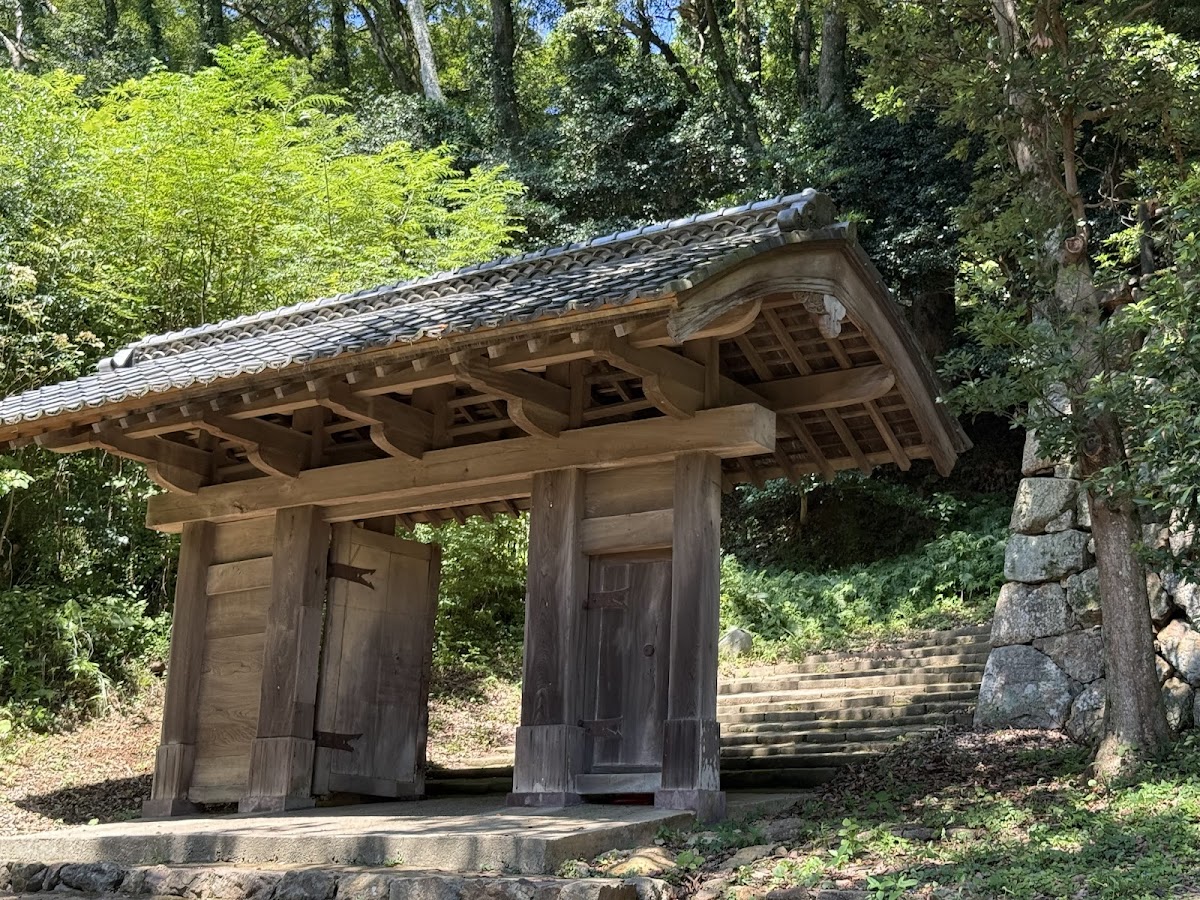
The road leading to Shiroyama Park led to Tian Castle, and the castle gate was built by the Wano clan’s samurai residence. However, it is an important element in the history of the castle.
It is understood that the style of the castle gate was reserved for samurai residences during the Edo period.
Gobenden (Imperial Family Rest Area)
Near the ruins of Fengtian Castle is the Meiji era “Gobenden” building. This is a resting place built during the Meiji Emperor’s tour of the mountain area, and the Chengtian Castle Museum.
The Gobenden exhibition has been completed, and the history of Toda Castle and the Tota domain, as well as the history of the Kitamae ship and the port of Sotonoura, is fully understood.
滨田城光point
Tower view
Spectacular panoramic view of the Climb Castle Tower, Lingtian City, and the Sea of Japan. From a high altitude view of about 68 meters above sea level, you can see the scenery that the castle lord saw in ancient times.
Sunli in clear skies, looking north from Yuke to the Sea of Japan horizon, heading to the west of Xixin, looking out over the Dengtian River, looking east to the prosperous Dengtian City. When the sun sets, the scenery is especially lost, the sun sets in the west, the Sea of Japan shines, beauty and victory are won.
Winning place
The location of Dengtian City is also a famous place of victory. Approximately 300 Yoshino oak trees have been planted in Shiroyama Park, and are in full bloom from late March to early April every year.
The seasons of the opening of lilac flowers, the reflection of the lilac flowers in the old-fashioned castle, the beauty of the castle, the beauty of the castle, and the attraction of many visitors. The curtain descends at night, the lights of the castle fort shine, and the visitors are invited to visit the castle, surrounded by a dream-like display of flowers.
Beautiful scenery on a stone mound with the reflection of a maple flower, a castle fortress lovers’ heaven, and a picture-lover’s garden.
Japan’s 100 Great Castles Vote (End)
Rentian Castle was selected as one of Japan’s 100 Great Castles (172nd place) in 2017. Please vote for the Yu Tian City Museum (Main Hall), which is a must-visit place for visitors to the castle.
The ticket card design is a stone mound in the castle tower, which is a commemorative item for welcoming guests.
Stone monument Japanese information tile
Shiroyama Park has many information plates and stone monuments, including the history of Tian Castle. Comprehensive list of major ancient traditions:
- Fengtian Castle Ruins Memorial Monument
- Announcement of the self-burning of the castle fort
- Information tiles indicating the location of each burial mound
- Announcement of the structure of the stone wall
In the course of the article, you can learn more about the trivial information, and read more about the history and summaries of the city.
Chengtian Castle and Xiangguan Historical Museum
Castle town ruins
The castle town of Dengtian City, south of Ucheng Fortress. Nowadays, in the center of Dengtian City, there are traces of a castle town, and the structure of the road layout has also emerged as the first castle town.
The castle town was built with samurai residences and Japanese commerce, and was a prosperous commercial center. A small place name, such as “Tono-machi” (领ushi乡) and “Kiyamachi” (Somebo-no-乡), is a historical stamp of the castle town when the envoy was here.
Soto Urawa Kitamaebune (Northbound ship)
In Sotopo, north of Yutian Castle, from the time of the river to the Meiji era, the ship stopped in front of the port and was a prosperous exhibition. The work of the Tian Clan’s maritime gate, the operation of the ship is an important function, and many shipping agents and merchants are collected here.
In 2017, Sotoura was designated as one of the Japanese Cultural Heritage, Chengdu’s “Kitamae Funa Port Castle Town and Shipowner’s Settlement”. All the members of Shogaiura and Tota Castle visited together, and even more fully understood the history of Tota.
Kokuta Kukuni Shrine
Fengtian Bokukoku Shrine located in Uchengshan Park. Dedicated to Zuza Shrine. Since the Meiji Restoration, a deceased general who has been in battle since the Meiji Restoration, is located on the site of Kenyu Tian Castle.
The shrine is beautiful, and visitors can pray at the same time.
Local information and transportation
Transportation method
Sitting fire car
It takes about 25-30 minutes to reach the JR Sanyaku Main Line “Hantian Station”. It takes about 5 minutes to sit at the rental car station.
When you reach Chengtian Station, the road line of Chengsan Park passes through the center of the city, and along the way you can reach the shopping street and other scenic spots.
Running car
Leaving the Yishanyu Expressway at the Dengtian Interchange Road, it takes about 10 minutes to arrive by car. Shiroyama Park is a free parking lot with a capacity of 30 cars.
Jizabaji
From here, I was sitting at a station in Ikoji/Mikawa, looking at the traffic on the road, and getting off at the Tonomachi station. You can reach the park within 5 minutes by walking to the station.
Visitor knowledge
- Opening time: Seongsan Park 24 hours free.
- Key vote: Disclaimer
- Advanced driving time: Approximately 30 minutes to 1 hour (depth driving requirement 1.5 to 2 hours)
- Washing room: A public entertainment space located in the park.
- No obstacles installed: There are steps at the entrance to the castle tower, so it is difficult to pass the wheelchair.
Hirota Castle Museum (main hall)
- Opening time: 9:30am to 4:30pm
- Closing day: Shuichi (the first day of the first year, the next day of the first year), New Year’s holiday
- Key vote: Disclaimer
- Land: 123-1 Ekimachi, Shimane, Totian City
- Telephone: 0855-24-1402
Exhibited at the museum is a Japanese model of historical materials from Totian Castle, and later exhibited by the Totian clan. Visit the ruins of Tian Castle before visiting Seongshan Park.
Precautions for visiting Tian Tian Castle Ruins
Please take a look at the following notes about the Tian Castle Ruins:
- Shoes for wearing shoes: Shoes for wearing shoes at Shiroyama Park.
- Recommendation for spring season: The seasonal scenery of lily blossoms is especially beautiful, and attracts a lot of visitors.
- Previous visit to the museum: Visiting the previous site of the Tian Castle Museum, understanding the history of the previous site of the Tian City Museum, and understanding the history of the previous site of the Tian City Museum.
- View from the bottom of the castle tower: View from the bottom of the castle tower.
- Sufficient time: How long does it take to think about something?
Zhoukan Scenic Spot
When you take a tour of Tian Castle, I recommend you to take a tour of the following surrounding scenery:
- Sotoura (Nippon Railway, Kitamae Ship Port): Approximately 15 minutes walk
- Hengtian World Children’s Museum: 10 minutes by car
- Shikun Haibin Park: Approximately 15 minutes by car
- Shimene Suizokukan: 20 minutes by car
- Stone View 榻 米浦:20 minutes by car
Designated as a cultural heritage site in Dengtian City
Cultural heritage designation below:
- Shimone-designated historical monument: Designated on April 13, 1971
- Japan’s 100 Great Castles (续): 2017 selection (111th person) 172)
This means that the construction of Tian Castle’s important cultural heritage will be protected, and its history will be recognized by the authorities.
overview
Tengtian Castle was built in 1619 by Yukota Shigeharu, and was the center of the Tengtian clan, and was an important function of its history in about 247 years. In 1866, during the second expedition to Changzhou, Chengtian Castle was burnt and the final mission was completed. However, the perfectly preserved stone tomb is still on display, giving it its original appearance.
The construction of Dengtian Castle was approximately 68 meters high on a mountain hill, with the style of a flatland fort built on a ladder, and the surrounding area of Tian River and Matsubara Bay. Natural defense works, stone tombs developed during the early Jiang Era construction techniques, historical castle fort sites.
Chengtian Castle Site is now open in China, and it is also known as one of Japan’s top 100 famous castles, and is a hot spot for castle enthusiasts across the country. When visiting Tiantian City, you must visit the historical fortress site of the eternal castle, the history of the castle on the stone wall engraved on the castle tower, and the magnificent panoramic view of the bottom of the castle tower.
Generals can visit the Tian Castle Museum and walk through the castle fort and explore the ruins of the fort. In addition, you can visit other places in the history of the world, such as those designated as the outskirts of the world of Japanese culture, and the history of the world as a whole.