Shinyama Castle (Hōyoshi-chō, Matsue City, Shimane Prefecture): History and Highlights | A Sengoku Period Mountain Castle Associated with Yamanaka Shikanosuke
Located in Hōyoshi-chō, Matsue City, Shimane Prefecture, Shinyama Castle is an important mountain castle that tells the story of the conflict between the Amago and Mōri clans in the Izumo region during the Sengoku period. Also known as “Shinyama Castle,” this castle was built near the summit of Mt. Shinyama, at an altitude of 256m, offering a superb location overlooking Lake Shinji and the Shimane Peninsula.
This article provides a detailed explanation of the charm of this Sengoku period mountain castle, from its historical background to the remains visible today and how to access it.
Basic Information on Shinyama Castle
Shinyama Castle is located in Hōyoshi-chō, in the northern part of Matsue City, and is a mountain castle built on the summit of Mt. Shinyama, which rises just north of Mt. Shiragayama.
- Castle Name: Shinyama Castle
- Alternate Name: Shinyama Castle
- Location: Hōyoshi-chō, Matsue City, Shimane Prefecture
- Elevation: 256m
- Relative Height: Approximately 245m
- Year of Construction: Sengoku period (details unknown)
- Lords: Amago clan retainers, Taga Motonobu, Yamanaka Shikanosuke (Yukimori), Amago Katsuhisa, etc.
- Remains: Enclosures, earthen bridges, moats, part of stone walls
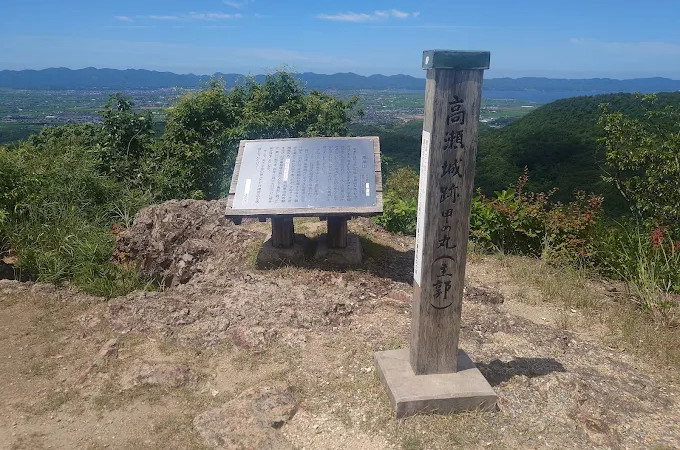
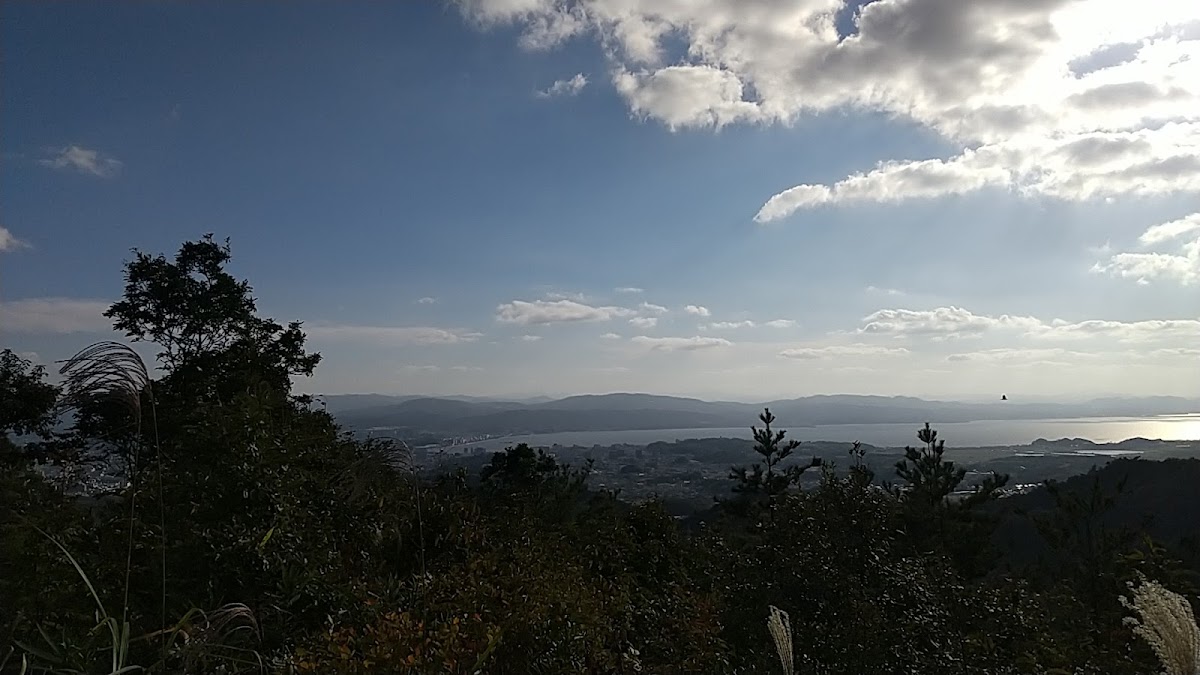
Although Shinyama is only 256m above sea level, the relative height from the base is 245m, so climbing to the castle requires considerable physical strength. However, the view from the summit is magnificent, offering panoramic views of Lake Shinji, Matsue city, and the Shimane Peninsula.
History of Mayama Castle
Izumo and the Amago Clan in the Sengoku Period
Mayama Castle appears on the historical stage during the Sengoku period, a time of conflict between the Amago and Mori clans in the Izumo region. The Amago clan was a powerful daimyo that expanded its influence throughout the San’in region, centered in Izumo. However, in 1566, Gassan-Toda Castle fell to Mori Motonari, and the Amago clan was temporarily destroyed.
However, Yamanaka Shikanosuke (Yukimori), a vassal of the Amago clan, did not give up on restoring his lord’s family and launched a movement to restore the Amago clan, supporting Amago Katsuhisa. Mayama Castle became one of the important bases in this restoration movement.
Yamanaka Shikanosuke and Mayama Castle
In 1569, Yamanaka Shikanosuke, together with Amago Katsuhisa, began an invasion of Izumo. The Amago army, having landed on the northern shore of the Shimane Peninsula, first captured Hakuroku Castle and then entered Mayama Castle.
Mayama Castle was situated on high ground overlooking Lake Shinji, making it an ideal location for exerting military pressure towards Matsue. Yamanaka Shikanosuke intended to use this castle as a base to establish a foothold for the restoration of the Amago clan in the Izumo region.
The Defense of Taga Motonobu
Taga Motonobu, a vassal of the Amago clan, was appointed as the lord of Mayama Castle. Taga Motonobu was a warrior who participated in the Amago restoration movement alongside Yamanaka Shikanosuke and was entrusted with the defense of Mayama Castle.
The castle, situated on a steep mountain, functioned as a highly defensible mountain castle, utilizing the natural terrain. The Amago army used this castle as a base to strengthen its influence in the surrounding region.
The Mori Army’s Counterattack and the Fall of the Castle
In response to the Amago army’s invasion of Izumo Province, the Mori clan dispatched an army led by Kikkawa Motoharu. Between 1569 and 1570, the Mori army successively captured Amago-held castles.
Mayama Castle also became a target of the Mori army, and fierce battles ensued. However, overwhelmed by the Mori army’s superior numbers, Mayama Castle ultimately fell. This fall meant the loss of one of the Amago clan’s key bases for restoration.
Mayama Castle After its Fall
After the fall of Mayama Castle, there are no clear records of its continued use. It is believed that, like many mountain castles, Mayama Castle was abandoned with the end of the Sengoku period.
In the Edo period, it came under the control of the Matsue Domain, and with the construction of the modern Matsue Castle, medieval mountain castles like Mayama Castle disappeared from the historical stage. ## Layout and Remains of Mayama Castle
Castle Structure
Mayama Castle is a typical Sengoku period mountain castle built around the summit of a mountain 256m above sea level. It features a defensive layout that takes advantage of the steep terrain, with multiple baileys (kuruwa) arranged throughout.
The main bailey is located at the summit, and multiple baileys are connected along the ridge, forming a linear structure. Moats and earthen bridges were constructed between each bailey, demonstrating a defensive strategy to prevent enemy intrusion.
Existing Remains
The following remains can still be seen at the Mayama Castle site today:
Bailey Remains: Multiple bailey remains remain, including the main bailey at the summit. These are clearly identifiable as flat areas, allowing us to estimate the scale of the castle at the time.
Moats: Several moats, dug to cut across the ridge, remain. These were important defensive structures designed to hinder enemy advances.
Earthen Bridge: Traces of an earthen bridge used to cross a moat can also be seen. It functioned as a narrow passage and served as a strategically important defensive point.
Traces of Stone Walls: Traces of what appear to be stone walls remain in some areas, suggesting that it was a relatively well-maintained castle for a mountain castle of the Sengoku period.
Stunning Views
One of the greatest features of Mayama Castle is the view from the mountaintop. From an altitude of 256m, one can look down on the entire Lake Shinji, and see Matsue city, the Shimane Peninsula, and, on a clear day, even Mount Daisen.
This excellent view also held significant military importance. It was an ideal location not only for detecting enemy movements from afar, but also for monitoring water transport on Lake Shinji and tracking the movements of landing forces from the Shimane Peninsula.
Access to Mayama Castle and Climbing Route
Access Methods
Access by Car:
- Head north on National Route 431 from central Matsue City.
- Proceed towards Hokiyoshi-cho and head towards the trailhead.
- Parking is available near the trailhead (limited spaces).
Public Transportation:
- Take the Ichibata Bus from JR Matsue Station towards Hokiyoshi.
- Walk from the nearest bus stop to the trailhead.
Climbing Route
Climbing Mayama Castle requires ascending a steep mountain path with a relative elevation of 245m. While some parts of the trail are maintained, proper mountain climbing equipment is recommended.
Estimated Time: Approximately 40 minutes to 1 hour one way from the trailhead to the summit
Difficulty: Intermediate (steep slopes included)
Precautions:
- Wear hiking boots or trekking shoes
- Carry plenty of drinking water
- Insect repellent is necessary in summer
- Be careful of snow and ice in winter
- Avoid solo climbing; climbing in groups is recommended
Precautions for Visitors
The Mayama Castle Ruins are protected as a historical site. Please observe the following points when visiting:
- Be careful not to damage the remains
- Always take your trash with you
- The use of fire is strictly prohibited
- The collection of plants and animals is prohibited
- Be prepared for sudden changes in weather
Mayama Castle and Surrounding Historical Sites
Relationship with Hakuroku Castle
Hakuroku Castle is located immediately south of Mayama Castle. Shiraka Castle also played a crucial role in the Amago clan’s restoration movement. Yamanaka Shikanosuke and others first captured Shiraka Castle before entering Mayama Castle.
The two castles are located close together and are believed to have cooperated in their defense. Understanding both castles together is essential for comprehending the Sengoku period history of the Izumo region.
Gassan-Toda Castle
Gassan-Toda Castle, the Amago clan’s stronghold, is located approximately 20 km southeast of Mayama Castle. The Amago clan’s restoration movement aimed to recapture Gassan-Toda Castle as its ultimate goal. Mayama Castle was positioned as a crucial stepping stone to achieving this objective.
Matsue Castle
Matsue Castle, built during the Edo period, is located approximately 8 km southwest of Mayama Castle. Known as a national treasure with an existing keep, Matsue Castle is a modern castle, in contrast to the medieval mountain castles like Mayama Castle. Visiting both castles allows one to experience the historical evolution of castle architecture.
Yamanaka Shikanosuke and the Amago Clan Restoration Movement
Who was Yamanaka Shikanosuke (Yukimori)?
Yamanaka Shikanosuke (Yukimori) was one of the leading warlords of Izumo during the Sengoku period. He served as a retainer of the Amago clan, and even after his lord’s family was destroyed by the Mori clan, he dedicated his life to the restoration of the Amago clan.
Known for his prayer to the crescent moon, “Grant me seven trials and eight hardships,” Shikanosuke is remembered as a loyal warrior. The Battle of Mayama Castle was also part of this restoration movement.
Supporting Amago Katsuhisa
Yamanaka Shikanosuke supported Amago Katsuhisa, a member of the Amago clan, and made him the figurehead of the restoration movement. During the invasion of Izumo in 1569, he landed on the Shimane Peninsula with Amago Katsuhisa, securing strongholds such as Shiraka Castle and Mayama Castle.
However, due to the Mori clan’s counterattack, these castles were lost one after another, and the dream of the Amago clan’s restoration was shattered.
Significance of the Restoration Movement
Although the Amago clan’s restoration movement ultimately failed, it holds significant meaning in the Sengoku period history of the Izumo region. This movement demonstrates the loyalty of the local samurai to their lord and reflects the complex political situation of the Sengoku period.
Mayama Castle, as one of the stages of this historical drama, still quietly preserves the memory of that time.
Cultural Value of Mayama Castle
A Typical Example of a Sengoku Period Mountain Castle
Mayama Castle retains a typical structure of a Sengoku period mountain castle, making it a valuable historical site for castle research. The layout, which utilizes the steep terrain, the arrangement of baileys, and defensive facilities such as moats and earthen bridges provide important clues to understanding the castle-building techniques of the time.
Importance in Local History
Mayama Castle is an indispensable historical site for understanding the Sengoku period history of the Izumo region, particularly the conflict between the Amago and Mori clans. The ruins allow us to glean insights into the actual conditions of the time that cannot be gleaned from written historical documents alone.
Challenges of Preservation and Utilization
While Mayama Castle currently does not have any specific legal protection measures in place, it is recognized as a valuable cultural asset of the region. Moving forward, it is necessary to strike a balance between appropriate preservation and utilization to pass it on to future generations.
Points to Consider When Visiting Mayama Castle
Best Season
The best time to visit Mayama Castle is spring (April-May) and autumn (October-November). The weather is mild during these periods, making it suitable for hiking. The view from the summit is also beautiful, allowing you to enjoy the scenery of Lake Shinji.
Summer requires caution due to the heat and insects, while winter may involve snow and ice, making it more suitable for experienced hikers.
Estimated Time Required
When visiting Mayama Castle, please allow the following time:
- Ascent: 40 minutes to 1 hour
- Castle Ruins Exploration: 30 minutes to 1 hour
- Descent: 30 minutes to 40 minutes
- Total: Approximately 2 to 3 hours
We recommend visiting with plenty of time to spare.
Checklist of Items to Bring
- Hiking boots or trekking shoes
- Drinking water (1 liter or more recommended)
- Snacks (chocolate, etc.)
- Towel
- Hat
- Rain gear
- Insect repellent (summer)
- Camera
- Map or GPS device
- Mobile phone (for emergency contact)
Photography Tips
You can enjoy taking photos like the following at Mayama Castle Ruins:
- Panoramic view of Lake Shinji from the mountaintop
- Flat area of the former bailey
- Remains of moats and earthen bridges
- Distant view of Matsue city
- View of the Shimane Peninsula
The view of Lake Shinji on a clear day is particularly spectacular. The light conditions in the morning and evening are also beautiful, making it an attractive subject for photography enthusiasts.
Summary
Mayama Castle is a Sengoku period mountain castle built on a mountaintop at an altitude of 256m in Hokiyoshi-cho, Matsue City, Shimane Prefecture. As a base for Yamanaka Shikanosuke, who aimed to restore the Amago clan, it played an important role in the Sengoku history of the Izumo region.
Even today, remains such as baileys, moats, and earthen bridges remain, and a spectacular view of Lake Shinji and Matsue city unfolds from the mountaintop. While climbing the castle requires a certain level of physical fitness, it is a historical site worth visiting for its Sengoku period romance and magnificent views.
A visit to Mayama Castle will allow you to feel firsthand the aspirations of Yamanaka Shikanosuke and Amago Katsuhisa for the restoration of their lord’s family, as well as the tense situation in the Izumo region during the Sengoku period. For history buffs, castle enthusiasts, and mountain climbing lovers, Mayama Castle is a hidden gem worth visiting.
When you visit Matsue, be sure to visit this Sengoku-era mountain castle in addition to the national treasure Matsue Castle. It will be a valuable experience to feel the breath of history.