Complete Guide to Jōheiji Castle (Shiga Prefecture) | A Thorough Explanation of the Kyōgoku Clan’s Fortified Castle, History, and Highlights
What is Jōheiji Castle?
Jōheiji Castle is a medieval mountain castle located in Yataka, Maibara City, Shiga Prefecture. Built on the southern slope of Mount Ibuki, at an altitude of approximately 666 meters, this castle is known as a “fortified castle” developed by the Kyōgoku clan, a prestigious family and one of the four powerful families of the Muromachi Shogunate, as a base for their control of northern Ōmi Province.
It is also known by several other names, including Jōheijō, Kirigajō, Kirigajō, Kariyasujō, and Kariyasuojō, and these names reflect the castle’s location and characteristics. The name “Kirigajō” (Mist Castle) is thought to originate from the fact that the castle was often shrouded in fog due to the unique weather conditions of Mount Ibuki.
The castle’s relative height reaches approximately 380 meters, making it a considerably large mountain castle. Located at a strategic point overlooking the Hokkoku Waki-Okan (Echizen Kaido), a major road connecting Mino and Echizen, it was an important military base controlling a key transportation hub.
The History of Kamihiraji Castle and the Kyogoku Clan
The Kyogoku Clan and the Genealogy of the Omi Provincial Governor
The Kyogoku clan was a branch of the Sasaki clan, a prestigious family descended from Sasaki Doyo (Takauji), who was active during the Nanboku-cho period. They held a position as one of the four chief officials of the Samurai-dokoro (Board of Retainers) in the Muromachi Shogunate and were powerful daimyo serving as governors of Omi, Izumo, Oki, and Hida provinces.
After the Onin War, the Kyogoku clan’s power declined due to internal conflicts and the rise of their vassals, but from the late 15th to the early 16th century, Kyogoku Takakiyo attempted to restore their power in northern Omi.
Construction by Kyogoku Takakiyo
The construction of Kamihiraji Castle is believed to have been carried out in Eisho 2 (1505) by Kyogoku Takakiyo. Takakiyo established the Kyogoku clan residence (Kyogoku clan Kamihira residence) at the foot of the mountain as his peacetime residence, and built Kamihiraji Castle on the mountaintop as a place of refuge in times of emergency.
This dual structure of “residence and fortified castle” was a typical castle design in Omi Province during the early Sengoku period. Daily administrative affairs were conducted at the residence at the foot of the mountain, while the mountain castle was used as a refuge during wartime.
During Takakiyo’s time, Kamihiraji Castle and the Kyogoku clan residence functioned as the political and cultural center of northern Omi for approximately 20 years, symbolizing the authority of the Kyogoku clan.
The Fall of the Castle and the Decline of the Kyogoku Clan in Daiei 3
The most important turning point in the history of Kamihiraji Castle was the coup d’état by the vassals that occurred in Daiei 3 (1523). This incident, also known as the “Daiei Coup,” involved local lords, including Asai Sukemasa, vassals of the Kyogoku clan, rebelling against their lord.
This coup resulted in the fall of Kamihiraji Castle, and the Kyogoku clan lost real power in northern Omi Province. From then on, the Asai clan became the de facto rulers of northern Omi, while the Kyogoku clan retained only their nominal position as shugo (provincial governor).
The Asai clan later reached its peak under Asai Nagamasa and became known for their conflicts with Oda Nobunaga. The fall of Kamihiraji Castle was a crucial point in the history of the Sengoku period, marking the catalyst for their rise to power.
The Aftermath of Kamihiraji Castle
After its fall, Kamihiraji Castle was abandoned and lost its function as a military base. The Kyogoku clan later recovered, with Kyogoku Takatsugu serving Toyotomi Hideyoshi and becoming the lord of the Obama Domain in Wakasa Province after the Battle of Sekigahara. However, Kamihiraji Castle was never used again.
Currently, the castle ruins are protected as a nationally designated historical site, and together with the garden remains of the Kyogoku clan’s residence at the foot of the mountain, they are a valuable cultural asset that conveys the history of Omi Province in the Middle Ages.
Layout and Structure of Kamihiraji Castle
Overall Composition and Location
Kamihiraji Castle was built on a peak at an altitude of 666 meters on the southern slope of Mount Ibuki, giving it a considerable elevation difference of approximately 380 meters for a mountain castle. Across the valley to the west of the castle was Yatakaji Temple (castle), and the Kyogoku clan’s Kamihira residence was located at the southern foot of the mountain, forming a complex defensive system.
The castle’s location overlooked the Hokkoku Waki-kaido (Northern Province side road), making it a strategic point for monitoring and preventing invasions from Mino and Echizen provinces. Furthermore, its location on part of the sacred Mount Ibuki suggests it also held religious significance.
Structure of the Main Enclosure (Honmaru)
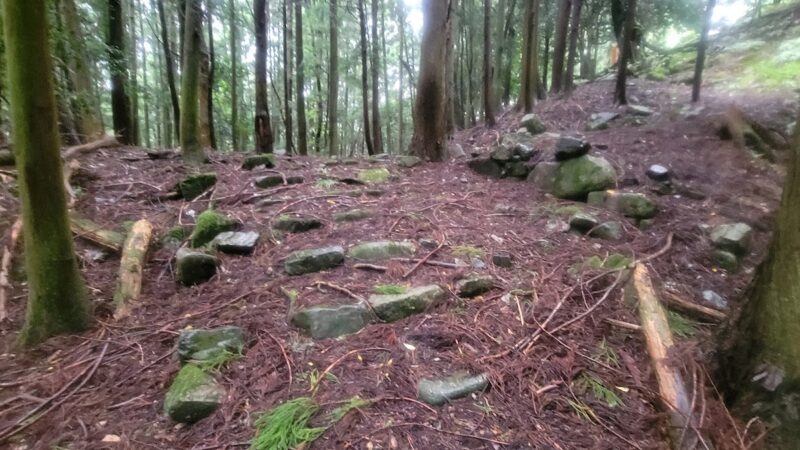
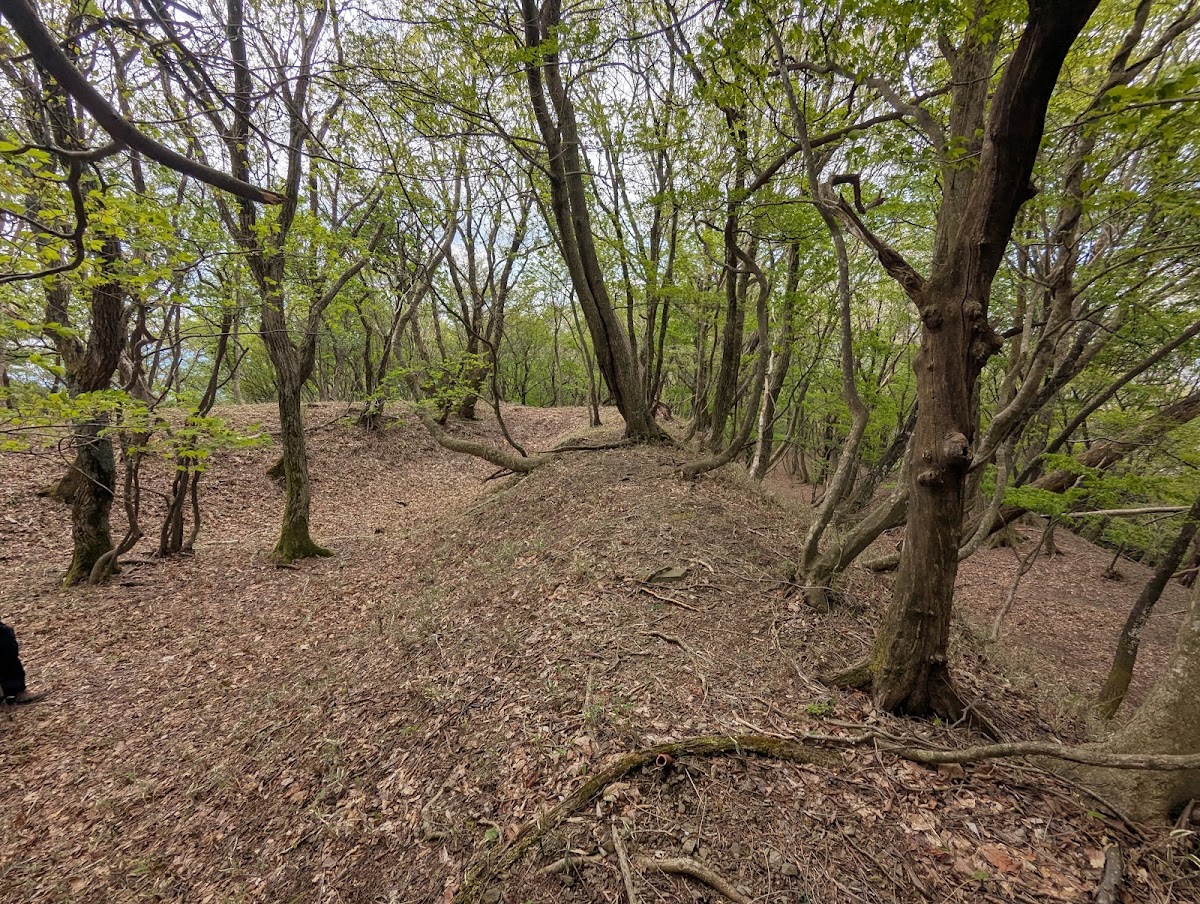
The main enclosure is located at the highest point of the castle and is surrounded by earthen ramparts. The earthworks are relatively well-preserved, conveying the castle-building techniques of the time.
The main enclosure has entrances on the west and southeast sides, designed to balance defense with ensuring movement. The view from the main enclosure is magnificent, offering a panoramic view of the entire northern Omi region and providing a clear understanding of the settlements and road movements at the foot of Mount Ibuki.
Second and Third Enclosures and Defensive Structures
The third enclosure is located south of the main enclosure and is surrounded by earthworks. Particularly noteworthy are the ridged vertical moats on the left (west) side, a defensive structure that prevented lateral movement of the enemy and dispersed their attacks. Additionally, a large vertical moat extends southward, serving to prevent enemy soldiers from climbing the slope.
A dry moat separates the third and second enclosures, dividing each enclosure and forming a defensive line. The earthen bridge spanning this moat is considered one of the castle’s highlights.
The structure of the castle, which involves a moat leading from the second bailey to the main bailey, indicates the construction of multiple defensive lines.
Vertical Moats and Civil Engineering Techniques
A major feature of Kamihiraji Castle is the series of vertical moats built on the slopes. Ridge-shaped vertical moats are a defensive technique that developed from the mid-Sengoku period onward, and considering the construction date of Kamihiraji Castle, this technique was introduced relatively early.
These vertical moats are thought to have served not only as defensive structures but also as drainage channels for rainwater, demonstrating a practical aspect in the maintenance and management of the mountain castle.
Ascent Routes and Bailey Layouts
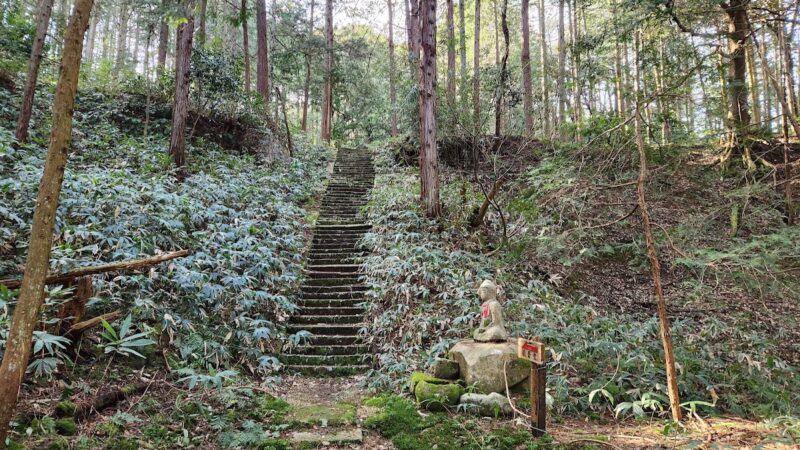
While the current most common ascent route is from the direction of Kamihiraji (Yatakaji), it is estimated that multiple ascent routes existed at the time. The ascent routes were steep and narrow in many places, including dangerous areas like cliff edges, suggesting a design focused on defense.
The baileys are arranged along the terrain, making maximum use of the natural landscape. This is a typical technique of medieval mountain castles, achieving effective defense while reducing the burden of civil engineering work.
Highlights of Kamihiraji Castle
View from the Main Bailey
The view from the main bailey, at an altitude of 666 meters, is one of the greatest highlights of Kamihiraji Castle. On a clear day, you can see the entire northern Omi region, including Lake Biwa, the surrounding mountains, and the city of Maibara spread out below.
This view is not merely scenic, but also a valuable opportunity to experience how the castle lord viewed his territory at the time. Visiting in person allows you to truly appreciate its location, which allowed for monitoring the movements of the Hokkoku Waki-kaido road.
Earthworks and Entrance
The earthworks surrounding the main bailey are well-preserved and are important remains for observing the defensive structures of a medieval mountain castle. The height and width of the earthworks, and their relationship to the baileys, allow us to understand the defensive thinking of the time when the castle was built. The structure of the gates is also a point of interest. By observing how the western and southeastern gates were defended, and their relationship to the earthworks, you can learn about the defensive techniques of medieval castles.
Moats and Earthen Bridges
The moats that demarcate each enclosure are the cornerstone of the defensive system of Kamihiraji Castle. The earthen bridge over the large moat, in particular, is highly regarded among castle enthusiasts and is a popular spot for photography.
By observing the depth and width of the moats and the angle of the cliffs, you can appreciate the advanced civil engineering techniques of the time.
Ridge-shaped Vertical Moats
The ridge-shaped vertical moats on the west side of the third enclosure are important remains that demonstrate defensive techniques of the Sengoku period. The sight of multiple vertical moats running parallel down the slope is breathtaking when viewed in person.
These vertical moats effectively hindered the enemy’s lateral movement and limited their attack routes, concretely demonstrating the ingenuity of slope defense in mountain castles.
Relationship with Yatakaji Temple (Castle)
Yatakaji Temple, located west of Kamihiraji Castle across a valley, is also believed to have once possessed castle-like functions. Observing the positional relationship between Yatakaji Temple and Kamihiraji Castle allows for an understanding of the overall complex defensive system.
Yatakaji Temple was the center of a group of temples known as “Yataka Hyakubo,” forming a unique medieval landscape where religious and military facilities were integrated.
Kyogoku Clan Residence (Kamihira Residence) Site
The Kyogoku Clan Residence site at the foot of the mountain is a nationally designated historical site, with garden remains preserved. Visiting the site allows for an understanding of its relationship with Kamihiraji Castle, the “fortified castle,” and provides insight into the distinction between living and military spaces for medieval samurai.
The garden remains have been confirmed through archaeological excavations and are valuable historical artifacts demonstrating the high cultural level of the Kyogoku clan.
Access and Castle Visit Information
Location
- Address: Yataka, Maibara City, Shiga Prefecture
- Elevation: Approximately 666 meters
- Relative Height: Approximately 380 meters
Access by Car
From the Maibara Interchange on the Meishin Expressway, it takes about 15 minutes by car to reach the vicinity of the castle entrance. Parking space is limited, so please be careful not to park on the street.
There is some parking space around Yataka-ji Temple, but it is recommended to check in advance.
Access by Public Transportation
Taking a taxi or rental car from Maibara Station on the JR Tokaido Main Line is the most practical option. Access by public transportation alone is difficult, so using a car is recommended.
Castle Visit Route and Estimated Time
The most common route is from the direction of Kamihei-ji Temple (Yataka-ji Temple). From the castle entrance to the main enclosure, it takes approximately 60-90 minutes one way at a normal hiking pace.
The path to the castle has many steep sections and is particularly slippery in rainy weather and winter, so appropriate equipment such as hiking boots is necessary. There are also dangerous sections that are like cliff edges, so careful movement is required.
Precautions for Climbing the Castle
- Equipment: Please prepare basic hiking equipment such as hiking boots, drinking water, a towel, and rain gear.
- Season: In summer, insect repellent is necessary; in winter, warm clothing and non-slip measures are required.
- Time: Plan for a round trip of 2-3 hours, and aim to descend before sunset.
- Physical Fitness: Climbing a mountain castle with a relative elevation of 380 meters requires considerable physical fitness. Please plan a reasonable trip considering your own physical strength.
- Weather: The weather on Mt. Ibuki is unpredictable, so please check the weather forecast beforehand and avoid climbing the castle in bad weather.
Best Time to Visit
Spring to autumn (April to November) is the best time to visit the castle. During winter, the possibility of snow and ice increases the danger, so it’s best to avoid the area unless you’re an experienced climber.
The scenery is particularly beautiful during the fresh green season (May) and the autumn foliage season (November), making these the recommended times to visit.
Nearby Attractions
Kyogoku Clan Residence Ruins (Kamihira Residence Ruins)
A must-visit in conjunction with Kamihira Castle is the Kyogoku Clan Residence Ruins at the foot of the mountain. It’s a nationally designated historical site, and you can see the garden remains and other features. Visiting the residence ruins will give you a deeper understanding of the relationship between the castle and the residence.
Yatakaji Temple and Yataka Hyakubo Ruins
Yatakaji Temple was the center of a group of temples known as “Yataka Hyakubo.” It still functions as a temple today, offering a glimpse into the religious landscape of the medieval period. Furthermore, Yatakaji Temple itself is believed to have had castle-like functions, making it an interesting site from the perspective of castle research.
Mount Ibuki
Mount Ibuki, one of Japan’s 100 Famous Mountains, is a sacred mountain towering behind Kamihiraji Castle. If you have the time and energy, a trip combining a climb of Mount Ibuki is possible. From Mount Ibuki, you can enjoy a magnificent panoramic view of Lake Biwa and the surrounding mountains.
Castle Ruins around Maibara City
Many other castle ruins are scattered around Maibara City. Visiting castle ruins related to the Asai clan and Ishida Mitsunari, such as Nagahama Castle, Odani Castle, and Sawayama Castle, will give you a deeper understanding of the Sengoku period history of Omi Province.
Historical Significance of Kamihiraji Castle
From the Kyogoku Clan to the Asai Clan: A Turning Point in the Rule of Northern Omi
Kamihiraji Castle symbolizes the turning point in the transfer of rule in northern Omi from the Kyogoku clan to the Asai clan. The fall of the castle in 1523 was not merely the loss of a single castle, but signified a major shift in the political power balance in Omi Province.
This event led to the Asai clan becoming the de facto rulers of northern Omi, reaching their peak during the reign of Asai Nagamasa. Meanwhile, the Kyogoku clan declined, but later, Kyogoku Takatsugu achieved a revival under the Toyotomi regime.
Castles Exhibiting the Transition from the Medieval to the Sengoku Period
The construction date of Kamihiraji Castle (1505) falls within the transitional period from the medieval to the Sengoku period. The castle’s structure blends medieval elements with Sengoku-era technology, making it a significant site in castle history research.
Defensive features such as the ridged vertical moats demonstrate the introduction of Sengoku-era technology, while the overall layout retains strong characteristics of medieval mountain castles, making it a valuable example for understanding the development of castle technology during this period.
A Strategic Base Controlling Transportation Routes
Located at a strategic point controlling the important transportation route known as the Hokkoku Waki-Okan, Kamihiraji Castle was not merely a military base, but also an economically and politically significant location. This route, connecting Mino and Echizen, was a vital flow of goods and information, and controlling it was crucial for governing northern Omi.
This strategic importance was the reason the Kyogoku clan established their base here, and also the motivation behind the Asai clan’s attempt to seize power.
Role as a Cultural Center
Kamihiraji Castle and the Kyogoku clan residence also served as a cultural center of northern Omi for approximately 20 years. As a shugo daimyo (provincial governor), the Kyogoku clan possessed a high level of cultural sophistication, and the garden remains at the residence site attest to this cultural level.
The existence of the Yataka Hyakubo temple complex also indicates that this area was a religious and cultural center, revealing its multifaceted character beyond mere military facilities.
Summary: The Charm of Kamihiraji Castle
Kamihiraji Castle is a medieval mountain castle built on the southern slopes of Mount Ibuki in Maibara City, Shiga Prefecture. It was an important fortress serving as a stronghold for the Kyogoku clan and a base for their control of northern Omi Province. Despite being a full-fledged mountain castle at an altitude of 666 meters and a relative height of 380 meters, it retains well-preserved remains such as earthworks, moats, and rows of vertical trenches, making it a valuable historical site for learning about the structure of medieval castles.
It also symbolizes a historical turning point in northern Omi Province, marking the decline of the Kyogoku clan and the rise of the Asai clan after its fall in 1523, and serving as an important historical stage for the beginning of the Sengoku period (Warring States period).
While climbing the castle requires considerable physical strength and equipment, considering the views from the main enclosure, the well-preserved remains, and its historical significance, it is a castle well worth visiting for castle enthusiasts. By visiting the Kyogoku clan residence ruins and Yatakaji Temple at the foot of the mountain, you can experience the landscape where the politics, culture, and religion of medieval Omi Province were integrated.
Kamihiraji Castle, protected as a nationally designated historic site, is expected to continue to be re-evaluated as an important cultural asset that conveys the medieval history of Omi Province.