Minakuchi Okayama Castle (Shiga Prefecture) Complete Guide: A Base for Controlling Koga Province Built by Toyotomi Hideyoshi
Located in Minakuchi-cho, Koga City, Shiga Prefecture, Minakuchi Okayama Castle is a mountain castle built at the end of the Sengoku period by order of Toyotomi Hideyoshi. Built on the summit of Kojōyama (Ōokayama), at an altitude of 282.9 meters, this castle played an important role as a base for controlling Koga County. It was designated a National Historic Site on February 9, 2017, and its historical and academic value is highly regarded.
History of Minakuchi Okayama Castle
Construction in 1585
Minakuchi Okayama Castle was built in 1585 by order of Hashiba (Toyotomi) Hideyoshi, who commissioned his retainer Nakamura Kazushi to construct it. This location was chosen as a base for Hideyoshi to control Koga County and part of Gamō County.
At that time, the Koga region was dominated by a group of independent local samurai known as the Koga-shu, and controlling them was a crucial task for Hideyoshi. The construction of Minakuchi Okayama Castle had strategic significance, aiming to strengthen control over the Koga-shu and to provide defense against Tokugawa Ieyasu to the east.
Changes in Castle Lords
Many warlords who played important roles under the Toyotomi regime served as lords of Minakuchi Okayama Castle.
Nakamura Kazushi resided at the castle from 1585 to 1590, after which he was transferred to Sunpu in Suruga Province. Next, Masuda Nagamori became the castle lord, residing there until 1595. Masuda Nagamori later became one of the Five Commissioners of the Toyotomi regime.
Subsequently, Nagatsuka Masaie became the castle lord. Nagatsuka Masaie was also one of the Five Commissioners who supported the Toyotomi regime. However, because it sided with the Western Army in the Battle of Sekigahara in 1600, it was dispossessed of its lands after the war, and Minakuchi Okayama Castle was abandoned.
Edo Period and Beyond
After the Battle of Sekigahara, Minakuchi Okayama Castle was abandoned, and its role was taken over by the newly built Minakuchi Castle at the foot of the mountain. During the Edo period, Minakuchi developed as a post town on the Tokaido road, and it is believed that some of the stone materials from Minakuchi Okayama Castle were reused in the construction of Minakuchi Castle.
After the castle was abandoned, the old castle mountain came to be known as “Kojōyama” (Old Castle Mountain) and became a familiar landmark for the local people. Currently, walking trails have been developed, and it is used as a place of relaxation for citizens and a place to learn about history.
Structure and Characteristics of Minakuchi Okayama Castle
Layout and Enclosure Arrangement
Minakuchi Okayama Castle is a mountain castle built on the summit of Kojōyama, which is 282.8 meters above sea level. Multiple baileys are spread across the mountaintop, which stretches long from east to west, with the main bailey (honmaru) located at the highest point in the northwest.
The castle’s structure is relatively complex for a mountain castle, with multiple baileys arranged in a stepped pattern around the main bailey. Each bailey is demarcated by horikiri (moats) and tatebori (vertical moats), enhancing its defensive capabilities. The moats around the main bailey, in particular, are deep and clearly visible as remains.
Characteristics of the Stone Walls
The most distinctive feature of Minakuchi Okayama Castle is that it possessed stone walls. While castles in the Koga region up to that point were mainly made of earth, Minakuchi Okayama Castle had stone walls and exhibited the appearance of a full-fledged early modern castle with tiled buildings.
Excavation surveys have confirmed the presence of rough-hewn stone walls, demonstrating the high level of castle-building technology of the time. The stone material used was locally quartz porphyry, indicating that the castle was built taking advantage of the topographical features of the old castle mountain.
Even today, remnants of stone walls remain around the main enclosure and along the edges of the baileys, allowing us to imagine the castle’s former grandeur. These stone walls are thought to have been symbolic of the Toyotomi regime’s authority, demonstrating it to the people of Koga and those traveling along the Tokaido road.
Defensive Structures
Numerous defensive structures characteristic of mountain castles have been identified at Minakuchi Okayama Castle.
Moats are important defensive structures separating the baileys, and large moats are particularly prominent on the east and west sides of the main enclosure. These served to prevent enemy incursions by cutting off the ridges.
Vertical moats are ditches dug along slopes, effectively hindering enemy lateral movement. Multiple vertical moats have been identified at Minakuchi Okayama Castle, indicating thorough preparation against attacks from slopes.
Furthermore, the layout of the baileys was also designed with defense in mind; it was necessary to pass through multiple baileys to reach the main enclosure, creating a multi-layered defensive structure.
Highlights of Minakuchi Okayama Castle
Main Enclosure (Honmaru) Site
The main enclosure, located at the highest point of Kojōyama Mountain, is the central part of Minakuchi Okayama Castle. Currently, it is a flat area, with traces of stone walls remaining around it. From the main enclosure, one can enjoy a panoramic view of Minakuchi city, a view likely shared by the castle’s lords at the time.
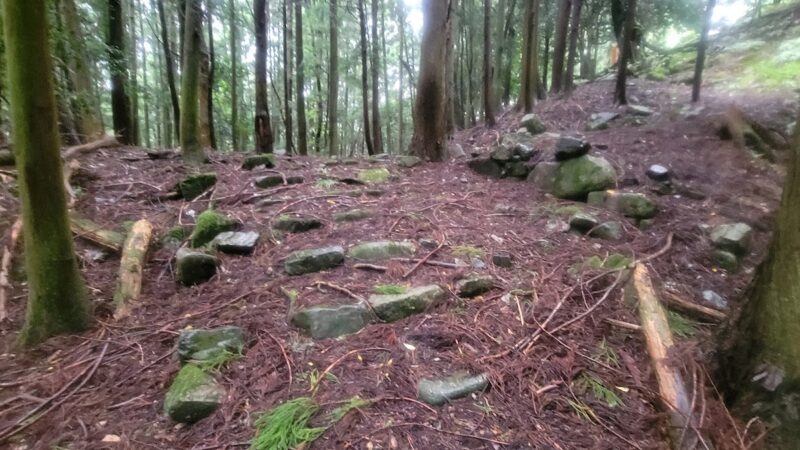
The main enclosure is approximately 30 meters square, and scattered stone materials, believed to be building foundations, can be seen. Excavations have unearthed artifacts such as roof tiles and ceramics, providing clues to the lifestyle of the time.
Stone Wall Remains
The most noteworthy remains at Minakuchi Okayama Castle are the stone walls. Well-preserved stone walls built using the nozurazumi (rough-stone masonry) method remain around the main enclosure and along the edges of each enclosure.
In particular, the stone wall on the north side of the main enclosure remains to a height of 2-3 meters, making it a valuable remains that allows for direct observation of the castle construction techniques of the time. The stonework uses locally sourced quartz porphyry, and the characteristic features of the “nozurazumi” style, where natural stones are stacked as they are, are clearly visible.
Standing before the stone walls, one can almost picture the castle as it was built over 400 years ago. The fact that this castle had stone walls, which are rare in the Koga region, speaks to its importance.
Moats and Vertical Moats
The large moats located on the east and west sides of the main enclosure are crucial to the defense of Mizuguchi Okayama Castle. The eastern moat, in particular, is over 5 meters deep and completely cuts off the ridge. This moat reveals the numerous ingenious measures taken to prevent enemy intrusion.
Multiple vertical moats can be seen on the slopes; these hindered lateral movement of the enemy and also functioned as rainwater drainage channels. The vertical moats extend long along the mountain slope, and their sheer scale is astonishing.
Enclosures
Several enclosures are arranged in a stepped pattern around the main enclosure. Each enclosure is relatively flat and leveled, suggesting that buildings and warehouses once stood there.
The groups of enclosures known as the second and third enclosures are clearly demarcated, giving a real sense of the castle’s scale. The significant elevation differences between the enclosures demonstrate defensive design features.
Views
The views from the summit of Kojōyama are magnificent, offering panoramic views of Minakuchi city and, on clear days, even Lake Biwa. This clearly explains why the castle was built in a strategic location overlooking Minakuchi, a key point on the Tōkaidō road.
The view from the main enclosure is particularly spectacular, offering views of the Suzuka Mountains to the east and Mount Hiei to the west, highlighting the castle’s strategic military location.
Archaeological Excavations and Development Status
Archaeological Excavation Results
Multiple archaeological excavations have been conducted at the Minakuchi Okayama Castle site since the Heisei era. These investigations have revealed a wealth of valuable information, including the structure of the stone walls, the layout of the buildings, and the excavated artifacts.
The investigations unearthed roof tiles, ceramics, and iron products, providing concrete insights into the castle’s appearance at the end of the 16th century. The discovery of roof tiles, in particular, is crucial evidence confirming that the buildings were tiled.
Further investigations have been conducted into the construction methods of the stone walls and the procurement of the stone materials, contributing to the understanding of castle-building techniques of the time.
Current Development
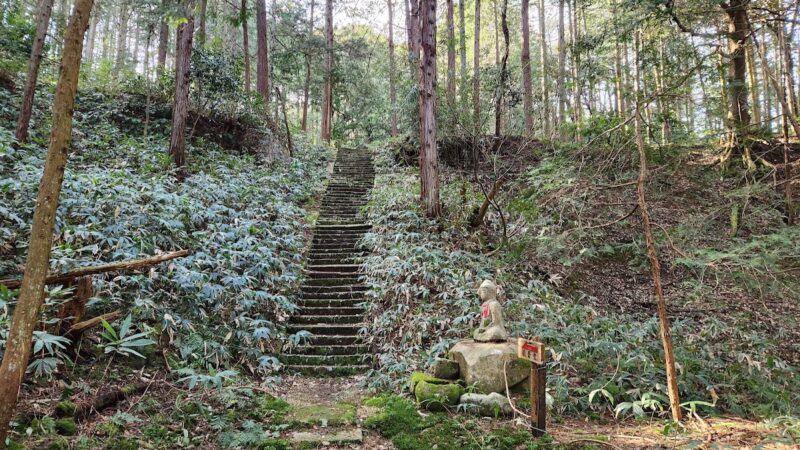
The Mizuguchi Okayama Castle ruins are currently developed as a park with a hiking trail (walking path). It takes approximately 30 minutes to climb from the base to the main enclosure, allowing visitors to enjoy a casual hike while exploring the castle ruins.
Information boards are installed along the hiking trail, allowing visitors to read explanations of the castle’s history and remains as they stroll. A gazebo has also been installed near the main enclosure, allowing visitors to rest and leisurely explore the site.
The “Minakuchi Okayama Castle Association,” formed by local volunteers, is engaged in preservation and promotional activities for the castle ruins, including events such as a giant balloon recreation of the castle. Efforts to promote the castle are ongoing throughout the community.
Koka City Human and Town Exchange Center
When visiting Minakuchi Okayama Castle, we recommend stopping by the Koka City Human and Town Exchange Center located at the foot of the castle. This facility provides detailed information and pamphlets about Minakuchi Okayama Castle.
The Exchange Center features exhibits where you can learn about the history and structure of Minakuchi Okayama Castle. Visiting before or after your castle visit will deepen your understanding of the castle. You can also obtain information about the history of Koka City and the Minakuchi post town on the Tokaido road, gaining insight into the historical background of the entire region.
The facility distributes free pamphlets and provides detailed information about the hiking routes to the castle ruins and points of interest. The staff are knowledgeable about local history and will kindly guide you.
Connection to the Mizuguchi Castle Museum
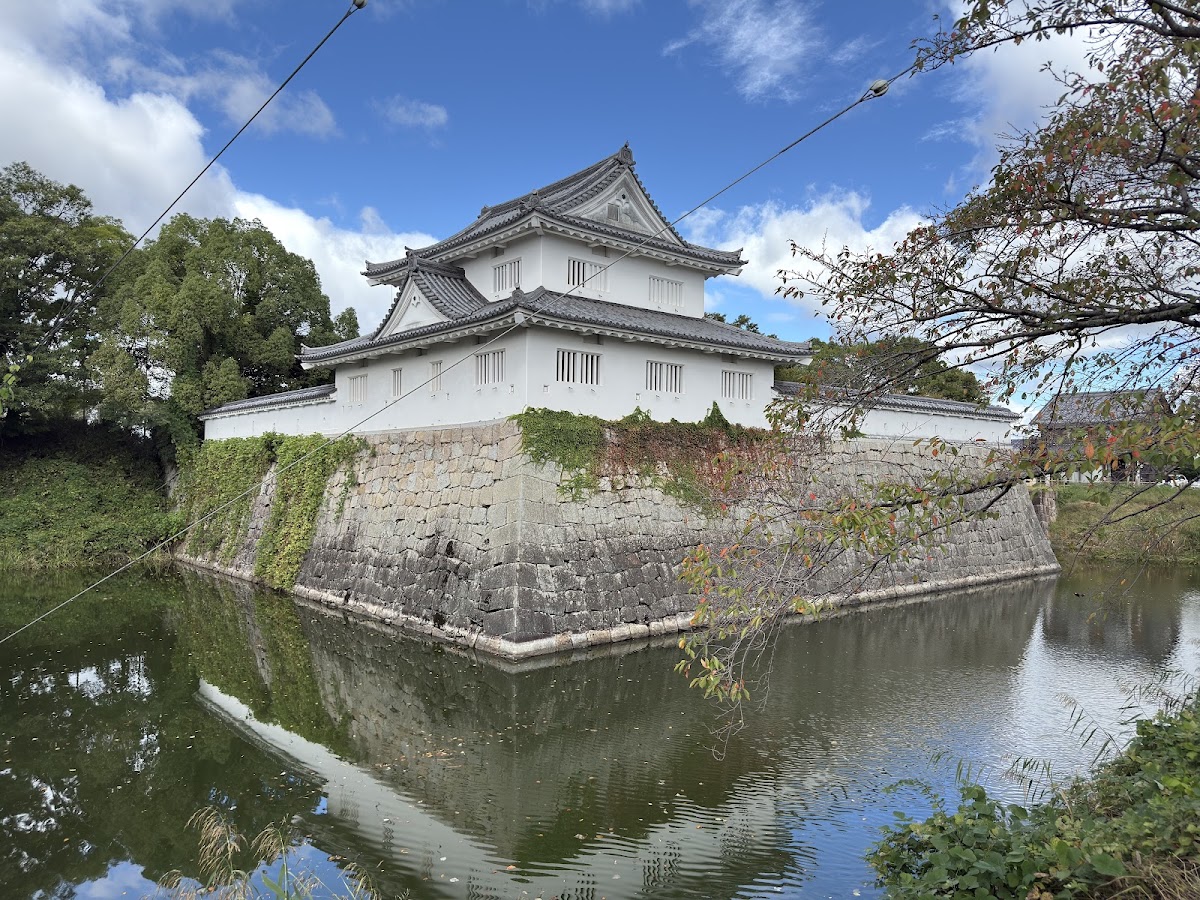
When visiting Mizuguchi Okayama Castle, we recommend also visiting the Mizuguchi Castle Museum. Mizuguchi Castle was built in the early Edo period as lodging for Tokugawa Iemitsu during his visit to Kyoto, after the abandonment of Mizuguchi Okayama Castle.
The Mizuguchi Castle Museum displays materials related to Mizuguchi Okayama Castle, as well as the history of Mizuguchi Castle. You can gain a more comprehensive understanding of the relationship between the two castles and the historical role played by the Mizuguchi area.
The museum also features a reconstructed model of Mizuguchi Okayama Castle and exhibits of excavated artifacts, helping you to visualize the remains seen at the castle site more concretely. Furthermore, there is a wealth of information on the castle lords, including Nakamura Kazushi, Masuda Nagamori, and Nagatsuka Masaie.
Access Information
Access by Public Transportation
The trailhead is approximately a 25-minute walk from JR Kusatsu Line “Mizuguchi Station”. Heading northeast from the station and passing through a residential area, you will reach the foot of Mt. Kojō.
Alternatively, it is accessible in about 20 minutes on foot from Ōmi Railway’s “Minakuchi-Jōnan Station.” This route passes through the ruins of Minakuchi Castle, making it convenient for visiting both castles.
Access by Car
By car, it is about 15 minutes from the Shin-Meishin Expressway’s “Kōga-Tsuchiyama IC” or about 30 minutes from the Meishin Expressway’s “Rittō IC.”
There are a few free parking spaces at the foot of Mt. Kojō. However, since the number of spaces is limited, it may be full on holidays. In that case, you can use public parking lots around Minakuchi Castle and access the castle on foot.
About Hiking
From the trailhead to the main enclosure, it takes about 30 minutes on a well-maintained walking trail. The path is relatively gentle, but since it is a mountain trail, it is recommended to wear comfortable walking shoes.
There are several hiking trails, but the main route has plenty of signposts, making it safe even for beginners. However, be careful as the ground can become slippery during and after rain.
Nearby Tourist Attractions
Mizuguchi Castle Ruins
These are the ruins of Mizuguchi Castle, built during the Edo period. Part of it has now been restored. The Mizuguchi Castle Museum is located on the premises, where you can learn about the history of Mizuguchi. It has strong ties to Mizuguchi Okayama Castle, and visiting both together provides a comprehensive understanding of the castle history of Mizuguchi.
Mizuguchi Post Town on the Tokaido Road
You can stroll through the streets that retain the atmosphere of Mizuguchi Post Town, which flourished as a post town on the Tokaido Road during the Edo period. Old townhouses and temples are scattered throughout, allowing you to enjoy a historically rich atmosphere.
Koga-ryu Ninja Residence
This facility allows you to learn about the history of Koga ninjas and visit an actual ninja residence. Visiting Minakuchi Okayama Castle after learning about its history—that it was built to control the Koga clan—will allow you to understand the history of Koga more deeply.
Daiike-ji Temple
This temple, founded during the Muromachi period, is famous for its garden, which is designated a national scenic spot. It’s about a 10-minute drive from Minakuchi Okayama Castle, and many tourists visit both.
Points to Note and Advice for Visitors
Clothing and Items to Bring
Since Minakuchi Okayama Castle is a mountain castle, we recommend the following preparations when visiting.
- Comfortable shoes: While the hiking trails are well-maintained, athletic shoes or trekking shoes are recommended due to the mountainous terrain.
- Drinks: Hydration is especially important during the summer months.
- Hat and sunscreen: There are few places with shade.
- Insect repellent: Insects can be numerous from spring to autumn.
- Camera: There are many photo opportunities, including stone walls and scenic views.
Best time to visit
Minakuchi Okayama Castle Ruins are open year-round, but there are particularly recommended times.
Spring (late March to May): The fresh greenery is beautiful, the weather is mild, and it’s ideal for hiking. You can also enjoy cherry blossom viewing at the foot of the mountain during cherry blossom season.
Autumn (October to November): The autumn foliage is beautiful, and the temperature is suitable for hiking. The views are also at their most beautiful during this season due to the clear air.
Summer requires caution due to the heat and insects, and winter may have snow or ice, so it is recommended to check the weather before visiting. ### Estimated Visiting Time
To visit the Mizuguchi Okayama Castle ruins, you should allow approximately 1 hour 30 minutes to 2 hours, including hiking time. If you plan to carefully observe the remains or enjoy taking photographs, it is recommended to allocate more time.
If you also plan to visit the Mizuguchi Castle Museum and the Koka City Human and Town Exchange Center, allocating about half a day will allow for a more relaxed visit.
Historical Significance of Mizuguchi Okayama Castle
Mizuguchi Okayama Castle was built as part of Toyotomi Hideyoshi’s unification of Japan and symbolizes a turning point in the power structure of the Koka region.
To bring the previously independent Koka clan under his control, Hideyoshi appointed Nakamura Kazushi, an outside vassal, as the castle lord. The construction of this modern castle with stone walls and tiled buildings was clearly different from the earthen castles of the time and functioned as a symbol of new power.
Furthermore, its strategic location on the Tokaido road meant it also served as a military defense against Tokugawa Ieyasu to the east. Its abandonment after the Battle of Sekigahara symbolizes the turning point in history: the end of the Toyotomi regime and the establishment of the Tokugawa regime.
Currently protected as a national historical site, the Mizuguchi Okayama Castle ruins are an extremely important historical site for studying the history of castles during the transition from the Sengoku period to the Edo period.
Summary
Mizuguchi Okayama Castle was an important castle built during Toyotomi Hideyoshi’s unification of Japan and is indispensable to understanding the history of the Koka region. Built on Mount Kojōzan (282.9 meters above sea level), the mountain castle retains well-preserved remains such as stone walls and moats, allowing for direct observation of the castle-building techniques and defensive ingenuity of the time.
From its construction in 1585 until its abandonment after the Battle of Sekigahara, Minakuchi Okayama Castle existed for only a short period of about 15 years. However, the fact that it was ruled by prominent figures of the Toyotomi regime—Nakamura Kazushi, Masuda Nagamori, and Nagatsuka Masaie—speaks to its importance.
Currently, the site is maintained as a park and is easily accessible to everyone. It’s a recommended spot not only for history buffs but also for hikers and those who want to enjoy the magnificent views. Visiting the Koka City Human and Town Exchange Center and the Minakuchi Castle Museum in conjunction with the castle will allow you to gain a deeper understanding of Minakuchi’s history.
When you visit Shiga Prefecture, why not stop by Minakuchi Okayama Castle and reflect on the history of over 400 years ago?