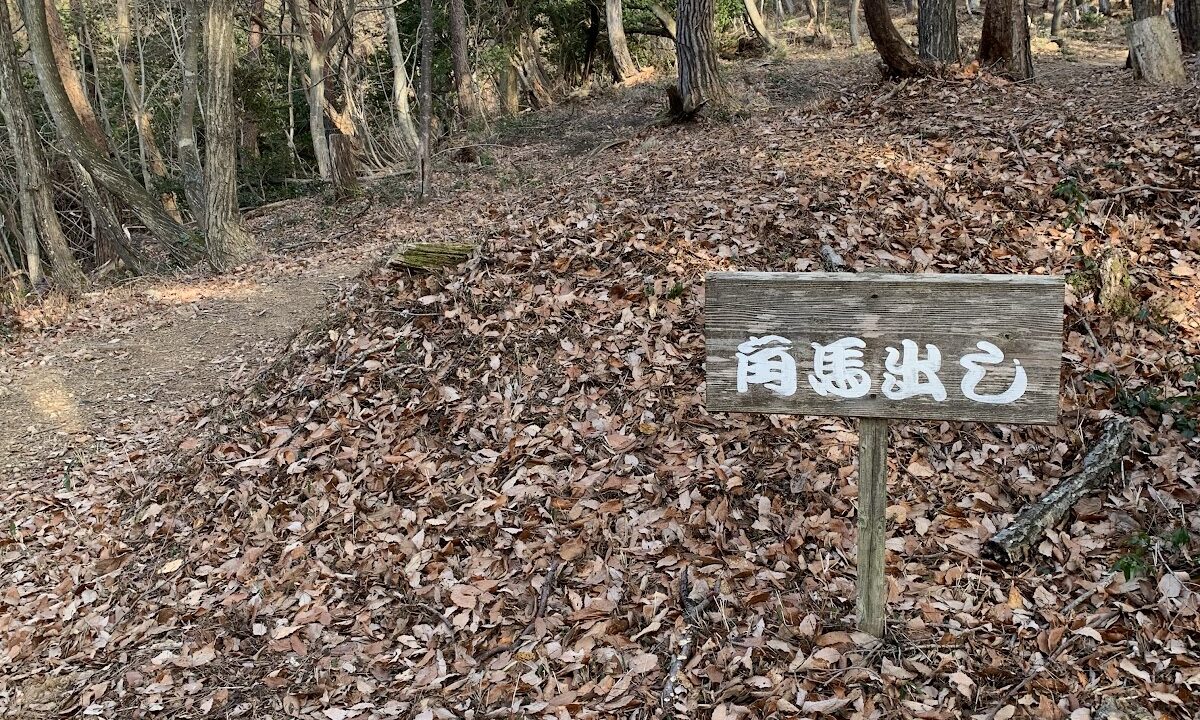
Tagamiyama Castle (Nagahama City, Shiga Prefecture) Complete Guide | A Thorough Explanation of Hashiba Hidenaga’s Camp at the Battle of Shizugatake
What is Tagamiyama Castle?
Tagamiyama Castle is a mountain castle located in Kinomoto-cho, Nagahama City, Shiga Prefecture. It was one of the camps built by Hashiba Hideyoshi’s army during the Battle of Shizugatake in 1583. Also known as Tagamiyama Fort, Tagamiyama Castle, and Kinomoto Castle, it was an important base where Hashiba Hidenaga, Hideyoshi’s younger brother, deployed his troops of 15,000.
Built on the summit of Mount Tagamiyama, at an altitude of approximately 330 meters, this castle was strategically located at a key point controlling the Hokkoku Kaido road and served as the final line of defense to prevent Shibata Katsuie’s army from advancing south. Even today, the remains of earthworks, dry moats, gates, and vertical trenches are well-preserved, making it a valuable historical site that conveys the appearance of a Sengoku period camp in the Kohoku region. ## Basic Information about Tagamiyama Castle
Location and Access
Location: Kinomoto-cho, Nagahama City, Shiga Prefecture
Nearest Station: Approximately 15 minutes on foot from Kinomoto Station on the JR Hokuriku Main Line to the castle entrance
Access by Car: Approximately 5 minutes from Kinomoto Interchange on the Hokuriku Expressway. Parking is available near Kinomoto Jizoin Temple.
Climbing Time: Approximately 30-40 minutes on foot from the entrance to the summit.
Basic Castle Data
- Alternate Names: Tagamiyama Fort, Tagamiyama Castle, Kinomoto Castle
- Castle Structure: Mountain Castle (Fortified Camp)
- Year of Construction: 1583 (Tensho 11)
- Builder: Hashiba Hidenaga (by order of Hashiba Hideyoshi)
- Lord: Hashiba Hidenaga
- Year of Abandonment: After the end of the Battle of Shizugatake in 1583 (Tensho 11)
- Elevation: Approximately 330 meters
- Remains: Earthworks, dry moats, gate, vertical moats, baileys, earthen bridges
History of Tagamiyama Castle
The Battle of Shizugatake and the Background of the Construction of Tagamiyama Castle
In June 1582, after Oda Nobunaga was killed by Akechi Mitsuhide in the Honnoji Incident, Hashiba Hideyoshi returned to Kyoto in the Chugoku Grand Return and defeated Mitsuhide at the Battle of Yamazaki. Following the Kiyosu Conference, the issue of succession within the Oda family surfaced, and the conflict between Hideyoshi and Shibata Katsuie intensified.
In December 1582, Hideyoshi besieged Nagahama Castle, defended by Shibata Katsutoyo, and forced Katsutoyo to retreat. In response, in March of the following year, 1583, Shibata Katsuie began his southward advance from Echizen. At this time, Hideyoshi adopted a strategy of constructing multiple encampments around Lake Yogo in the northern part of Lake Biwa to prepare for Katsuie’s army.
The Deployment of Hashiba Hidenaga’s Army and the Role of Tagamiyama Castle
Tagamiyama Castle was part of a group of fortified camps built alongside Shizugatake Fort, Higashinoyama Castle, and Iwasakiyama Fort. In particular, Tagamiyama Castle was located along the Hokkoku Kaido road, controlling a crucial transportation route for the Shibata army’s southward advance.
Hashiba Hidenaga was Hideyoshi’s younger brother and was known as a skilled general. Hidenaga deployed a large army of 15,000 men at Tagamiyama Castle, effectively making it the headquarters of the Hashiba army. This is thought to be because Hideyoshi himself employed a tactic of moving his forces flexibly between bases, entrusting the rear defense to his younger brother, Hidenaga.
The Course of the Battle of Shizugatake and Tagamiyama Castle
In April of Tensho 11 (1583), Shibata Katsuie’s army attacked Hashiba-controlled forts around Shizugatake. Initially, Shibata’s army held the advantage, but the tide of battle turned dramatically when Hideyoshi returned from Mino-Ōgaki with astonishing speed. Hideyoshi launched a surprise attack on Shibata’s forces stationed at Shizugatake, achieving a great victory.
During this time, Hashiba Hidenaga of Tagamiyama Castle held firm on the Hokkoku Kaidō road, effectively cutting off Shibata’s detachments and retreat routes. The strong defense of Tagamiyama Castle allowed Hideyoshi to focus on the decisive battle on the front lines with peace of mind.
Post-War and Abandonment
After his victory at the Battle of Shizugatake, Hideyoshi forced Shibata Katsuie to commit suicide at Kitano-shō Castle in Echizen, establishing his leadership within the Oda clan. Having achieved its objectives, Tagamiyama Castle was subsequently abandoned and left unused. Due to its nature as a temporary encampment, it was never intended to be developed as a permanent fortress, and its role ended with the conclusion of the war.
Remains and Highlights of Tagamiyama Castle
Layout and Castle Structure
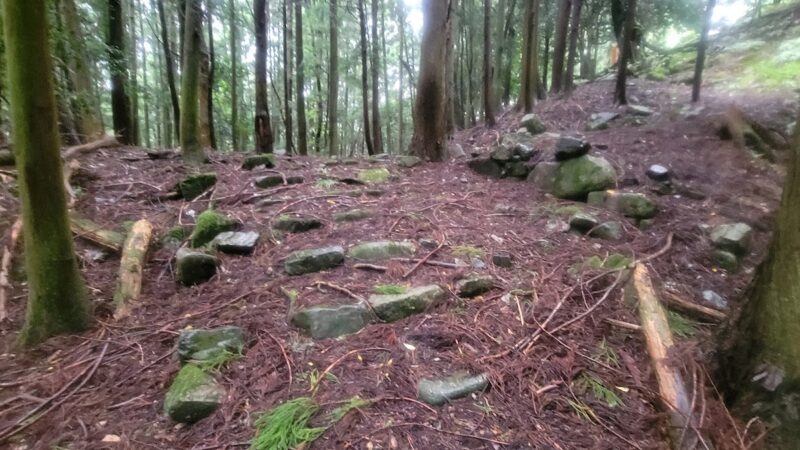
Tagamiyama Castle has the typical structure of a mountain castle, with multiple baileys arranged around the mountaintop. Despite being a fortified camp built in a short period, it features well-maintained defensive structures such as earthworks and dry moats, demonstrating the high level of castle-building technology at the end of the Sengoku period.
Multiple baileys are arranged to the east, west, north, and south of the main bailey, each separated by earthworks. Dry moats separate the baileys, showcasing ingenious methods to prevent enemy intrusion.
Earthworks
The earthworks remaining throughout the castle grounds are the most prominent remains of Tagamiyama Castle. The earthworks surrounding the main bailey are approximately 2-3 meters high and are still clearly visible today. Walking along the earthworks allows one to appreciate the scale and defensive capabilities of the castle at that time.
The earthworks are not simply piles of earth; they were reinforced using rammed earth techniques, and have remained intact for over 400 years. This indicates that even in the short-term construction of the encampment, solid construction work was carried out.
Dry Moats and Vertical Moats
Multiple dry moats, approximately 5-10 meters wide and 3-5 meters deep, can be found demarcating the baileys. The dry moats on the north and east sides of the main bailey are particularly large, indicating their crucial defensive role.
Vertical moats, dug along the mountain slopes, served to prevent enemy lateral movement. At Tagamiyama Castle, multiple vertical moats can be found on the eastern slope, and these worked together organically to enhance the overall defensive strength of the castle.
Entrance Gates and Earthen Bridges
The entrance gates to the castle are heavily guarded by earthworks and dry moats. The entrance gates are not straight but curved, a design intended to make enemy intrusion difficult.
Earthen bridges for crossing the dry moats also remain; these are bridge-like passages created by excavating and leaving some earth intact. Their structure was easily destroyed during wartime, functioning as the final line of defense.
Layout of the Enclosures
The main enclosure is located at the highest point of the mountaintop, offering panoramic views of the surrounding area. The main enclosure measures approximately 40 meters east-west and 30 meters north-south, and is believed to have been the location of Hidenaga’s headquarters.
The second and third enclosures surround the main enclosure, forming a stepped defensive line. It is presumed that soldiers were stationed in each enclosure, and that weapons and food supplies were stored there.
Views
From the mountaintop, one can enjoy panoramic views of northern Lake Biwa, Lake Yogo, and the Shizugatake area. On clear days, one could even see people traveling along the Hokkoku Kaido road. This excellent view is one of the reasons why Tagamiyama Castle was chosen as a strategic base.
Even today, one can enjoy the scenery of northern Lake Biwa through the trees, reliving the landscape seen by the warlords of the Sengoku period.
Preservation and Maintenance Status of Tagamiyama Castle
Current Preservation Status
Tagamiyama Castle is protected by Nagahama City as a historical site related to the Battle of Shizugatake. The remains are relatively well-preserved, and major structures such as earthworks and dry moats can be clearly identified.
In recent years, advances in castle research have led to a re-evaluation of the historical value of encampment castles, and Tagamiyama Castle has come to be recognized as an important historical site. Visits by local history enthusiasts and castle fans are increasing, and it is attracting attention as a tourist resource in the Kohoku region.
Maintenance of the Ascent Route
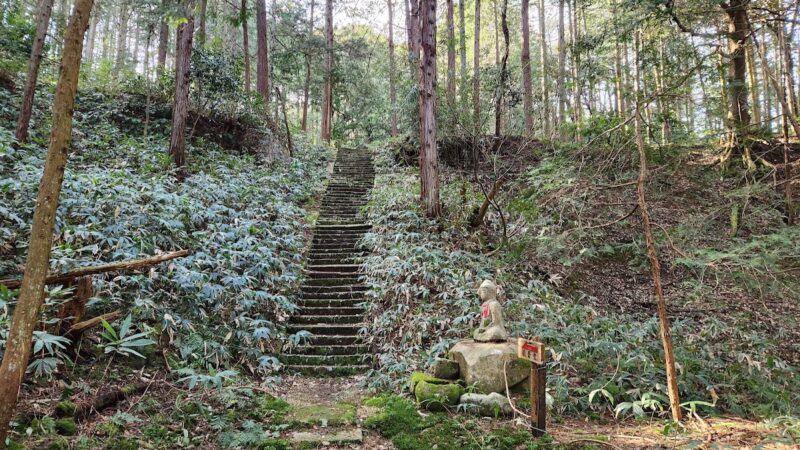
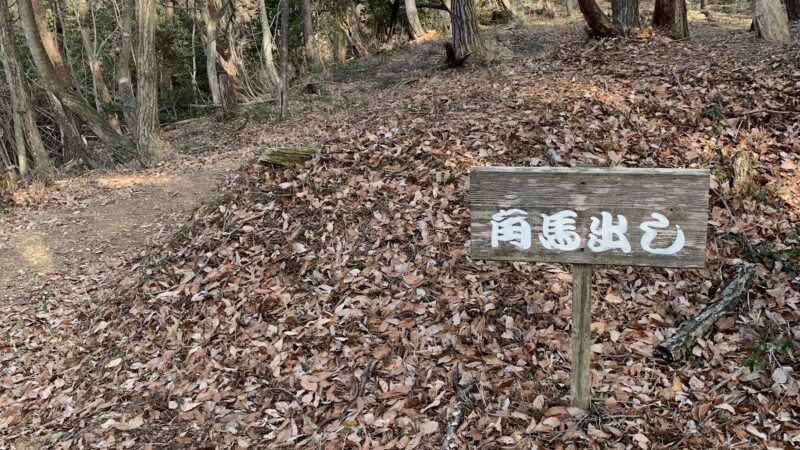
While some guide signs are installed along the ascent route from the entrance to the summit, comprehensive maintenance has not been carried out. The mountain path is in its natural state, and appropriate clothing and shoes for hiking are necessary.
Caution is advised during rainy weather and winter, as the ground can be slippery. In summer, vegetation can be overgrown, obstructing views in some areas. It is recommended to check the weather beforehand and wear appropriate equipment when visiting.
Information Boards and Explanation Boards
Information boards explaining the history of Tagamiyama Castle and the Battle of Shizugatake are installed near the entrance to the castle and in the main enclosure. These boards are a valuable source of information for understanding the historical background of the castle.
However, there are few detailed explanation boards for the remains, so visiting with some basic knowledge about castles beforehand will allow for a deeper understanding.
Historical Sites Related to Tagamiyama Castle and the Battle of Shizugatake
Camp Forts Around Shizugatake
Tagamiyama Castle is part of a group of camp forts built during the Battle of Shizugatake. The following related historical sites are located in the surrounding area:
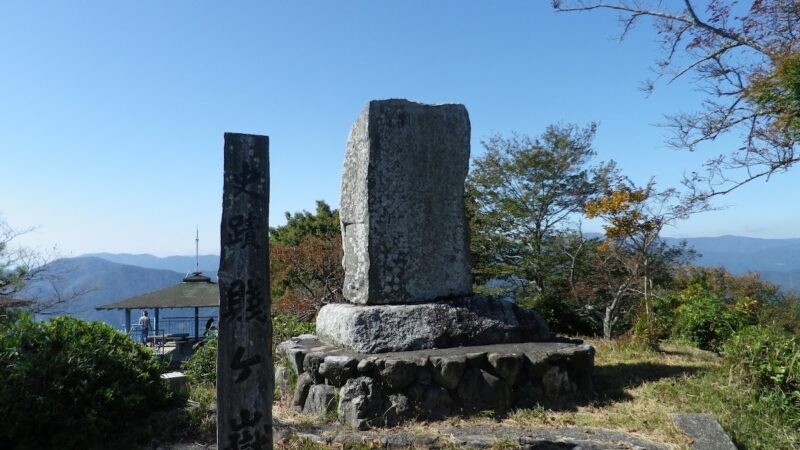
Shizugatake Fort: A frontline fort of Hashiba Hideyoshi’s army. Defended by Nakagawa Kiyohide and others, it was the site of fierce fighting. Currently, a stone monument stands on the summit of Shizugatake, and it is accessible by lift.
Higashinoyama Castle: A camp fort located about 5 kilometers north of Tagamiyama Castle. Hori Hidemasa was stationed here. Similar to Tagamiyama Castle, earthworks and dry moats remain.
Iwasakiyama Fort: A fort located south of Lake Yogo. It formed the defensive line of the Hashiba army.
Genba-o Castle (Uchinakaoyama Castle): A castle where Shibata Katsuie established his headquarters. It was a base for the Shibata army during the Battle of Shizugatake. The remains are remarkably well-preserved and impressive.
Kinomoto Jizo-in Temple
Kinomoto Jizo-in Temple, located near the entrance to Tagamiyama Castle, is a renowned temple and one of Japan’s three great Jizo temples. It is said that Hideyoshi also visited to pray for victory in battle, making it a temple deeply connected to the Battle of Shizugatake.
The temple grounds contain items related to Hideyoshi, and a visit is recommended when visiting Tagamiyama Castle. The charming streetscape of the temple town is also appealing.
Nagahama Castle
Nagahama Castle, where Hashiba Hideyoshi first became a daimyo with his own castle, is located approximately 15 kilometers south of Tagamiyama Castle. Currently, a reconstructed keep stands, and it is open to the public as the Nagahama Castle Historical Museum.
The battle for Nagahama Castle took place in the preliminary stages of the Battle of Shizugatake. Visiting both Nagahama Castle and Tagamiyama Castle will provide a deeper understanding of the overall picture of the Battle of Shizugatake.
Access to and Visiting Points for Tagamiyama Castle
Detailed Access Information
Using Public Transportation:
- Get off at Kinomoto Station on the JR Hokuriku Main Line.
- Walk approximately 15 minutes from the station towards Kinomoto Jizoin Temple.
- Head towards the castle entrance from the vicinity of Jizoin Temple (signposts are available).
- Walk approximately 30-40 minutes from the castle entrance to the summit.
Using a Car:
- Approximately 5 minutes from Kinomoto IC on the Hokuriku Expressway via National Route 8.
- Park near Kinomoto Jizoin Temple (free parking available).
- A few minutes’ walk to the castle entrance.
Notes for Visitors
Clothing and Equipment: Hiking boots or trekking shoes, long-sleeved shirt and long pants are recommended. Insect repellent is necessary in summer, and warm clothing is necessary in winter.
Estimated Time: Approximately 1 hour 30 minutes to 2 hours round trip from the castle entrance to the summit. If you plan to thoroughly explore the ruins, please allow approximately 2 hours and 30 minutes.
Best Time to Visit: Spring (April-May) and Autumn (October-November) are ideal. Be aware of the heat and overgrown vegetation in summer, and snow in winter.
Hydration: There are no vending machines or rest facilities at the summit, so please be sure to bring your own water.
Photography Tips
For ruins such as earthworks and dry moats, photographing them in the morning’s oblique light will enhance their three-dimensionality. For views from the main enclosure, sunny days are recommended. A composition overlooking Shizugatake Mountain is a unique photograph of Tagamiyama Castle.
Historical Value and Evaluation of Tagamiyama Castle
Importance in the Study of Fortified Camps
Tagamiyama Castle occupies an important position in castle research as a typical example of a fortified camp from the late Sengoku period. Despite being built in a short period, the castle features strategically placed defensive structures such as earthworks and dry moats, demonstrating the high level of castle-building technology of the time.
In particular, as a historical site showcasing the strategic vision of Hashiba Hideyoshi, it is indispensable for understanding the entire Battle of Shizugatake. Hideyoshi’s tactics of coordinating multiple encampments to create a defensive line are believed to have influenced later battles such as the Battle of Sekigahara.
Significance in Regional History
The Kohoku region has long played an important role as a transportation hub connecting Hokuriku and Kyoto. Tagamiyama Castle is a valuable historical site that conveys to the present day that this region was an important battlefield during the Sengoku period.
Locally, tourism promotion and historical education utilizing Tagamiyama Castle and other historical sites related to the Battle of Shizugatake are underway, making it an important element in shaping the region’s identity.
Evaluation from Castle Enthusiasts
Among castle enthusiasts and history lovers, Tagamiyama Castle is highly regarded as a “well-preserved encampment.” For castle enthusiasts across Japan, a tour of historical sites related to the Battle of Shizugatake is a popular route, and Tagamiyama Castle is a central part of it.
On castle information websites such as Kojodan, many visitors have given favorable reviews of the state of the remains and the historical background. The clarity of the earthworks and dry moats, and the excellent views, are particularly highly praised.
Tourist Spots Around Tagamiyama Castle
Kinomoto Jizoin Temple and the Temple Town
Kinomoto Jizoin Temple is a renowned temple revered as the Buddha of the eyes. The temple town retains its old Edo-period streetscape, offering a charming and atmospheric experience. There are also shops selling local specialties and restaurants scattered throughout the area.
Shizugatake Battlefield
The summit of Shizugatake can be accessed by lift, offering panoramic views of Lake Yogo and Lake Biwa. A monument to the battlefield and information boards marking the locations of the warriors’ encampments are installed, allowing visitors to reflect on the battle. ### Lake Yogo
Also known as “Mirror Lake,” this beautiful lake boasts a tranquil atmosphere distinct from Lake Biwa. A promenade is maintained along the lakeshore, perfect for a leisurely stroll. It’s also known as a mystical lake associated with the legend of the celestial maiden’s robe.
Odani Castle Ruins
Odani Castle, known as the residence of Asai Nagamasa, is approximately a 20-minute drive from Tagamiyama Castle. A full-fledged mountain castle designated as a national historic site, it retains extensive remains such as stone walls and baileys.
Nagahama City Center
The tourist area centered around Kurokabe Square is a popular spot with glass art shops, cafes, and restaurants. Nagahama Castle History Museum and Daitsuji Temple (Nagahama Gobo) are also notable sights.
Model Itinerary for Visiting Tagamiyama Castle
Half-Day Course (Focusing on Tagamiyama Castle)
9:00 Arrive at JR Kinomoto Station
9:15 Visit Kinomoto Jizoin Temple and stroll through the temple town
10:00 Begin climbing Tagamiyama Castle
10:40 Arrive at the summit and view the ruins
11:30 Begin descending
12:00 Lunch near Kinomoto Jizoin Temple
13:00 Depart from Kinomoto Station
Full-Day Course (Tour of Shizugatake Battle Historical Sites)
9:00 Arrive at Kinomoto Station and arrange rental car
9:30 Climb Tagamiyama Castle
11:30 Visit Higashinoyama Castle
12:30 Lunch by Lake Yogo
14:00 Shizugatake Battlefield (using the lift)
15:30 Visit to Genba-o Castle
17:00 Visit to Kinomoto Jizo-in Temple
18:00 Return to Kinomoto Station
Two-Day Course (Exploring the History of Kohoku)
Day 1:
- Arrive at Nagahama Station
- Visit Nagahama Castle History Museum
- Stroll through Kurokabe Square
- Visit to Daitsuji Temple
- Overnight stay in Nagahama City
Day 2:
- Climb to the ruins of Odani Castle
- Climb to Tagamiyama Castle
- Visit the Battle of Shizugatake
- Visit to Kinomoto Jizo-in Temple
- Depart from Kinomoto Station
Summary
Tagamiyama Castle was an important encampment where Hashiba Hidenaga deployed 15,000 troops during the Battle of Shizugatake in 1583. Located at a strategic point controlling the Hokkoku Kaido road, it functioned as the final line of defense to prevent Shibata Katsuie’s army from advancing south.
Even today, remnants such as earthworks, dry moats, gates, and vertical trenches remain well-preserved, conveying the appearance of a fortified camp from the late Sengoku period. From the mountaintop, you can enjoy a panoramic view of northern Lake Biwa and the Shizugatake area, allowing you to relive the scenery seen by the warlords of that time.
When visiting Nagahama City in Shiga Prefecture, why not explore the historical sites related to the Battle of Shizugatake, including Tagamiyama Castle, and experience the historical stage where Hashiba Hideyoshi paved the way to unifying Japan? Visiting nearby tourist spots such as Kinomoto Jizo-in Temple and Nagahama Castle will allow you to enjoy a more fulfilling historical exploration of the northern Lake Biwa region.
This historical site is recommended not only for castle enthusiasts but also for history buffs and those who enjoy hiking. Be sure to prepare appropriate equipment and visit Tagamiyama Castle, where the spirit of the Sengoku period still lingers.