Complete Guide to Takiyama Castle (Ritto City, Shiga Prefecture) | Thorough Explanation of History, Remains, and Ascent Route
What is Takiyama Castle?
Takiyama Castle is a Sengoku period mountain castle built on the summit of Mt. Hyugayama, at an altitude of 222.9 meters, in Rokujizo, Ritto City, Shiga Prefecture. Also known as “Hyugayama Castle,” it overlooks a strategically important transportation point on the south side of the old Tokaido road.
While there are no reliable historical documents regarding the castle’s construction date or builder, and many details remain unknown, its layout and the characteristics of its remains have made it a nationally recognized castle from the Oda and Toyotomi regimes. In particular, the castle gate (gate remains) and stone walls are highly valued by castle researchers as valuable remains that show the transitional form from medieval mountain castles to early modern castles.
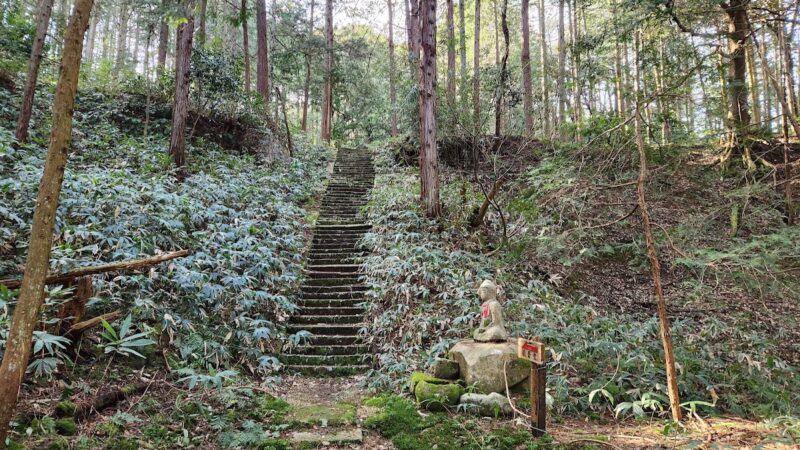
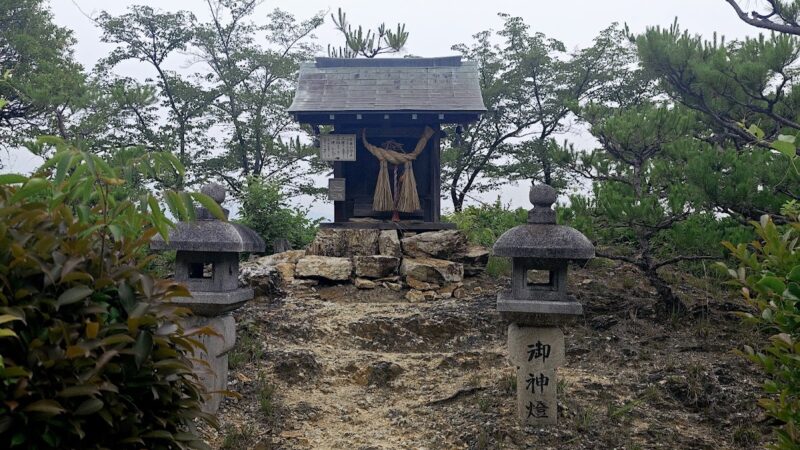
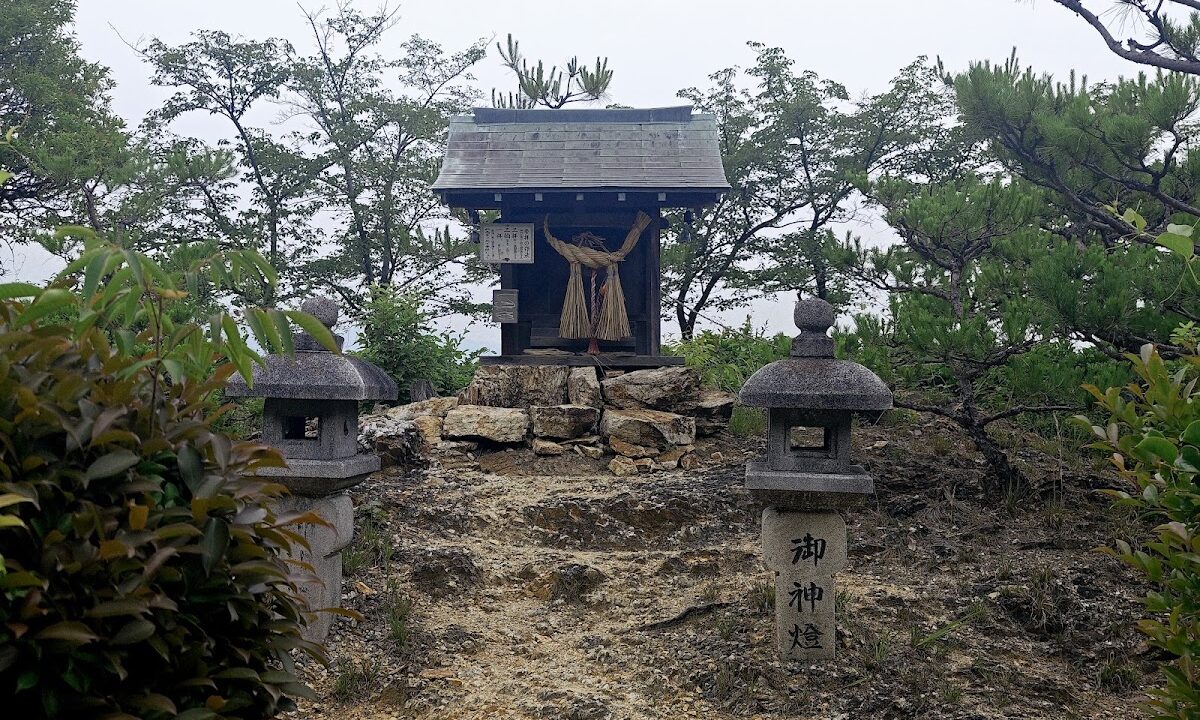
Currently, 721 stone steps lead to the summit, where a shrine to the Eight Great Dragon Kings is enshrined. One of its attractions is the excellent view overlooking Ritto City, the Yasugawa River, and the Konan Plain.
History of Takiyama Castle
Background and Era of Construction
There are various theories regarding the construction period of Takiyama Castle, but it is generally believed to have been built during the late Sengoku period, particularly around the Genki era (1570-1573). This period was a turbulent time known as the “Genki Rebellion,” when Oda Nobunaga was expanding his power into Omi Province (present-day Shiga Prefecture).
This region was originally a manor of Kofuku-ji Temple in Nara, and a local administrator (jitōdai) was stationed there. Therefore, it has been suggested that some kind of defensive structure may have existed before the Oda army advanced. Early modern geographical records state that it was a fortified castle (tsumejiro = a castle for emergency refuge) of the local powerful Takano clan.
Involvement of Oda Nobunaga and Sakuma Nobumori
From 1570 (Genki 1) to 1573 (Genki 4), Oda Nobunaga was suppressing anti-Oda forces in Omi Province. The Ikkō-ikki rebels were particularly strong in the Konan region, and Nobunaga dispatched his retainer, Sakuma Nobumori, to quell them.
Sakuma Nobumori operated from Nagahara Castle in Yasu City to suppress the Konan Ikkō-ikki, and it is said that he built or renovated Takiyama Castle during this process. However, since there are no reliable historical documents to support this, it remains purely speculative.
On the other hand, analysis of the castle’s layout and the characteristics of its remains reveals technical features from the Oda and Toyotomi regimes, suggesting that a large-scale renovation was undoubtedly carried out during the period when the castle was incorporated into Nobunaga’s sphere of influence.
Relationship with the Rokkaku Clan
The existence of the Rokkaku clan, who controlled southern Omi Province, cannot be ignored when considering the background of Takiyama Castle’s construction. The Rokkaku clan was a Sengoku period daimyo based at Kannonji Castle (Omihachiman City) and became a resistance force during Oda Nobunaga’s march to Kyoto.
Nobunaga successfully marched to Kyoto in 1568 (Eiroku 11), driving out the Rokkaku clan in the process. However, remnants of the Rokkaku clan and their supporters continued to resist in various locations. Takiyama Castle may have functioned as a frontline base to prepare for these resistance forces, including the Rokkaku clan.
Its location near the old Tokaido road was strategically important for monitoring and securing the transportation route connecting Kyoto and eastern Japan, making it an indispensable base for the Oda army.
The Castle’s End and Aftermath
There are no clear records of when Takiyama Castle was abandoned. Generally, it is believed that the strategic importance of Takiyama Castle declined after Oda Nobunaga completely seized control of Omi Province and built Azuchi Castle in 1576 (Tensho 4), as military tensions in the region eased.
During the time of Toyotomi Hideyoshi, larger, more modern castles were built throughout the region, and smaller mountain castles were gradually abandoned. It is presumed that Takiyama Castle was also abandoned as part of this trend, and thereafter became known as Hyugayama, a place of local worship.
Structure and Layout of Takiyama Castle
Overall Layout
Takiyama Castle is a mountain castle spread across an area of approximately 150 meters east-west and 100 meters north-south, centered on the summit of Hyugayama. Multiple baileys (flat areas) are arranged around the main enclosure, and defensive structures utilizing the ridges and slopes are skillfully positioned.
The castle’s layout exhibits characteristics of a medieval mountain castle, making maximum use of the terrain, while the structure of the stone walls and gates shows technological advancements from the Oda and Toyotomi periods. This transitional characteristic is why Takiyama Castle is considered an important historical site in castle research.
Main Enclosure (Honmaru)
Located at the mountaintop, the main enclosure is the core of the castle. Currently, a shrine to the Eight Great Dragon Kings is enshrined there, and traces of earthworks remain around it. From the main enclosure, one can see not only Ritto City but also the Yasugawa River basin and the Konan Plain, clearly demonstrating its function as a military surveillance base.
The main enclosure is not particularly large, suggesting that the number of permanently stationed guards was limited. Therefore, it is highly likely that Takiyama Castle was not a castle designed for large-scale battles, but rather an outpost primarily intended for surveillance, information transmission, and emergency refuge.
Gate (Castle Gate Remains)
One of the most noteworthy remains at Takiyama Castle is the gate. A “koguchi” is the entrance to a castle, and various ingenious measures were taken to prevent enemy intrusion.
The koguchi of Takiyama Castle has a masugata-shaped structure using stone walls, exhibiting characteristics of the transitional period from medieval mountain castles to early modern castles. The structure, which combines earthworks and stone walls rather than being entirely stone-walled, is valuable evidence of a technological transitional period.
Around the koguchi, various measures to restrict enemy movement can be seen, demonstrating meticulous planning for defense.
Stone Walls and Stone Masonry
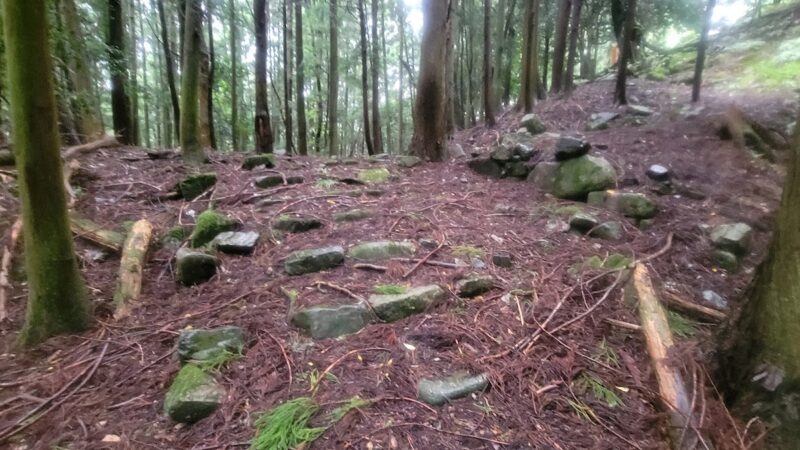
Partial stone walls and stone masonry remain at Takiyama Castle. These are not completely cut-stone masonry (kirikomi-hagi), but rather built using techniques closer to rough-stone masonry (nozura-zumi) or fitted-stone masonry (uchikomi-hagi), indicating the technological level of the late 16th century.
The stone walls are small in scale, unlike the early modern castles that surrounded the entire castle with stone walls. However, the intention to enhance defensive capabilities by strategically placing stone walls is evident. This point is also important evidence of the development of castle construction technology during the Oda and Toyotomi regimes.
Enclosures and Earthworks
Several enclosures are arranged around the main enclosure. These are irregularly placed according to the terrain, strongly retaining the characteristics of medieval mountain castles that skillfully utilize the natural landscape.
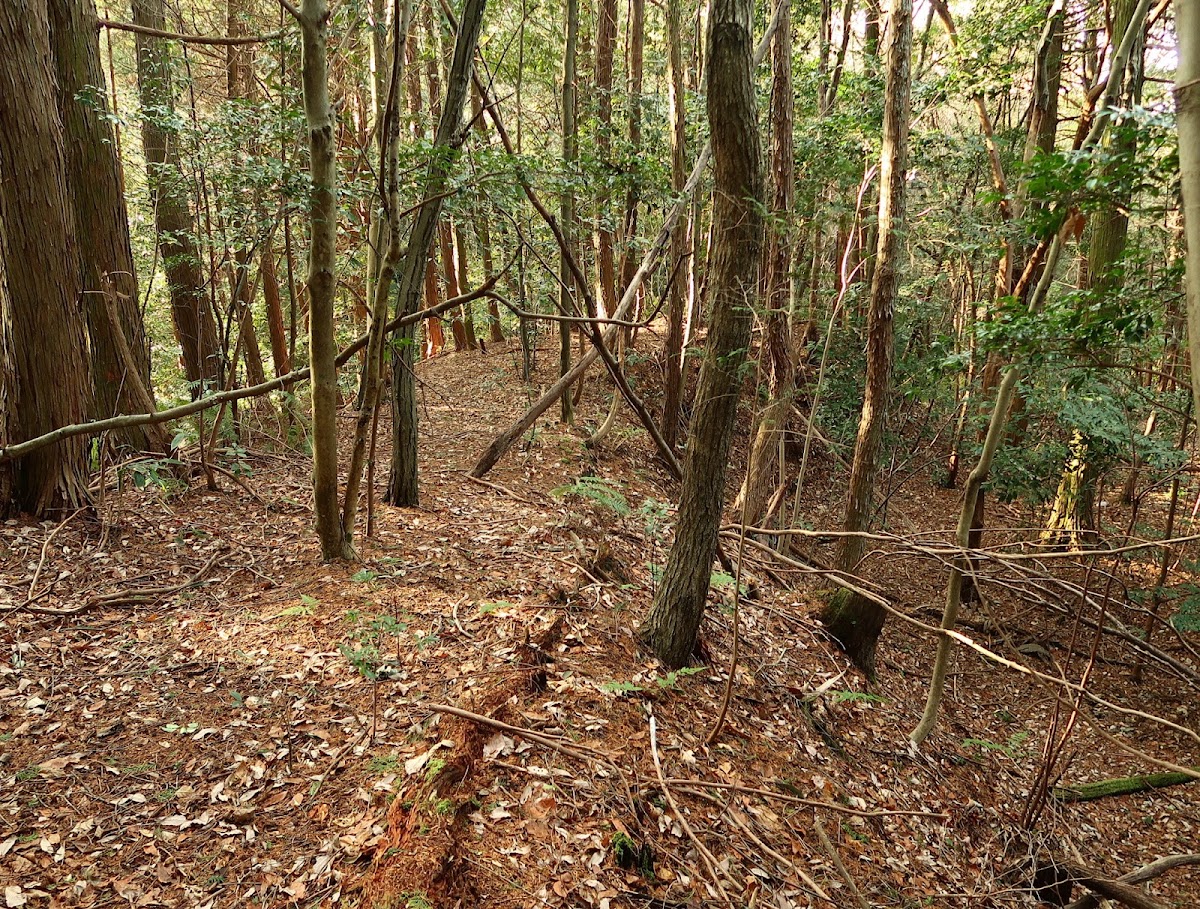
Earthworks were built around the enclosures, and some are still clearly visible today. The earthworks served to protect against enemy arrows and firearms, as well as physically hindering enemy incursions.
Traces of trenches can also be seen along the east and west ridges, indicating that measures were taken to block enemy access routes.
Watchtower Remains
There are several elevated areas within the castle grounds that are presumed to be the remains of watchtowers. Towers were important facilities serving as lookout and attack bases, used for monitoring the surrounding area and transmitting signals.
From the remains of the towers at Takiyama Castle, one can clearly see the old Tokaido road and the direction of the Yasugawa River, making it a strategic location for monitoring the movements of people traveling along the road. This location confirms that traffic monitoring was a crucial task for the castle.
Highlights of Takiyama Castle
721 Stone Steps
The 721 stone steps, which were developed as the path to Takiyama Castle, are a highlight in themselves. These steps were developed as a pilgrimage route to Mount Hyuga after the Edo period and are not part of the castle’s remains, but they make the climb to the summit more pleasant.
As you climb the steps, observing the surrounding nature and changes in the terrain allows you to appreciate the strategic value of why the castle was built in this location. There are places to rest along the way, and even those without much physical stamina can reach the summit if they climb slowly.
View
The view from the mountaintop is one of Takiyama Castle’s greatest attractions. While the elevation of 222.9 meters isn’t particularly high, the unobstructed surroundings allow for a 360-degree panoramic view.
To the north, the city of Ritto stretches out, and beyond that, Lake Biwa can be seen in the distance. To the east, the Yasugawa River and the Konan Plain are visible, to the west, the direction of Mount Hiei, and to the south, the mountains of Shigaraki. This view makes it clear that the castle was ideally positioned to monitor the entire surrounding area.
On a clear day, you can even see as far as Kyoto and the mountains of Omi, and it’s deeply moving to imagine that the warlords of the Sengoku period also gazed upon this same scenery.
Shrine of the Eight Great Dragon Kings
At the mountaintop, there is a shrine dedicated to the Eight Great Dragon Kings. Dragon King worship has been practiced since ancient times as a deity for rainmaking and water, and Mount Hinata has been cherished as a place of worship in the region. After the castle was abandoned, this mountain transformed from a military facility into a place of worship, becoming cherished by the local people. The area around the shrine has a quiet and sacred atmosphere, making it a fitting place to conclude your exploration of the castle ruins.
Observing the Remains
When visiting the castle ruins, we recommend carefully observing the remains such as the gate, earthworks, and stone walls. While information boards are limited, paying attention to changes in the terrain, unnatural flat areas, and the arrangement of stones will reveal the castle’s structure.
Especially around the gate, you can see ingenious measures to prevent enemy intrusion, giving you a real feel for the castle-building techniques of the Sengoku period. Taking time to carefully observe the remains while taking photographs will allow you to understand the castle’s history more deeply.
Access Information
Using Public Transportation
The nearest station is “Ritto Station” on the JR Biwako Line. It takes approximately 30 to 40 minutes to walk from the station to Takiyama Castle Ruins (Hinatayama). From the east exit of Ritto Station, head towards the Tokaido Road, pass through the Rokujizo settlement, and you will reach the trailhead of Mt. Hinata. There are signs along the way, but it is recommended to check a map beforehand.
Bus service is available, but the number of buses is limited, so please check the timetable in advance.
If using a car
It’s about a 10-minute drive from the Ritto Interchange on the Meishin Expressway. Take National Route 8 towards Rokujizo.
There is a parking lot near the trailhead, but space is limited. It may get crowded on weekends and during peak seasons, so please try to arrive early.
If using a car navigation system, searching for “Mt. Hinata” or “Takiyama Castle Ruins” is recommended.
From the trailhead to the summit
From the trailhead to the summit, it takes about 20 to 30 minutes using the well-maintained stone steps. The steps are relatively easy to walk on, but 721 steps is certainly not a small number.
There are rest points along the way, so it’s important to climb at your own pace without pushing yourself too hard. Especially in summer, don’t forget to stay hydrated, and in winter, be careful as the ground may freeze.
We recommend wearing comfortable walking shoes such as athletic shoes or trekking shoes.
Points to Note and Recommended Time of Visit
Clothing and Equipment
For visiting a mountain castle, comfortable clothing and walking shoes are essential. Especially after rain or in winter, the ground can be slippery, so choose shoes with good grip.
In summer, bring insect repellent, a hat, a towel, and drinking water. In winter, don’t forget to take precautions against the cold. The summit can be windy, so a windbreaker would be useful.
Recommended Time of Visit
Takiyama Castle Ruins can be visited throughout the year, but spring (late March to May) and autumn (October to November) are especially recommended.
Spring is beautiful with its fresh greenery, and the weather is mild, making it ideal for hiking. Autumn offers beautiful autumn foliage and clearer air for better views.
In summer, be aware of the heat and insects. In winter, there is a possibility of snow and ice, so please check the weather before visiting.
Estimated Time Required
The round trip from the trailhead to the summit takes approximately 1 to 1.5 hours. Including time at the summit, allow about 2 hours. If you want to carefully observe the ruins, it is recommended to allocate more time.
Nearby Tourist Attractions
Attractions in Ritto City
It is recommended to visit other tourist attractions in Ritto City before or after visiting Takiyama Castle.
The Ritto Historical and Folk Museum allows you to learn about the local history and culture. There may be exhibits related to Takiyama Castle, so visiting beforehand will make your castle ruins exploration more fulfilling.
Along the Old Tokaido Road, there are scattered townscapes and historical sites that retain the atmosphere of the Edo period. Walking along the Tokaido Road, which passes near Takiyama Castle, allows you to appreciate the historical importance of this region.
Nearby Castles
If you’re a castle enthusiast, why not visit other castle ruins in the surrounding area?
Nagahara Castle Ruins (Yasu City) was the base of Sakuma Nobumori and has a deep connection to Takiyama Castle.
Kannonji Castle (Omihachiman City) is one of Japan’s leading mountain castles, known as the headquarters of the Rokkaku clan. Comparing it to Takiyama Castle helps to understand the diversity of castles during the Sengoku period.
Azuchi Castle Ruins (Omihachiman City) is an innovative castle built by Oda Nobunaga and is an essential historical site for understanding the historical context of Takiyama Castle.
Historical Significance of Takiyama Castle
Although not large in scale, Takiyama Castle occupies an important position in the history of Japanese castles.
The main reason for this is that it strongly retains the technical characteristics of the transition period from medieval mountain castles to early modern castles. The castle exhibits characteristics typical of a transitional period, such as a structure combining earthworks and stone walls rather than being entirely built of stone, and an early form of a masugata koguchi (square-shaped gate).
Furthermore, it is highly valued as a historical site that tells the story of Oda Nobunaga’s expansion of power and his rule over Omi Province. Due to the scarcity of written historical records, the remains themselves serve as valuable evidence telling the history.
From a regional history perspective, it is carefully preserved by the local community as a site symbolizing the turmoil of the Sengoku period in the Konan region and the subsequent transition to peace.
Current Status and Challenges of Takiyama Castle Research
Many aspects of Takiyama Castle remain unexplained.
Even basic information such as the builder, construction date, specific lords, and period of operation cannot be definitively determined based on reliable historical sources. It is hoped that the discovery of new historical documents and progress in archaeological investigations will help to unravel these mysteries.
Detailed analyses of the castle’s layout and remains are underway, and in recent years, the use of cutting-edge technologies such as aerial laser surveying has been considered. This could potentially lead to the discovery of previously overlooked remains.
Local residents, researchers, and the government are working together to preserve this valuable cultural asset for future generations.
Summary
Takiyama Castle is a Sengoku period mountain castle built on Mount Hinata in Ritto City, Shiga Prefecture, and is an important historical site related to Oda Nobunaga’s rule over Omi Province. While many aspects of its builder and detailed history remain unknown, the characteristics of the remains suggest it is a valuable archaeological site illustrating the development of castle construction technology during the Oda and Toyotomi regimes.
721 stone steps have been constructed, and from the summit, visitors can enjoy panoramic views of Ritto City and the Konan Plain. The remains, including the castle gate, stone walls, and earthworks, convey the castle construction techniques of the transition period from the medieval to the early modern era.
Access is relatively easy, about a 30-minute walk from Ritto Station or about a 10-minute drive from the Ritto Interchange. Spring and autumn are recommended for visits, as the surrounding area boasts numerous attractive spots for history buffs, including the old Tokaido road and other castle ruins.
Although not large in scale, Takiyama Castle holds an important place in the history of Japanese castles. When visiting Shiga Prefecture, be sure to stop by. The atmosphere of the Sengoku period and beautiful views await you.