Futoyama Castle (Maibara City, Shiga Prefecture) Complete Guide | History, Remains, and Access Explained in Detail
Futooyama Castle is a medieval mountain castle located in Maibara, Maibara City, Shiga Prefecture. It was built on Mount Futoyama (elevation 254m), which rises east of JR Maibara Station. Controlling a strategic transportation hub at the junction of the Nakasendo and Hokkokukaido roads, it played a crucial role throughout the Sengoku period as a border castle between Mino and Omi provinces, and between Kohoku and Konan provinces.
Basic Information on Taioyama Castle
Location: Maibara, Maibara City, Shiga Prefecture (formerly Maibara, Sakata District, Shiga Prefecture)
Construction Date: Unknown (Estimated to be before Bunmei 3, 1471)
Lords: Maibara clan, Kyogoku clan, Rokkaku clan, Asai clan, Oda clan, etc.
Elevation: 254m
Castle Structure: Separate castle complex (Composed of two castles: North Castle and South Castle)
Designation: Maibara City Designated Historic Site
Taioyama Castle ruins are located in a strategically important location near the border of Omi and Mino provinces. While the exact construction date is unclear, it is believed to have been built by the local powerful Maibara clan. Local explanatory signs and historical documents confirm its existence as early as Bunmei 3 (1471).
History of Taioyama Castle
From Construction to the Early Sengoku Period
The exact construction date of Taioyama Castle is unknown, but it is believed that the first lords were the local powerful Yonehara clan. The Yonehara area has long been a strategically important transportation hub, a crucial point where the Nakasendo and Hokkokukaido roads diverged. This geographical advantage is thought to have been a major reason for the construction of the mountain castle.
Records show that in 1471 (Bunmei 3), Saito Myochin, the deputy governor of Mino Province, invaded Omi Province and fought a battle at Yonehara Mountain. This “Yonehara Mountain” is believed to refer to Taioyama Castle, indicating that it was already functioning as a military base at this time.
Conflict between the Kyogoku and Rokkaku Clans
With the arrival of the Sengoku period, Taioyama Castle became the stage for conflict between the Kyogoku clan, the governors of Omi Province, and the Rokkaku clan of southern Omi. While the Kyogoku clan held the position of Shugo (provincial governor) of Omi Province, real power gradually shifted to powerful local lords such as the Asai clan.
During the Tenbun era (1532-1555), there is a record of Kyogoku Takahiro attempting to capture Taioyama Castle. At this time, Taioyama Castle was defended by the Imai clan, and Kyogoku Takahiro’s attack failed. This fact speaks to the castle’s strong defenses and its importance as a border castle.
The Asai Clan Era
During the Eiroku era (1558-1570), the castle came under the influence of Asai Nagamasa, who controlled northern Omi. The Asai clan considered Taioyama Castle a frontline stronghold against the Rokkaku clan of southern Omi and appointed their retainer, Nakajima Sozaemon, as its lord.
Taioyama Castle functioned as a crucial base on the Asai clan’s southern defense line, playing a vital role in protecting the border with the Rokkaku clan. The structure of the “separate castle complex,” consisting of the North and South Castles, is thought to reflect the defensive system of this period.
Oda Nobunaga’s Invasion and the Castle’s Abandonment
In 1570, when Oda Nobunaga invaded Omi Province to attack Asai Nagamasa, Taioyama Castle was caught in the crossfire. Nobunaga defeated the Asai-Asakura allied forces at the Battle of Anegawa, and subsequently conquered various castles in northern Omi.
Taioyama Castle also fell into the hands of the Oda forces and was under their control for a time. However, when the Asai clan was destroyed in 1573 and Niwa Nagahide entered Sawayama Castle, the strategic importance of Taioyama Castle declined. It is believed that the castle was subsequently abandoned and ceased to function as a mountain castle.
Layout and Remains of Taioyama Castle
Structure of Separate Castle Enclosures
The most distinctive feature of Taioyama Castle is its “separate castle enclosure” structure, consisting of two castle enclosures: the North Castle and the South Castle. This is a castle form in which two independent castle enclosures are placed on a single mountain, coordinating with each other for defense.
North Castle: Located on the northern ridge of Taioyama, it functioned as a major defensive base. Multiple enclosures are arranged in a stepped pattern, and defensive structures such as moats and earthworks can be seen.
South Castle: Built on the southern ridge, it served as a forward base against invasions from the southern Omi region. It is connected to the North Castle by a ridge, allowing for mutual support in emergencies.
Major Remains
Currently, the following remains are preserved at the Taioyama Castle site:
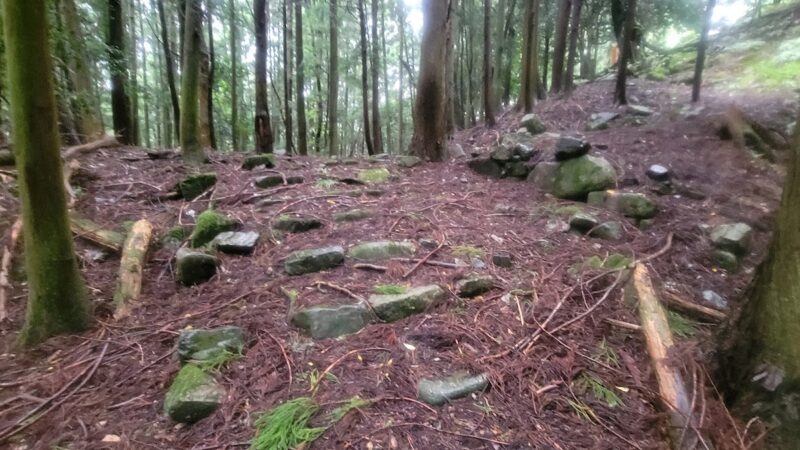
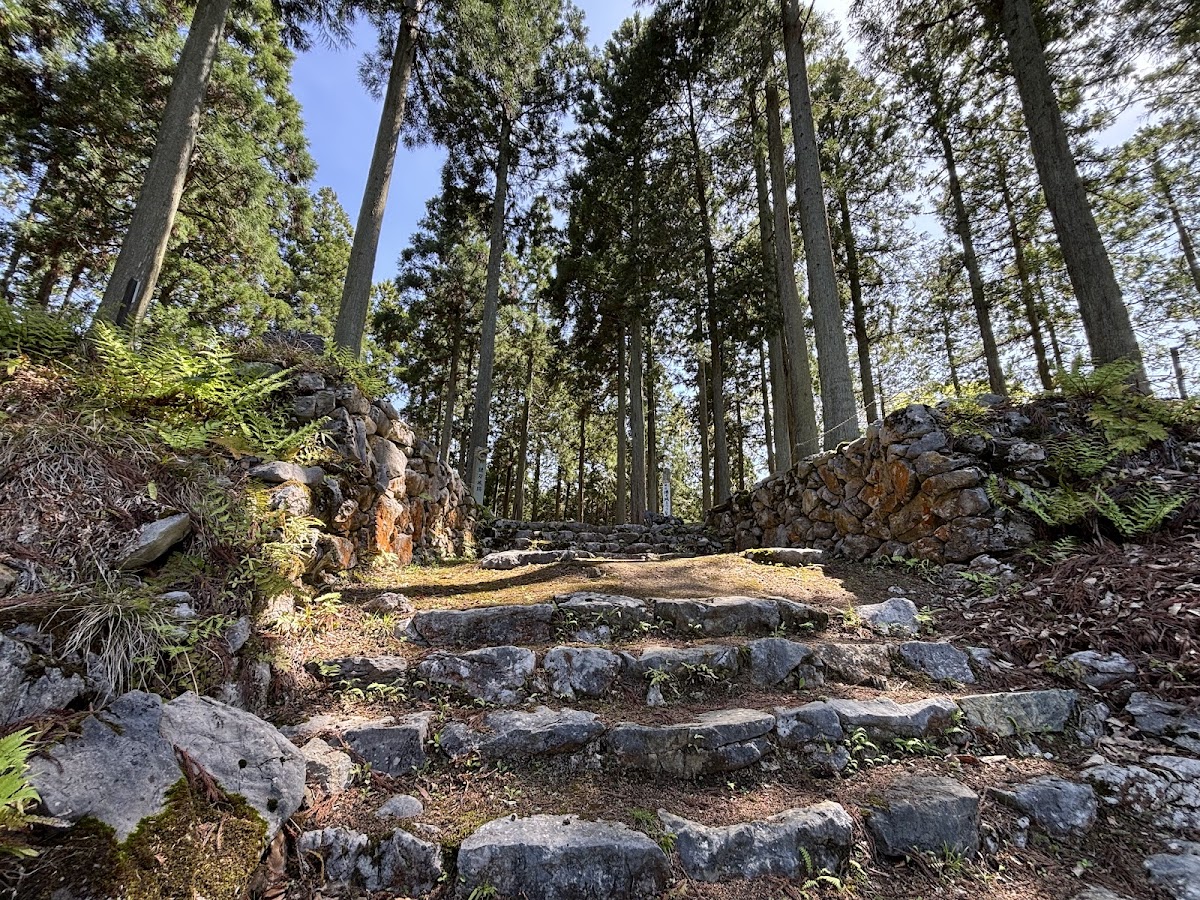
Enclosures (Kuruwa): Multiple enclosures of varying sizes are arranged around the main enclosure. The main enclosure at the mountaintop is relatively spacious, and flat areas believed to be the remains of buildings can be seen.
Moat: Several moats blocking the ridge were constructed, demonstrating ingenuity in preventing enemy intrusion. The moat separating the north and south castles is particularly large and clearly preserved.
Earthwork: Traces of earthworks remain around the enclosures, indicating ingenuity in enhancing defensive capabilities.
Vertical Moat: Vertical moats cutting vertically down the slopes can also be observed, serving to prevent enemy flanking attacks.
Gate Entrance: Traces of gate entrances to the enclosures remain, revealing defensive structures with bends and staggers.
These remains demonstrate typical defensive techniques of mountain castles from the Sengoku period, indicating that Taioyama Castle was a full-fledged military base.
Strategic Importance of Taioyama Castle
Strategic Location
The primary reason for the importance of Taioyama Castle lies in its location. Maibara has been a crucial transportation hub since ancient times, where the Nakasendo (Tosan-do) and Hokkokukaido (Hokkoku Waki-okan) roads diverged. The Nakasendo was a major highway alongside the Tokaido, and the Hokkokukaido was an important route to the Hokuriku region.
Taioyama Castle, overlooking these two highways, was ideally positioned for monitoring and controlling them. Controlling the castle allowed for control of entry routes from Mino to Omi, or movement from northern Omi to southern Omi.
Border Castle
Taioyama Castle was also important as a “border castle.” It was located near the border between Mino and Omi, and within Omi itself, at the boundary between northern Omi (Asai clan territory) and southern Omi (Rokkaku clan territory).
During the Sengoku period, such border castles were constantly under tension, and battles were frequently fought. Taioyama Castle was no exception, and was repeatedly contested by multiple powers, including the Kyogoku, Rokkaku, Asai, and Oda clans.
Relationship with Sawayama Castle
Approximately 10 km south of Taioyama Castle lay Sawayama Castle, an important stronghold in Omi Province. Sawayama Castle is a large fortress known as the residence of Ishida Mitsunari, and Taioyama Castle played a key role in its northern defense line.
During the Asai clan’s era, it functioned as a frontline base against the Rokkaku clan in southern Omi, and during the Oda clan’s era, it served as a check against remnants of forces in northern Omi. It is believed that the strategic value of Taioyama Castle declined after the fall of Sawayama Castle, leading to its abandonment.
Access to and Climbing Route to Taioyama Castle
Access Methods
Using Public Transportation:
- Get off at Maibara Station on the JR Tokaido Main Line/Tokaido Shinkansen
- Approximately 15 minutes on foot from the station to the castle entrance
- Approximately 30-40 minutes on foot from the castle entrance to the summit
Using a Car:
- Approximately 5 minutes from Maibara IC on the Meishin Expressway
- Approximately 5 minutes from Maibara IC on the Hokuriku Expressway
- There are a few parking spaces around Seiganji Temple (please confirm)
Climbing Route
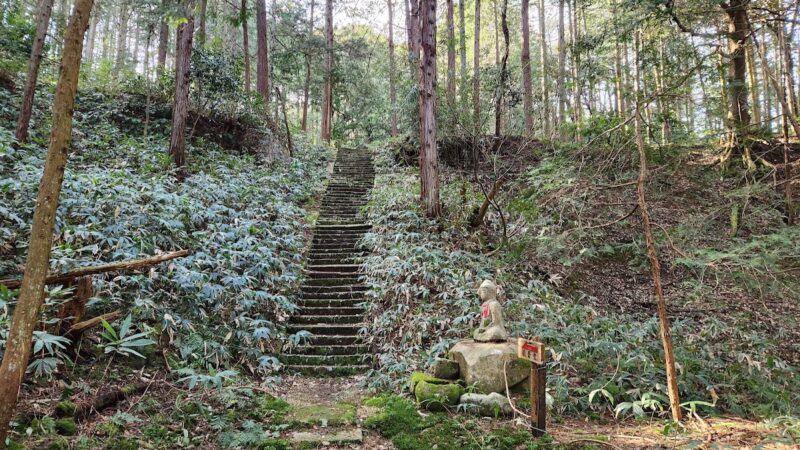
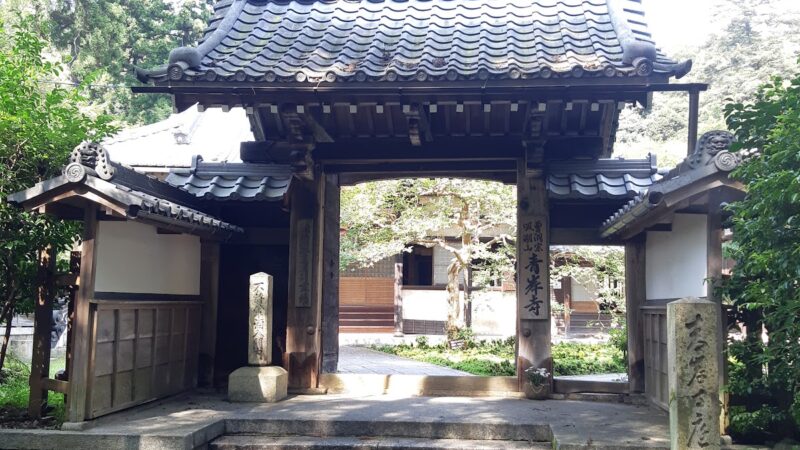
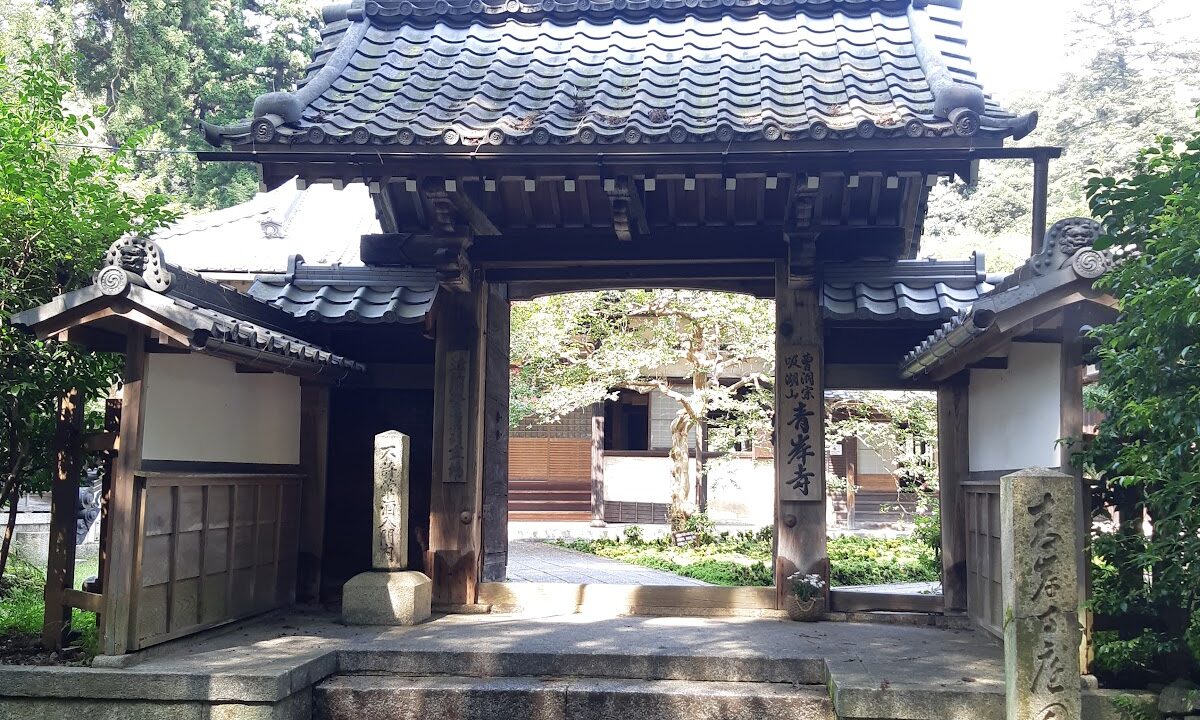
The main climbing route to Taioyama Castle starts from Seiganji Temple. Seiganji Temple is an ancient temple located east of Maibara Station, and a hiking trail to Taioyama Mountain is maintained from the temple grounds.
Standard Ascent Route:
- Head from Maibara Station to Seiganji Temple (approx. 15-minute walk)
- Enter the hiking trail from the grounds of Seiganji Temple
- Climb the ridge and view the remains of the South Castle (approx. 20 minutes)
- Continue north to the main enclosure of the North Castle (approx. 10-15 minutes)
- Descend via the same route
Estimated Time: Approximately 1 hour 30 minutes to 2 hours round trip (including time spent viewing the remains)
Difficulty: Intermediate (Caution advised for those unfamiliar with mountain trails)
Precautions When Ascending
- The hiking trail is well-maintained, but there are steep slopes and slippery areas characteristic of mountain castles.
- Non-slip shoes such as trekking shoes are recommended.
- Take insect repellent in summer and warm clothing in winter.
- Always bring drinking water.
- Information boards are installed on site, but learning about the history beforehand will deepen your understanding.
- It is recommended to avoid climbing the castle alone and instead travel in groups.
Nearby Attractions
Seiganji Temple
Seiganji Temple, the entrance to the climb to Taioyama Castle, is an ancient Tendai sect temple known for its beautiful garden. It attracts many tourists, especially during the autumn foliage season. When visiting Taioyama Castle, be sure to also admire the garden of Seiganji Temple.
Around Maibara Station
JR Maibara Station remains a major transportation hub, serving as a junction for the Tokaido Shinkansen and the Hokuriku Main Line. A tourist information center is located near the station, where you can obtain information about the history and tourism of Maibara City.
Sawayama Castle Ruins
Located approximately 10km south of Taioyama Castle, Sawayama Castle Ruins is another important mountain castle from the Sengoku period. Famous as the residence of Ishida Mitsunari, visiting both Taioyama Castle and Sawayama Castle will provide a deeper understanding of the castle network in Omi Province.
Nagahama Castle and Odani Castle
Nagahama, the central city of northern Omi Province, is home to Nagahama Castle, built by Hashiba Hideyoshi (Toyotomi Hideyoshi). The ruins of Odani Castle, the base of Asai Nagamasa, are also nearby and are important historical sites for understanding the history of Taioyama Castle.
Current Status and Preservation Activities of Taioyama Castle
The Taioyama Castle ruins are protected as a designated historical site by Maibara City, and the remains are preserved in relatively good condition. Investigations are being conducted by local history enthusiasts and castle researchers, making it a valuable historical site for understanding the realities of mountain castles during the Sengoku period.
In recent years, with the growing interest in mountain castles, the number of castle enthusiasts visiting Taioyama Castle has increased. Maibara City is considering utilizing it as a tourist resource, and is working on the installation of explanatory signs and maintenance of hiking trails.
However, as is unique to mountain castles, there are issues such as the burial of remains due to tree growth and collapse due to weathering. To preserve this valuable historical heritage for future generations, a balance between appropriate preservation management and utilization is required. ## The Charms of Visiting Taioyama Castle
Feeling the Spirit of the Sengoku Period
Taioyama Castle was the stage for fierce battles during the Sengoku period. By actually walking among the remains such as moats and earthworks, you can feel firsthand the defensive ingenuity built by the warlords of that time.
Experiencing the Structure of the Separate Castle Enclosure
The structure of the Separate Castle Enclosure, consisting of the North and South Castles, can only be truly understood by actually walking around the site. You can imagine how the two castles worked together for defense while observing the terrain.
Experiencing the Strategic Location
From the mountaintop, you can enjoy a panoramic view of the town of Maibara, Lake Biwa, and the mountains of Mino Province. You can visually understand the strategic importance of why the castle was built in this location.
An Easily Accessible Mountain Castle
It’s accessible on foot from JR Maibara Station, and the round trip takes about two hours, making it relatively easy to visit. It’s a recommended castle site even for beginners to mountain castles.
The Historical Significance of Taioyama Castle
At first glance, Taioyama Castle may appear to be merely a small, provincial mountain castle. However, delving into its history reveals it to be an important historical site reflecting the political and military situation in Omi Province during the Sengoku period (Warring States period).
The fact that prominent daimyo of the Sengoku period—the Kyogoku, Rokkaku, Asai, and Oda clans—fought over this castle indicates that Taioyama Castle was not merely a local fort, but a strategic point holding the key to controlling Omi Province.
Furthermore, its unique structure as a single castle complex is a valuable example of the development of castle-building technology during the Sengoku period. The idea of defending by linking multiple castles rather than relying on a single fortress speaks to the sophistication of military thought at the time.
Taioyama Castle ended its role in the process of Oda Nobunaga’s unification of Japan and was abandoned. However, its remains still stand today, more than 450 years later, quietly continuing to tell the history of the Sengoku period.
Summary
Taoyama Castle (Maibara City, Shiga Prefecture) is a Sengoku period mountain castle built on Mount Taoyama, which is 254m above sea level. It was strategically located at the junction of the Nakasendo and Hokkokukaido roads. Built by the local Maibara clan, it later came under the control of various clans, including the Kyogoku, Rokkaku, Asai, and Oda clans, playing a crucial role as a border castle throughout the Sengoku period.
It features a distinctive “separate castle, one enclosure” structure consisting of a north and south castle, with well-preserved remains such as moats, earthworks, and baileys. It is accessible on foot from JR Maibara Station, and a hiking trail starting from Seiganji Temple is well-maintained, making it a relatively easy mountain castle to visit.
Protected as a Maibara City designated historical site, the Taoyama Castle ruins are a valuable historical site for understanding the political and military situation in Omi during the Sengoku period. It is recommended not only for castle enthusiasts but also for anyone interested in history. Be sure to visit and experience the atmosphere of the Sengoku period.