Complete Guide to Toragozeyama Castle (Nagahama City, Shiga Prefecture) | The Full Picture of Oda Nobunaga’s Base for Conquering Odani Castle
What is Toragozeyama Castle?
Toragozeyama Castle is a Sengoku period encampment built on the summit of Mt. Toragozeyama, approximately 220-230m above sea level, in Nakano-cho and Yamawaki, Kohoku-cho, Nagahama City, Shiga Prefecture. It was constructed in 1572 (Genki 3) as a frontline base for Oda Nobunaga’s conquest of Odani Castle, the residence of Asai Nagamasa.
Located just 500m from Odani Castle and boasting an excellent location overlooking the castle, this castle is an important historical site symbolizing Nobunaga’s strategic thinking, and is still visited by many history enthusiasts and castle fans today.
This mountain, formerly known as “Nagaoyama,” is covered in dense forest and surrounded by steep slopes, forming a natural fortress. With a large fortified layout of approximately 500m north-south and 300m east-west, it served as a base for the Oda army’s full-scale siege battles.
Historical Background of Toragozenyama Castle Construction
The Battle of Anegawa and the Asai Clan’s Siege
To understand the construction of Toragozenyama Castle, it’s necessary to explain the “Battle of Anegawa,” which took place on June 28, 1570. In this battle, the Oda-Tokugawa allied forces defeated the Asai-Asakura allied forces, but Asai Nagamasa did not completely surrender, choosing instead to fortify himself in his castle, Odani Castle.
For Nobunaga, capturing Odani Castle, the Asai clan’s stronghold, was essential for securing complete control of Omi Province and a stable route to Kyoto. However, Odani Castle was known as an impregnable mountain castle, and a frontal attack was expected to be extremely difficult.
From Yokoyama Castle to Toragozenyama Castle
Initially, Nobunaga used Yokoyama Castle, which he had captured at the Battle of Anegawa, as a forward base. Yokoyama Castle was located about 3 km south of Odani Castle and had some strategic value, but it was too far away to directly monitor and pressure Odani Castle.
Therefore, on July 27, 1572 (Genki 3), Nobunaga ordered the construction of a castle on Toragozenyama, which was very close to Odani Castle. The castle is said to have been largely completed around August 9th, just about two weeks later, demonstrating Nobunaga’s high level of castle-building skill and organizational ability.
Three Phases of Construction and Expansion
In fact, Toragozenyama Castle was not built in a single phase. According to historical records, Nobunaga had forts built on it three times. This is evidence that the Oda forces anticipated a protracted siege of Odani Castle, gradually strengthening their defensive structures and building a more formidable encirclement.
This persistent construction activity is thought to have aimed at psychologically pressuring the Asai forces. Witnessing the daily strengthening of the Oda army’s fortifications would have likely demoralized those within Odani Castle.
Structure and Layout of Toragozenyama Castle
North-South Arrangement of Encampments
The most distinctive feature of Toragozenyama Castle is the continuous arrangement of multiple forts along a long, north-south ridge. This arrangement was a rational design for monitoring Odani Castle from multiple directions and forming a siege network.
The encampments, arranged from south to north, are as follows:
Southern Encampment: This is believed to be where the encampment of Hori Hidemasa (a later renowned general) was located. Hori Hidemasa was a general who served as a close confidant of Nobunaga, and this placement demonstrates the high level of Nobunaga’s trust in him.
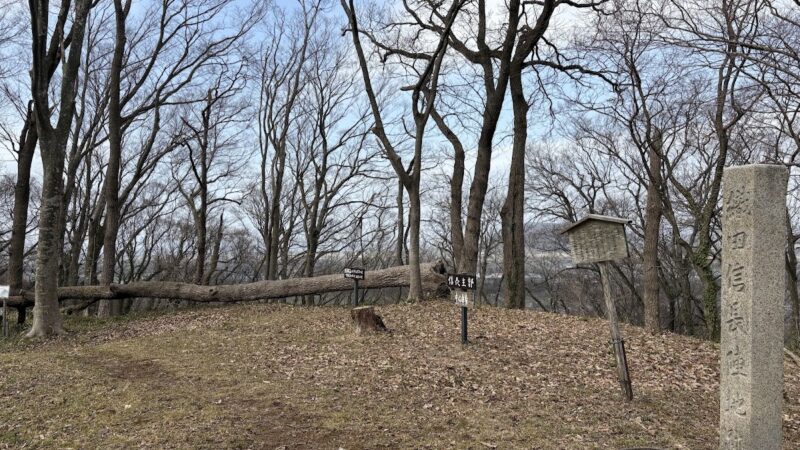
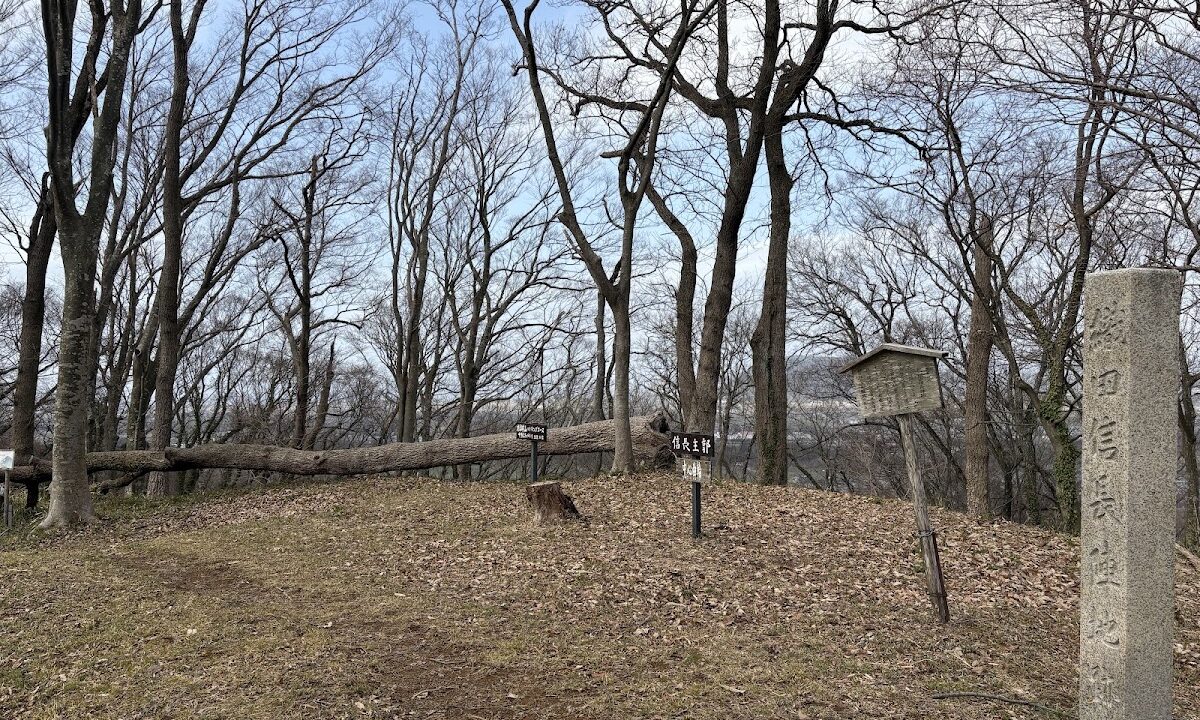
Central Highest Point: This was where Oda Nobunaga’s own headquarters were located. By establishing the headquarters at the highest point, overall command and control were facilitated, and the position allowed for direct monitoring of the movements at Odani Castle.
Northernmost Camp: This is believed to be the site of Hashiba Hideyoshi’s (Kinoshita Hideyoshi, later Toyotomi Hideyoshi) camp. Hideyoshi later achieved great success in the capture of Odani Castle and became the ruler of this area.
Shibata Katsuie’s Camp and Frontline Command
At Toragozenyama Castle, Shibata Katsuie, a particularly brave warrior among the Oda retainers, commanded the front lines. As a senior retainer of Nobunaga, Katsuie was responsible for direct military pressure on Odani Castle and played a central role in the daily battles.
Katsuie’s camp was located on the front lines towards Odani Castle and is thought to have served as a base for skirmishes with the Asai forces and reconnaissance activities.
Defensive Design Utilizing Natural Terrain
Toragozenyama Castle’s design maximized the use of its steep terrain. The entire mountain was covered in forest, and the surrounding steep slopes formed a natural fortress, allowing for effective defense even with a small force.
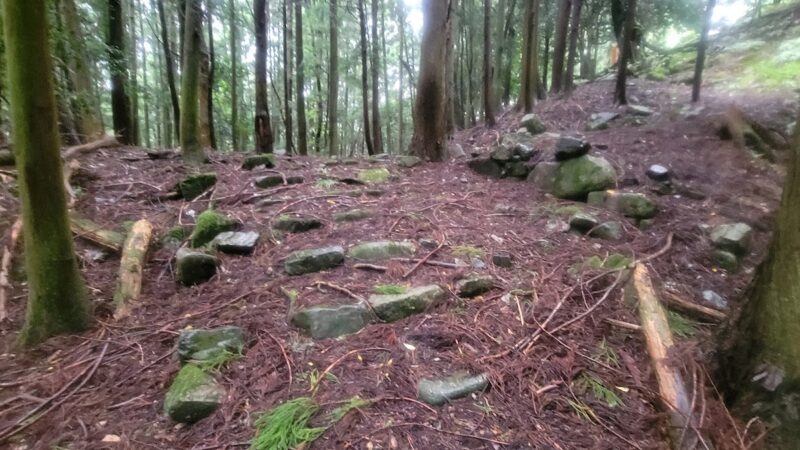
Defensive structures such as earthworks and trenches were built along the ridge, providing a structure capable of responding to any counterattacks from the Asai forces. Some of these remains can still be seen today.
The Role of Toragozenyama Castle in the Siege of Odani Castle
A Base for a Continuous Siege
The construction of Toragozenyama Castle enabled the Oda army to exert continuous pressure on Odani Castle. All the functions necessary for a long-term siege, such as securing supply lines, troop rotations, and intelligence gathering, were concentrated in this castle.
Records show that Nobunaga himself stayed at Toragozenyama Castle several times and directly commanded the forces. Having the supreme commander positioned close to the front lines allowed for rapid decision-making and flexible tactical changes.
As a Tool of Psychological Warfare
Toragozenyama Castle held significance beyond mere military presence. Its location, just 500 meters from Odani Castle, meant that the Oda army’s movements were constantly visible from within the castle, creating a powerful psychological pressure.
The daily smoke rising from Toragozenyama, the nighttime bonfires, and the sound of war drums undoubtedly impressed upon the Asai soldiers besieged in Odani Castle the strength of the Oda army and the continuity of the siege.
The Path to the Fall of Odani Castle
In August of Tensho 1 (1573), Odani Castle finally fell. The Asai clan was annihilated after approximately one year of siege centered at Toragozenyama Castle, followed by a final all-out attack. Asai Nagamasa committed suicide, and the Asai clan disappeared from the stage of history as a Sengoku daimyo.
Toragozenyama Castle occupies an important position in Sengoku history as a strategic base that played a decisive role in the capture of Odani Castle.
Toragozenyama Castle After the Fall of Odani Castle
Rapid Abandonment
Once Odani Castle fell, Toragozenyama Castle’s role came to an end. According to historical records, the castle was immediately demolished. This was because, as a temporary encampment, it did not need to function as a permanent administrative center.
In Nobunaga’s strategy, Toragozenyama Castle was merely a temporary facility for the conquest of Odani Castle, and there was no reason to maintain it after achieving that objective. Rather, it is thought that it was intentionally demolished to eliminate the possibility of it being used by enemy forces in the future.
Towards the Construction of Nagahama Castle by Hashiba Hideyoshi
For his achievements in the conquest of Odani Castle, Hashiba Hideyoshi was granted the former territory of the Asai clan. Hideyoshi abandoned Odani Castle and decided to build a new castle on a plain more suitable location for governance. That was Nagahama Castle.
Hideyoshi renamed this area, then called “Imahama,” to “Nagahama,” taking a character from Nobunaga’s name. This place name continues to this day, reflecting the relationship between Hideyoshi and Nobunaga.
The role of Toragozenyama Castle was taken over by Nagahama Castle, which functioned as a new administrative center for the region.
Highlights and Remains of Toragozenyama Castle
Existing Remains
Many traces of a Sengoku period fort remain on Toragozenyama. The main highlights are as follows:
Kuruwa (Enclosure) Remains: The flat areas along the ridge are the remains of former kuruwa (flat areas where soldiers were stationed or weapons were stored). Multiple kuruwa, ranging in size from large to small, can be identified.
Earthworks: Partial remains of earthworks, built for defense, are still present. Although their height is low, they allow us to imagine the defensive line of the time.
Moat: Several moats dug across the ridge can be seen. These served to prevent enemy intrusion and also demarcate various encampments.
Stunning Views
The view from the summit of Toragozenyama is breathtaking. To the east, you can see the majestic figure of Mount Ibuki, and to the west, the vast expanse of Lake Biwa. And above all, to the north, you can see Mount Odani, where the ruins of Odani Castle are located, up close.
This view speaks volumes about the strategic value of Toragozenyama Castle. Standing here, you can truly understand why Oda Nobunaga chose this location. On a clear day, you can see the surrounding mountains and the northern part of Lake Biwa, reliving the view seen by the warlords of the Sengoku period.
Positional Relationship with Odani Castle
The greatest highlight of Toragozenyama Castle is its positional relationship with Odani Castle. The distance of just 500 meters feels surprisingly close when you’re actually there. The relationship between the two castles, facing each other across a plain, conveys the tension of that time.
The view towards Odani Castle is extremely clear, making it an ideal location for monitoring movements within the castle. This geographical condition was a crucial factor in the success of Nobunaga’s strategy.
Access and Visiting Guide
Location
Address: Nakano-cho, Nagahama City, Shiga Prefecture / Yamawaki, Kohoku-cho
Access by Car
- Approximately 15 minutes from the Nagahama IC on the Hokuriku Expressway
- There are signs along National Route 365
- Parking is available near the trailhead (limited spaces)
Access by Public Transportation
- Approximately 30 minutes on foot from Kawage Station on the JR Hokuriku Main Line to the trailhead
- Approximately 10 minutes by taxi
- Renting a car from Nagahama Station is also convenient
About Hiking
Hiking Mt. Toragozen is relatively easy, but please note the following:
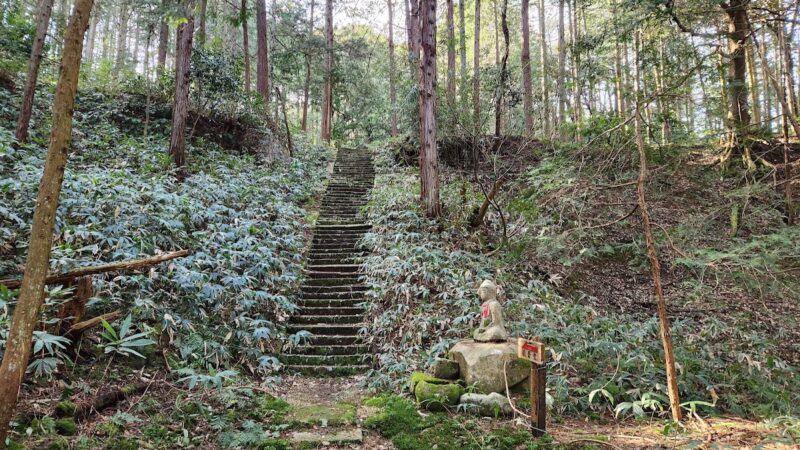
Estimated Time: Approximately 30-40 minutes from the trailhead to the summit
Difficulty: Suitable for beginners, but wearing hiking boots or trekking shoes is recommended
Clothing: Wear comfortable clothing, bring a hat and drinking water
Season: Spring to autumn is the best season. During winter, be careful of snow and ice.
Important Notes: Please be careful not to damage the ruins. Always take your trash with you.
Visiting Points
When visiting Toragozenyama Castle, we recommend the following order:
- Check the information board at the trailhead: Understand the overall layout and points of interest.
- Proceed northward from the southern encampment sites: Visit the encampments of Hori Hidemasa, Nobunaga, and Hideyoshi in order.
- Enjoy the view from the highest point: Confirm the relative position to Odani Castle.
- Observe the ruins: Carefully observe the baileys, earthworks, moats, etc.
- Visit surrounding historical sites after descending: Visit Odani Castle, Yokoyama Castle, etc.
Related Historical Sites in the Surrounding Area
Odani Castle Ruins
If you visit Toragozenyama Castle, be sure to also visit the Odani Castle Ruins. It was the residence of three generations of the Asai clan and is a famous castle counted as one of Japan’s five great mountain castles. Experiencing the relative locations of Toragozenyama Castle firsthand provides a more comprehensive understanding of the battles fought at the time.
Distance: Approximately 2km from Toragozenyama Castle
Highlights: Extensive group of remains including the main keep, the great hall, and the Akaoya residence.
Yokoyama Castle Ruins
This castle was Nobunaga’s first front-line base after the Battle of Anegawa. It played an important role as a base for the Oda army before the construction of Toragozenyama Castle.
Distance: Approximately 4km from Toragozenyama Castle
Features: Located on a relatively flat hill, easily accessible.
Nagahama Castle History Museum
This museum stands on the site of Nagahama Castle, built by Hashiba Hideyoshi. It is an ideal facility for learning about the Sengoku period history of this region, and features extensive exhibits on Toragozenyama Castle and Odani Castle.
Address: 10-10 Koen-cho, Nagahama City, Shiga Prefecture
Opening Hours: 9:00 AM – 5:00 PM (Last entry at 4:30 PM)
Closed: New Year’s Holidays
Anegawa Battlefield
This is the site of the Battle of Anegawa in 1570. The outcome of this battle led to the construction of Toragozenyama Castle.
Distance: Approximately 5 km from Toragozenyama Castle
Highlights: Historical sites related to the battle, such as the battlefield monument, the blood-filled field, and the burial mound.
Historical Knowledge to Know Before Visiting Toragozenyama Castle
The Relationship Between Oda Nobunaga and Asai Nagamasa
To deeply understand the history of Toragozenyama Castle, it is necessary to know the relationship between Oda Nobunaga and Asai Nagamasa.
Initially, the two were allies. Nobunaga had married his sister, Oichi (Oichi no Kata), to Nagamasa, forging a strong alliance. However, when Nobunaga attacked the Asakura clan of Echizen, the Asai clan, who had long been friendly with the Asakura, betrayed Nobunaga and sided with the Asakura.
Enraged by this betrayal, Nobunaga resolved to completely destroy the Asai clan. The construction of Toragozenyama Castle was a manifestation of Nobunaga’s strong will.
The Genki and Tensho Eras
The Genki era, when Toragozenyama Castle was built, was the most difficult period for Oda Nobunaga. In addition to battles with the Asai and Asakura clans, he was surrounded on all sides by enemies such as Ishiyama Honganji, Enryakuji on Mount Hiei, and Takeda Shingen.
Under such circumstances, stabilizing Omi Province was critically important to Nobunaga. Toragozenyama Castle is a symbolic castle that demonstrates Nobunaga’s tenacity and strategic vision during this difficult period. ### The Rise of Hashiba Hideyoshi
Her achievements at Toragozenyama Castle were a crucial step in the rise of Hashiba Hideyoshi (then known as Kinoshita Hideyoshi). His success in the siege of Odani Castle made him the lord of a province and castle for the first time, marking the beginning of his path to becoming the unifier of Japan.
Toragozenyama Castle holds historical significance as one of the important stages in Hideyoshi’s rise to power.
Historical Significance of Toragozenyama Castle
Importance in the Study of Sengoku Period Camp Castles
Toragozenyama Castle occupies an important position in castle research as a typical example of a Sengoku period camp castle (a castle temporarily built for siege warfare).
It retains many characteristics unique to camp castles, such as a design philosophy different from permanent residences, construction techniques for a short period, and a layout that integrates the encampments of multiple warlords. It is a valuable historical site for studying Sengoku period castle construction techniques and tactics.
A Legacy Demonstrating Oda Nobunaga’s Strategic Thought
The selection of the construction site for Toragozenyama Castle, its three subsequent reinforcements, and its proximity to Odani Castle all reflect Nobunaga’s meticulous strategic thinking.
This castle, built based on a comprehensive strategy encompassing not only military attack but also psychological pressure, continuous siege, and securing supply lines, is an important legacy that conveys Nobunaga’s military genius.
Its Place in Local History
Toragozenyama Castle is an indispensable part of the Sengoku period history of Shiga Prefecture, particularly around Nagahama City. Along with Odani Castle, Yokoyama Castle, and Nagahama Castle, it is a crucial piece for a comprehensive understanding of the Sengoku period history of this region.
Toragozenyama Castle also plays an important role in local history education and as a tourist resource.
Best Season and Ways to Enjoy Toragozenyama Castle
Spring (March-May)
The season of fresh greenery is ideal for hiking. From the foot of the mountain to the summit, various spring flowers bloom, and the mild weather makes for a pleasant stroll. During cherry blossom season, the surrounding scenery is beautiful, allowing you to enjoy both historical exploration and nature appreciation at the same time.
Summer (June-August)
While heat precautions are necessary during the summer, the mountain paths covered by trees are relatively cool, making early morning or evening visits recommended. The cool breeze from Lake Biwa is pleasant, and the view from the summit is stunning against the summer blue sky.
Autumn (September-November)
This is the most recommended season. The beauty of the autumn foliage and the clear air provide excellent panoramic views. Mount Ibuki is clearly visible, and its position relative to Odani Castle becomes clearer. It is an ideal season for historical exploration.
Winter (December-February)
Due to the possibility of snow and ice, winter hiking is recommended for experienced climbers. However, the castle ruins amidst the snowy landscape have a special charm, and the views in the crisp winter air are magnificent. Sufficient equipment and preparation are necessary.
Link to Historical Events
Nagahama City hosts various historical events throughout the year. During events such as the “Nagahama Sengoku Taiga Hometown Expo,” special guided tours and lectures are sometimes held, so it is recommended to check the information in advance.
Summary
Toragozenyama Castle is a valuable historical site from the Sengoku period remaining in Nagahama City, Shiga Prefecture. This encampment, built by Oda Nobunaga to attack Asai Nagamasa’s Odani Castle, played a crucial role for about a year as a strategic base for monitoring and surrounding Odani Castle from a distance of only 500 meters.
With the encampments of Hori Hidemasa, Oda Nobunaga, and Hashiba Hideyoshi positioned on the ridge running north and south, and Shibata Katsuie commanding the front lines, this castle was the stage for a siege battle that brought together the full strength of the Oda clan’s retainers. From its construction in 1572 to its fall in 1573, Toragozenyama Castle played a crucial role in key moments of the Sengoku period, making it of immense historical significance.
Even today, remnants such as baileys, earthworks, and moats remain on the mountaintop, offering a magnificent panoramic view of the Odani Castle ruins, Mount Ibuki, and Lake Biwa. As a valuable place to relive the scenery seen by Sengoku-era warlords, it’s a popular historical site for history buffs and castle enthusiasts.
Visiting Toragozenyama Castle along with other nearby historical sites such as Odani Castle, Yokoyama Castle, and Nagahama Castle will provide a deeper and more comprehensive understanding of the Sengoku history of this region. When visiting Shiga Prefecture, be sure to visit Toragozenyama Castle and experience the strategic genius of Oda Nobunaga and the spirit of the Sengoku period.