Urasoe Gusuku (Okinawa Prefecture) Complete Guide | A Thorough Explanation of the History and Highlights of the Chuzan Kingdom’s Royal Castle Ruins
What is Urasoe Gusuku?
Urasoe Gusuku (Urasoe Castle) is the site of the royal castle of the Chuzan Kingdom, which existed before the establishment of the Ryukyu Kingdom, located in Nakama, Urasoe City, Okinawa Prefecture. Before the capital was moved to Shuri Castle, it functioned as the political and cultural center of Ryukyu for approximately 220 years, from the 12th to the early 15th century. It was designated a national historic site on August 11, 1989, and is now maintained as Urasoe Grand Park.
Built on a hilly area of Ryukyu limestone, Urasoe Gusuku boasts a scale of approximately 380 meters east-west and 60-80 meters north-south. Located on a plateau approximately 140 meters above sea level, it was a fortress with a geographical advantage overlooking the surrounding area. The eastern side is called “Old Gusuku,” and the western side is called “New Gusuku (Mi-Gusuku),” showing how the castle expanded over time.
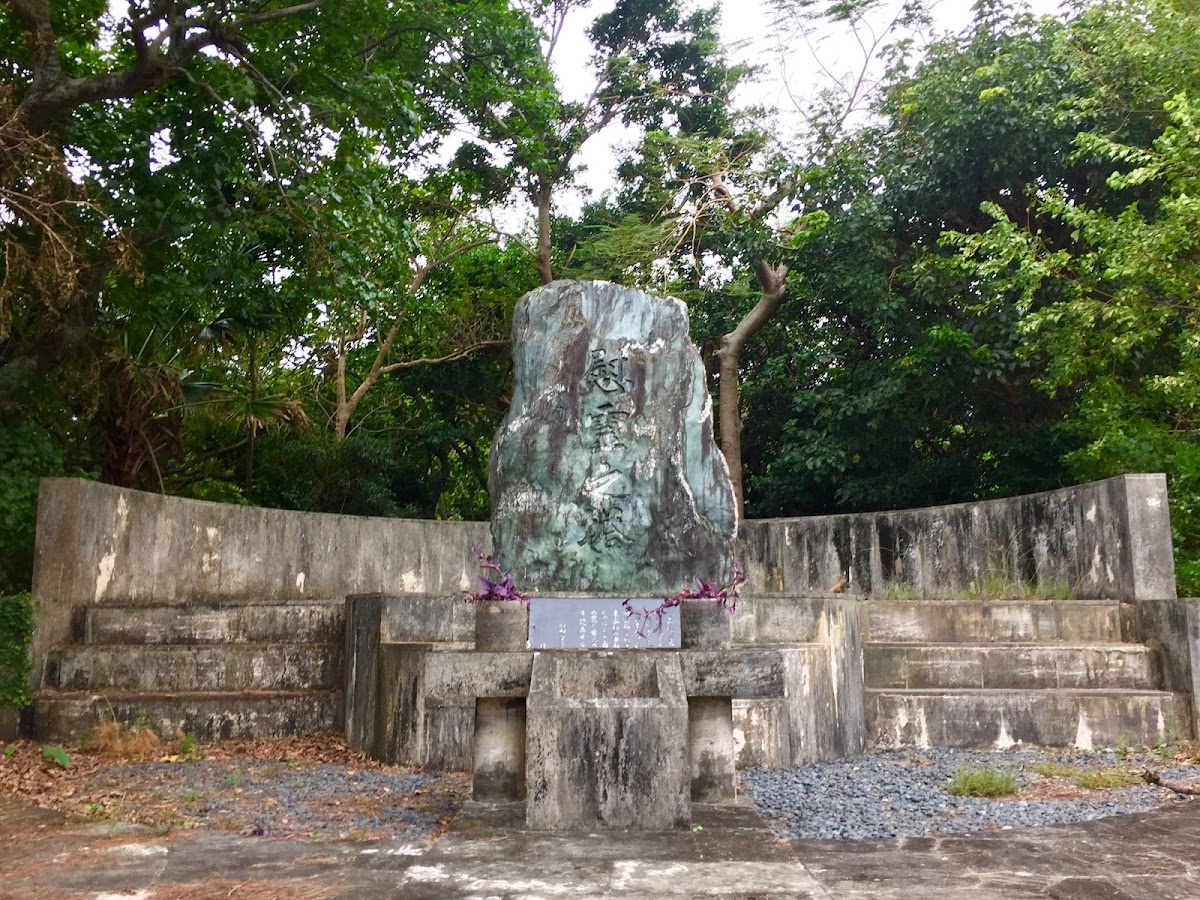
During the Battle of Okinawa in World War II, it was a fierce battleground, and much of the castle was destroyed. However, remnants such as stone walls and building paving stones remain, preserving it as a valuable historical site that tells the story of the Ryukyu Kingdom’s history before its establishment.
History of Urasoe Gusuku
Shuten Dynasty Era (12th-13th Centuries)
The history of Urasoe Gusuku dates back to the era of the Shuten Dynasty. According to Ryukyuan history books such as the “Chuzan Seikan,” Shuten is said to be a descendant of Minamoto no Tametomo (though this is largely legendary), and is believed to have ruled Ryukyu from around 1187. The Shuten Dynasty lasted for three generations, and during this period, Urasoe was established as the base of Chuzan.
While Urasoe Gusuku during the Shuten Dynasty is believed to have been a relatively small fortress, it had already begun to function as a political center. Although many details of the remains from this period are unclear due to damage during the Battle of Okinawa, archaeological investigations have uncovered traces of life at that time.
Eiso Dynasty (13th-14th Centuries)
Around 1260, Eiso ascended to the throne, marking the beginning of the Eiso Dynasty. Eiso significantly expanded Urasoe Gusuku, strengthening its function as a royal castle. The Eiso Dynasty lasted for five generations, and Urasoe Gusuku reached its peak during this period.
During the reign of King Eiso, the royal tomb, “Urasoe Yōdore,” was constructed on the hillside below the northern cliff of the gusuku. A Buddhist temple, Gokuraku-ji, was also built, giving Urasoe a religious character as well. During the Eiso Dynasty, Urasoe flourished greatly as the political, economic, and cultural center of the Chūzan Kingdom.
The successive kings of the Eiso dynasty focused on promoting agriculture and trade, solidifying the foundation of the Chuzan Kingdom. During this period, Urasoe Gusuku evolved from a mere military base into a facility befitting a royal palace.
Satto Dynasty (Late 14th Century)
Around 1350, Satto ascended to the throne, establishing the Satto dynasty. Satto made Urasoe Gusuku his residence and actively promoted tributary trade with China (Ming Dynasty). In 1372, he sent the first tribute envoy to the Ming Dynasty, establishing formal diplomatic relations between Ryukyu and China.
During the Satto dynasty, Urasoe Gusuku also functioned as a hub for international trade. Trade with China and Southeast Asia brought valuable items such as ceramics and metal products to Urasoe, leading to significant cultural development. Archaeological excavations have unearthed numerous ceramics from China and Southeast Asia, illustrating the state of international exchange at the time.
The Satto dynasty lasted for three generations, but was overthrown in the early 15th century by the expanding power of Sho Shisho and his son, Sho Hashi.
Unification of the Three Kingdoms and the Decline of Urasoe Gusuku
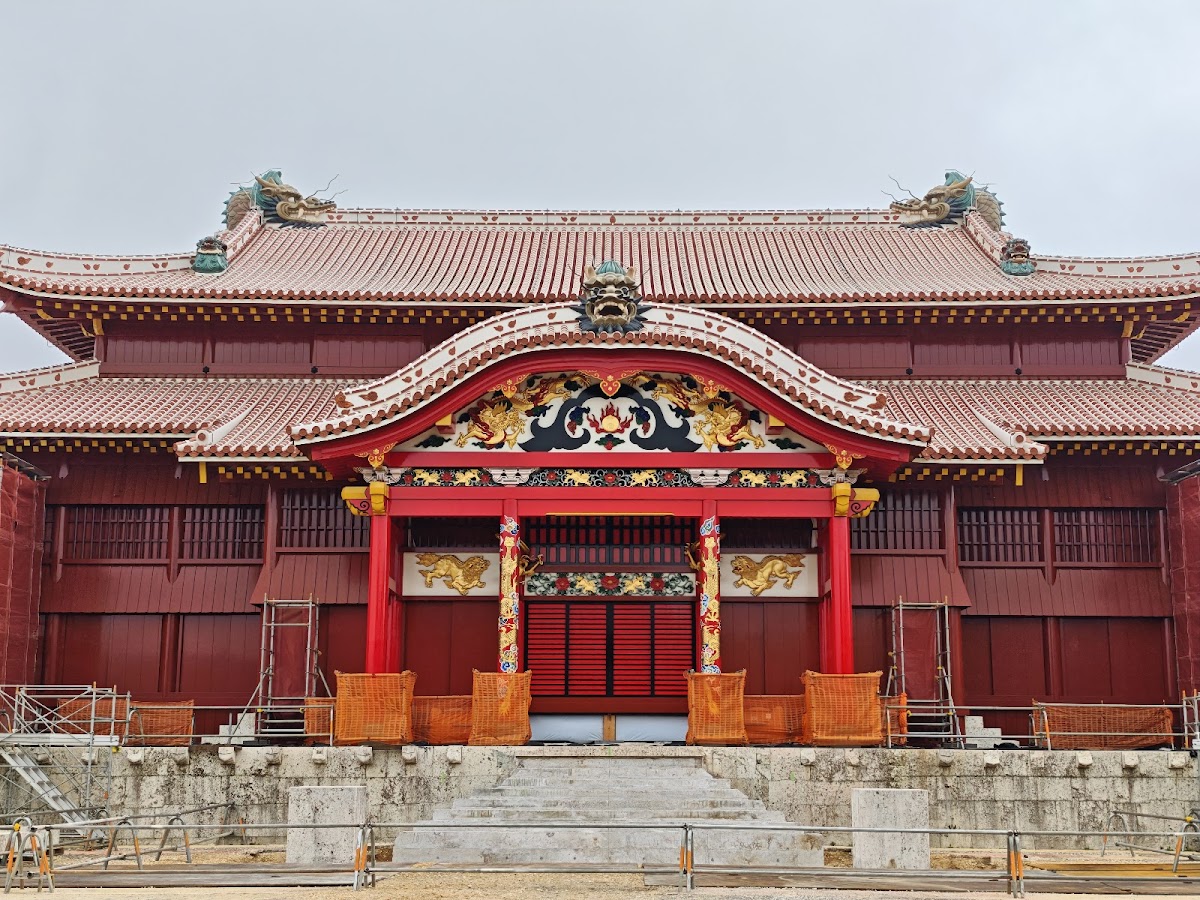
In 1406, Sho Shisho ascended to the throne as King of Chuzan, and his son, Sho Hashi, seized de facto power. In 1416, he conquered Hokuzan, and in 1429, Nanzan, achieving the unification of the three kingdoms of Ryukyu. During this process, Sho Hashi moved the capital from Urasoe to Shuri and developed Shuri Castle as the new royal castle.
As a result, Urasoe Gusuku ceased to function as a royal castle and gradually fell into ruin. However, Urasoe Yōdore, the mausoleum of King Eiso, continued to be respected as a sacred site of the royal family and remained an important location in the later Ryukyu Kingdom.
From the Early Modern Period to the Present
After the relocation of the capital to Shuri Castle, Urasoe Gusuku (castle) withdrew from the historical stage, but it continued to be cherished by the local people as a legacy of their ancestors. Even during the Edo period in the Ryukyu Kingdom, Urasoe was recognized as a historical sacred site, and pilgrimages to Yōdore were common.
During the Battle of Okinawa in 1945, the area around Urasoe Gusuku became the site of fierce fighting, and most of the castle was destroyed by intense battles between the Japanese and American forces. Post-war investigations confirmed the remains of the castle, and it was designated a national historic site in 1989. Currently, it is maintained as Urasoe Grand Park, serving as a place of relaxation for citizens and preserved as an important historical site for learning about Ryukyu history.
Structure and Characteristics of Urasoe Gusuku
Gusuku’s Arrangement and Scale
Urasoe Gusuku is built on the highest point of the Ryukyu limestone hills that run east-west through Urasoe City. It has a long, narrow shape, approximately 380 meters east-west and 60-80 meters north-south, and is broadly divided into the “Old Gusuku” on the east side and the “New Gusuku (Mi-Gusuku)” on the west side.
The Old Gusuku is the initial castle section, believed to have been built from the Shuten dynasty to the early Eiso dynasty. The New Gusuku is the expanded section from the late Eiso dynasty to the Satto dynasty, where larger facilities were constructed. The existence of these two areas indicates that Urasoe Gusuku was gradually expanded over time.
Stone Walls and Defensive Structures
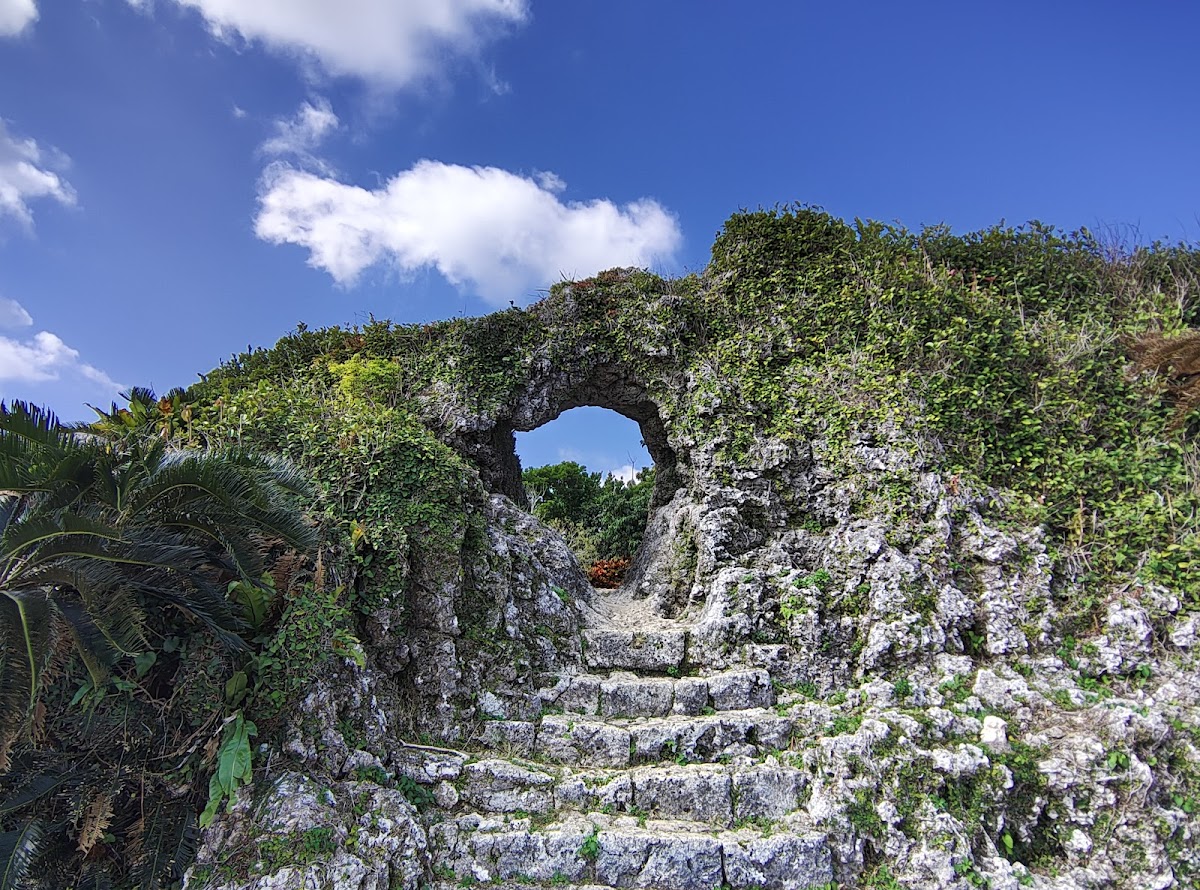
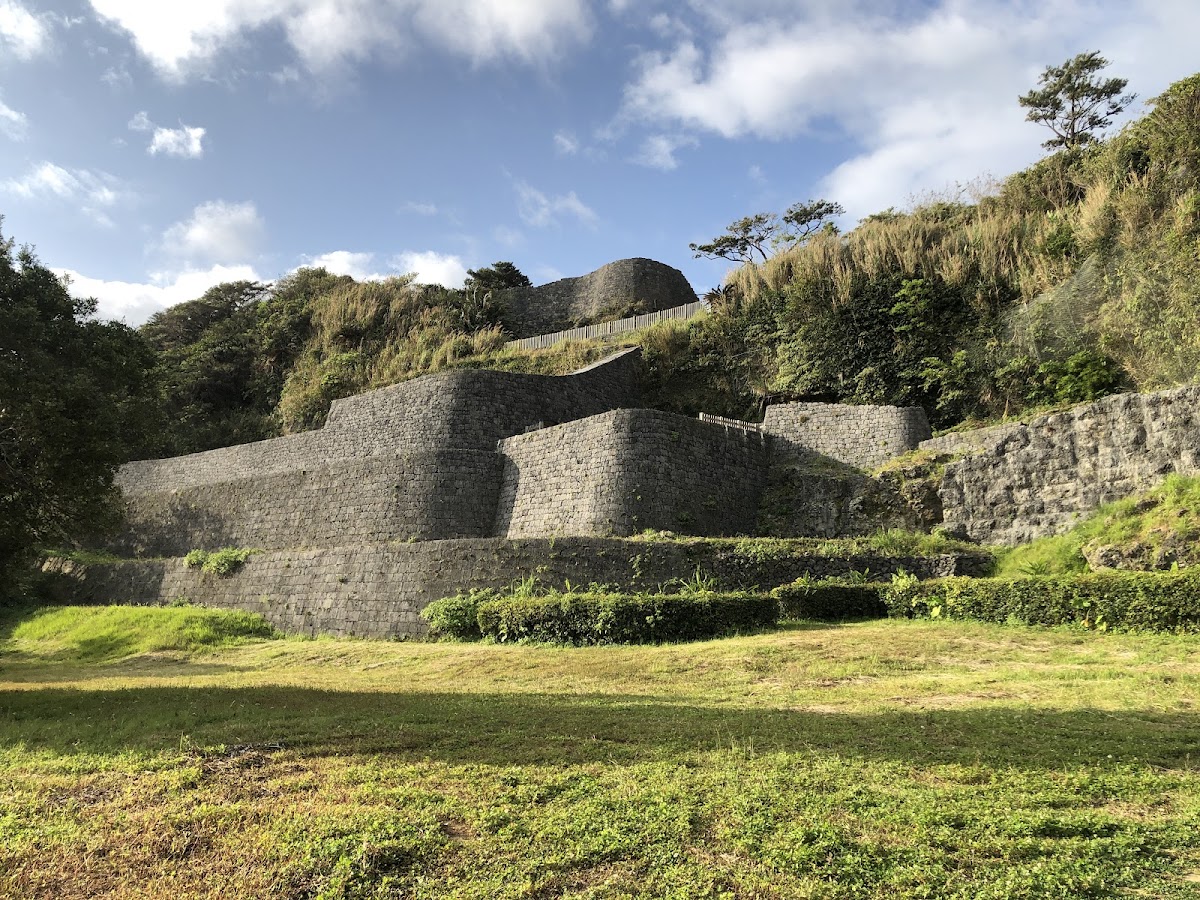
The stone walls of Urasoe Gusuku are built using the Nozurazumi (rough-stone masonry) technique with Ryukyu limestone. Although not entirely intact due to destruction during the Battle of Okinawa, the existing stone walls reveal the advanced stonework techniques of the time.
The height of the stone walls varied depending on the location, but it is estimated that the highest parts reached 5-6 meters. The structure cleverly utilized the natural terrain, making it difficult to attack. The cliff on the north side, in particular, was steep and functioned as a natural defensive wall.
Building Remains and Paving Stones
Excavation has revealed that multiple buildings existed within the gusuku (castle). Foundation stones and paving stones have been discovered, confirming the presence of buildings that functioned as a royal palace.
The paving stones are made of flattened Ryukyu limestone and were laid in the royal living quarters and ceremonial areas. These remains indicate that Urasoe Gusuku was not merely a military facility, but a center of politics and rituals.
Urasoe Yodore (Royal Mausoleum)
Located on the northern slope of the cliff face of Urasoe Gusuku, there is a royal mausoleum called “Urasoe Yodore.” Known as the burial place of King Eiso and King Sho Nei (Second Sho Dynasty), it is a stone chamber tomb excavated from Ryukyu limestone.
Urasoe Yodore is considered the oldest gable-roofed tomb in Okinawa and is an important historical site for understanding the development of Ryukyuan burial customs. A stone sarcophagus is enshrined inside, adorned with elaborate carvings. Part of it was destroyed during the Battle of Okinawa, but it was restored after the war and is now open to visitors.
Highlights of Urasoe Gusuku
Site of the Main Hall
On the western side of Shin Gusuku, there is a site believed to have been the main hall, the king’s residence. While the building no longer exists, the layout can be imagined from the foundation stones and paving stones. From the site of the main hall, you can enjoy a panoramic view of Urasoe city, giving you a glimpse into how the king of that time surveyed his territory from this location.
Stone Wall Remains
Despite the damage sustained during the Battle of Okinawa, the stone walls of Urasoe Gusuku retain their original form in various places. In particular, the Old Gusuku area on the east side has relatively well-preserved stone walls, allowing for close observation of Ryukyu-era stonework techniques.
These are valuable remains that allow you to learn about the advanced civil engineering techniques of the time, including the methods of stacking the stones, the selection of stones, and the ingenuity of the drainage system.
Urasoe Yodore (Open to Visitors)
If you visit Urasoe Gusuku, you should definitely see Urasoe Yodore. The tombs of King Eiso and King Sho Nei are important historical sites where you can experience the history and culture of Ryukyu. The elaborate carvings inside the stone chamber and the architectural style unique to gabled tombs demonstrate the high level of aesthetic sense and technical skill of the Ryukyu Kingdom.
View from the Observation Deck
Urasoe Gusuku is located on a hill approximately 140 meters above sea level. From the observation deck, you can see not only the city of Urasoe, but also, on a clear day, the East China Sea and the Kerama Islands. This excellent location is clearly one of the reasons it was chosen as the royal castle of the Chuzan Kingdom.
Gokuraku-ji Temple Ruins
The ruins of Gokuraku-ji Temple, believed to have been built by King Eiso, also remain within Urasoe Gusuku. While only the remains exist today, it functioned as one of the centers of Buddhism in Ryukyu at the time. The temple’s foundation stones and stone steps remain, allowing us to understand the religious aspect of Urasoe Gusuku.
Excavation and Research of Urasoe Gusuku
Post-War Research
After its destruction during the Battle of Okinawa, serious academic research on Urasoe Gusuku began in the 1960s. The Urasoe City Board of Education led multiple excavation surveys, gradually revealing the structure and historical changes of the gusuku.
Excavations have uncovered building foundations, paving stones, and the base of stone walls, scientifically clarifying the layout and scale of the gusuku (castle). Furthermore, the excavated artifacts, such as ceramics and metal objects, have revealed aspects of the lifestyle and trade practices of the time.
Excavated Artifacts
A diverse range of ceramics have been unearthed from Urasoe Gusuku, including Chinese celadon and white porcelain, Southeast Asian pottery, and domestically produced earthenware. These artifacts are important evidence that Urasoe Gusuku was a center of international trade.
In particular, the abundance and quality of Chinese ceramics from the 14th and 15th centuries indicate active tributary trade with the Ming Dynasty. The discovery of metal objects and ornaments also suggests the high status of the castle as a royal residence.
Restoration and Development Project
Following its designation as a national historic site, Urasoe City is proceeding with preservation and development projects for Urasoe Gusuku. The stone walls have been restored, walking paths have been improved, and explanatory signs have been installed, creating an environment where visitors can easily learn about the history.
Regarding Urasoe Yōdore, post-war restoration work has restored it to its original appearance, and it is now possible to tour the interior. Plans are underway for continued preservation and utilization efforts.
Access and Visiting Information for Urasoe Gusuku
Location
2-chome, Nakama, Urasoe City, Okinawa Prefecture 901-2103 (within Urasoe Grand Park)
Access Methods
Access by Car
- Approximately 30 minutes by car from Naha Airport
- Approximately 15 minutes from the Nishihara IC on the Okinawa Expressway
- Free parking available at Urasoe Grand Park (multiple locations)
Access by Public Transportation
- Approximately 15 minutes by bus from Furujima Station on the Yui Rail, get off at Ohira bus stop, then approximately 15 minutes on foot
- Approximately 30 minutes by local bus (Route 88, 98, etc.) from Naha Bus Terminal, get off at Ohira bus stop
Visiting Information
- Visiting Hours: Open all day (as Urasoe Grand Park)
- Admission Fee: Free
- Visiting Urasoe Yodore: Advance reservation is recommended (inquire with the Urasoe City Cultural Properties Division)
- Estimated Time Required: Approximately 1-2 hours
Points to Note During Your Visit
- The stone walls and ruins are valuable cultural assets. Please be careful not to climb on them or damage them.
- The sun is strong in summer, so please bring a hat and drinking water.
- We recommend wearing comfortable shoes.
- Be careful as the ground can be slippery in rainy weather.
Nearby Tourist Attractions
Urasoe City Museum of Art
Located about 10 minutes by car from Urasoe Gusuku, the Urasoe City Museum of Art exhibits art and crafts, primarily Ryukyu lacquerware. Urasoe is known as a production center for Ryukyu lacquerware, and you can learn about its history and techniques.
Urasoe Tedako Hall (Citizens’ Hall)
A cultural facility in Urasoe City, where concerts and plays are held. Ryukyu performing arts performances are also held regularly, allowing you to experience Okinawa’s traditional culture.
Minatogawa Stateside Town
A residential area in the Minatogawa district of Urasoe City that retains the atmosphere of the American colonial era. Currently, it’s a popular area with stylish cafes and shops. It offers a glimpse into post-war Okinawan culture, a stark contrast to Urasoe Gusuku.
Cultural Value of Urasoe Gusuku
Importance in Ryukyu History
Urasoe Gusuku occupies an extremely important position in Ryukyu history as the political center of the Chuzan Kingdom before the establishment of the Ryukyu Kingdom. As the royal castle before Shuri Castle, its role as the residence of 10 kings of three dynasties for approximately 220 years is essential for understanding the continuity of Ryukyu history.
The political system, diplomatic relations, and cultural foundation established during the Urasoe Gusuku era led to the later development of the Ryukyu Kingdom. In particular, the tributary trade with the Ming Dynasty, which began during the reign of the Satto Dynasty, formed the basis of the Ryukyu Kingdom’s prosperity.
Archaeological Value
Urasoe Gusuku provides valuable archaeological materials for understanding the social structure, architectural techniques, and lifestyle of Ryukyu from the 12th to the 15th centuries. The excavated ceramics and metal artifacts provide crucial evidence revealing the trade routes and cultural exchanges of the time.
Furthermore, the remains of stone walls and buildings are indispensable resources for studying the development of Ryukyu castle architecture. By comparing them with later castles such as Shuri Castle, we can trace the evolution of Ryukyu’s architectural techniques.
Regional Identity
For the citizens of Urasoe, Urasoe Gusuku is a source of regional pride and identity. Its history as the center of Ryukyu is a vital element in fostering local pride among its residents.
In Urasoe City, historical education and cultural events utilizing the gusuku are actively conducted, and efforts to pass on history to future generations continue. The development of Urasoe Grand Park has also made it a place of relaxation for citizens, creating a space where history and modern life blend seamlessly.
Summary
Urasoe Gusuku is a historically extremely important site, having functioned as the royal castle of the Chuzan Kingdom for approximately 220 years, serving as the center of Ryukyu before Shuri Castle. As the residence of ten kings of the three royal dynasties—the Shuten, Eiso, and Satto dynasties—Urasoe Gusuku played a significant role in the development of Ryukyu’s politics, economy, and culture.
Although it suffered extensive damage during the Battle of Okinawa, post-war excavations and preservation efforts have ensured that it is now protected as a nationally designated historical site. The remains, including stone walls and building foundations, the royal tomb known as Urasoe Yodore, and the numerous unearthed artifacts are invaluable cultural assets that tell the story of the Ryukyu Kingdom’s history before its establishment.
Located on a hill overlooking Urasoe city, Urasoe Gusuku’s geographical advantage explains why the kings of that time chose it as their base for governing Ryukyu. When visiting Okinawa, be sure to visit Urasoe Gusuku, in addition to Shuri Castle, to learn about its pre-history. It will be a valuable experience that allows you to appreciate the depth of Ryukyu’s history and the wisdom and technology of its ancestors.