Complete Guide to Uchimine Gusuku (Haebaru Town, Okinawa Prefecture): The Ruins of an Anji Castle Built in a Blacksmith’s Village
What is Uchimine Gusuku?
Uchimine Gusuku is a Ryukyu Kingdom-era gusuku (castle ruin) located in Kanegusuku, Haebaru Town, Shimajiri District, Okinawa Prefecture. Built on the top of a small hill near the JA Okinawa Haebaru Branch, this gusuku is said to have been built by the Uchimine Anji during the reign of King Satto.
Although no clear remains such as stone walls remain today, the remains of a settlement centered around the gusuku spread throughout the surrounding area, making it an important site for understanding the regional society of the ancient Ryukyu Kingdom. Locally known as “Uchinmi Gusuku,” it is preserved as a valuable cultural heritage that conveys the history of the region.
History and Legends of Uchimine Gusuku
Legend of the Uchimine Anji’s Migration
An interesting legend remains regarding the construction of Uchimine Gusuku. During the reign of King Satto (late 14th century), it is believed that the Uchimine Anji (lord) migrated from Shuri to this area with his family and built a gusuku (castle) on the hillside.
The Uchimine Anji not only built a castle but is also said to have made significant contributions to the development of this region. He is particularly known for his efforts in introducing blacksmithing techniques and promoting agriculture, contributing to the development of the surrounding area. Thanks to this Anji’s achievements, the Uchimine region flourished as an important production center throughout the Ryukyu Kingdom era.
Origin of the Place Name “Uchinmi”
The place name “Uchimine” holds important meaning that reflects the characteristics of this region. This place name, known locally as “Uchinmi,” is actually believed to originate from a word meaning “blacksmith’s shop.”
This etymology suggests that the Uchimine Anji encouraged blacksmithing techniques and gathered blacksmiths in this area to produce ironware. During the Ryukyu Kingdom era, iron tools were extremely important as agricultural implements and weapons, and regions possessing blacksmithing technology held important economic and military positions.
Haebaru in the Gusuku Period
The period in which Uchimine Gusuku was built corresponds to the “Gusuku Period” in Ryukyu history. From the 12th to the 15th centuries, Anji (local powerful families) held power throughout Ryukyu, and they solidified their rule by building Gusuku in their respective territories.
The Haebaru region was no exception, and a unique regional society was formed centered around Uchimine Gusuku. During this period, each Anji increased agricultural production, engaged in trade, and expanded their power by sometimes fighting with other Anji. Eventually, after the Three Kingdoms period, the Ryukyu Kingdom was unified, and the Uchimine region was incorporated under the kingdom’s rule.
Location and Topographical Characteristics of Uchimine Gusuku
Location and Topography of the Gusuku
Uchimine Gusuku is located near the intersection in Kanegusuku, Haebaru Town, and is built on the top of a hill approximately 80 meters above sea level. This hill rises gently from the surrounding plains, providing excellent defensive and strategic locations for overlooking the surrounding area.
The hilly area where the gusuku was built is now used for residential and agricultural purposes, but it once functioned as the base of operations for the Uchimine Anji (local lord). It is believed that the Anji’s residence and important facilities were located on the flat area at the top.
Surrounding Geographical Environment
The area surrounding the gusuku features typical hilly terrain of southern Okinawa Island. This terrain is formed from Ryukyu limestone and has long been used as agricultural land with good drainage.
Furthermore, the location of Uchimine Gusuku was strategically important for the distribution of goods and the transmission of information, as it was close to the transportation route from Shuri Castle to the southern region. This geographical advantage is thought to be one of the reasons why Uchimine Anji chose this location.
Archaeological Sites Surrounding Uchimine Gusuku
Maetama-no-den Site
Several important archaeological sites are scattered around Uchimine Gusuku. One of them is the Maetama-no-den Site. Numerous fragments of pottery and porcelain, which tell the story of life during the Gusuku period, have been discovered at this site, providing important evidence of the extent of the settlement centered around Uchimine Gusuku.
The name “Maetama-no-den” in the site’s name refers to a traditional Ryukyuan place of worship (Utaki), indicating that this area was not merely a residential area but also a sacred site that was an object of worship.
Miyadaira Noro-den Site
The Miyadaira Noro-den Site is an archaeological site related to “Noro,” female priests who presided over religious ceremonies during the Ryukyu Kingdom era. The Noro (female shaman) played a crucial role in conducting rituals in each region and was closely linked to the rule of the Anji (local lord).
The existence of this site indicates that the area around Uchimine Gusuku was not merely a military base, but a regional center where politics, religion, and economy were integrated. The Noro’s residence is thought to have functioned as a regional ritual space and as a religious foundation supporting the authority of the Anji.
Miyadaira Site
The Miyadaira site is one of the settlement sites discovered around Uchimine Gusuku. Excavations have confirmed the remains of dwellings, daily life tools, and food remnants, providing valuable information about the daily lives of people during the Gusuku period.
Of particular note is the discovery of items brought in through trade, such as Chinese porcelain and pottery from Southeast Asia. This is evidence that the Uchimine region was integrated into the Ryukyu Kingdom’s trade network and speaks to the economic prosperity of the region.
Settlement Structure Revealed by the Archaeological Sites
The distribution of these archaeological sites reveals a concentric settlement structure centered around Uchimine Gusuku. It is presumed that a hierarchical spatial configuration existed, with the gusuku (the residence of the Anji) at the center, surrounded by ritual spaces (Noro-denchi), and further outside, by general residential areas (such as the Miyadaira site).
This type of settlement structure is commonly seen in the Ryukyu Gusuku period and reflects the political and social order of the regional society with the Anji at its apex.
Archaeological Value of Uchimine Gusuku
Lifestyle and Culture as Seen from Excavated Artifacts
Various artifacts have been unearthed from the sites surrounding Uchimine Gusuku. Of particular note are the high-quality goods brought in through trade, such as Chinese celadon and white porcelain, and Southeast Asian pottery. These artifacts indicate that the Uchimine Anji held a position that allowed access to the Ryukyu Kingdom’s trade network.
Furthermore, numerous earthenware, stone tools, and iron artifacts used in daily life have been discovered, providing clues to the lifestyle of the people at that time. The discovery of iron artifacts, in particular, is important evidence supporting the existence of blacksmithing technology, which is the origin of the place name.
Importance of Blacksmithing-Related Artifacts
As the place name “Uchinmi” suggests, blacksmithing is believed to have flourished in the Uchinmi region. Indeed, iron slag (impurities produced during iron smelting) and tools used for forging have been discovered at surrounding sites, confirming that ironware production took place in this area.
During the Ryukyu Kingdom era, iron was a valuable resource, and possessing the technology to produce it provided a significant economic advantage. The tradition that the Uchinmi Anji encouraged blacksmithing technology is supported by archaeological evidence.
Position in Ryukyu History Research
Uchinmi Gusuku and its surrounding archaeological sites are important research subjects for understanding the transition period from the Ryukyu Gusuku period to the Ryukyu Kingdom period. Unlike large-scale gusuku castles such as Shuri Castle and Nakagusuku Castle, which are registered as World Heritage Sites, this site is a valuable example for understanding the realities of small to medium-sized gusuku castles in rural areas.
In particular, research on Uchimine Gusuku is indispensable for understanding the foundations of Ryukyuan society, such as how the rule of the Anji (local lord) was rooted in the local community and how economic activities (especially blacksmithing) were linked to political power.
Current Status and Preservation of Uchimine Gusuku
Current Status of Remains
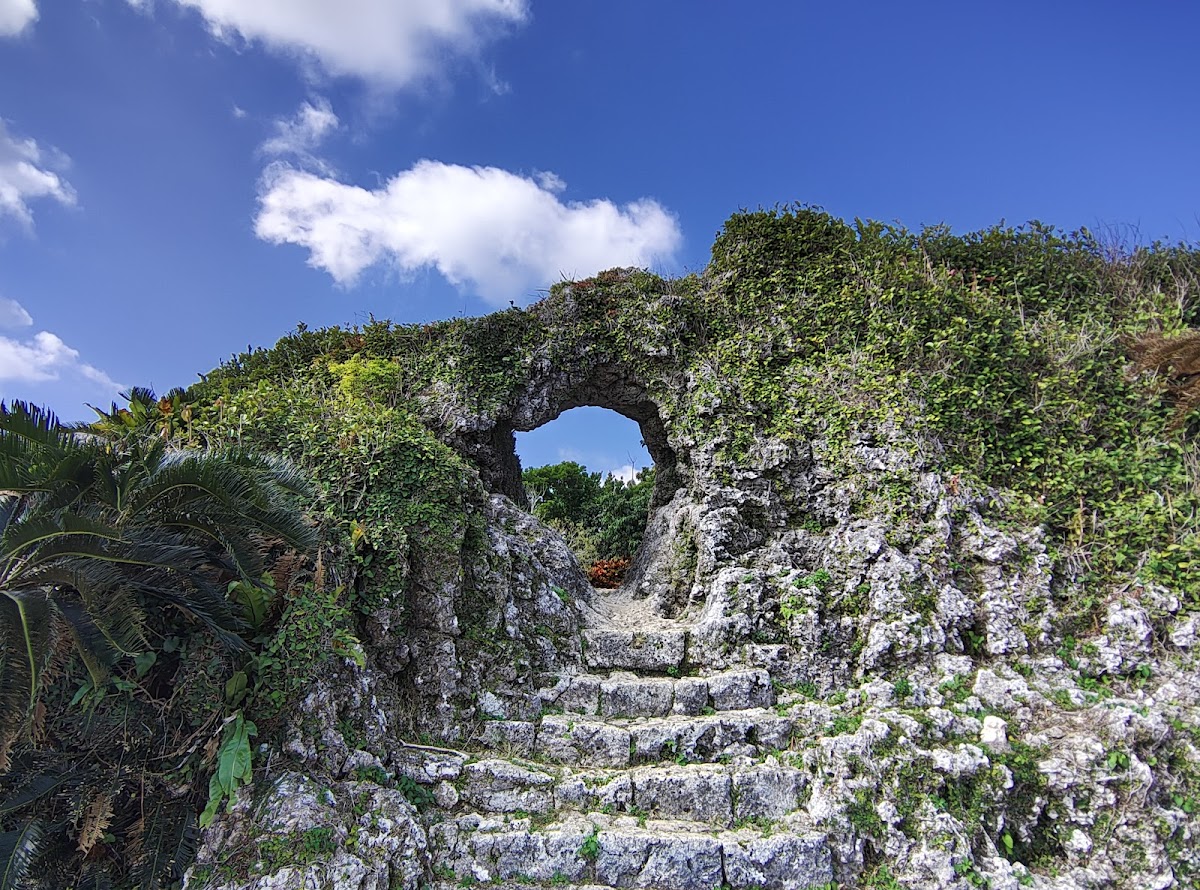
Currently, very few clear stone walls or building remains remain at the Uchimine Gusuku site. Over the long years, weathering and development have caused the structures visible above ground to disappear. However, the topography of the hilly area itself retains traces of the time, allowing us to appreciate the site’s characteristics.
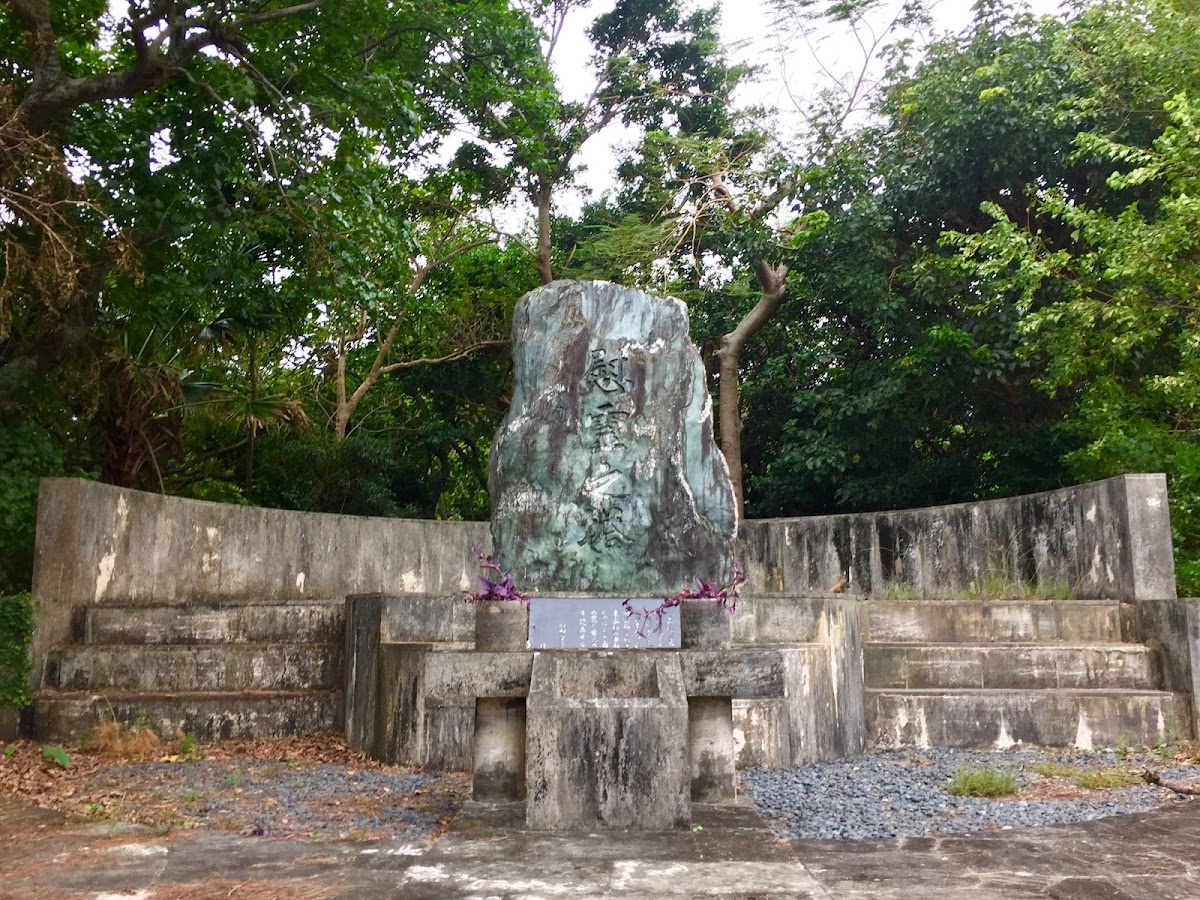
A monument to Uchimine Gusuku stands in one corner of the gusuku site, indicating that this area was once a gusuku. The plaza where the monument stands is a place visited by local residents and researchers, playing an important role in conveying history.
Status of Cultural Property Designation
Uchimine Gusuku is recognized as an important cultural heritage site in Haebaru Town. While not included in the World Heritage site “Gusuku Sites and Related Properties of the Kingdom of Ryukyu,” it is positioned within the town’s cultural property administration as an indispensable site for understanding local history.
Together with surrounding archaeological sites, the entire Uchimine Gusuku area is being considered for comprehensive preservation as the “Uchimine Gusuku Related Sites.” More systematic investigations and preservation measures are expected in the future.
Role in the Community
Even today, the Uchimine Gusuku site is a special place for local residents. It is used for annual events and as a site for learning local history, and is a core element of the community’s identity.
In Haebaru Town, fieldwork is conducted as part of an educational program to learn about the town’s history, visiting historical sites within the town, including Uchimine Gusuku. It serves as an important teaching material for children to experience local history and deepen their understanding of their hometown.
How to Access Uchimine Gusuku
Location Details
Location: Kanegusuku, Haebaru-cho, Shimajiri-gun, Okinawa Prefecture
Uchimine Gusuku is located in the Kanegusuku area, close to the center of Haebaru-cho. Haebaru-cho, adjacent to Naha City, is a transportation hub in southern Okinawa Island, making it relatively easy to access.
Access by Car
It’s about a 30-minute drive from Naha Airport. Take National Route 329 and head towards the intersection in Kanegusuku, Haebaru-cho. The JA Okinawa Haebaru branch is a landmark; the gusuku ruins are on the hillside beyond the side road.
Parking space is limited, so please be considerate of local residents when visiting.
Access by Public Transportation
Take a bus bound for Haebaru from Naha Bus Terminal. Get off at the “Kanegusuku” bus stop and the gusuku ruins are about a 10-minute walk away. However, since there is an uphill path to the hilly area, we recommend wearing comfortable shoes.
Points to Note When Visiting
The Uchimine Gusuku Ruins are not a developed tourist area, but a historical site adjacent to a residential area. Please note the following points when visiting:
- Be considerate of the privacy of local residents
- Always take your trash with you
- Avoid trespassing on private property
- Do not damage the ruins or take any artifacts
- Bring a hat and drinking water, as the sun is strong in the summer.
Other Historical Sites and Cultural Properties in Haebaru Town
Haebaru Cultural Center
When visiting Uchimine Gusuku, we also recommend visiting the Haebaru Cultural Center, where you can learn about the history and culture of Haebaru Town comprehensively. The center introduces the history of Haebaru Town from multiple perspectives, including exhibits of artifacts excavated from ruins in the town and materials related to war relics.
Haebaru Army Hospital Bunker Ruins
Haebaru Town also has important war relics that tell the history of the Battle of Okinawa. The Haebaru Army Hospital Bunker Site is an underground bunker actually used during the Battle of Okinawa, and is now open to the public as a place for peace education.
Kogane Mori Park
Located within the town, Kogane Mori Park is a park where nature and history harmonize, and the walking paths offer a panoramic view of the town of Haebaru. It has long been a sacred site and an object of worship, and visiting it together with Uchimine Gusuku will allow you to gain a deeper understanding of Haebaru’s history.
Understanding Ryukyu Gusuku
What is a Gusuku?
“Gusuku” refers to a unique type of castle in Ryukyu. It has characteristics different from castles on the mainland, and is characterized by its distinctive curved stone walls made of Ryukyu limestone. Gusuku were not merely military facilities, but complex facilities with diverse functions such as the residence of the Anji (local lord), the administrative center, and a place of worship.
Social Structure of the Gusuku Period
During the Gusuku period (12th-15th centuries), Ryukyu was a decentralized society where local Anji held independent power. The Anji (local lords) built their economic power on agricultural production and participated in trade with China, Japan, and Southeast Asia.
It is believed that the Uchimine Anji was one such Anji, ruling the Haebaru region and solidifying his economic base through iron production using blacksmithing techniques.
Comparison with World Heritage Gusuku Sites
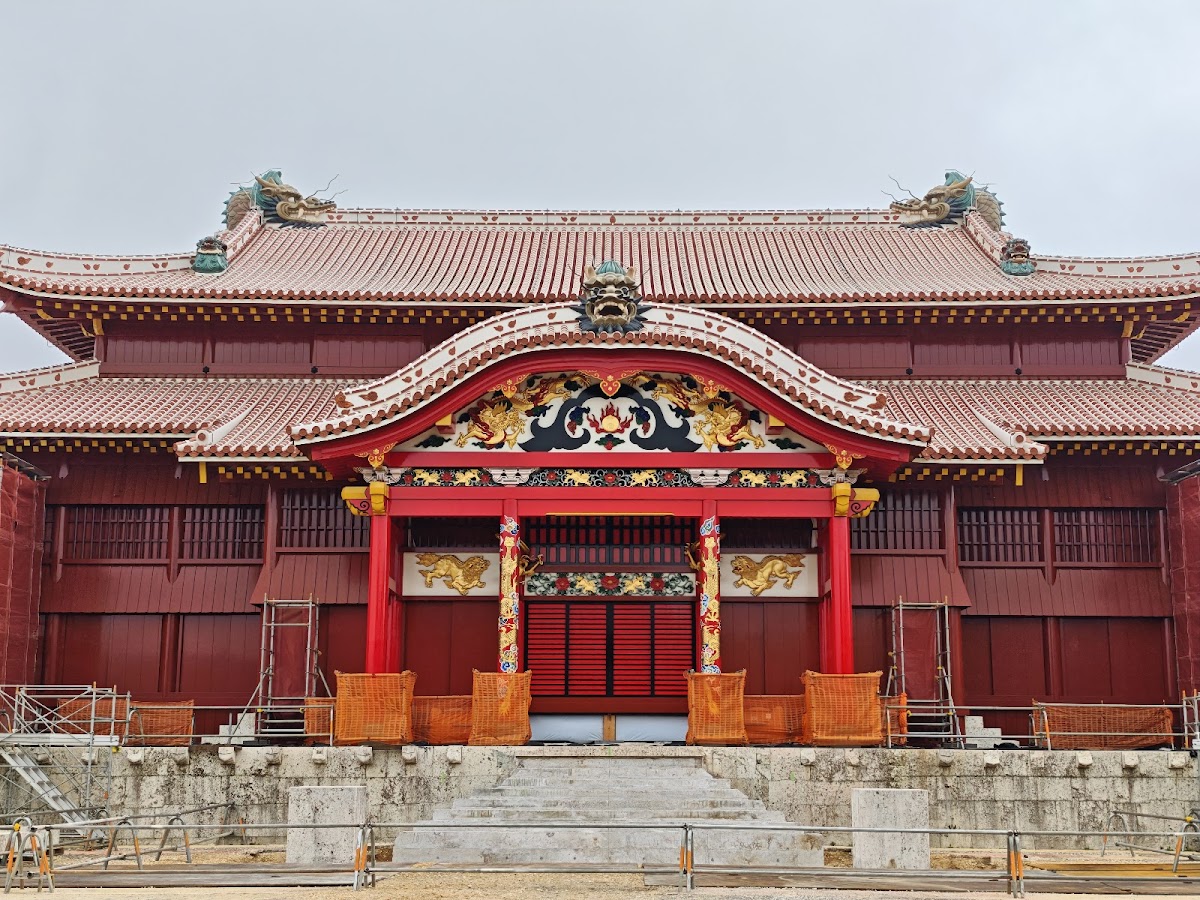
The “Gusuku Sites and Related Properties of the Kingdom of Ryukyu,” registered as a World Heritage Site in 2000, includes five gusuku: Shuri Castle, Nakijin Castle, Zakimi Castle, Katsuren Castle, and Nakagusuku Castle. These are large-scale gusuku that symbolize the power of the Ryukyu Kingdom.
On the other hand, small to medium-sized gusuku like Uchimine Gusuku more directly reflect the realities of the local community. If large-scale gusuku represent the “pinnacle of power,” then Uchimine Gusuku can be said to represent the “foundation of the local community.” By comparing the two, the multi-layered structure of Ryukyu society becomes apparent.
Learning Ryukyu History from Uchimine Gusuku
The Role of Local Lords
The history of Uchimine Gusuku is a valuable example for understanding the role played by local lords in their communities. The Uchimine lords developed the local economy through the introduction of blacksmithing technology and agricultural promotion, and established political power based on this foundation.
The accumulation of these activities by local lords led to the economic development and increased social complexity of Ryukyu as a whole, eventually leading to the establishment of a unified kingdom.
The Relationship Between Technology and Power
As the place name “Uchinmi” suggests, blacksmithing technology held a significant position in the Uchimine region. This fact is a good example of how technological innovation can be the basis of political power.
Iron tools increased productivity as agricultural implements and strengthened military power as weapons. Mastering blacksmithing technology provided a significant economic and military advantage, and was a crucial element supporting the power of the lords.
Differences in Castle Culture Between Ryukyu and Mainland Japan
Ryukyuan castles, including Uchimine Gusuku, developed differently from castles on the Japanese mainland. While mainland castles developed highly advanced military functions after the Sengoku period (Warring States period), Ryukyuan castles maintained a strong character as spaces for religious rites.
This difference is related to Ryukyu’s emphasis on trade as a “bridge to all nations” and its relatively peaceful development. Gusuku served as both a symbol of power and the spiritual center of the local community.
Summary: Historical Significance of Uchimine Gusuku
Uchimine Gusuku is an important historical site remaining in Haebaru Town, Okinawa Prefecture. Built by the Uchimine Anji during the reign of King Satto, this castle conveys the development of the local economy through blacksmithing technology and the reality of the Anji’s regional rule.
As the origin of the place name “Uchinmi” (meaning “blacksmith’s shop”) suggests, iron production flourished in this region, forming the economic and political base of the Anji (local lord). The surrounding related archaeological sites, such as the Maetama-no-den Ruins, Miyadaira Noro-denchi Ruins, and Miyadaira Ruins, demonstrate a settlement structure centered around the gusuku (castle), providing valuable information for understanding the regional society of the Ryukyu Gusuku period.
Although no clear remains currently exist, Uchimine Gusuku is recognized for its value as an important cultural heritage site that conveys the history of the region, and as an important subject for Ryukyu history research. Unlike the large-scale gusuku registered as World Heritage Sites, Uchimine Gusuku offers insight into the realities of small to medium-sized local gusuku, making it indispensable for understanding the diversity and complexity of Ryukyu society.
When visiting Haebaru Town, be sure to visit the Uchimine Gusuku ruins and reflect on the history of the Anji who once ruled this land. Looking out from the hilly landscape of modern Haebaru, you should be able to sense the lives of the people who lived during the Ryukyu Kingdom era.