Complete Guide to Miimungusuku: The Full Picture of the Rectangular Stone Masonry Structure Built as an Outpost of Nakijin Gusuku
What is Miimungusuku?
Miimungusuku is a stone masonry structure from the Ryukyu Kingdom era, located in Imadomari, Nakijin Village, Kunigami District, Okinawa Prefecture. It is built on the tip of a hill approximately 400 meters north of Nakijin Gusuku (Nakijin Castle Ruins), a World Heritage Site, at an altitude of approximately 67 meters. It was designated a National Historic Site on July 23, 2009.
This stone masonry structure, with its three-tiered rectangular structure, is presumed to have functioned as an outpost or watchtower of Nakijin Gusuku. It has recently attracted attention as an important historical heritage site that shows a part of the Ryukyu Kingdom’s defense system.
Historical Background of Miimungusuku
Construction Date and Builder
Currently, there are no clear records regarding the exact construction date or builder of Miimungusuku. However, based on its location relative to Nakijin Castle and the stonework techniques used, it is believed to have been built around the 14th or 15th century, when Nakijin Castle functioned as the residence of the Hokuzan King.
Relationship with Nakijin Castle
Nakijin Castle is a fortress that flourished as the residence of the Hokuzan King during the Three Kingdoms period before the unification of the Ryukyu Kingdom. Mimungusuku is located along the Hanta Road, which extends north from Nakijin Castle, and is presumed to have played an important role as part of Nakijin Castle’s defense system.
In addition to its function as an outpost, it is highly likely that it was also used as a lookout post to monitor enemy movements from the north, and is considered to have been a strategically important point in the outer defense of Nakijin Castle.
Structure and Characteristics of Mimungusuku
Three-Tiered Square Stonework Structure
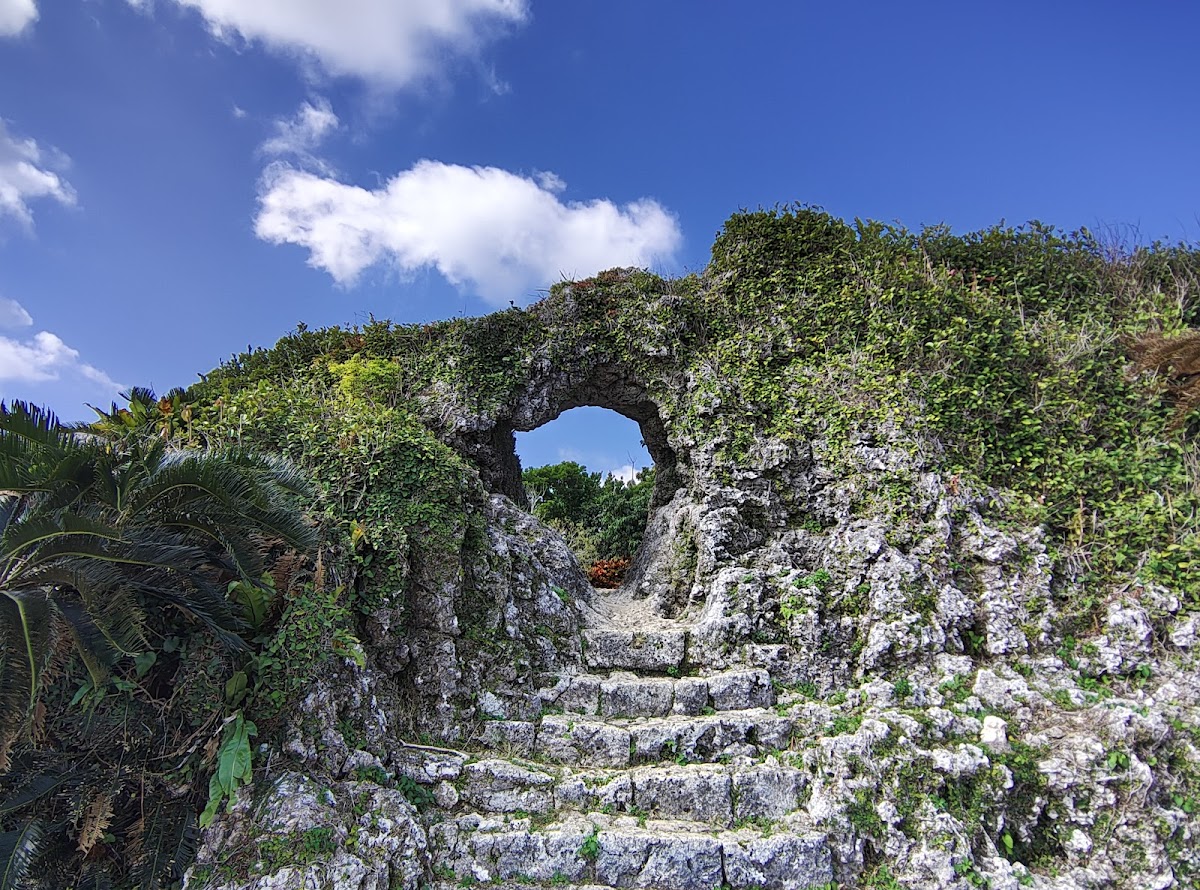
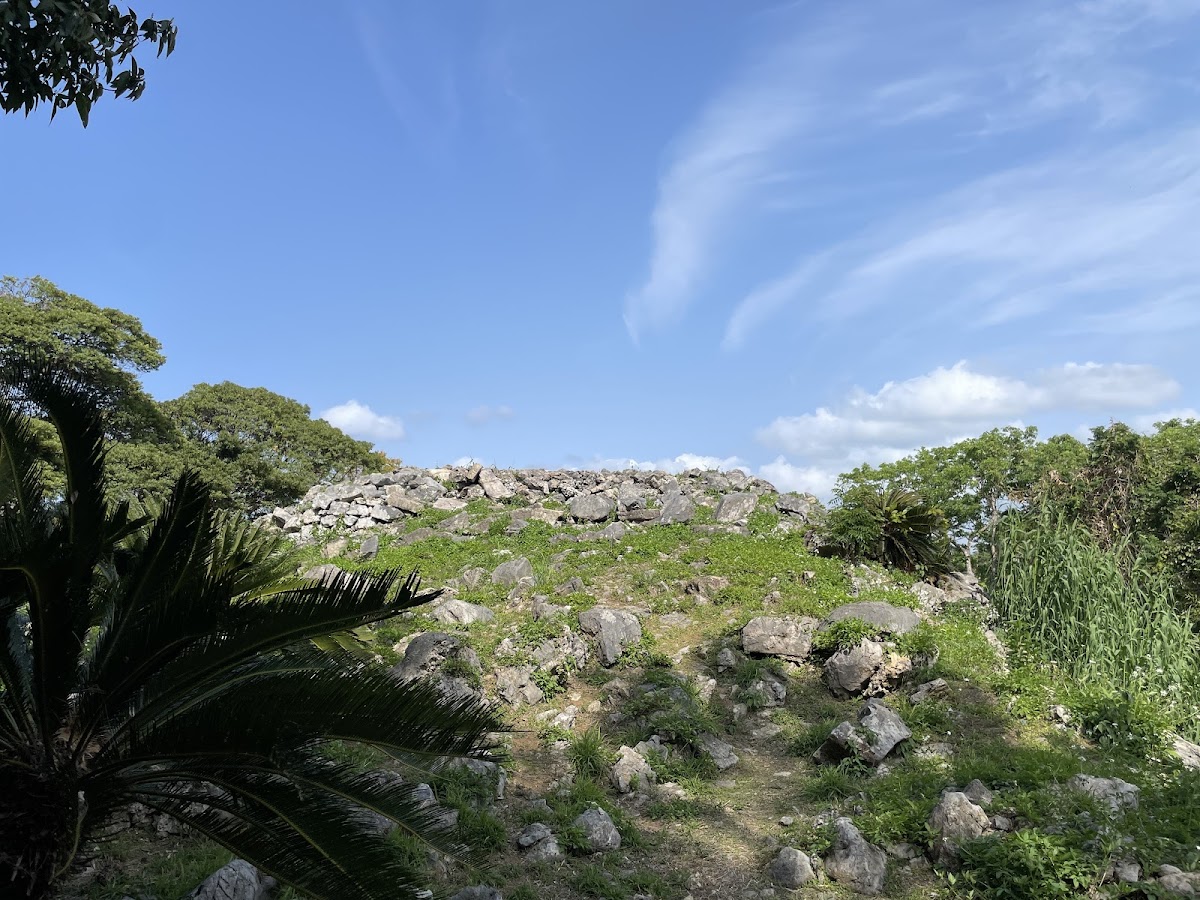
The most distinctive feature of Mimungusuku is its three-tiered, square (quadrilateral) structure. The lower tier boasts a size of approximately 18 meters x 19 meters, making it the largest stonework structure remaining around Nakijin Castle.
The stone masonry is built in a pyramidal shape, stacked in three tiers, with each tier approximately 1.5 meters high. This structure utilizes the “aikata-zumi” technique, a unique Ryukyuan stone masonry method, achieving a strong structure by skillfully combining natural stones.
Stone Masonry Techniques and Characteristics
The stone masonry of Miimungusuku uses Ryukyuan limestone, similar to that used at Nakijin Gusuku. The stones are believed to have been quarried from the surrounding area, and the technique employs stacking natural stones with minimal processing.
The rectangular plan shape is a relatively rare feature among Ryukyuan gusuku. While many gusuku have irregular shapes that follow the terrain, Miimungusuku has a planned rectangular plan, suggesting it may have been built for a specific military purpose.
Comparison with Surrounding Stone Masonry Remains
Besides Miimungusuku, other stone masonry remains, such as Shiina Gusuku, are scattered around the Nakijin Gusuku area. These ruins are believed to have formed a defensive network centered around Nakijin Gusuku, and Miimungusuku occupies an important position as the largest outpost within this network.
How to Access Miimungusuku
Route via Hanta Road
The main access route to Miimungusuku is via the “Hanta Road,” which extends north from Nakijin Gusuku. The Hanta Road is an ancient road from the Ryukyu Kingdom era, and is a popular route for strolling while experiencing a historical atmosphere.
Approximately 200 meters from the entrance to the Hanta Road near the Nakijin Gusuku Exchange Center, a fork in the road leading down to Miimungusuku will appear on the right. Taking this right fork, you will arrive at Miimungusuku in approximately 30 meters.
Location and Parking Information
Location: Imadomari, Nakijin Village, Kunigami District, Okinawa Prefecture
When visiting Miimungusuku, it is convenient to use the parking lot at the Nakijin Gusuku Exchange Center. It is accessible on foot from the Exchange Center via the Hanta Road. Parking is free.
Points to Note When Visiting
The Hanta Trail is a mountain trail that passes through nature, so please note the following:
- Wear comfortable shoes (sneakers or hiking boots recommended)
- Be careful as the trail can become slippery in rainy weather
- Bring insect repellent spray in summer for a more comfortable experience
- Carry drinking water
- Follow the signs
Highlights of Miimungusuku
Panoramic View of the Three-Tiered Stone Structure
The biggest highlight of Miimungusuku is undoubtedly the three-tiered, rectangular stone structure. Viewing it from a vantage point overlooking the entire ruins allows you to appreciate the beautiful pyramidal form.
Especially in the morning when the light hits, the shadows of the stonework are striking, making it ideal for photography. By moving your gaze from the bottom tier to the top tier, you can truly appreciate the sophistication of Ryukyu stonework techniques.
Relative Position to Nakijin Gusuku
From Miimungusuku, you can see Nakijin Gusuku, allowing you to actually confirm the relative positions of the two castles. From this perspective, we can understand how Mimungusuku functioned as an outpost of Nakijin Gusuku, for monitoring and defending the north.
Historical Landscape of the Hanta Road
The Hanta Road leading to Mimungusuku is itself an important historical site. Walking along this ancient path, which dates back to the Ryukyu Kingdom era, allows you to relive the journeys of the people of that time. Subtropical vegetation spreads along the road, offering a unique landscape where Okinawa’s nature and history blend seamlessly.
Cultural Value of Mimungusuku
Significance as a National Historic Site
On July 23, 2009, Mimungusuku was officially designated a national historic site. This designation signifies that Mimungusuku was evaluated not only as a standalone structure but also as an important component of a defense system integrated with Nakijin Gusuku.
With the designation as a national historic site, preservation and research of the remains are progressing, and it is expected that more detailed historical facts will be revealed in the future.
Importance in the Study of the Ryukyu Kingdom’s Defense System
Mimungusuku is a valuable resource for studying the military strategies and defense technologies of the Ryukyu Kingdom era. Its functions as an outpost and watchtower, and its coordination system with Nakijin Gusuku, are highly valued academically as a concrete example of the defense philosophy of the time.
In particular, its planned rectangular plan is important evidence of the diversity of Ryukyu gusuku construction techniques, and further research is expected to yield many more insights.
Related Historical Sites Around Nakijin Gusuku
Shiina Gusuku
Shiina Gusuku is one of the stone masonry remains scattered around Nakijin Gusuku, and like Mimungusuku, it is presumed to have been part of Nakijin Gusuku’s defense system. Although smaller in scale than Mimungusuku, it is an important comparative site as a contemporary structure.
Nakijin Gusuku (Nakijin Castle Ruins)
Nakijin Gusuku, a World Heritage Site, is a must-see historical site, especially when visiting Mimungusuku. This magnificent castle, which flourished as the residence of the King of Hokuzan, is characterized by its beautifully curved walls and vast enclosures. Visiting Nakijin Castle after visiting Mimungusuku will allow you to gain a deeper understanding of the relationship between the two.
Historical Sites Along the Hanta Road
Along the Hanta Road, in addition to Mimungusuku, there are several other stone structures and places of worship. By visiting these, you can realize that the Nakijin Castle area was not merely a castle, but a complex space where faith and defense were intertwined.
Best Season to Visit Mimungusuku
Climate and Clothing
Nakijin Village, located in northern Okinawa, has a warm climate throughout the year, but there is an optimal time to visit.
Spring (March-May): The pleasant temperature is ideal for strolling. Visiting Nakijin Castle in conjunction with cherry blossom season (late January-February) is also recommended.
Summer (June-September): High temperatures, high humidity, and strong sunlight make hats, sunscreen, and adequate hydration essential. Early morning visits are recommended.
Autumn (October-November): Temperatures begin to drop, making it a suitable season for strolling. Be mindful of the weather as it’s the end of typhoon season.
Winter (December-February): Relatively mild, but strong northerly winds can occur. A light jacket is recommended.
Estimated Time Required
A visit to Miimungusuku alone takes about 30 minutes, but including a stroll along the Hanta Road, allow about an hour. If visiting Nakijin Gusuku as well, it’s recommended to allocate a total of 2-3 hours.
Tourist Attractions Around Miimungusuku
Nakijin Gusuku Exchange Center
This facility allows you to learn about the history and culture of Nakijin Gusuku, deepening your understanding of the Hokuzan region during the Ryukyu Kingdom era through exhibits and videos. Visiting this area before visiting Miimungusuku will make your visit more fulfilling.
Nakijin Village Coastline
Nakijin Village is also known for its beautiful coastline. Along with visiting the gusuku (castle), you can enjoy the natural beauty of Okinawa, including the Kouri Bridge leading to Kouri Island and beaches with crystal-clear waters.
Nakijin Village’s Settlement and Culture
Nakijin Village retains the traditional Okinawan settlement landscape, with red-tiled roofs, stone walls, and rows of Fukugi trees, giving a glimpse into Ryukyu culture.
Preservation and Future Prospects of Miimungusuku
Current Status of Preservation Activities
Miimungusuku, a nationally designated historical site, is being preserved and managed primarily by the Nakijin Village Board of Education. Continuous efforts are being made to preserve the remains, including preventing the collapse of stone walls and managing vegetation.
Progress in Research and Investigation
In recent years, archaeological excavations and surveys have been conducted at Mimungusuku, leading to progress in research into the detailed structure and age of the remains. Further investigations are expected to clarify the construction period and specific uses of the site.
Utilization as a Tourism Resource
The value of Mimungusuku is being re-recognized as part of a historical tourism route integrated with the World Heritage site, Nakijin Gusuku. Wellness tourism and ecotourism initiatives utilizing the Hanta Road have also begun, attracting attention as a tourism resource where visitors can experience history and nature simultaneously.
Guided tours are also available, allowing for a deeper understanding by exploring Nakijin Gusuku and Mimungusuku while listening to expert explanations.
Summary: The Charm of Mimungusuku
Mimungusuku is a three-tiered, square-shaped stone structure built as an outpost of the World Heritage site, Nakijin Gusuku, and is a valuable historical site that conveys the defense system of the Ryukyu Kingdom era.
Built on a hill 67 meters above sea level, this 18-meter square stone structure is the largest of the surrounding ruins and is believed to have also served as a lookout post. It was designated a National Historic Site in 2009, officially recognizing its historical value.
This structure, reachable by walking approximately 200 meters along the Hanta Road from the Nakijin Gusuku Exchange Center and then descending to the right at the fork, is a valuable site offering a glimpse into the sophistication of Ryukyuan stonework techniques and a part of the military strategy of the time.
For those interested in Okinawan history, those who enjoy visiting gusuku (castles), or those who appreciate nature walks, Miimungusuku is a historical site worth visiting in conjunction with Nakijin Gusuku. Why not reflect on the lives of people hundreds of years ago in this place where you can truly feel the history of the Ryukyu Kingdom?