Komaba Castle (Shimoina District, Nagano Prefecture) Complete Guide | History and Highlights of the Mountain Castle Said to be the Site of Takeda Shingen’s Demise
What is Komaba Castle?
Komaba Castle (Komanba-jō) is a mountain castle located on Komaba Castle Mountain in Achi Village, Shimoina District, Nagano Prefecture, and is also known as Achi Castle. Built on the southern bank of the Achi River at the southern tip of Shinano Province, this castle was constructed on a ridge extending eastward from the 693.7m-high castle mountain, making it a formidable stronghold at an elevation of 646m and a relative height of approximately 110m.
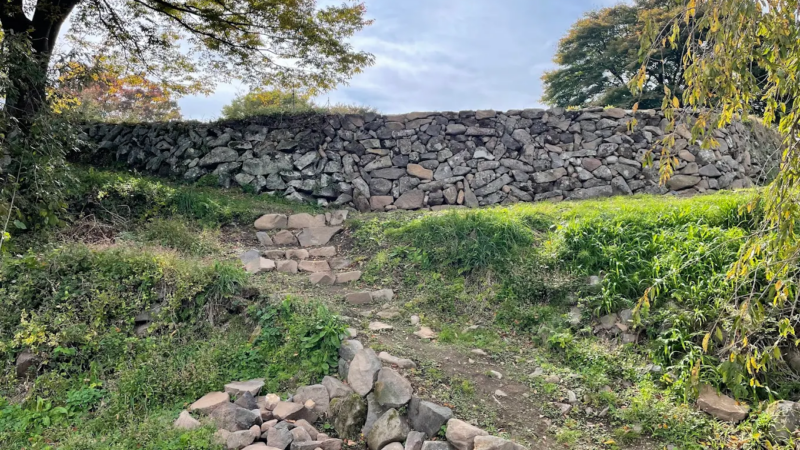
Komaba was a transportation hub where the Tōsandō, Sanshū Kaidō, and Shimojō Kaidō roads converged, and it functioned as an important military base during the Sengoku period. Currently, the castle ruins have been developed into Achi Park, and it is a valuable historical site where remains such as earthworks, dry moats, and trenches can be seen.
Basic Information on Komaba Castle
- Location: Komaba Castle Mountain, Achi Village, Shimoina District, Nagano Prefecture
- Former Province: Shinano
- Castle Structure: Mountain Castle
- Elevation: 646m (Main Enclosure)
- Relative Height: Approximately 110m
- Construction Period: Around the Oei era (1394-1428)
- Builder: Hayashi clan
- Main Lords: Hayashi clan, Takeda clan
- Year of Abandonment: Unknown (Estimated to be late Sengoku period)
- Remains: Enclosures, earthworks, moats, dry moats
- Current Status: Developed as Achi Park
History of Komaba Castle
The Construction of Komaba Castle During the Oei Era and the Hayashi Clan
Komaba Castle is believed to have been built around the Oei era (1394-1428) by the Hayashi clan. The Hayashi clan were local lords in southern Shinano Province and ruled the Komaba area.
During this period, Shinano Province was under the influence of the Ogasawara clan, the shugo (military governor) of the Muromachi Shogunate, but local lords maintained their own spheres of influence in the southern Shinano region. Komaba Castle was built on a natural stronghold on a cliff overlooking the Achi River and functioned as an important base controlling the Tōsandō road.
The Sengoku Period and the Rule of the Takeda Clan
Entering the Tenbun era (1532-1555), the Takeda clan of Kai Province intensified their invasion of Shinano. Takeda Shingen (Harunobu) advanced his conquest of Shinano Province, and the southern Shinano region was incorporated under the Takeda clan’s influence.
Komaba Castle was renovated by the Takeda clan, and its function as a signal fire station was strengthened. In the Takeda clan’s rule of Shinano Province, Komaba Castle played a crucial role as a supply base for provisions in the Shimoina region, a so-called “connecting castle”. Furthermore, its position as a border castle between the Yoshioka and Ogasawara clans made it a strategically important base.
Legend of Takeda Shingen’s Final Resting Place
Komaba Castle is most notable in history for the legend that it is the place of Takeda Shingen’s final resting. In 1573, Takeda Shingen, who was conducting a westward campaign aiming to march on Kyoto, is said to have died in Komaba while retreating to Shinano after falling ill.
However, there are various theories regarding Shingen’s place of death, with some suggesting it was Namiai (Namiai, Achi Village, Shimoina District, Nagano Prefecture) or Neba (Kitashitara District, Aichi Prefecture). Supporting the Komaba theory, Chogaku-ji Temple, located at the eastern foot of the castle, houses a memorial tower containing the ashes of Shingen after his cremation, and preserves Shingen’s belongings, including a helmet crest.
The memorial tower at Chogaku-ji Temple is an important historical site that conveys the legend of Komaba as the place of Shingen’s death, and is visited by many history enthusiasts.
After the Fall of the Takeda Clan
After the fall of the Takeda clan in 1582, detailed records of what happened to Komaba Castle are scarce. It is believed that after the invasion of Shinano by Oda Nobunaga and the chaotic period following the Honnoji Incident, it eventually came under the control of Tokugawa Ieyasu.
During the Edo period, it is presumed that the castle lost its function and was abandoned. After many years, it is now a historical site cherished by local residents as Achi Park.
Komaba Castle’s Layout and Remains
Overall Structure
Komaba Castle is not built on the summit of Shiroyama (693.7m above sea level), but on the ridge extending eastward from there. It has a typical mountain castle layout, with moats and enclosures arranged along the ridge extending east and west from the main enclosure.
Currently, it is maintained as a park, with walking paths, making it relatively easy to view the remains. However, due to the undulating terrain typical of mountain castles, comfortable walking shoes are recommended.
Main Enclosure (Honmaru)
The main enclosure, the center of the castle, is located on the widest, flattest area on the ridge. From the main enclosure, there are panoramic views of the surrounding area, overlooking the Achi River valley and the old highway. Traces of earthworks remain around the main enclosure, confirming its defensive structure.
Western Moats
On the western ridge leading from the main enclosure to the summit of the castle mountain, there are five consecutive moats. These moats were constructed to prevent attacks from the rear, and the largest moat at the very back boasts an impressive scale.
This large moat is large in both depth and width, and is thought to have been reinforced during renovations by the Takeda clan. The steep cliffs of the moats attest to the high level of defense at the time.
Eastern Enclosures
Several enclosures are also located on the ridge east of the main enclosure. These enclosures are arranged in a stepped pattern, and each is thought to have functioned as a small defensive base. Moats and cliffs are provided between the enclosures, creating a structure that hinders enemy intrusion.
Earthworks and Dry Moats
Traces of earthworks remain in various places within the castle, and are particularly well-preserved around the main enclosure. Dry moats also remain in several locations, conveying the defensive structure of this mountain castle. While some remains have been altered due to the park’s development, the main defensive structures have been preserved, allowing visitors to imagine the appearance of the mountain castle during the Sengoku period.
Access to Komaba Castle
Access by Car
Komaba Castle Ruins (Achi Park) is most easily accessible by car.
Main Route:
- Approximately 20 minutes from the Iida-Yamamoto IC on the Chuo Expressway
- Approximately 15 minutes from the Sonohara IC on the Chuo Expressway
Approximately 200m north of Achi Junior High School, head west onto the forest road, proceed approximately 800m, and make a sharp right turn. The parking lot is located at the end of the road, approximately 300m further on.
Caution: The forest road is unpaved and has some deeply eroded sections, so it is advisable not to attempt it unless you have a four-wheel drive vehicle. Access may be difficult depending on the weather.
Access by Public Transportation
Nearest Station: JR Iida Line “Iida Station”
From Iida Station, you can take a local bus or taxi. However, there is no direct bus to Komaba Castle Ruins, so it is more practical to take a bus to the center of Achi Village and then take a taxi or rental car.
Parking Information
There is a parking space at the end of the forest road, but space is limited. If visiting with multiple vehicles, please be considerate of others.
Highlights of Komaba Castle
1. Continuous Moats
The greatest highlight of Komaba Castle is the five continuous moats on the west side of the main enclosure. In particular, the large moat at the far end is impressive in its scale and steep cliff face, allowing you to appreciate the high level of castle-building technology of the Takeda clan. Walk along the moats and experience the defensive structure of the time.
2. View from the Main Enclosure
From the main enclosure, you can see the Achi River valley and the surrounding mountains. This is a scenic viewpoint that allows you to truly appreciate the geographical importance of Komaba, a key transportation hub. On a clear day, you can even see the distant Central Alps.
3. Chogaku-ji Temple, Associated with Takeda Shingen
Located at the eastern foot of Komaba Castle, Chogaku-ji Temple is an important historical site that preserves the legend of Takeda Shingen’s final moments. Within the temple grounds is a memorial tower enshrining Shingen’s ashes from his cremation, and you can also view Shingen’s belongings, such as the crest on his helmet (prior confirmation required).
When visiting Komaba Castle, be sure to also visit Chogaku-ji Temple and reflect on its history as the site of Shingen’s death.
4. Nature as Achi Park
Currently, the Komaba Castle ruins have been developed into Achi Park, where you can enjoy nature throughout the seasons. Cherry blossoms are beautiful in spring, and the autumn leaves are stunning, allowing you to enjoy both a stroll through the castle ruins and nature appreciation simultaneously.
Castle Stamp Information
Komaba Castle’s castle stamp has been on sale since June 2025.
Sales Location: Kominka Tsuboya
Address: 1151 Komaba, Achi-mura, Shimoina-gun, Nagano Prefecture
Sales Hours: Friday, Saturday, Sunday, and Monday 9:30 AM – 3:30 PM
Note: Since there is little official announcement regarding the start of sales, it is recommended to check the business days before visiting.
Castle stamps are very popular as souvenirs of castle tours, so why not get one as proof of your visit to Komaba Castle?
Nearby Tourist Attractions
Starry Sky of Achi Village
Achi Village is a tourist destination known for having “Japan’s best starry sky.” In conjunction with your visit to Komaba Castle, you can enjoy a magnificent starry sky at night. The “Heavens Sonohara” night tour is particularly popular, and reservations are recommended.
Hirugami Onsenkyo
Located about a 10-minute drive from Komaba Castle, Hirugami Onsenkyo is one of Shinshu’s leading hot spring resorts. It’s perfect for relaxing after exploring the castle ruins, and boasts a wide range of day-trip bathing facilities.
Old Houses and History of Achi Village
Achi Village retains historical buildings, including the old house Tsuboya. While strolling through the streets of Komaba, you can experience the road culture that has continued since the Edo period.
Points to Note and Advice for Visitors
Clothing and Equipment
- Footwear: As it’s a mountain castle, comfortable walking shoes such as trekking shoes or athletic shoes are essential.
- Clothing: Wear comfortable clothing appropriate for the season. Insect repellent is also recommended in summer.
- Items to Bring: Drinking water, towel, camera, map (smartphone map apps are also useful)
Best Season for Visiting
- Spring (April-May): The scenery is beautiful during cherry blossom season. The climate is mild.
- Autumn (October-November): Beautiful autumn foliage and comfortable temperatures.
- Summer (June-August): Lush greenery and cool, but insect repellent is necessary.
- Winter (December-March): Possibility of snowfall, and forest roads may become impassable.
Estimated Visiting Time
- Komaba Castle Ruins Only: Approximately 1-1.5 hours
- Including Chogaku-ji Temple: Approximately 2-2.5 hours
- Including surrounding sightseeing: Half a day to a full day
Historical Value of Komaba Castle
A Border Castle of Shinano Province
Komaba Castle is located at the southern tip of Shinano Province and played an important role as a “border castle” near the border with Mikawa Province. Its location, controlling the ancient main road, the Higashiyama-do, was extremely important both militarily and economically.
The Takeda Clan’s Signal Fire Network
The Takeda clan established a network of signal fire stations during their rule of Shinano Province. Komaba Castle played a key role in this network, functioning as a hub for information transmission. Its function as a signal fire station is evidence of the sophisticated military organization of the Takeda clan.
A “Connecting Castle” for Food Supply
Komaba Castle served as a “connecting castle,” a supply base for food in the Shimo-Ina region. In the wars of the Sengoku period, securing logistics was a crucial factor in determining victory or defeat, and Komaba Castle functioned as a key point in this network.
Research and Preservation of Komaba Castle
Archaeological Investigation
Although no full-scale archaeological excavations have been conducted on Komaba Castle, its structure has been revealed through layout surveys and measurements. Further detailed investigations may shed more light on its construction date and renovation history.
Preservation Activities
The site has been developed as Achi Park, ensuring the preservation and utilization of the historical remains. Local residents continue their efforts to pass on the historical site to future generations through activities such as cleaning and the installation of information boards.
Future Challenges
To raise awareness of Komaba Castle’s historical value among more people, improvements to information boards and explanatory materials are desirable. Furthermore, improving the forest roads is an important issue for increasing visitor numbers.
The Truth Behind Komaba Castle and the Legend of Takeda Shingen’s Death
Multiple Legends of the Death Site
Besides Komaba, there are several other possible locations for Takeda Shingen’s death, including Namiai and Neba. This is due to the fact that Shingen’s death was kept secret, and that legends related to Shingen remain in various locations.
Evidence for the Komaba Theory
The main evidence for the Komaba theory is as follows:
- Chogakuji Temple Memorial Tower: The existence of a memorial tower said to enshrine the ashes of Shingen after his cremation.
- Tradition of Relics: The existence of items believed to be Shingen’s relics, such as the helmet crest.
- Geographical Conditions: Located on the route of his retreat from Kyoto.
- Local Tradition: Records passed down through oral tradition since ancient times.
Historical Romance
Regardless of the truth, the fact that Komaba is one of the candidates for the site of Takeda Shingen’s demise enhances the historical value of this area. It is a reason why many history enthusiasts visit this site as the final resting place of the warlord hailed as the strongest of the Sengoku period.
Summary
Komaba Castle is the site of a Sengoku period mountain castle remaining in Achi Village, Shimoina District, Nagano Prefecture. Built by the Hayashi clan during the Oei era and later renovated by the Takeda clan, this castle was a crucial strategic point controlling a vital transportation hub in southern Shinano Province.
Currently, it is maintained as Achi Park, where visitors can admire magnificent remains, including the five moats. The legend that it is the site of Takeda Shingen’s demise adds a touch of historical romance to the castle.
With its location overlooking the ancient Higashiyama-do road, its role as part of the Takeda clan’s signal fire network, and the historical background of Shingen’s demise, Komaba Castle is one of the representative historical sites of Shinano’s mountain castles.
When visiting Achi Village, be sure to visit the Komaba Castle ruins and experience the spirit of the Sengoku period. The continuous moats, the view from the main enclosure, and the memorial tower at Chogaku-ji Temple will transport you to the Sengoku era.
From June 2025, castle stamps will also be available for purchase, making it a perfect memento of your castle tour. Enjoy a fulfilling trip to Achi Village, known for having the best starry sky in Japan, where you can explore the history of Komaba Castle during the day and admire the magnificent starry sky at night.