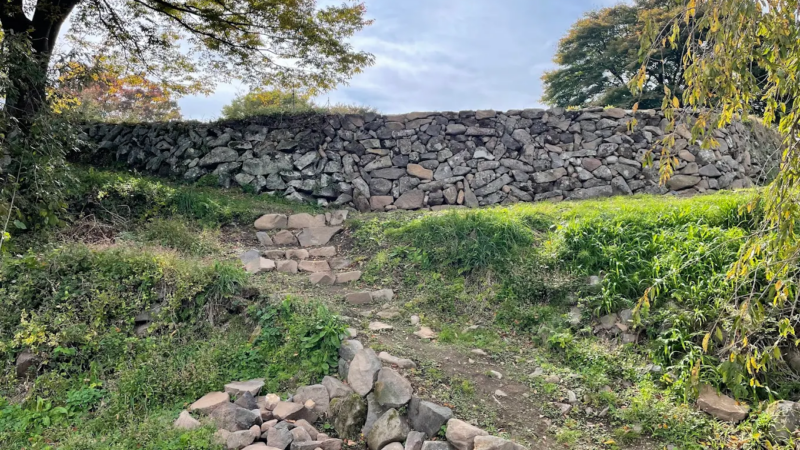
Complete Guide to Kuwahara Castle (Suwa City, Nagano Prefecture) – History and Highlights of the Mountain Castle that Became Suwa Yorishige’s Last Base
Located in the mountains of the Shiga district of Suwa City, Nagano Prefecture, Kuwahara Castle is an important historical site that conveys the tragedy of the Sengoku period. Also known as Takatoya Castle, Suisho Castle, and Yatake Castle, it is known as the place where Suwa Yorishige, the last head of the Suwa clan, attempted his final resistance against the invasion of Takeda Shingen.
This article comprehensively introduces everything you need to know before visiting Kuwahara Castle, including its detailed history, the characteristics of its castle structure, the remains that can be seen on site, access methods, and surrounding tourist information.
Basic Information on Kuwahara Castle
Location: Kuwahara, Shiga, Suwa City, Nagano Prefecture
Other Names: Takatoya Castle, Suisho Castle, Yatake Castle
Castle Classification: Mountain Castle
Year of Construction: Unknown (by the Suwa clan)
Main Lord: Suwa Yorishige
Year of Abandonment: Around 1542 (Tenbun 11)
Remains: Enclosures, moats, earthworks
Designated Cultural Property: Suwa City Historic Site
Kuwahara Castle is a mountain castle built on a mountaintop approximately 900 meters above sea level, southeast of Lake Suwa. It occupies a strategic location overlooking the Suwa Basin. Currently, hiking trails are maintained, making it a historical site visited by history enthusiasts and castle fans.
The History of Kuwahara Castle – The Stage of the Suwa Clan’s Downfall
The Suwa Clan and Kuwahara Castle
The Suwa clan was a family of Shinto priests who served as the chief priest (Ōhōri) of Suwa Grand Shrine, but they were also a powerful samurai family in Shinano Province. While there are no clear records of when Kuwahara Castle was built, it is believed to have functioned as one of the Suwa clan’s branch castles.
The Suwa clan’s main base was Uehara Castle (present-day Chino City), but Kuwahara Castle was positioned as an important branch castle protecting the southern shore of Lake Suwa. From the mountaintop, one could overlook the entire Lake Suwa and the surrounding plains, giving it a strategically advantageous location.
The Tragedy of 1542 – Takeda Shingen’s Invasion of Suwa
The name of Kuwahara Castle is etched in history during Takeda Shingen’s invasion of Suwa in 1542. In this year, Takeda Harunobu (later Shingen) of Kai Province began a full-scale invasion of the Suwa territory.
The then-head of the Suwa clan, Suwa Yorishige, initially defended Uehara Castle, but was overwhelmed by the superior forces of the Takeda army. Yorishige abandoned Uehara Castle and retreated to the more formidable mountain castle, Kuwahara Castle.
Kuwahara Castle was a natural stronghold utilizing the rugged mountainous terrain, and Yorishige attempted to put up a fierce resistance there. However, the Takeda army besieged Kuwahara Castle, prolonging the battle. With their supply lines cut off, the Suwa army gradually weakened, and ultimately Yorishige was forced to surrender.
The End of Suwa Yorishige
After surrendering, Suwa Yorishige was taken to Kai Province and ordered to commit suicide at Tokoji Temple (present-day Kofu City). He is believed to have been around 30 years old. With this, the main line of the Suwa clan, which had continued as the chief priest family of Suwa Grand Shrine, effectively came to an end. Suwa Goryōnin, Yorishige’s sister (or possibly daughter), became a concubine of Takeda Shingen and gave birth to the future Takeda Katsuyori. Therefore, Takeda Katsuyori had Suwa blood flowing through his veins, and the Suwa clan name continued to exist in a modified form.
The Aftermath of Kuwahara Castle
After the fall of the Suwa clan, the Suwa territory became a direct territory of the Takeda clan, and it is believed that Kuwahara Castle ceased to serve its military purpose and was abandoned. The castle ruins were left neglected for a long time, but in recent years, local historical preservation groups and Suwa City have been working on its restoration, preserving the remains and developing viewing paths.
Structure and Layout of Kuwahara Castle
Overall Structure of the Castle
Kuwahara Castle is a typical Sengoku period mountain castle, characterized by its defensive facilities that skillfully utilize the natural terrain. The castle grounds extend approximately 300 meters north-south and 200 meters east-west, with multiple baileys (kuruwa) arranged within them.
The main components are as follows:
Main Enclosure (Honmaru): The most important enclosure located at the mountaintop, measuring approximately 30m x 20m. Surrounded by an earthen embankment, it is presumed to have been the residence of the castle lord.
Second and Third Enclosures: A group of secondary enclosures surrounding the main enclosure. These are thought to have been used as troop encampments and storage areas for supplies.
Moat: A dry moat dug across the ridge, an important defensive structure to prevent enemy intrusion. Clear moats remain on the north and south sides of the main enclosure at Kuwahara Castle.
Vertical Moat: A moat dug vertically along the slope, serving to restrict the lateral movement of enemies.
Characteristics of the Defensive System
Kuwahara Castle’s defensive system makes maximum use of the steep terrain. The only access to the castle is via a treacherous mountain path, making it difficult for large armies to attack.
Of particular note is the “tiered enclosure” layout, where multiple enclosures are arranged in a stepped fashion. This allows for counterattacks from higher enclosures using firearms or thrown stones, even if lower enclosures are breached.
Furthermore, the earthworks surrounding the main enclosure remain at a height of approximately 1-2 meters, suggesting they were even higher in their original state. It is highly probable that fences or walls were constructed on top of these earthworks, further enhancing their defensive capabilities.
Water Supply
Securing a water supply is one of the most crucial challenges for mountain castles. Kuwahara Castle, as its alternative name “Crystal Castle” suggests, is believed to have had access to high-quality spring water. While wells or water sources are presumed to exist within or near the castle, no clear remains have been confirmed.
However, it has been suggested that water shortage may have been a contributing factor to the surrender during the prolonged siege by the Takeda army in 1542 (Tenbun 11).
Highlights of Kuwahara Castle – Remains Visible on-site
Main Enclosure (Honmaru) Site
Located at the summit, reached by climbing the mountain trail, the main enclosure is the central part of Kuwahara Castle. Currently a flat open area, traces of the surrounding earthworks can still be seen.
The view from the main enclosure is magnificent, offering panoramic views of Lake Suwa, the Suwa Basin, and on clear days, even the Yatsugatake mountain range and the Southern Alps. Suwa Yorishige may have also observed the movements of the Takeda army from this location.
A castle site monument and explanatory sign are installed in the main enclosure, allowing visitors to learn about the history of Kuwahara Castle.
Moat
Clear moats remain on the north and south sides of the main enclosure. The moat on the north side, in particular, is approximately 3-4 meters deep and 5 meters wide, providing a good indication of the defensive structure at the time.
The moat was a structure designed to prevent enemies attacking along the ridge, and it is imagined that breaking through this section would have been extremely difficult. When visiting the site, you can truly appreciate the depth and steepness of the moat.
Enclosures
Several enclosures are arranged in a stepped pattern around the main enclosure. These enclosures can still be seen as flat surfaces today, making them valuable remains for understanding the structure of castles during the Sengoku period.
The second enclosure is located to the east of the main enclosure and has a relatively large area. It is presumed that this was the location of soldiers’ quarters and an armory.
Earthworks
Traces of earthworks remain around the main enclosure and each enclosure. While currently only 1-2 meters high, it is thought that they were higher when the castle was built, and that wooden fences or other structures were erected on top.
The earthworks not only protected against enemy arrows and stones, but also had the effect of obscuring the view of the castle from the outside.
Vertical Moats
Multiple traces of vertical moats can be seen on the slope. These were structures designed to restrict enemy lateral movement and limit attack routes. Although weathered, careful observation reveals the ingenuity of the original design.
Ascent Route
The current hiking trail may differ from the original ascent route, but the experience of climbing the steep mountain path gives a real sense of how difficult this castle was to attack.
Along the ascent route, several flat areas that appear to be the remains of former baileys can be seen, indicating that a tiered defensive line was constructed.
How to Access Kuwahara Castle
Using Public Transportation
From JR Chuo Main Line, Kami-Suwa Station:
- Approximately 15 minutes by taxi from the station to the trailhead in the Kuwahara area.
- Approximately 40-50 minutes on foot from the trailhead to the main enclosure.
By Local Bus:
- Take the Suwa City Loop Bus from Kami-Suwa Station and get off at the Shiga area.
- Approximately 20 minutes on foot from the bus stop to the trailhead.
- Approximately 40-50 minutes on foot from the trailhead to the main enclosure.
*Since bus services are limited, it is recommended to check the timetable in advance.
If traveling by car
From Suwa IC on the Chuo Expressway:
- Take National Route 20 towards Lake Suwa
- Turn onto Prefectural Road 50 (Suwa-Tatsuno Line) and head towards Shiga for about 10 minutes
- There are several parking spaces near the trailhead in the Kuwahara area.
Setting your car navigation system:
- Search for “Shiga Kuwahara, Suwa City” or “Kuwahara Castle Ruins Trailhead”
- Since there is no clear address, it is recommended to check the location on a map beforehand.
About the hiking trail
The trail from the trailhead to the main enclosure takes about 40-50 minutes. The trail is well-maintained, but please note the following:
- Steep Slope: There are steep uphill sections along the way.
- Slippery: The ground can become slippery during and after rain.
- Clothing: Comfortable clothing and hiking boots or trekking shoes are recommended.
- Items to Bring: Please bring drinking water, a towel, and insect repellent (in summer).
- Estimated Time: Allow approximately 2-3 hours round trip.
Best Seasons for Visiting
Spring (April-May): Beautiful fresh greenery and mild weather, ideal for hiking.
Autumn (October-November): Beautiful autumn foliage and excellent views. Temperatures are also suitable for hiking.
Summer (June-September): The greenery is lush, but be aware of the heat and insects. Early morning visits are recommended.
Winter (December-March): Due to snow cover and dangerous hiking trails, it is not suitable for general visitors.
Tourist Attractions Around Kuwahara Castle
When visiting Kuwahara Castle, we recommend also visiting other historical sites and tourist attractions in Suwa City.
Suwa Grand Shrine Upper Shrine Main Sanctuary
This is the main sanctuary of Suwa Grand Shrine, where the Suwa clan served as chief priests. It is about a 15-minute drive from Kuwahara Castle and is an essential place for understanding the history of the Suwa clan. It is known for the Onbashira Festival, held once every seven years, and giant sacred pillars stand within the grounds.
Uehara Castle Ruins (Chino City)
This is the site of Uehara Castle, where Suwa Yorishige first took refuge. Visiting it together with Kuwahara Castle will give you a deeper understanding of the circumstances surrounding the downfall of the Suwa clan. It is about a 20-minute drive.
Ariga Castle Ruins
Another mountain castle ruin located within Suwa City. This castle was the residence of the Ariga clan, a senior retainer of the Suwa clan, and, like Kuwahara Castle, played a role in the defense of the area around Lake Suwa.
Lake Suwa
The largest lake in Nagano Prefecture and a symbol of Suwa City. A promenade is maintained along the lakeshore, and in August, the nationally famous Suwa Lake Festival Fireworks Display is held. The view of Lake Suwa from Kuwahara Castle is exceptional.
Takashima Castle
A flatland castle located in the city of Suwa, it was the residence of the Suwa Domain during the Edo period. Known as the “Floating Castle of Suwa,” a reconstructed keep now stands and is open to the public as a museum. Although it is from a different era than Kuwahara Castle, you can learn about the history of castles in Suwa.
Katakura-kan
A Western-style public bathhouse built in the early Showa period, designated as a National Important Cultural Property. It is famous for its 1.1-meter-deep “Thousand-Person Bath,” perfect for relaxing after a hike.
Suwa City Museum
This museum exhibits the history and culture of the Suwa region. It also displays materials related to the Suwa and Takeda clans, and visiting before visiting Kuwahara Castle will deepen your understanding.
Precautions when visiting Kuwahara Castle
Safety Precautions
- Avoid solo climbing: Please visit in groups whenever possible.
- Check the weather: Climbing in bad weather is dangerous. Please check the weather forecast in advance.
- Time allocation: Plan your trip with ample time to descend before sunset.
- Mobile phone: Please bring a mobile phone in case of emergency (however, there are areas with weak reception in the mountains).
- Wild animals: Please be aware of wild animals such as bears and wild boars. We recommend carrying a bell or similar item.
Manners and Rules
- Protection of Historical Structures: Please be careful not to damage historical structures such as earthworks and moats.
- Take Your Trash Home: Please be sure to take your trash home with you.
- No Open Fires: The use of fire is strictly prohibited at the castle ruins.
- Private Property: Please refrain from entering areas other than the designated hiking trails.
- No Plant Collection: The collection of plants is prohibited.
Historical Significance of Kuwahara Castle
Kuwahara Castle is an important historical site symbolizing the power struggles in Shinano during the Sengoku period. As the place where the powerful local samurai clan, the Suwa clan, succumbed to the formidable Takeda clan of Kai, it conveys the harsh realities of the Sengoku period.
Historical Significance of the Fall of the Suwa Clan
The fall of the Suwa clan was not simply the downfall of a single local family. The disappearance of the unique figure who possessed both the religious authority of the Suwa Grand Shrine’s chief priest and the secular power of a samurai lord symbolized the end of the medieval order.
Takeda Shingen secured a base for his invasion of Shinano by directly controlling the Suwa territory. This was a crucial step leading to the later Battle of Kawanakajima.
Position in Castle History
Kuwahara Castle, as a typical Sengoku period mountain castle, is a valuable resource for understanding the castle construction techniques and tactics of the time. The castle, constructed solely through civil engineering without the use of stone walls, reflects the regional technological level and defensive philosophy.
Furthermore, although it ultimately fell, the fact that it held off the Takeda army for a certain period demonstrates the high defensive capabilities of the mountain castle.
The Significance of Visiting Kuwahara Castle
Visiting Kuwahara Castle in modern times has meaning beyond mere sightseeing:
- Experiencing the Site of History: You can experience the actual terrain and sense of distance that cannot be obtained from textbooks or documents.
- Suwa Yorishige’s Perspective: By overlooking the Suwa Basin from the main enclosure, you can share the view that Yorishige saw.
- Understanding the Sengoku Period: You can deepen your imagination about what a siege in a mountain castle was like.
- Harmony with Nature: You can learn about the relationship between the castle and the natural terrain.
- Discovering Local History: Although it is not a well-known historical site nationwide, it offers an opportunity to learn deeply about the history of the region.
Summary – The Charm of Kuwahara Castle
Kuwahara Castle does not have a flashy keep or stone walls, but it is a valuable historical site that conveys the vivid history of the Sengoku period. As the site of the last resistance of a single warrior, Suwa Yorishige, and as an important stage in Takeda Shingen’s invasion of Shinano, its historical value is extremely high.
Climbing the steep mountain path and looking down at Lake Suwa from the main enclosure, visitors can feel the spirit of the Sengoku period warlords from nearly 500 years ago. The simple remains, such as moats and earthworks, tell the story of the desperate defensive efforts of the people of that time.
When visiting Suwa City, be sure to visit Kuwahara Castle in addition to famous tourist spots like Lake Suwa and Suwa Grand Shrine. It will be an unforgettable experience where you can feel the weight of history and the value of the remains that tell it.
Kuwahara Castle is an indispensable historical site for understanding Shinano during the Sengoku period, and as a historical heritage of the Suwa region, it should be carefully preserved for the future.