
Kakuda Castle (Miyagi Prefecture) Complete Guide: From the Residence of a Date Family Retainer to the Ishikawa Clan’s Fortress
What is Kakuda Castle?
Kakuda Castle (Kakuda-jō) was a Japanese castle located in Kakuda, Kakuda City, Miyagi Prefecture (formerly Igu District, Mutsu Province). It was also known as Kakuda Fortress, Kinkeikan, Kinkeigakan, and Gagyūjō. As one of the 21 fortresses established after the Genna Era’s “One Castle Per Province” decree in the Sendai Domain, it served as an important base until the end of the Edo period, as the residence of the Ishikawa clan, a senior retainer of the Date family.
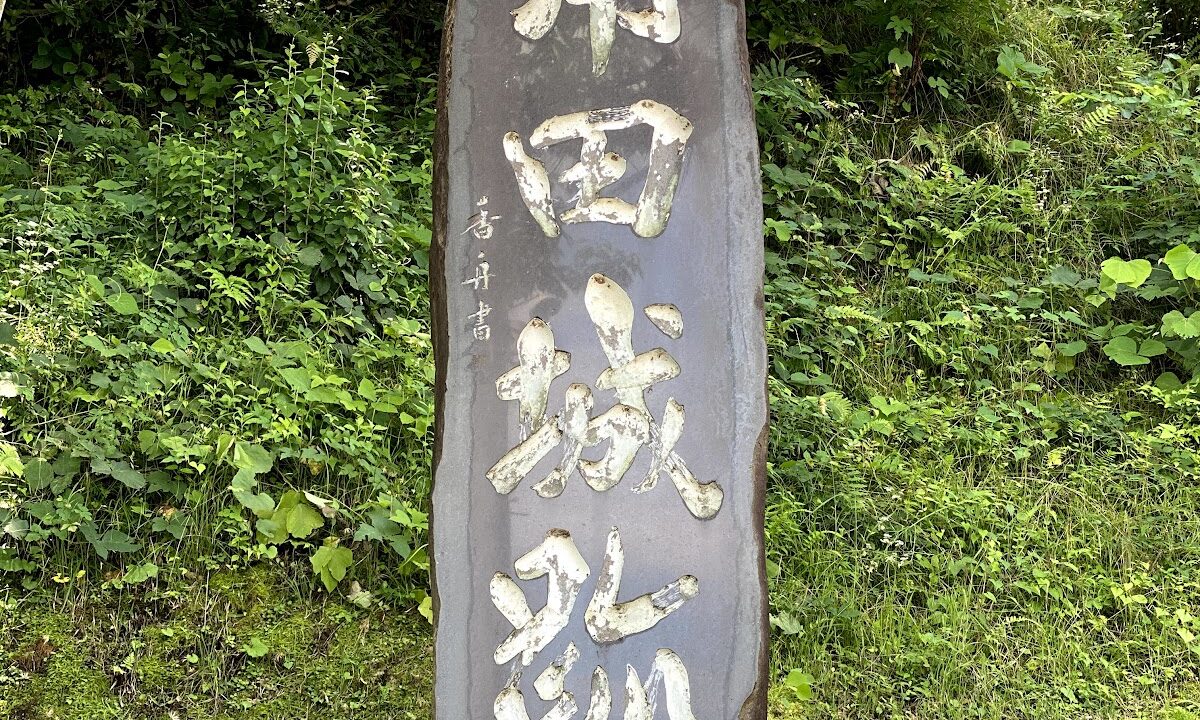
Currently, the site is occupied by Miyagi Prefectural Kakuda High School, and while the remnants of its magnificent castle remain limited, a stone monument near the school entrance commemorates its history. Kakuda Castle, situated on the front lines of the power struggle between the Date and Soma clans, played a crucial role from the Sengoku period to the Edo period, making it a noteworthy presence in the history of Japanese castles.
History of Kakuda Castle
Construction and the Era of the Tate Clan (Eiroku-Tensho Periods)
Kakuda Castle is believed to have been built during the Eiroku period (1558-1570). It is said to have been constructed by Tate Munemitsu, a vassal of the Date clan, and from the beginning, it functioned as a key point for the Date clan’s southern defense.
The area around Kakuda was a strategically important point where the territories of the Date and Soma clans intersected, becoming the stage for fierce battles between the two forces. In 1566, when the Soma clan invaded Kakuda Castle, Tate Munemitsu defected from the Date clan and sided with the Soma. This betrayal was a major blow to the Date clan.
However, in 1584, during the reign of Date Terumune, the Date clan succeeded in recapturing Kakuda Castle. Interestingly, Munemitsu’s son, Tate Munetoki, unlike his father, remained loyal to the Date clan, and after the castle was recaptured, Munetoki was appointed lord. This loyalty of Tate Munetoki was highly valued by the Date clan, and Kakuda Castle once again came under their firm control.
Entry of Date Shigezane (Tensho 19)
In Tensho 19 (1591), after Toyotomi Hideyoshi’s pacification of Oshu, Date Shigezane, one of Date Masamune’s most important retainers, was appointed lord of Kakuda Castle. Shigezane was a cousin of Date Masamune and is known as a renowned general who supported Masamune’s rise to power.
Although Shigezane’s tenure at Kakuda Castle was relatively short, it is believed that improvements to the castle were made during this period. However, in 1595, due to a conflict with Masamune, Shigemitsu left the Date family for a period. This defection caused a great stir within the Date clan.
Ishikawa Akimitsu’s Arrival and the Development of Kakuda (1598-)
In 1598, Ishikawa Akimitsu entered Kakuda Castle with a stipend of 8,000 koku. Ishikawa Akimitsu was an uncle of Date Masamune and held a high position within the Date family. Upon entering Kakuda Castle, Akimitsu undertook large-scale renovations and began construction of the castle town.
Akimitsu’s construction of the castle town laid the foundation for Kakuda as a city. By gathering merchants and artisans, establishing a market, Kakuda developed into the economic and cultural center of the southern part of the Sendai domain. The Ishikawa clan subsequently expanded their territory through increased stipends and land reclamation, eventually becoming a powerful family with over 21,380 koku of land, and establishing the prestigious position of head of the Date clan.
The One Castle Per Province Decree and the Renaming of Kakuda Fortress
In 1615, the Edo shogunate issued the One Castle Per Province Decree, resulting in the abolition of all castles in the Sendai domain except for Sendai Castle. However, due to its military importance, Kakuda Castle was not completely abolished and was permitted to remain as Kakuda Fortress.
The Sendai domain recognized 21 fortresses in addition to Sendai Castle, and Kakuda Fortress was one of the most important. Even after its continued existence as a fortress, it continued to function as the Ishikawa clan’s residence and played a central role in the administration of the territory.
The Ishikawa Clan’s Rule Throughout the Edo Period
The Ishikawa clan ruled Kakuda for 13 generations, from Akimitsu onward until the end of the Edo period. The Ishikawa family, as the leading branch of the Date family, played a crucial role in the politics of the Sendai Domain, and many of its successive heads held important positions within the domain.
In managing their territory in Kakuda, they promoted agriculture utilizing the fertile land of the Abukuma River basin, developed new rice fields, and encouraged commerce, resulting in stable prosperity for the domain. The Ishikawa family also focused on cultural projects, including the maintenance of temples and shrines such as Chōsenji, and the promotion of learning.
From the End of the Edo Period to the Meiji Restoration
During the turbulent period at the end of the Edo period, the Ishikawa family, along with the Sendai Domain, participated in the Ōuetsu Reppan Alliance and fought against the new government forces. Kakuda was caught in the fighting during the Boshin War, but the castle itself was spared from becoming a battlefield.
After the Meiji Restoration, with the abolition of the feudal domains and the establishment of prefectures, Kakuda Castle was abandoned, and its role as the Ishikawa family’s residence came to an end. The castle site was sold to private individuals and later used as school grounds. ## Structure and Layout of Kakuda Castle
Location and Topography
Kakuda Castle is a hilltop castle built on a hill approximately 30 meters above sea level on the west bank of the Abukuma River. It was a natural stronghold, surrounded to the north and west by the Abukuma River and its tributaries, while a castle town spread out to the south and east. This terrain was well-suited for defense, and its alternative name, “Gagyu-jo” (Reclining Ox Castle), is said to originate from the hill’s shape resembling a reclining ox.
Structure of the Enclosures
Kakuda Castle had a stepped layout composed of multiple enclosures (kuruwa). The central Honmaru (main enclosure) was surrounded by the Ninomaru (second enclosure) and Sannomaru (third enclosure), with samurai residences and merchant districts extending as an outer enclosure.
The Honmaru (main enclosure) was the core of the castle and housed the residence of the Ishikawa clan. Although large structures such as keeps could not be built after the “One Castle Per Province” decree, it is believed that a palace befitting a feudal lord’s residence was built there. The second bailey was an important defensive line protecting the main bailey, and housed the residences of senior retainers and granaries. The third bailey was an outer bailey that further reinforced the defenses, covering a wider area.
Defensive Structures
Kakuda Castle’s defensive structures included earthworks, moats, and fortified gates (koguchi). While large-scale stone walls were not constructed, it is possible that important sections were reinforced with stone.
The moats were artificially excavated, utilizing the natural terrain, and it is believed that both water and dry moats were used. The water moats, fed by water from the Abukuma River, likely enhanced the castle’s defenses and contributed to its aesthetic appeal.
Structure of the Castle Town
The castle town, developed by Ishikawa Akimitsu, was systematically laid out around the castle. Samurai residences were located southeast of the castle, with merchant districts forming further outside.
Merchant houses lined the main roads, and markets were also established. Temples and shrines were strategically placed throughout the castle town, playing a vital role in its defense and serving as centers of faith for the local people. In particular, Chōsenji Temple held an important position as the Ishikawa family’s ancestral temple and remains a valuable historical site in Kakuda City today.
Current State of Kakuda Castle Ruins
Current Status of Remains
Currently, the Kakuda Castle ruins are the site of Miyagi Prefectural Kakuda High School, and many of the original remains have been lost. However, observing the topography allows one to sense the castle’s former appearance.
Within the high school grounds, slight traces of earthworks and elevation changes of the baileys remain, allowing one to imagine the former layout. However, access is restricted due to it being school grounds.
Stone Monument and Information Board
Near the entrance to Kakuda High School, a stone monument commemorating the history of Kakuda Castle stands. This monument is an important landmark indicating the former location of Kakuda Castle and serves as a guide for visitors to the castle site.
Information boards are also installed nearby, providing concise explanations of the history and structure of Kakuda Castle. ### Related Historical Sites in the Surrounding Area
When visiting Kakuda Castle Ruins, we recommend also visiting the related historical sites in the surrounding area.
Chōsenji Temple is the family temple of the Ishikawa family and houses the tombs of successive family heads. Valuable materials related to the Ishikawa family are preserved within the temple grounds, making it an essential place for understanding the history of Kakuda.
Kakuda City Local History Museum exhibits information about Kakuda Castle and the Ishikawa family. Armor, weapons, and ancient documents of the Ishikawa family retainers are on display, allowing visitors to learn deeply about the history of Kakuda. In particular, special exhibitions such as the “Armor Exhibition” are held regularly, allowing visitors to see valuable materials such as Edo period combat armor and decorative armor.
Highlights of Kakuda Castle
Historical Value
The greatest highlight of Kakuda Castle is its historical value. Kakuda Castle was the stage for conflicts between the Date and Soma clans, and as its lords changed hands from the Tate clan to Date Shigezane and then the Ishikawa clan, it has etched its own history in each era.
In particular, the history of the Ishikawa clan, who ruled for 13 generations, is an important case study in the history of regional governance in Japan, as it is a prime example of a single family governing a region for a long period.
Geographical Importance
The location of Kakuda Castle demonstrates its strategic importance in the Date clan’s southern defense. Situated on the border with the Soma clan and controlling the Abukuma River, a crucial waterway, it was an extremely important military and economic base.
This geographical importance is one of the reasons why it was allowed to remain a fortress even after the “One Castle Per Province” decree.
Cultural Heritage of the Ishikawa Family
The cultural heritage left behind by the Ishikawa family is also an important highlight of Kakuda Castle. The armor and weapons housed in the local history museum represent the pinnacle of samurai culture at the time and are of high value as works of art.
Furthermore, the Ishikawa family’s tombs and related documents remaining at Chōsenji Temple are valuable resources for understanding the nature of daimyo families’ family temples during the Edo period.
Access and Visiting Information
Location
Address: Kakuda, Kakuda City, Miyagi Prefecture
Kakuda Castle Ruins (Miyagi Prefectural Kakuda High School) are located in the center of Kakuda City and are relatively easy to access.
Access by Public Transportation
Train: The nearest station is Kakuda Station on the JR Tohoku Main Line and Joban Line. The castle ruins are approximately a 15-minute walk from the station.
To reach Kakuda Station, take the Tohoku Main Line from Sendai Station, transfer to the Abukuma Express Line at Shiroishi Station or Tsukinoki Station, or take the Joban Line. The journey takes approximately 1 to 1.5 hours, including transfer time.
Bus: A community bus circulating within Kakuda City is also available, but since the number of services is limited, it is recommended to check the timetable in advance.
Access by Car
Tohoku Expressway: Approximately 30 minutes from Shiroishi IC via National Route 4
Joban Expressway: Approximately 20 minutes from Yamamoto IC via Prefectural Road
Regarding parking, there is no public parking space on the grounds of Kakuda High School, so you will need to use nearby public parking lots. Parking lots at Kakuda City Hall and the Local History Museum are available.
Notes on Visiting
The Kakuda Castle Ruins are currently located on the grounds of Miyagi Prefectural Kakuda High School, therefore access to the school grounds is restricted. Avoid unauthorized entry during class hours. If you wish to visit, please obtain permission from the school or view from outside.
Stone monuments and information boards are located near the school entrance and can be viewed relatively freely.
Nearby Tourist Attractions
When visiting the Kakuda Castle Ruins, we recommend also visiting the following related facilities.
Kakuda City Local History Museum
- Address: 17 Kakuda-cho, Kakuda City, Miyagi Prefecture
- Opening Hours: 9:00 AM – 4:30 PM (Please confirm)
- Closed: Mondays, the day after national holidays, and during the New Year holidays
- Admission Fee: 100 yen for adults (Special exhibitions may have separate fees)
Chōsenji Temple
- Address: Terauchi, Kakuda, Kakuda City, Miyagi Prefecture
- The Ishikawa family’s ancestral temple, containing the graves of successive family heads.
Daiyama Park
- A park offering panoramic views of Kakuda city, also known as a famous cherry blossom viewing spot.
Nearby Castles
For castle enthusiasts visiting Kakuda Castle, we recommend also visiting the surrounding castles.
Shiraishi Castle: Located approximately 15 km north of Kakuda Castle, it was the residence of the Katakura clan, a senior retainer of the Date family, and its keep has now been restored.
Marumori Castle: Located approximately 10km south of Kakuda Castle, this castle was situated on the border between the Date and Soma clans.
Kanayama Castle: A medieval mountain castle located within Kakuda City, it served as a base before Kakuda Castle.
Relationship between Kakuda Castle and the Date/Ishikawa Clan
The Role of Kakuda Castle in the Date Clan
Kakuda Castle was of crucial importance to the Date clan as a key point for southern defense. Situated on the border with the powerful Soma clan, securing this territory was vitally important for the Date clan’s domain management.
Therefore, the Date clan stationed the Ishikawa clan, the head of their family, at Kakuda Castle, granting them a territory exceeding 20,000 koku, entrusting them with the defense of this important stronghold.
Genealogy of the Ishikawa Clan
The Ishikawa clan was originally a branch of the Date clan, beginning with the younger brother of Date Tanemune, the grandfather of Date Masamune, who adopted the name Ishikawa. Akimitsu was Masamune’s uncle and held a particularly high social standing within the Date family.
The Ishikawa clan played a wide range of roles in Kakuda, not only in military defense but also in territorial management, cultural promotion, and civil administration, developing Kakuda into a core city in the southern part of the Sendai Domain.
Role as Head of the Family
As the head of the Date family’s branch clan, the Ishikawa clan played a crucial role in the politics of the Sendai Domain. The opinions of the Ishikawa family head were highly valued in the decision-making of important domain policies, and some successive heads of the family even held the position of chief retainer of the Sendai Domain.
This status indicates that Kakuda Castle was not merely a local stronghold, but a crucial political and military base for the Sendai Domain.
Alternative Names for Kakuda Castle
Kakuda Fortress
This is the official name after the “One Castle Per Province” decree. A “fortress” refers to a military base that possesses the functions of a castle but lacks symbolic structures such as a keep. The Sendai Domain had 21 fortifications, and Kakuda Fort was one of the most important.
Kinkei-kan (Kinkei-ga-kan)
The elegant alternative name “Kinkei-kan” is said to originate from a legend. There is a tradition that a golden chicken statue or ornament was buried during the castle’s construction, hence the name “Kinkei-kan.” Another theory suggests that the castle, illuminated by the morning sun, resembled a golden, shining chicken.
Gagyū-jō (Reclining Ox Castle)
The castle was also called “Gagyū-jō” (Reclining Ox Castle) because the shape of the hill on which it stood resembled a reclining ox. This type of alternative name, likening a castle to an animal, is found throughout Japan and is a traditional naming convention that describes the characteristics of the terrain.
Summary
Kakuda Castle was a historically important castle located in Kakuda City, Miyagi Prefecture. Since its construction during the Eiroku era, the castle’s lords changed hands from the Tate clan to Date Shigezane and then the Ishikawa clan, each playing an important role in their respective eras.
Especially after Ishikawa Akimitsu took control in 1598, the Ishikawa clan ruled Kakuda for 13 generations, holding a crucial position in the politics and military affairs of the Sendai Domain as the head of the Date family. After the “One Castle Per Province” decree, Kakuda Fortress continued to exist and functioned as the Ishikawa clan’s residence until the end of the Edo period.
Currently, the castle site is occupied by Kakuda High School, and while the remains of the original structure are limited, its rich history can be learned through monuments, the nearby Chōsenji Temple, and the local history museum.
Kakuda Castle is a valuable historical site that embodies important themes in the history of Japanese castles and local governance: the tense relationship of the Sengoku period between the Date and Sōma clans, the Edo shogunate’s “One Castle Per Province” decree, and the Ishikawa clan’s long-term rule of the region. When visiting Miyagi Prefecture, we highly recommend visiting the Kakuda Castle ruins and related historical sites to feel the weight of history etched into this land.


