
Complete Guide to Ishinomaki Castle (Miyagi Prefecture): History and Highlights of the Kasai Clan’s Castle Built on Hiyoriyama
What is Ishinomaki Castle?
Ishinomaki Castle is a medieval mountain castle built on Hiyoriyama in Ishinomaki City, Miyagi Prefecture. Also known as Hiyoriyama Castle, it functioned for approximately 400 years as the residence of the Kasai clan, who ruled this region from the Kamakura period to the Sengoku period.
Hiyoriyama, at an elevation of 59.6 meters, is a strategically important location at the mouth of the former Kitakami River, allowing for the monitoring of both maritime and land traffic. Currently, it is maintained as Hiyoriyama Park, a place of relaxation for Ishinomaki citizens, and is also known as a place that conveys the memory of the Great East Japan Earthquake.
History of Ishinomaki Castle
Kamakura Period: Construction by the Kasai Clan
The construction of Ishinomaki Castle dates back to the early Kamakura period. The castle’s builder is believed to be Kasai Kiyotsune, whose father, Kasai Kiyoshige, distinguished himself in the Oshu War (1189) while serving Minamoto no Yoritomo. As a reward, Kasai Kiyoshige was granted a vast territory including Oshika District in Mutsu Province, and his descendants developed Ishinomaki Castle as their base.
The Kasai clan, as retainers of the Kamakura Shogunate, grew into a powerful samurai family in the Tohoku region. Ishinomaki Castle functioned not only as a military base but also as a center for the collection of goods utilizing the Kitakami River’s water transport, becoming the economic center of Ishinomaki during the medieval period.
From the Muromachi to the Sengoku Period: The Prosperity of the Kasai Clan
Even into the Muromachi period, the Kasai clan maintained their power as a powerful local lord in Mutsu Province. The Kasai clan’s territory, centered around Ishinomaki Castle, extended from present-day northern Miyagi Prefecture to southern Iwate Prefecture, and at its peak, it is said to have controlled 12 districts.
During the Sengoku period (Warring States period), conflicts with neighboring daimyo such as the Nanbu and Date clans intensified. The relationship with the Date clan, in particular, was complex, alternating between alliances and conflicts. It is believed that during this period, Ishinomaki Castle increased in importance as a military base, and its fortifications were improved.
1590 (Tensho 18): Abandonment due to the Oshu Settlement
The history of Ishinomaki Castle came to an end with Toyotomi Hideyoshi’s Oshu Settlement. In 1590 (Tensho 18), after the Siege of Odawara, Hideyoshi proceeded with the unification of the Tohoku region and reorganized the territories of the various Sengoku daimyo.
The Kasai clan was dispossessed of their lands for reasons including their late entry into the Toyotomi regime, and Ishinomaki Castle, their long-time residence, was abandoned. The history of the Kasai clan’s rule and Ishinomaki Castle, which had lasted for approximately 400 years, came to an end here.
After the castle was abandoned, this area came under the control of Kimura Yoshikiyo and his son Kiyohisa. However, with the outbreak of the Kasai-Osaki Rebellion, the Kimura clan was also dispossessed of their lands, and the area ultimately became part of Date Masamune’s territory.
Structure and Layout of Ishinomaki Castle
Location and Topographical Characteristics
Hiyoriyama, where Ishinomaki Castle was built, is an isolated hill located on the right bank of the mouth of the former Kitakami River. While its elevation is not particularly high at approximately 60 meters, the surrounding flat land provides excellent visibility, making it a suitable location for defense.
The Kitakami River has long been an important waterway in the Tohoku region, a crucial point for logistics connecting the inland areas with the Pacific Ocean. Ishinomaki Castle’s position at the river mouth allowed for monitoring and control of maritime traffic. Furthermore, it was a key transportation hub through which a branch of the Oshu Kaido (highway) passed, indicating its importance both militarily and economically.
Archaeological Remains Revealed by Excavation
The excavation conducted in 1983 (Showa 58) gradually revealed the true nature of Ishinomaki Castle. This investigation confirmed the existence of a large-scale castle structure on Hiyoriyama Hill.
The main remains confirmed by the excavation include the following:
Arrangement of Enclosures (Kuruwa)
It was discovered that multiple enclosures (kuruma) were arranged utilizing the topography of Hiyoriyama Hill. A defensive line was constructed in stages around the main enclosure, exhibiting a typical structure for a medieval mountain castle.
Traces of Earthworks and Moats
Traces of earthworks and moats blocking the ridge have been confirmed in some areas. These are considered defensive structures to prevent enemy intrusion and evidence that the castle was strengthened during the Sengoku period (Warring States period).
Excavated Artifacts
The excavation also yielded fragments of medieval pottery and porcelain, providing clues to understanding life within the castle.
Remaining Structures
Unfortunately, many of the remains of Ishinomaki Castle have been lost due to later development and the effects of the Great East Japan Earthquake. The current Hiyoriyama Park was developed after the Meiji era, and with the construction of shrines, memorials, and observation facilities, it is difficult to imagine the castle’s original appearance.
However, the topography of Hiyoriyama itself has not changed significantly, and the scale of the former castle can be imagined from the flat areas where baileys are presumed to have existed and the steep slopes that were likely used for defense.
Highlights of Ishinomaki Castle
Charms of Hiyoriyama Park
Currently, the Ishinomaki Castle site has been developed into Hiyoriyama Park, which is popular with citizens and tourists alike. The park contains the following highlights:
Kashima Mikojinja Shrine
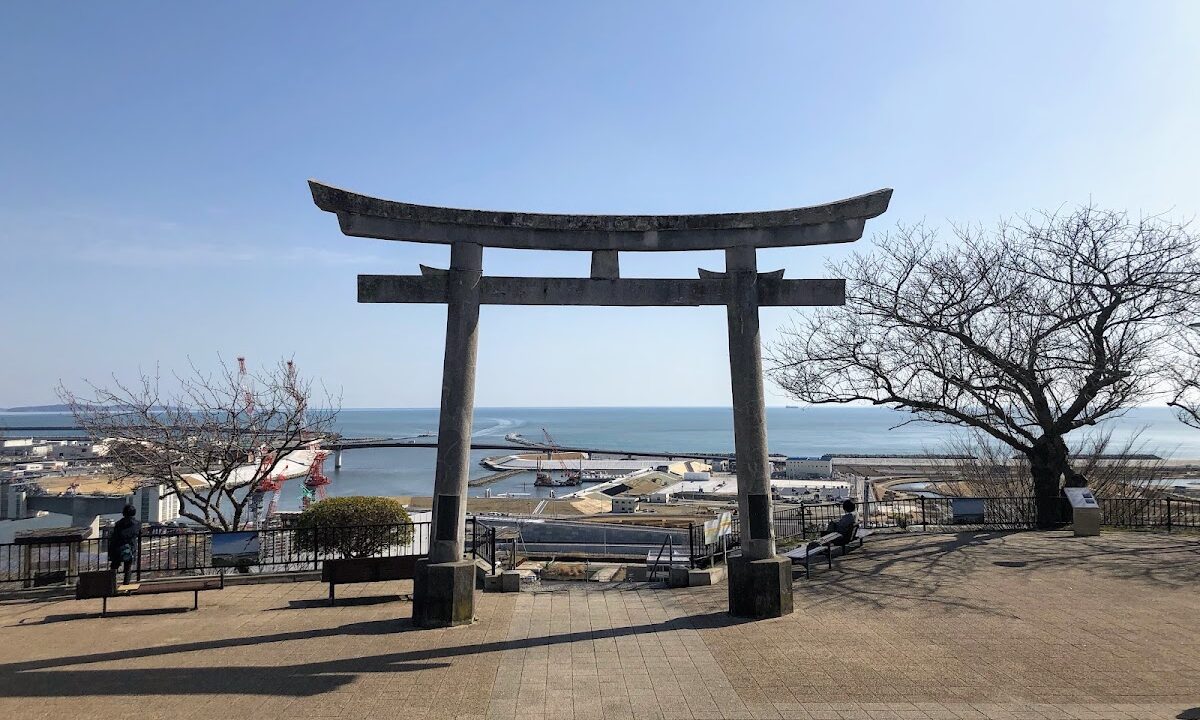
Kashima Mikojinja Shrine is located at the summit of Hiyoriyama. This shrine has long been worshipped as a deity protecting maritime safety and prosperity in Ishinomaki. From the shrine grounds, you can enjoy a panoramic view of Ishinomaki city, the former Kitakami River, and the Pacific Ocean.
Ishinomaki Castle Monument
Between the shrine and the park stands a monument marking the existence of Ishinomaki Castle. This monument is an important landmark for history enthusiasts visiting the castle ruins.
Observation Spot
Hiyoriyama Park is one of the best observation spots in Ishinomaki city. On a clear day, you can see all the way to the horizon of the Pacific Ocean, a view that the former castle lords likely gazed upon while praying for the peace and security of their territory.
A Place to Convey the Memory of the Great East Japan Earthquake
Hiyoriyama is known as a place where many citizens evacuated during the Great East Japan Earthquake of March 11, 2011. Its elevation of approximately 60 meters saved many lives from the tsunami.
Currently, the park contains memorials and explanatory plaques that convey the memory of the earthquake, and it plays an important role as a place for disaster prevention education. Visiting the Ishinomaki Castle ruins provides an opportunity not only to learn about medieval history but also to reflect on modern disasters and reconstruction. ## Access and Tourist Information for Ishinomaki Castle
Basic Information
- Location: 2-chome, Hiyorigaoka, Ishinomaki City, Miyagi Prefecture
- Alternate Name: Hiyoriyama Castle
- Castle Structure: Mountain Castle
- Builder: Kasai Kiyotsune
- Construction Period: Early Kamakura Period
- Main Lords: Kasai Clan
- Year of Abandonment: Tensho 18 (1590)
- Remains: Enclosures (partial)
- Designated Cultural Property: None
- Reconstructed Structures: None
Access Methods
Access by Train
Approximately 20 minutes on foot from JR Senseki Line “Ishinomaki Station”. There is a gentle uphill slope from the station to Hiyoriyama Park, but the road is well-maintained and easy to walk.
Access by Car
Approximately 15 minutes from Sanriku Expressway “Ishinomaki Kanan IC”. Hiyoriyama Park has a parking lot that is free to use. It can accommodate approximately 20 cars.
Access by Bus
Take the city loop bus bound for “Hiyoriyama” from Ishinomaki Station and get off at the “Hiyoriyama Park” bus stop. It’s about a 3-minute walk from there.
Points to Note When Visiting
- Visiting Hours: The park is open 24 hours, but we recommend visiting during daylight hours.
- Estimated Time Required: Allow 30 minutes to 1 hour for a stroll through the park.
- Attire: Since you will be walking on mountain paths, we recommend wearing comfortable shoes.
- Best Season: The scenery is especially beautiful during the cherry blossom season in spring and the autumn foliage season.
Nearby Tourist Attractions
When visiting Ishinomaki Castle Ruins, we recommend also visiting nearby tourist attractions.
Ishinomori Manga Museum
This museum allows you to experience the world of Shotaro Ishinomori, the manga artist known for Kamen Rider and Cyborg 009. It’s about a 15-minute walk from Ishinomaki Station and close to Hiyoriyama Park.
Ishinomaki City Museum
This museum teaches about the history and culture of Ishinomaki, and also features exhibits on the Kasai clan and Ishinomaki Castle. It’s a must-see for anyone who wants to understand the history of Ishinomaki Castle more deeply.
Former Kankeimaru Store
This historical building in Ishinomaki, built during the Meiji era, has survived the earthquake and tsunami and been preserved. You can learn about the history of commerce in Ishinomaki here.
Kinkasan Island
This sacred island, located about an hour by boat from Ishinomaki Port, has long been an object of worship. The Kasai clan is also said to have revered Kinkasan Island.
Ishinomaki Castle and the Legacy of the Kasai Clan
Tracing the Footsteps of the Kasai Clan
While the Kasai clan was based at Ishinomaki Castle, they built several branch castles throughout their vast territory. Castle ruins associated with the Kasai clan are scattered from northern Miyagi Prefecture to southern Iwate Prefecture, and visiting these sites allows you to experience the extent of their influence.
Major Castle Ruins Related to the Kasai Clan
- Teraiike Castle (Tome City, Miyagi Prefecture): An important branch castle of the Kasai clan
- Sanuma Castle (Tome City, Miyagi Prefecture): A castle ruled by a branch of the Kasai clan
- Komagamine Castle (Shinchi Town, Fukushima Prefecture): The southern base of the Kasai clan
Place Name and History of Ishinomaki
There are several theories about the origin of the place name “Ishinomaki,” but one theory suggests it was named because stones were piled up like a spiral at the mouth of the Kitakami River. In the past, it was sometimes written as “Ishinomaki” (石の巻).
During the Kasai clan’s rule, Ishinomaki flourished as a center for the collection and distribution of goods utilizing the Kitakami River’s water transport, becoming one of the important commercial cities in the Tohoku region during the medieval period. The foundation of this prosperity was laid by Ishinomaki Castle and the rule of the Kasai clan.
The Cultural Value of Ishinomaki Castle
Results and Challenges of Archaeological Excavations
Since the 1983 excavation, academic research on Ishinomaki Castle has been limited. Due to the loss of many remains, a detailed understanding of the castle’s structure has not been achieved.
However, even from the limited research results, it is clear that Ishinomaki Castle was a powerful mountain castle in the Tohoku region during the medieval period. Further detailed documentary research and archaeological excavations in the surrounding areas may reveal a more complete picture of Ishinomaki Castle.
Current Status of Preservation and Utilization
While the Ishinomaki Castle site is not currently designated as a specific cultural property, it is cherished by citizens as Hiyoriyama Park and recognized as an important place that conveys the history of Ishinomaki.
Following the Great East Japan Earthquake, Hiyoriyama has also attracted attention as a site for disaster prevention education, and its value is being re-evaluated from both the perspectives of historical heritage and disaster prevention heritage.
The Significance of Visiting Ishinomaki Castle
Visiting the Ishinomaki Castle ruins is not simply about viewing the remains of a medieval castle. Multiple layers of history overlap here.
From the rule of the Kasai clan from the Kamakura period to the Sengoku period, to the rule of the Date clan in the Edo period, to the modernization after the Meiji Restoration, and up to the modern history of the Great East Japan Earthquake, Hiyoriyama has witnessed all of this.
Standing on the small hill 60 meters above sea level, and gazing at the Ishinomaki city and the Pacific Ocean spread out below, we can feel the continuity of history that transcends time. The former lords of the castle and the people who evacuated during the earthquake all saw the same view.
Materials for Ishinomaki Castle Research
The main materials for learning about Ishinomaki Castle are as follows:
Documentary Sources
- *Ishinomaki City History*: The official history book of Ishinomaki City, containing descriptions of Ishinomaki Castle.
- *Studies on the Kasai Clan*: A research book specializing in the history of the Kasai clan.
- *Showa 58 (1983) Excavation Report*: The official excavation report by the Miyagi Prefectural Board of Education.
Online Resources
- Kojodan: A website collecting information on castles nationwide, featuring numerous visitor reviews and photographs.
- Jōkaku Hōrōki: A privately run castle information website, featuring detailed layout maps and visitor reports.
Summary
Ishinomaki Castle (Hiyoriyama Castle) was a medieval mountain castle built on Hiyoriyama in Ishinomaki City, Miyagi Prefecture, and functioned as the residence of the Kasai clan from the Kamakura period to the Sengoku period. Although it was abandoned in 1590 during Toyotomi Hideyoshi’s pacification of Ōshū, its historical value remains undiminished.
Currently developed as Hiyoriyama Park, it serves as a place of relaxation for the citizens of Ishinomaki and also plays an important role as a place to convey the memory of the Great East Japan Earthquake. While much of the remains have been lost, an archaeological excavation in 1983 confirmed the existence of a large castle complex.
It’s easily accessible, about a 20-minute walk from Ishinomaki Station, and there are plenty of other tourist attractions nearby, such as the Ishinomori Manga Museum and the Ishinomaki City Museum. It’s a place recommended not only for history buffs but for everyone visiting Ishinomaki.
Looking down on the city of Ishinomaki from the top of Hiyoriyama, you can feel the long history of this area, stretching from the time of the Kasai clan to the present day. The Ishinomaki Castle ruins are a precious historical heritage site connecting the past and the present.


