A Thorough Explanation of the History and Remains of Kishioka Castle (Suzuka City, Mie Prefecture) | Medieval Castles of Ise Province
What is Kishioka Castle?
Kishioka Castle was a medieval castle located in Kishioka-cho, Suzuka City, Mie Prefecture. It is believed to have been built in the area of the present-day Kishiokayama Green Park, particularly around the Kishiokayama No. 7 Tumulus. This castle, which functioned as a base for regional control during the Sengoku period in Ise Province, no clear remains exist today, but it remains an important historical site for understanding the region’s history.
Basic Information on Kishioka Castle
Location: Kishioka-cho, Suzuka City, Mie Prefecture
Other Names: None
Castle Structure: Hilltop Castle
Elevation: Approximately 45m
Construction Period: Unknown (Estimated to be the Sengoku period)
Builder: Unknown
Main Lords: Details unknown
Current Status: Developed as Kishiokayama Green Park; remains are unclear
Kishiokayama, where Kishioka Castle was built, is a hill approximately 45m above sea level, strategically important for overlooking the surrounding plains. This geographical advantage is thought to be one of the reasons why a castle was built there during the medieval period.
Historical Background of Kishioka Castle
Situation in Ise Province during the Sengoku Period
Ise Province, including Suzuka City in Mie Prefecture, was a region where multiple forces, such as the Kitabatake, Oda, and Seki clans, competed for influence during the Sengoku period. The area around Suzuka City faces Ise Bay and is a strategically important transportation hub close to the Tokaido road, leading to the construction of many small castles.
Kishioka Castle is believed to have functioned as one of these regional control centers. Although detailed historical records are scarce, it is considered highly likely that it was a castle built by a local powerful family or lord.
Role as a Castle
Currently, no reliable records regarding Kishioka Castle’s specific battle history or its lords have been discovered. However, given its location, it is presumed to have served the following roles:
- Regional Control Base: A base for governing the surrounding rural areas
- Road Monitoring: Monitoring and managing traffic on nearby roads
- Defense Facility: A defensive base prepared for invasions by hostile forces
- Intelligence Gathering: An outpost for gathering information on the Ise Bay area and inland areas
Remains and Current Status of Kishioka Castle
Current Status of Kishiokayama Green Park
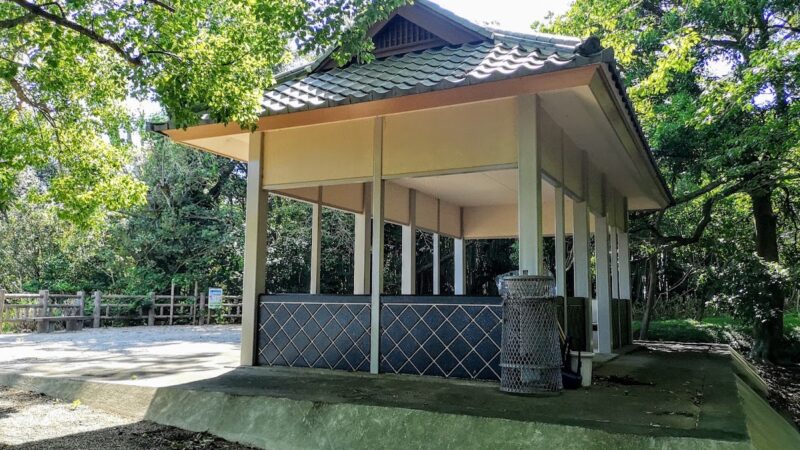
Currently, the site believed to be the site of Kishioka Castle is developed as Kishiokayama Green Park. Several burial mounds exist within the park, and the area around Kishiokayama Burial Mound No. 7 is considered to be the castle site.
While the castle system lists Kishiokayama at an elevation of 45m, the Suzuka City archaeological site information identifies the green park to the north as the castle site, and there are differing opinions among researchers regarding the exact castle area.
Preservation Status of the Remains
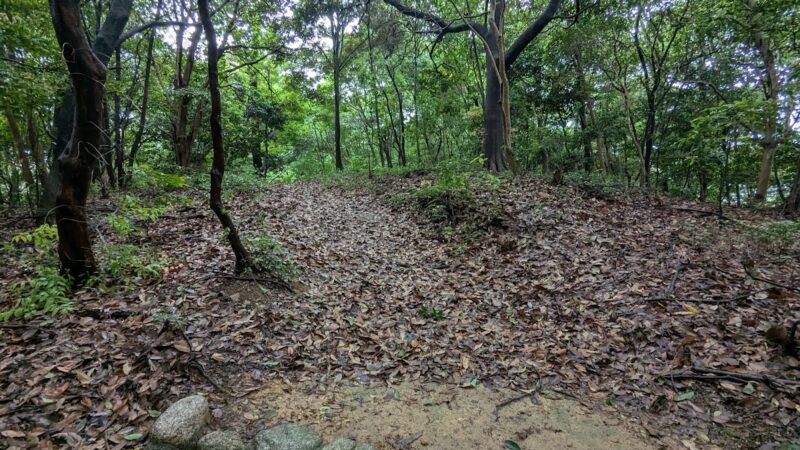
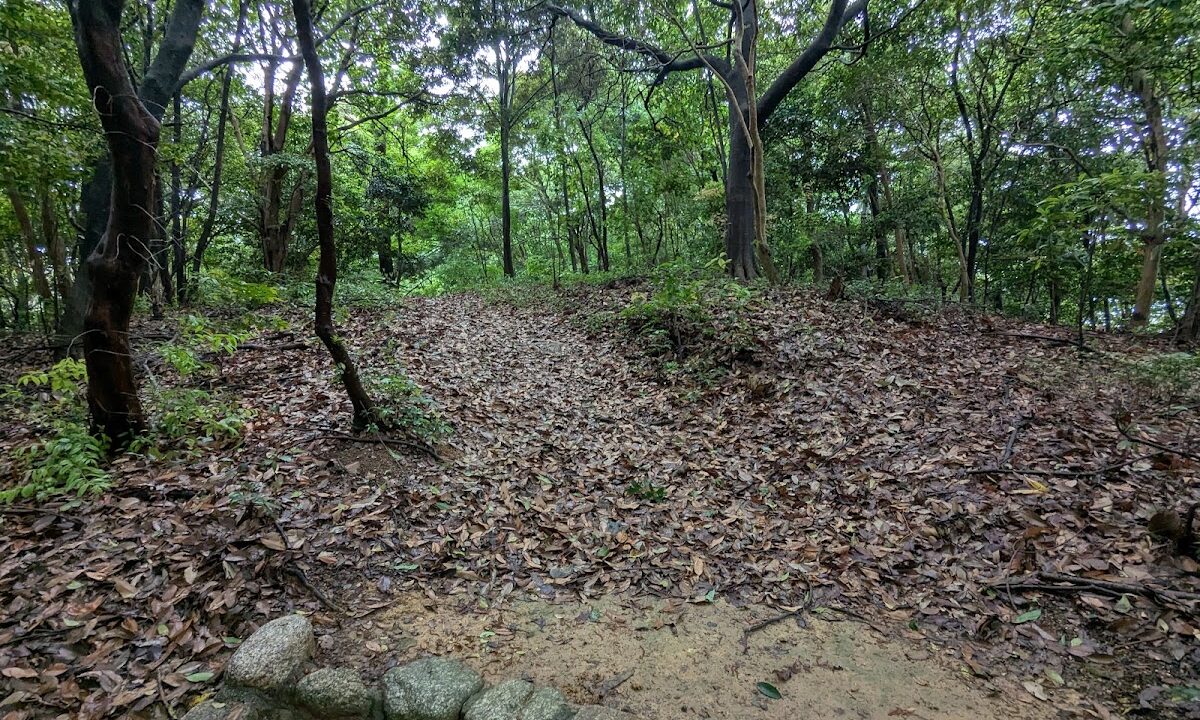
Unfortunately, very few clear remains of Kishioka Castle can be confirmed today. The following reasons are possible:
- Alteration due to Development: The topography has changed due to residential development and park construction since the modern era.
- Small-Scale Castle: It may have originally been a simple structure without large stone walls or moats.
- Weathering and Erosion: The remains have disappeared due to natural processes over many years.
- Lack of Records: Detailed drawings and records do not exist.
Relationship with Burial Mounds
Several burial mounds exist in Kishiokayama Green Park. These were constructed long before Kishioka Castle was built, during the Kofun period (3rd to 7th centuries). It is known that medieval castle builders often utilized the elevation of burial mounds to construct defensive facilities, and Kishioka Castle may have also utilized the topography of these burial mounds.
Geography and History of Kishioka-cho
Overview of Kishioka-cho, Suzuka City, Mie Prefecture
Kishioka-cho is a town located in the northern part of Suzuka City, Mie Prefecture. Suzuka City is one of the central cities in northern Mie Prefecture and is a region with a thriving automobile industry, known for the Suzuka Circuit.
Basic Data of Kishioka-cho:
- Location: Kishioka-cho, Suzuka City, Mie Prefecture
- Access: Approximately 2km northwest from Hirata-cho Station on the Kintetsu Suzuka Line
- Surrounding Area: Adjacent to Hirata-cho, Yabashi-cho, Nagataei-cho, etc.
Origin of the Place Name
The place name “Kishioka” is thought to originate from its topographical features. “Kishi” means a waterside or step, and “oka” means a small hill, so it is presumed to represent a hilly area facing a river or lowland. In fact, Kishioka-yama is a hill that juts out from the surrounding plains.
Historical Changes
The Suzuka region, including Kishioka-cho, has developed as a transportation hub since ancient times:
- Ancient Times: As evidenced by the construction of burial mounds, it was a region controlled by powerful local clans.
- Medieval Times: As part of Ise Province, castles such as Kishioka Castle were built.
- Early Modern Times: During the Edo period, it came under the influence of the Tsu and Kuwana domains.
- Modern Times and Beyond: After the implementation of the Meiji-era town and village system, it was incorporated into the present-day Suzuka City.
How to Access Kishioka Castle
Access by Public Transportation
By Train:
- Get off at Hirata-cho Station on the Kintetsu Suzuka Line.
- Approximately 25 minutes on foot or 5 minutes by car northwest from the station.
- Buses are also available (Suzuka City Community Bus, etc.; it is recommended to check the operating status in advance).
Distance from Nearest Station:
- Hirata-cho Station on the Kintetsu Suzuka Line: Approximately 2km
- Kintetsu Suzuka Line “Suzuka-shi Station”: Approximately 3km
Access by Car
Route from Major Roads:
- Approximately 10 minutes from National Route 23 via Prefectural Roads
- Approximately 15 minutes from Tomeihan Expressway “Suzuka IC”
- Approximately 20 minutes from Isewangan Expressway “Mie Kawagoe IC”
Parking Information:
Kishiyama Green Park may not have its own dedicated parking lot, so it is recommended to check the park management information of Suzuka City before visiting. Please be careful not to park on the street or use nearby public parking facilities.
Points to Note When Visiting
- Condition of Remains: No clear castle remains are left, so historical imagination is necessary.
- Park Hours: As it is maintained as a green space park, daytime visits are generally recommended.
- Season: The scenery is beautiful during the cherry blossom season in spring and the autumn foliage season.
- Attire: As it is a hilly area, comfortable walking shoes are recommended.
Surrounding Castles and Historical Sites
Major Castles in the Suzuka City Area
To deepen your understanding of Kishioka Castle, visiting surrounding castles will give you a more comprehensive view of the medieval history of this region.
Kanbe Castle:
- Location: Kanbe, Suzuka City, Mie Prefecture
- Features: A representative castle of Suzuka City, with well-preserved remains of stone walls and moats.
- Distance: Approximately 5km southeast of Kishioka Castle
Nagafuka Castle:
- Location: Nagafuka-cho, Suzuka City, Mie Prefecture
- Features: A medieval mountain castle, with remains of earthworks and baileys visible.
- Distance: Approximately 6km southwest of Kishioka Castle
Kawawa Castle:
- Location: Kawawa-cho, Suzuka City, Mie Prefecture
- Features: A flatland castle near Ise Bay, controlling a strategic point for water transport.
- Distance: Approximately 4km east of Kishioka Castle
Historical Spots in Suzuka City
Suzuka City Archaeological Museum:
Exhibits artifacts excavated from archaeological sites within the city. Information on the Kishiokayama Kofun Cluster is also available.
Ise Provincial Government Site: The site of the political center of ancient Ise Province. Important for understanding the historical background of Kishioka Castle.
Tsubaki Grand Shrine: An ancient shrine known as the Ichinomiya (first-ranked shrine) of Ise Province. You can experience the local history and culture.
Current Status and Challenges of Kishioka Castle Research
Lack of Documentary Sources
Research on Kishioka Castle faces a major challenge: a lack of documentary sources. While basic texts such as “Castle System” mention it, very few primary sources detailing the construction date, lord, castle structure, or battle history have been discovered.
Therefore, current knowledge about Kishioka Castle relies on indirect methods such as:
- Topographical analysis
- Comparative research with surrounding castles
- Inferences from the local historical context
The Need for Archaeological Investigation
To clarify the true nature of Kishioka Castle, a full-scale archaeological excavation is necessary. However, since the site is currently used as a green space park and no clear remains can be confirmed from the surface, the priority of the investigation is not necessarily high.
The following investigations are expected in the future:
- Ground-penetrating radar survey: Non-destructive exploration of underground remains
- Trial excavation: Confirmation of remains through focused small-scale excavations
- Topographic survey: Reconstruction of the castle layout through detailed topographic map creation
- Historical document survey: Search for undiscovered related historical materials
Position in regional history research
Kishioka Castle is positioned as part of the study of medieval castles in Ise Province. Although not a large-scale castle, it is important as a clue to understanding the activities of local minor lords and samurai.
Hundreds of medieval castle sites have been confirmed in Mie Prefecture, but many of them, like Kishioka Castle, remain largely unknown. Comprehensive research into these small-scale castles will provide a clearer picture of the regional society during the Sengoku period.
Significance of visiting Kishioka Castle
Historical romance and imagination
Kishioka Castle has neither magnificent stone walls nor a keep. However, this is precisely why visitors can exercise their own imagination. Standing on a 45-meter-high hill and gazing at the surrounding scenery, one can imagine the era when a castle once stood here, where warlords strategized and soldiers guarded the site—that is the true charm of visiting Kishioka Castle.
Learning about Local History
Exploring Kishioka Castle is an excellent opportunity to learn about the local history of Suzuka City, Mie Prefecture. While Suzuka City is now known as an industrial city, its history is long, and it played an important role from ancient times through the medieval and early modern periods.
Using Kishioka Castle as a starting point, the following learning opportunities unfold:
- The Sengoku period history of Ise Province
- Regional changes since the Kofun period
- The development of castle architecture and defensive techniques
- The relationship between place names, topography, and history
How to Enjoy Castle Tours
Small castles like Kishioka Castle offer a different kind of enjoyment compared to famous tourist attractions:
- Quiet Environment: Less crowded with tourists, allowing for a more in-depth engagement with history
- Topographical Observation: Gain a real understanding of how the castle utilized the terrain
- Interaction with the Local Community: Opportunities to interact with locals and hear stories passed down through generations
- Research Perspective: The enjoyment of observing while formulating your own hypotheses
Kishioka Castle and the Castle Culture of Mie Prefecture
Characteristics of Castles in Mie Prefecture
Mie Prefecture is composed of parts of Ise Province, Iga Province, Shima Province, and Kii Province, and different castle cultures developed in each region.
Castles of Ise Province:
- Mostly located in plains, with flatland castles and hilltop castles being the norm.
- Situated with consideration for water transport in Ise Bay.
- A group of castles influenced by the Kitabatake clan, Oda clan, and others.
Kishioka Castle can be understood as one of these castles in northern Ise Province.
Challenges of Preservation and Utilization
Many medieval castles in Mie Prefecture, like Kishioka Castle, do not leave clear remains. This is due to:
- Development due to modernization
- Conversion to farmland and residential areas
- Damage due to natural disasters
On the other hand, there are movements to utilize these castle ruins as regional resources.
Possibilities for Utilization:
- Development as a place for historical learning
- Promotion as a tourist resource
- Re-evaluation as a core of regional identity
- Creation of restoration CG using digital technology
Summary: Historical Value of Kishioka Castle
Kishioka Castle was a medieval castle located in Kishioka-cho, Suzuka City, Mie Prefecture. Although detailed records are scarce, it is believed that Kishioka Castle played an important role as a base for regional control during the Sengoku period (Warring States period).
Currently, the castle site is maintained as Kishiokayama Green Park, and no clear remains can be confirmed. However, its location and surrounding environment allow us to imagine what it was like in those days. Kishioka Castle is a historical site with a different kind of charm than famous large castles—its history rooted in the region, its ambiguity that stimulates the imagination, and the pleasure of quiet exploration.
When visiting Suzuka City in Mie Prefecture, why not take a look at this historical side in addition to Suzuka Circuit and the industrial area? Standing at the Kishioka Castle ruins and reflecting on the lives of the people who once ruled this land will make the region’s history feel more intimate.
While much about Kishioka Castle remains unexplained in castle research, this also means that there is potential for new discoveries through future investigations. We hope that continued investigations by local history enthusiasts and researchers will one day reveal the true nature of Kishioka Castle.