Aoki Castle (Nabari City, Mie Prefecture) Complete Guide | History, Remains, and Access Information
What is Aoki Castle?
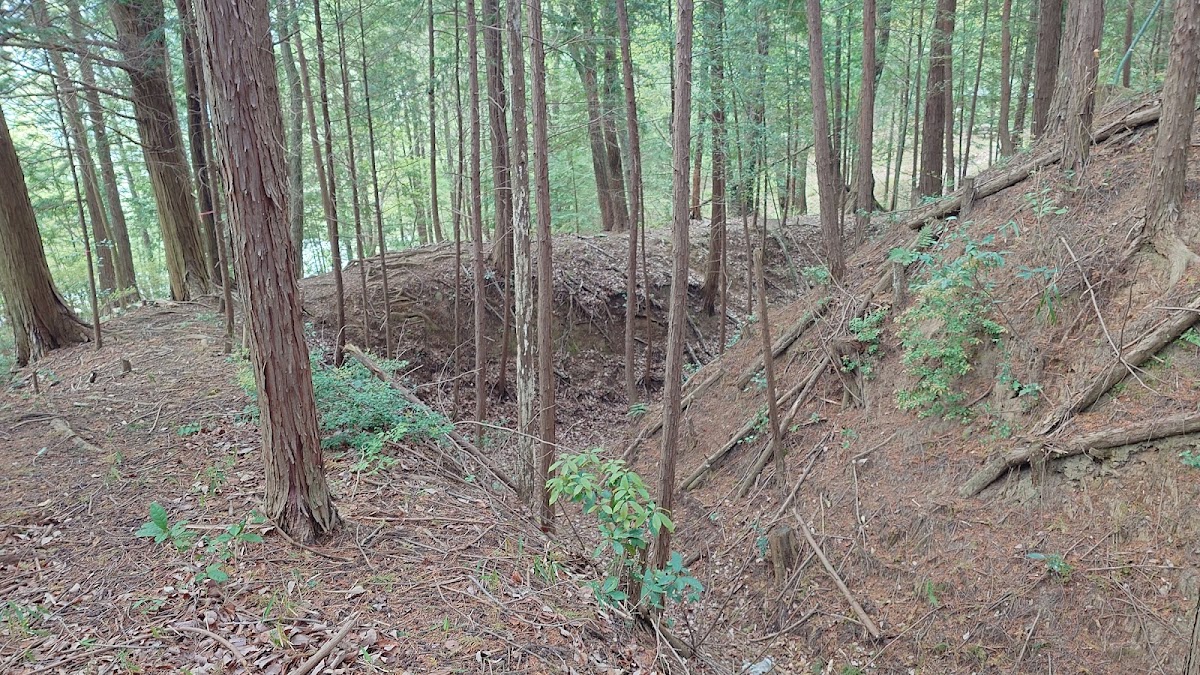
Aoki Castle is a medieval mountain castle located in Shorenji, Nabari City, Mie Prefecture. Currently, it is the site of Shorenji Park and the grounds of Tahozan Jizoin Temple. It is known as a castle with a unique square, single-enclosure layout characteristic of the Iga region. Built during the Muromachi period, this castle was attacked and fell to Oda Nobunaga’s forces during the Tensho Iga Rebellion. Even today, remnants from the Sengoku period, such as earthworks reaching 8 meters in height and deep dry moats, are well-preserved.
Also known as “Shorenji Castle,” it was built on a hill approximately 30 meters high, located at the southern end of Yurigaoka, south of Nabari Station. As one of the representative remains of medieval castles in the Iga region, it attracts attention from castle enthusiasts and history buffs.
History of Aoki Castle
Construction and Lord
Aoki Castle was built during the Muromachi period by Aoki Minbu-no-jo Nobusada. The Aoki clan was a powerful local lord family in Iga Province, controlling the Nabari region. During this period, Iga Province was a region where central government control was difficult to exert, and many local lords and powerful families held sway.
Aoki Nobusada, as one of the Iga clan, built this castle as a base for regional defense and control. The castle’s location on a hill overlooking the Nabari River gave it a strategic position controlling a key transportation hub. The castle’s layout, a square single-enclosure style unique to the Iga region, was a widely adopted castle construction style in the area, allowing for efficient defense with limited personnel.
The Tensho Iga Rebellion and the Fall of Aoki Castle
The most important event in the history of Aoki Castle was Oda Nobunaga’s invasion of Iga Province in September 1581 (Tensho 9). This conflict, known as the “Tensho Iga Rebellion” or the “Second Tensho Iga Rebellion,” saw Nobunaga launch a large-scale military operation to crush the independence of Iga Province.
Nobunaga mobilized approximately 40,000 troops and invaded Iga Province from six directions. Faced with this overwhelming force, Iga’s castles fell one after another. Aoki Castle was no exception, and it fell after a fierce attack by the Oda army. This battle led to the collapse of Iga Province’s independent rule and its subsequent incorporation into the Oda regime.
While detailed records of Aoki Castle after its fall are scarce, it is believed, like many Iga castles, to have been abandoned with the end of the Sengoku period. Later, Shorenji Temple was built on the castle site and continues to function as a local place of worship to this day.
Structure and Layout of Aoki Castle
Square Single-Enclosure Layout
Aoki Castle is a castle with a typical square single-enclosure layout found in the Iga region. This structure centers around a single main enclosure (honmaru), surrounded by earthworks and a dry moat. Unlike large castles with complex enclosure arrangements, it achieves a simple yet robust defensive system.
The main enclosure is roughly square, measuring approximately 60 meters east-west and 50 meters north-south, and was constructed utilizing relatively flat terrain. This size is standard for castles of the Iga local lord class, and it combines residential and defensive functions.
Features of the Earthworks
The greatest highlight of Aoki Castle is the earthworks, which still remain today and are approximately 8 meters high. These earthworks are well-preserved on the north, east, and west sides of the castle. While part of the south side has been lost due to the construction of Shorenji Temple, it remains a structure that fully conveys the castle’s former scale.
The earthen rampart has a trapezoidal cross-section, with a base width of approximately 10 meters and a top width of approximately 2-3 meters. Constructed using the rammed earth technique, the rampart has remained intact for nearly 500 years, demonstrating the high level of civil engineering technology during the Sengoku period. A deep dry moat was dug outside the rampart, and the combination of the rampart and moat effectively created a defensive height of over 10 meters.
Dry Moat and Defensive System
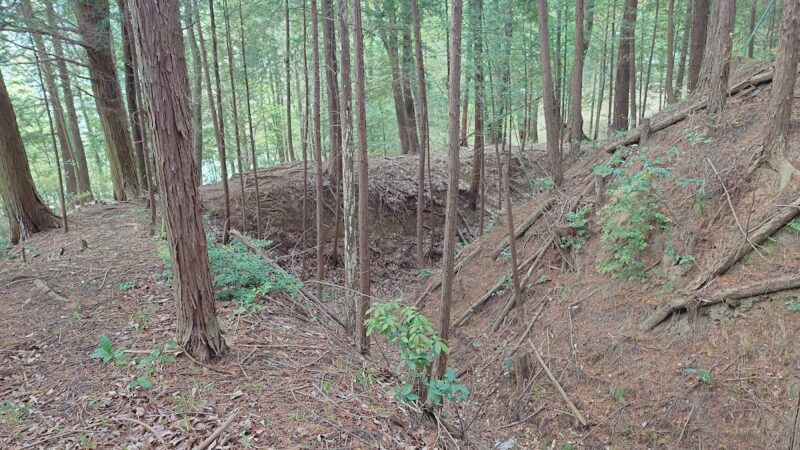
The dry moat surrounding Aoki Castle is approximately 4-5 meters deep and 8-10 meters wide, and is still clearly visible today. The bottom of the dry moat is not flat, but has a V-shaped or U-shaped cross-section, a design intended to make enemy intrusion difficult.
The dry moats on the north and east sides are particularly well-preserved, allowing visitors to experience the actual defenses of a Sengoku period castle by walking along the bottom of the moat. In some places, an outer earthen rampart was constructed outside the dry moat, indicating the formation of a double defensive line.
The main entrance (koguchi) is presumed to have been located in the northwestern part of the main enclosure, and the area near the current entrance to Shorenji Park is thought to be its location. However, due to later alterations, it is difficult to clearly identify the remains of the main entrance.
Highlights of Aoki Castle
8-meter-high earthen rampart
The most impressive feature when visiting Aoki Castle is the massive earthen rampart surrounding the main enclosure. At 8 meters high, it is equivalent to the height of a three-story building, making it an extremely large earthen rampart. The northern and eastern ramparts, in particular, are well-preserved, and it is possible to walk along them.
The depth of the dry moat viewed from the top of the rampart is breathtaking, allowing one to truly appreciate the difficulty faced by enemy soldiers attacking this castle during the Sengoku period. Furthermore, a panoramic view of Nabari city can be seen from the top of the rampart, highlighting the castle’s strategic location for monitoring a key transportation hub.
Deep dry moat
The dry moat surrounding the outside of the earthen rampart is another important highlight of Aoki Castle. The eastern moat, in particular, retains ample depth and width, allowing visitors to experience the impressive scale of the castle ruins up close by descending to the bottom.
The moat walls still bear traces of the original excavation, revealing evidence of large-scale civil engineering work carried out by human hands. While vegetation grows thick from spring to autumn, the ruins are more clearly visible in winter, making a winter visit recommended for castle enthusiasts.
Shorenji Temple and Tahozan Jizoin Temple
Tahozan Jizoin Temple stands within the main enclosure of the castle ruins, creating a unique landscape where historical temple architecture and castle ruins blend seamlessly. Information boards are installed within the temple grounds, allowing visitors to learn about the history and structure of Aoki Castle.
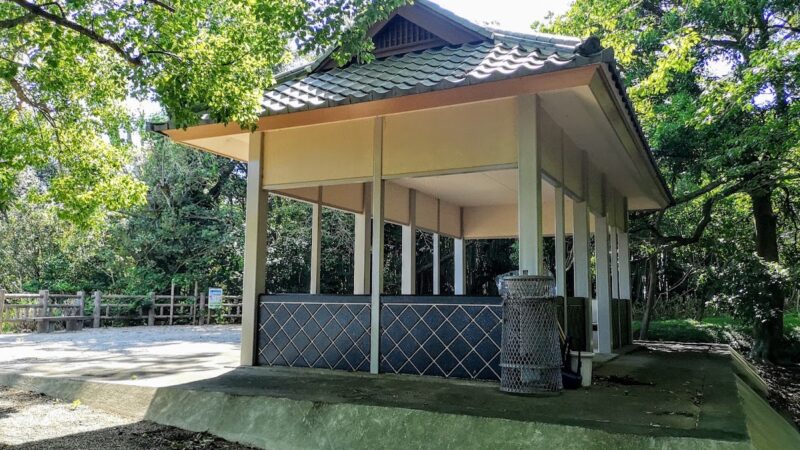
The area developed as Shorenji Park also functions as a place of relaxation for local residents, serving as a fine example of the coexistence of historical heritage and modern living spaces. Cherry trees are planted within the park, making it a popular spot for cherry blossom viewing in spring.
Information Boards and Signs
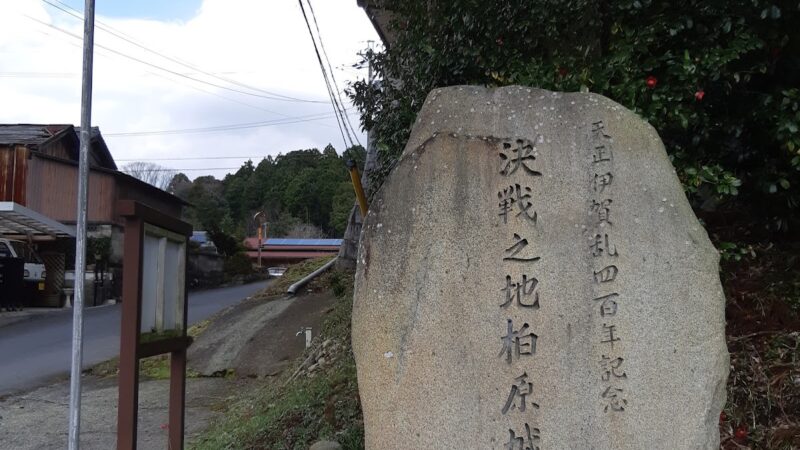
Near the T-junction north of the castle ruins is the Shorenji Park parking lot, where an information board explaining the history and structure of Aoki Castle is located. This board includes a detailed map of the castle grounds and historical background; reading it before your visit will allow you to understand the castle ruins more deeply.
Within the castle ruins, there are several signposts clearly indicating the location and names of remains such as earthworks and dry moats. Following these signs will allow you to efficiently grasp the overall layout of the castle ruins.
Access to Aoki Castle
Access by Public Transportation
The nearest station to Aoki Castle is Kintetsu Osaka Line’s “Nabari Station.” The distance from Nabari Station to the castle ruins is approximately 2.5 kilometers, taking about 30-35 minutes on foot.
Taxis are also available from Nabari Station, taking about 7-10 minutes and costing around 1,000 yen. Nabari City also operates a community bus, but the number of services is limited, so it is recommended to check the timetable in advance.
If accessing on foot, the most common route is to head south from the south exit of Nabari Station along the prefectural road towards Yurigaoka. There are signs along the way, so you are unlikely to get lost. However, there are some uphill sections, so comfortable walking shoes are recommended.
Access by Car
If accessing by car, it’s approximately 30 minutes from the Hari IC on the Meihan Expressway via National Route 369, or approximately 40 minutes from the Ueno IC via National Route 368. From Nagoya, the route using the Tomeihan Expressway and Meihan Expressway is convenient.
From Osaka, the shortest route is to take the Nishimeihan Expressway, then the Meihan Expressway, and exit at the Hari IC. From Kyoto, you can use the Keina-Wa Expressway, and access via National Route 163 and National Route 368 from the Kizu IC.
Shorenji Park has its own parking lot, which is free to use. Parking is limited to approximately 10 cars, so it can become full on weekends and during cherry blossom season. In that case, we recommend using nearby paid parking lots or visiting at a different time.
Address and Location Information
- Address: Shorenji, Nabari City, Mie Prefecture
- Latitude/Longitude: Approximately 34.6 degrees North, 136.1 degrees East
- Elevation: Approximately 180 meters (relative height approximately 30 meters)
When searching using car navigation or smartphone map apps, it is best to search for “Shorenji Park” or “Tahozan Jizoin Temple.” Searching for “Aoki Castle” may not display the correct location, so please be careful.
Notes and Manners for Visitors
Visiting Hours and Attire
Aoki Castle Ruins are maintained as a park and are generally open 24 hours a day, but it gets dark after sunset, so we recommend visiting during the daytime. Especially if you want to observe the earthworks and dry moats in detail, the bright morning hours are ideal.
Within the castle ruins, there are stairs and slopes, and the footing can be unstable in some areas when walking on top of the earthworks or at the bottom of the dry moats. Wear comfortable, non-slip shoes such as sneakers, and be especially careful during rainy weather or after rain. Insect repellent spray in summer and warm clothing in winter will make your visit more comfortable.
Photography and Manners
Photography at the castle ruins is generally permitted, but consideration must be given to avoiding disturbing worshippers in temple grounds. When photographing the remains of the earthworks and dry moats, please be careful not to damage the remains or enter dangerous areas.
If you wish to use a drone for aerial photography, you must obtain permission from Nabari City in advance. Also, since the surrounding area is residential, consideration for noise and privacy is important.
Cultural Property Protection
Aoki Castle Ruins are a valuable historical heritage site, and the remains such as the earthworks and dry moats are protected as cultural properties. Damaging the remains, collecting artifacts, or collecting plants are strictly prohibited. When visiting the castle ruins, please limit your visit to “seeing” and “learning,” and be considerate in preserving the remains for future generations.
By following basic manners, such as always taking your trash with you and smoking only in designated areas, you can maintain an environment where everyone can comfortably enjoy the historical heritage.
Nearby Tourist Attractions
Akame 48 Waterfalls
Located about 20 minutes by car from Aoki Castle, Akame 48 Waterfalls is one of Mie Prefecture’s most representative scenic spots. Numerous waterfalls of various sizes line a 4-kilometer gorge, offering particularly spectacular views during the autumn foliage season. It’s ideal to combine a visit to Aoki Castle with a day trip to this site.
Nabari Todo Family Residence Ruins
Located in the city of Nabari, the Nabari Todo Family Residence Ruins are the remains of a samurai residence from the Edo period. While Aoki Castle is a mountain castle from the Sengoku period, this site showcases samurai architecture from the peacetime Edo period, allowing visitors to learn about the changes in castles and samurai architecture over time.
Shorenji Lake
Located south of Aoki Castle, Shorenji Lake is an artificial lake completed in 1970. The surrounding area includes the Shorenji Tourist Grape Farm and a campsite. You can combine a visit to the castle ruins with leisure activities enjoying nature.
Iga Ueno Castle
Located about 40 minutes by car from Aoki Castle, Iga Ueno Castle is a representative example of a modern castle built by Todo Takatora. While Aoki Castle is a medieval earthen castle, Iga Ueno Castle is a modern castle with stone walls and a keep. Comparing the two castles allows you to experience the evolution of Japanese castle history.
Castle Culture of the Iga Region
Characteristic Castles of Iga
The Iga region has many castles similar to Aoki Castle, featuring a square, single-enclosure design. This is due to the historical background of Iga Province being a region less susceptible to direct control by the central government, and where numerous small local lords held sway. Each local lord built a square, single-enclosure castle to efficiently defend their territory.
A characteristic feature of Iga castles is their structure, which primarily utilizes earthworks and dry moats, with very little use of stone walls. This reflects the difficulty in obtaining stone materials and the superior civil engineering skills of the Iga clan. Furthermore, many castles are built on low-lying hills and are characterized by their practicality, prioritizing residential functions.
Iga Clan and Castles
During the Sengoku period, the Iga clan formed their own autonomous organization, establishing a system of collective resistance against external incursions. Each local lord’s castle served as an individual defensive stronghold, but also as part of a network of bases that cooperated in times of conflict.
Aoki Castle is also thought to have functioned not in isolation, but as part of a defensive system coordinating with surrounding castles. Oda Nobunaga’s mobilization of a massive army of 40,000 during the Tensho Iga Rebellion was necessary to break through this unity and defensive system of the Iga clan.
Research and Preservation of Aoki Castle
Archaeological Investigation
While no full-scale archaeological excavations have been conducted on Aoki Castle, detailed layouts have been revealed through surface observations and surveys. The importance of Aoki Castle was recognized during castle distribution surveys conducted by the Mie Prefectural Board of Education and the Nabari City Board of Education, and documentation and preservation efforts are underway.
Further detailed investigations may reveal new historical facts, such as the construction period, renovation history, and building layout within the castle. Analysis of excavated artifacts is particularly expected to provide a deeper understanding of the lord’s lifestyle and the castle’s function.
Preservation Activities and Challenges
The Aoki Castle site is currently a popular local park known as Shorenji Park, but its preservation as a historical heritage site remains a crucial issue. Earthworks and dry moats are susceptible to natural weathering and vegetation changes, requiring regular maintenance.
Nabari City strives to maintain the castle site in its current state from a cultural property protection perspective, but budget and personnel constraints limit sufficient preservation activities. Volunteer activities by castle enthusiasts and local residents contribute to the preservation of the ruins through activities such as mowing grass and cleaning.
Summary
Aoki Castle is a valuable medieval castle site remaining in Nabari City, Mie Prefecture. From its construction in the Muromachi period to its fall during the Tensho Iga Rebellion, it is an important legacy that tells the story of the Sengoku period in the Iga region. The 8-meter-high earthen ramparts and deep dry moats retain their original appearance even after nearly 500 years, conveying the spirit of the Sengoku period to visitors.
The unique square-shaped single-enclosure layout of the Iga region is a manifestation of a rational philosophy aimed at achieving maximum defensive effectiveness with limited resources, and is a good example of the regional diversity in the history of Japanese castles. Even now, as Shorenji Park, it is noteworthy that it functions as a place of relaxation for local residents without diminishing its value as a historical heritage site.
Its convenient location, within walking distance of Nabari Station, is one of its attractions. Combining a visit to nearby tourist spots such as Akame 48 Waterfalls and Iga Ueno Castle allows for a fulfilling historical sightseeing experience. It’s a recommended spot not only for castle enthusiasts, but also for history buffs and those who enjoy nature walks.
By visiting Aoki Castle, you can experience local history beyond textbooks, the true face of the Sengoku period, and the wisdom and skills of our ancestors. When you visit Nabari City in Mie Prefecture, be sure to stop by this hidden gem of a castle.