Complete Guide to Ise Ueno Castle (Tsu City, Mie Prefecture) | History, Highlights, and Access Information
Located in Ueno, Kawage-cho, Tsu City, Mie Prefecture, Ise Ueno Castle is a historically significant castle site built by Oda Nobukane, the younger brother of Oda Nobunaga. Currently, it is maintained as Honjoyama Youth Park, a valuable spot where you can enjoy historical walks and family leisure activities simultaneously. This article provides a detailed explanation of Ise Ueno Castle, from its historical background to its current highlights and access methods.
What is Ise Ueno Castle?
Ise Ueno Castle (Ueno-jo) is a flatland castle built on a plateau approximately 30-40 meters above sea level. Strategically situated overlooking the town of Ueno, its eastern side is a cliff offering a panoramic view of Ise Bay, while the other three sides are surrounded by valleys, creating a natural stronghold.
The castle grounds measured approximately 230 meters east-west and 120 meters north-south, with the main keep located on a hill approximately 80 meters square. With its low earthen ramparts and a watchtower-like platform at the northwest corner, it played an important role as a temporary castle for Tsu Castle.
History of Ise Ueno Castle
Construction and Improvement by Oda Nobukane
In 1569 (Eiroku 12), Oda Nobukane, the younger brother of Oda Nobunaga, became the lord of Ise Ueno Castle. Nobukane established this site as his residence, using it as a temporary castle for Anotsu Castle (Tsu Castle), and ordered his retainer, Wakebe Sakyo-no-suke Mitsuyoshi, to carry out repairs to the castle.
In 1570 (Genki 1), a full-scale renovation was carried out, and the castle tower base and main enclosure were improved. During this period, Nobukane utilized this castle as a base for governing Ise Province, making it the center of regional control.
A Site Associated with the Asai Sisters
A noteworthy aspect of the history of Ise Ueno Castle is its deep connection to the Asai sisters.
In 1573 (Tensho 1), Odani Castle, the residence of Asai Nagamasa and his wife Oichi, fell. The following year, 1574 (Tensho 2), Oichi and her three daughters—Chacha (later known as Yodo-dono), Hatsu (wife of Kyogoku Takatsugu), and Go (wife of Tokugawa Hidetada)—are said to have been taken refuge at Ise Ueno Castle, the residence of Nobukane.
During this period, the three sisters spent time at this castle and would later play important roles on the historical stage. Chacha, in particular, as a concubine of Toyotomi Hideyoshi, and Go as the principal wife of Tokugawa Hidetada, the second shogun of the Edo shogunate, had a significant impact on Japanese history.
The Era of the Wakebe Clan and the Castle’s Abandonment
From 1590 (Tensho 18) onward, Wakebe Mitsuyoshi managed the castle as its castellan. After Nobukane was demoted and transferred to Omi Province in 1594, Ise Ueno Castle continued to exist as an independent castle.
However, in 1619, when Mitsuyoshi’s adopted son, Wakebe Mitsunobu, was transferred to Koizumi in Yamato Province, Ise Ueno Castle was abandoned. This marked the end of its approximately 50-year history.
Current Ise Ueno Castle Site: Honjoyama Youth Park
Park Development
Currently, the Ise Ueno Castle site has been developed as “Honjoyama Youth Park,” a place of relaxation for citizens. While utilizing the remains of the castle, a lawn area and athletic facilities have been installed, creating a space that combines historical learning with recreation.
The park is rich in nature, allowing visitors to enjoy the scenery of each season. In particular, cherry blossoms bloom in the spring, making it a popular spot for cherry blossom viewing. This facility is popular with both local residents and tourists, offering a full day of enjoyment for families.
Observation Deck and Museum
A two-story observation deck has been built on the site of the former main keep, providing visitors with a magnificent view.
View from the Observation Deck
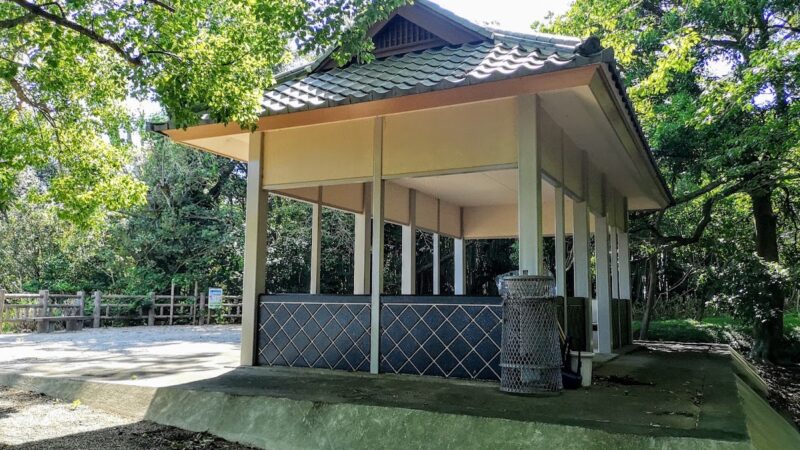
From the observation deck, you can enjoy a panoramic view of the magnificent Ise Bay, and on clear days, you can even see the Suzuka mountain range in the distance. To the south, you can see the city of Tsu up close, allowing you to relive the view seen by the former castle lords. A gazebo is also provided, where you can relax and enjoy the scenery.
Exhibits in the Museum
A museum is located on the second floor of the observation deck, where you can learn about the history of Ise Ueno Castle. The main exhibits include the following:
- Diorama of Ise Ueno Castle (Estimated Reconstruction Model): A three-dimensional model that recreates the castle’s appearance in its heyday, allowing visitors to visually understand its structure and scale.
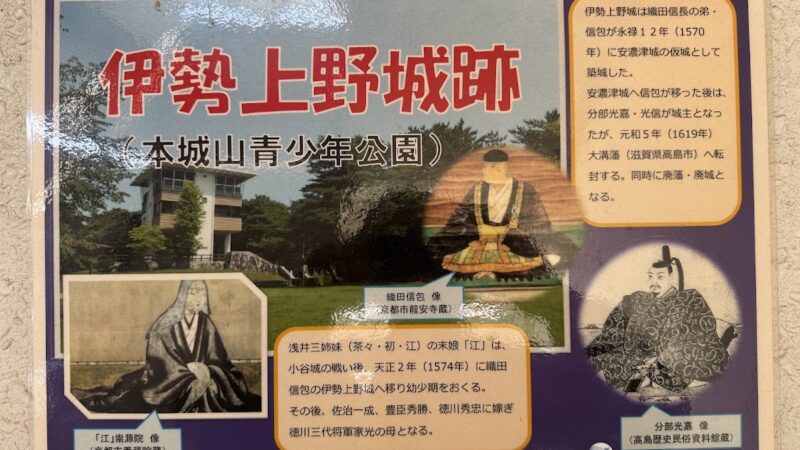
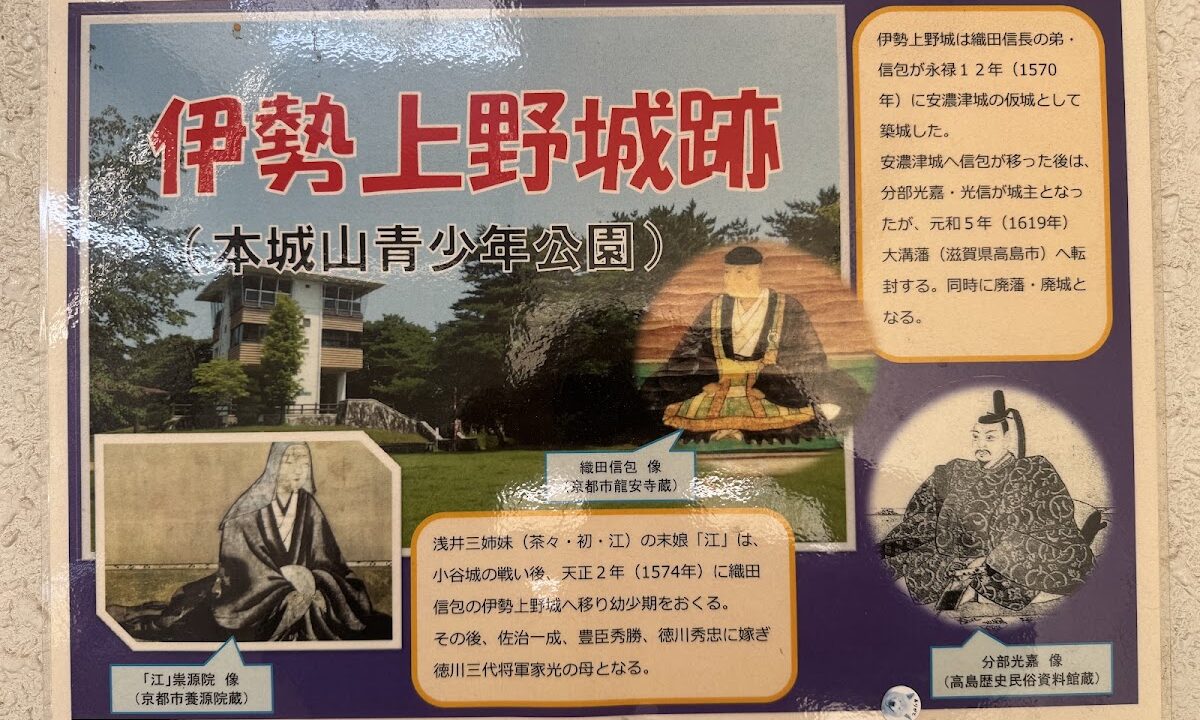
- Introduction to Figures Related to the Castle: Explanatory panels about historical figures deeply connected to the castle, such as Oda Nobukane, Wakebe Mitsuyoshi, and the Asai sisters.
- Historical Records: Exhibits of historical documents illustrating the castle’s transformation and the lives of people at the time.
The archives are free to enter and are a must-visit spot when visiting the castle ruins.
Remains of the Castle Site
Within the park, there are scattered remains that preserve the appearance of the former castle:
- Main Enclosure Site: Currently a hill with an observation deck, this marks the location of the former main enclosure.
- Keep Base Site: The site where the keep is believed to have stood; some of the stonework remains.
- Earthwork: Traces of an earthen embankment built as a defensive structure for the castle can be seen.
- Watchtower Base Site: A topographical feature in the northwest corner where a watchtower is presumed to have stood.
These remains are valuable resources for understanding castle architecture of the Sengoku period.
Highlights of Ise Ueno Castle
Historical Value
Ise Ueno Castle possesses extremely high historical value as a place where the histories of two prominent families representing the Sengoku period, the Oda clan and the Asai clan, intersect.
Oda Nobukane, as Nobunaga’s younger brother, was entrusted with the rule of Ise Province and established his base in this area. Furthermore, the fact that the Asai sisters spent time at this castle is an important episode that indirectly relates to the later establishment of the Toyotomi regime and the Tokugawa shogunate.
Visiting the castle ruins allows you to feel firsthand the turbulent history from the Sengoku period to the early Edo period.
Stunning Views
One of the greatest attractions of Ise Ueno Castle is the magnificent view it offers due to its location.
Located on a plateau 30-40 meters above sea level, it offers expansive panoramic views. The view of Ise Bay from the eastern cliff is particularly breathtaking, and on clear days, you can see all the way to the other side of the sea.
During the Sengoku period, this view was important for military surveillance, but today it is a scenic resource that provides solace and inspiration to visitors.
Nature Through the Seasons
Honjoyama Youth Park shows different faces throughout the four seasons.
Spring: Cherry blossoms are in full bloom, attracting many visitors. The contrast between the castle ruins and the cherry blossoms makes it a popular photo spot.
Summer: Lush green trees provide shade, and a cool breeze blows through. Children can be seen playing on the playground equipment.
Autumn: The autumn foliage is beautiful, making it the perfect season for a stroll. The crisp air enhances the views even further.
Winter: The air is clear, allowing for expansive views, and you can sometimes enjoy the snow-covered Suzuka Mountains.
Access Information
Location
Address: 2640 Ueno, Kawage-cho, Tsu City, Mie Prefecture
Access by Car
- From Tsu IC on the Ise Expressway: Approximately 15 minutes
- From National Route 23: Head north from Tsu city center towards Kawage-cho
- Parking: Free parking available within the park (limited spaces; early arrival is recommended during events)
Access by Public Transportation
- From JR/Kintetsu Tsu Station: Take a Mie Kotsu bus and get off at the “Ueno” bus stop, then walk approximately 10 minutes
- From Toyotsu-Ueno Station on the Kintetsu Nagoya Line: Approximately 20 minutes on foot (nearest station)
Usage Information
- Opening Hours: Always open (The museum is open only during the daytime; please check the hours)
- Admission Fee: Free
- Closed Days: None (The museum has closed days)
- Inquiries: Tsu City Board of Education or Tsu City Kawage Regional Development Division
Recommended Nearby Spots
Michi-no-Eki Tsu Kawage
A roadside station located about 5 minutes by car from the Ise Ueno Castle Ruins. You can purchase fresh local produce and specialty products. It’s also an ideal rest stop and convenient for gathering local information.
Kazahaya no Sato ~Kappa’s Hometown~
A tourist facility where you can enjoy seasonal flowers such as plum blossoms, wisteria, and hydrangeas. Visiting it in conjunction with the Ise Ueno Castle Ruins allows you to fully enjoy the nature and history of Tsu City.
Tsu Castle Ruins
The site of Tsu Castle, the main castle that functioned as a temporary castle while Ise Ueno Castle was used. Currently developed as a park, it’s an essential spot for learning about the history of Tsu City.
Points to Note When Visiting Ise Ueno Castle
Recommended Time to Visit
Cherry Blossom Season (Late March to Early April): This is the best time to enjoy cherry blossoms while strolling through the castle ruins.
Autumn (October to November): The weather is mild and ideal for walks. The autumn foliage is beautiful, and the views are magnificent.
Estimated Time Required
- Castle Ruins Walk Only: Approximately 30 minutes to 1 hour
- Including Museum Visit: Approximately 1 hour to 1 hour 30 minutes
- Including Park Activities: 2 hours to half a day
What to Bring & Wear
- Comfortable Walking Shoes: The castle ruins are uneven, so comfortable walking shoes such as sneakers are recommended.
- Hat & Sunscreen: There is little shade at the observation deck and plaza.
- Camera: For taking photos of the views and castle ruins.
- Drinks: Essential, especially in summer, to prevent heatstroke.
Family-Friendly Visits
Honjoyama Youth Park has plenty of facilities that families with children can enjoy:
- Lawn Area: A spacious area for picnics and ball games.
- Athletic Facilities: Playground equipment where children can play and exercise.
- Toilets and Rest Facilities: These are conveniently located within the park and can be used with peace of mind.
The charm of Ise Ueno Castle Ruins lies in the fact that both adults interested in history and children who want to play can enjoy themselves in their own way.
Historical Significance of Ise Ueno Castle
Base of the Oda Clan’s Rule over Ise
Oda Nobukane’s use of Ise Ueno Castle as his base was an important part of the Oda clan’s rule over Ise Province. Nobunaga entrusted the governance of Ise Province to his younger brother, Nobukane, who aimed to stabilize the region from this castle.
While functioning as a temporary castle for Tsu Castle, Ise Ueno Castle played its own political and military role, making it a prime example of regional governance during the Sengoku period.
The Asai Sisters and Women of the Sengoku Period
The period the Asai sisters spent at Ise Ueno Castle was a crucial turning point in their lives. Having lost their father, Asai Nagamasa, and receiving protection from Nobukane along with their mother, Oichi, their experiences during this time may have influenced their later lives.
This castle ruin quietly tells the story of women who, despite being treated as political pawns during the Sengoku period, shrewdly survived.
Event and Usage Information
Honjoyama Youth Park hosts various events throughout the year:
- Cherry Blossom Festival: Events organized by local residents are sometimes held during the spring cherry blossom season.
- History Lectures: Lectures and guided tours on the castle’s history are organized by the Tsu City Board of Education and other organizations.
- Children’s Events: Nature experience events for young people are sometimes held during summer vacation, etc.
Event information can be found on the Tsu City official website and the Regional Development Division.
Summary
Ise Ueno Castle, built by Oda Nobukane, is a historically valuable castle ruin known for its connection to the Asai sisters. Currently, it is maintained as Honjoyama Youth Park, offering diverse ways to enjoy the area, including stunning views from the observation deck, historical learning in the museum, and leisure activities on the lawn and athletic facilities.
When you visit Tsu City, be sure to stop by the Ise Ueno Castle Ruins and enjoy the breathtaking views of Ise Bay and the lush natural surroundings while reflecting on the history of the Sengoku period. It’s a hidden gem in Tsu City that can be enjoyed all day long, not just by history buffs, but also by families.
It’s easily accessible and free to enter, making it a convenient place to visit. Enjoy the beauty of both history and nature at the Ise Ueno Castle Ruins, which boasts charm in every season: cherry blossoms in spring, lush greenery in summer, vibrant autumn leaves, and crisp winter air.