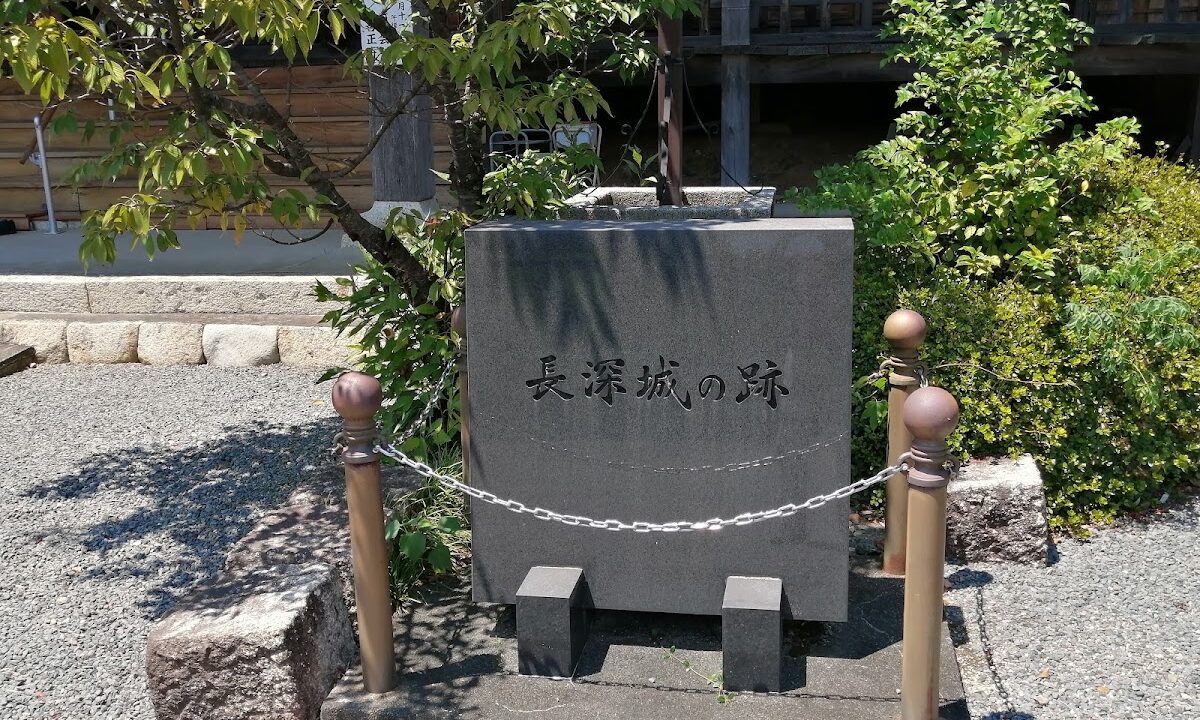
The History and Remains of Nagafuke Castle (Inabe District, Mie Prefecture) – The Complete Picture of the Medieval Castle Remaining at Zenshoji Temple
Overview of Nagafuke Castle
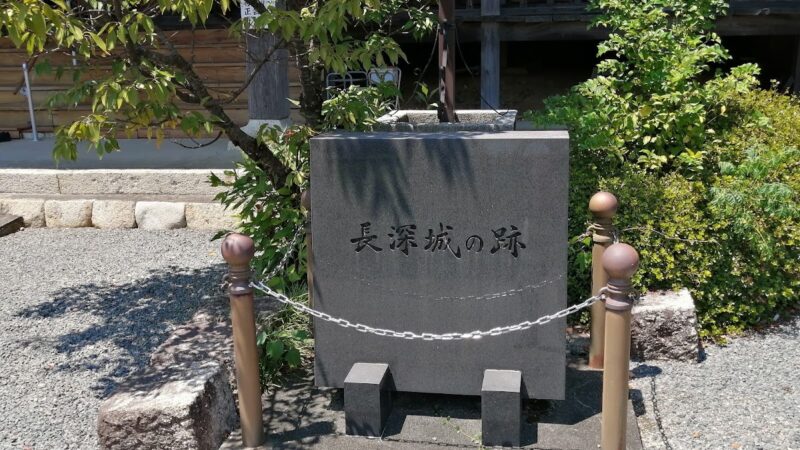
Nagafuke Castle is a medieval hilltop castle located in Nishimori, Nagafuke, Toin-cho, Inabe District, Mie Prefecture. Currently, the site is part of Zenshoji Temple’s grounds, and some of the original remains still exist. Built on a hill approximately 40 meters high, this castle is believed to have functioned as a base for regional control in northern Ise Province.
Location and Basic Information
Location: Nishimori, Nagafuka, Toin-cho, Inabe-gun, Mie Prefecture (Zenshoji Temple)
Postal Code: 511-0254
Castle Classification: Hilltop Castle
Relative Elevation: Approximately 40 meters
Current Status: Temple grounds, some remains remaining
Remains: Remains of baileys, traces of earthworks
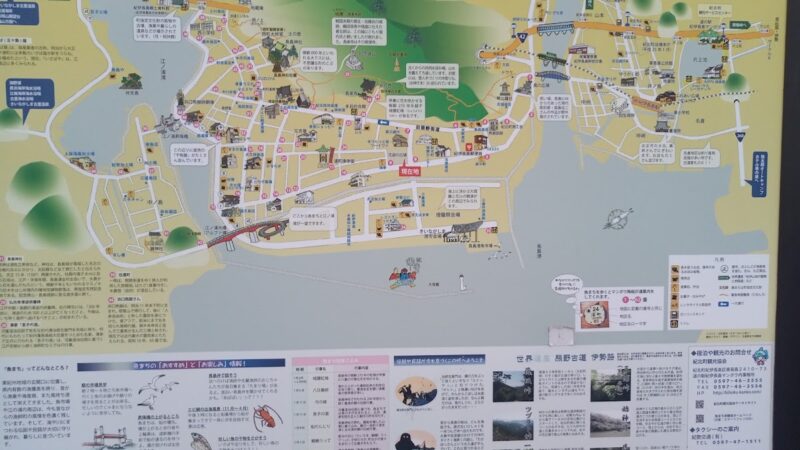
Nagafuka Castle is located slightly northwest of the center of Toin-cho, Inabe-gun. The surrounding area is dotted with settlements such as Anao, Oki, Sasao-nishi, Sasao-higashi, Shiroyama, Sekoizumi, Chikushi, Tottori, Nakagami, Hachiman-shinden, Minami-taisha, Yamada, and Rokubano-shinden.
Historical Background of Toin Town, Inabe District
Establishment and Transformation of Inabe District
Inabe District has existed since ancient times as a district located in the northern part of Ise Province. Under the County, District, Town, and Village Organization Law of the Meiji era, Inabe District was officially established as an administrative division on February 5, 1879 (Meiji 12). The district office was located in Minami-Taisha Village and functioned as the administrative center of the region.
In the early Meiji period, village consolidation progressed, with Shinmachi-Shinden merging into Tozenji Village and Isshiki-Shinden into Nagafuka Village. At that time, there were approximately 110 villages in Inabe District, and Nagafuka Village was one of them, forming a local community.
From Toin Village to Toin Town
Toin Village, including the Nagafuka area, underwent regional development from the Showa era through to the Heisei era. Present-day Toin Town is comprised of districts such as Anao, Oki, Kitadaisha, Sasao Nishi, Sasao Higashi, Shiroyama, Sekoizumi, Chikushi, Tottori, Nakagami, Nagafuka, Hachiman Shinden, Minamidaisha, Yamada, and Rokubanono Shinden.
History of Nagafuka Castle
Construction Period and Lord
Regarding the construction period and builder of Nagafuka Castle, there are few clear historical records, and many details remain unknown. However, based on the castle’s structure and location, it is highly likely that it was built by a local powerful family during the Sengoku period (Warring States period).
The northern part of Ise Province was a region where local powerful families known as the “Forty-Eight Families of Hokusei” held sway, and Nagafuka Castle may have been one of these regional strongholds. Several castles existed around Inabe County, including Kuwana Castle, Nagashima Castle, and Inabe Castle, suggesting that Nagafuka Castle also played a role in this region’s castle network.
Northern Ise Province during the Sengoku Period
Northern Ise Province during the Sengoku period was a fierce battleground where various forces, including the Kitabatake clan, the Oda clan, and the Nagashima Ikko-ikki rebels, clashed. The battles with the Nagashima Ikko-ikki were particularly intense, with Oda Nobunaga launching three attacks on them before finally conquering them in 1574.
While it’s unclear how Nagafuka Castle was involved in these conflicts, its geographical location between Nagashima Castle and Kuwana Castle suggests it likely played some military role.
Abandonment and its Aftermath
The exact date of Nagafuka Castle’s abandonment is also unclear, but it’s believed that, like many small castles, it ceased to function militarily with the end of the Sengoku period. During the Edo period, it became part of the Kuwana Domain, and in this peaceful region, its function as a castle was lost.
Currently, Zenshoji Temple stands on the site of the castle, and only slight traces of the former castle remain in the temple grounds’ topography.
Layout and Remains of Nagafuka Castle
Castle Structure
Nagafuka Castle was a flatland castle built on a hill approximately 40 meters high, with a layout that skillfully utilized the natural terrain. It is presumed that multiple baileys were arranged around the main bailey, and that its defenses were strengthened by earthworks and moats.
Within the current Zenshoji Temple grounds, some flat areas believed to be the remains of former baileys and traces of earthworks can be seen. However, due to the construction of the temple and later alterations, it is unclear to what extent the original remains are preserved.
Existing Remains
When visiting the Zenshoji Temple grounds, the following traces of remains can be seen:
Bailey Remains: The flat area around the main hall is presumed to be the site of the former main bailey.
Traces of Earthworks: Earthwork-like elevations can be seen in part of the temple grounds.
Topographical Undulations: Remnants of a defensive line utilizing the natural terrain remain in the landscape.
These remains exhibit typical characteristics of medieval castles, indicating that Nagafuka Castle was constructed based on the common castle-building techniques of the time.
Access and Visiting Information for Nagafuka Castle
Transportation Access
Public Transportation:
- Approximately 20 minutes on foot from Toin Station on the Sangi Railway Hokusei Line
- Buses are also available from Kuwana Station on the Kintetsu Nagoya Line
By Car:
- Approximately 15 minutes from Kuwana-Higashi Interchange on the Tomeihan Expressway
- Use the parking lot for visitors of Zenshoji Temple (advance confirmation required)
Visiting Precautions
Since the Nagafuka Castle ruins are located within the grounds of Zenshoji Temple, please observe the following points when visiting:
- Consideration for the Temple: Please visit quietly so as not to disturb other visitors.
- Prior Confirmation: If you wish to have a detailed tour, we recommend contacting Zenshoji Temple in advance.
- Protection of Historical Remains: Please be careful not to damage the historical remains such as earthworks.
- Photography: Please follow the temple’s rules regarding photography on the temple grounds.
Nearby Attractions
When visiting Nagafuka Castle, we recommend also visiting other historical sites and tourist spots around Toin-cho, Inabe-gun:
Major Castles in Mie Prefecture:
- Kuwana Castle (Kuwana City)
- Nagashima Castle (Nagashima-cho, Kuwana City)
- Inabe Castle (Inabe City)
- Ise Ueno Castle (Tsu City)
- Matsusaka Castle (Matsusaka City)
- Tsu Castle (Tsu City)
- Akagi Castle (Kumano City)
- Tamaru Castle (Tamaki-cho, Watarai-gun)
By visiting these castles in comparison, you can understand the changes in castles in Mie Prefecture from the medieval to the early modern period.
Castle Culture of Mie Prefecture and the Position of Nagafuka Castle
Characteristics of Castles in Mie Prefecture
Mie Prefecture boasts a diverse array of castles spanning Ise, Iga, and Shima provinces. From early modern flatland castles with stone walls like Iga Ueno Castle, to mountain castles with Toyotomi-era stone walls like Akagi Castle, and medieval earthen castles like Nagafuka Castle, various types of castles remain.
Castles in northern Ise Province have the following characteristics:
- Many flatland castles in plains: Flatland castles utilizing low-lying hills, like Nagafuka Castle, are prevalent.
- Defenses primarily based on earthworks and moats: Many earthen castles without stone walls are found.
- Small-scale regional strongholds: Rather than large-scale castles, they functioned as strongholds for local powerful families.
Castle Network in the Northern Ise Region
Many castles were built in the northern Ise region, including Inabe District, during the Sengoku period (Warring States period). These castles worked in coordination with each other to defend and control the region. It is believed that Nagafuka Castle was also part of this network, coordinating with surrounding castles.
Major Castles in the Hokusei Region:
- Kuwana Castle (Kuwana City)
- Nagashima Castle (Kuwana City)
- Inabe Castle (Inabe City)
- Daian Castle (Inabe City)
- Tozenji Castle (Inabe District)
These castles were located several kilometers apart, allowing for communication via signal fires and mutual military support.
History and Culture of the Nagafuka Area
Establishment of Nagafuka Village
The name Nagafuka has existed since ancient times. In the early Meiji period, Isshiki Shinden merged with Nagafuka Village, indicating its function as a central village in the surrounding area. There are various theories regarding the origin of the name “Nagafuka,” but it has been suggested that it may be related to topographical features or water resources.
History of Zenshoji Temple
Zenshoji Temple, built on the site of the former Nagafuka Castle, has a long history as a center of local faith. The construction of temples on castle sites is a common phenomenon throughout Japan, representing an example of former military facilities being transformed into religious institutions during times of peace.
For more detailed information regarding Zenshoji Temple’s founding date and history, please contact the temple directly.
Modern Nagafuka District
The current Nagafuka district, part of Toin Town, is a quiet area with a mix of residential and agricultural land. Its postal code is 511-0254, and it has good access to the Toin Town Hall and other major facilities.
Surrounding Areas of Nagafuka District:
- Anou: Postal Code 511-0243
- Oki: Postal Code 511-0244
- Sasao-nishi: Surrounding Area
- Sasao-higashi: Surrounding Area
- Shiroyama: Place name related to castles
Current Status and Challenges of Nagafuka Castle Research
Lack of Historical Materials
The biggest challenge regarding Nagafuka Castle is the absolute lack of historical materials. Even basic information such as the builder, lord, and specific historical events is unclear. Further research into local historical documents and archaeological investigations may reveal new facts.
The Need for Archaeological Excavation
Although constrained by the Zenshoji Temple grounds, academic archaeological excavation would allow us to approach the true nature of Nagafuka Castle through its structure, age, and artifacts used. In particular, the following points are expected to be clarified:
- Accurate layout: Arrangement, size, and structure of the baileys
- Date of construction: Estimation of the date based on excavated artifacts
- Identification of the castle lord: Discovery of family crest tiles and written documents
- Date of abandonment: Confirmation of traces related to the abandonment of the castle
Contribution to regional history research
Research on Nagafuka Castle is not simply about clarifying the history of a single castle, but also holds significant meaning in understanding the medieval history of Inabe County, the Sengoku period history of northern Ise Province, and even the castle history of Mie Prefecture as a whole.
Nagafuka Castle for castle enthusiasts
Charm as a castle
Unlike famous castles with large stone walls and keeps, Nagafuka Castle possesses the simple charm of a medieval earthen castle. For castle enthusiasts, it is an interesting castle site in the following respects:
Typical medieval castle: It retains the appearance of a regional base castle from the Sengoku period, mainly consisting of earthworks and moats.
Observation of Remains: Due to its preservation within the temple grounds, some remains are still visible.
Historical Imagination: The scarcity of historical records offers the pleasure of imagining what it was like in those days.
Evaluation on “Castle Wanderings”
The castle research website “Castle Wanderings” features Nagafuka Castle as a flatland castle in Ise, documented with six photographs. Such records are valuable resources for understanding the current state of the castle.
Information on “Kojodan” and “Nippon Castle Tour”
The castle information websites “Kojodan” and “Nippon Castle Tour” register Nagafuka Castle as a castle in Mie Prefecture, allowing visitors to record their visits. These platforms also allow for information exchange with other castle enthusiasts.
Mie Prefecture Castle Tour and Nagafuka Castle
Model Course: Hokusei Castle Tour
We introduce a model course for efficiently visiting castles in the Hokusei region, including Nagafuka Castle:
1-Day Course:
- Morning: Kuwana Castle Ruins (Kuwana City) → Nagashima Castle Ruins (Kuwana City)
- Afternoon: Nagafuka Castle Ruins (Toin Town, Inabe District) → Inabe Castle Ruins (Inabe City)
2-Day Course:
- Day 1: Castles in the Hokusei region (above)
- Day 2: Castles in the Central and Southern Mie regions, such as Iga Ueno Castle and Tsu Castle
150 Selected Castles of Mie Prefecture
More than 150 major castles have been confirmed in Mie Prefecture alone. Among them, Nagafuka Castle is one of the important historical sites that tells the story of the region’s history. A diverse array of castles, including Hinokijo, Udono, Kyojo, Onigajo, Akagijo, Sonejo, Mikijo, Ushiroyama, Nagashima, Wagu, and Koshigajo, are distributed throughout the prefecture.
Summary: The Historical Value of Nagafuka Castle
Nagafuka Castle is a medieval hilltop castle located in Nagafuka, Toin-cho, Inabe-gun, Mie Prefecture. It is currently the grounds of Zenshoji Temple. While historical records are scarce and many aspects remain unclear, it is a castle site that warrants further investigation in regional history and castle research.
Key Points of Nagafuka Castle:
- Location: Nishimori, Nagafuka, Toin-cho, Inabe-gun, Mie Prefecture (Zenshoji Temple)
- Castle Classification: Hilltop Castle (Relative Height Approximately 40m)
- Period: Medieval Period (Estimated to be the Sengoku Period)
- Current Status: Temple grounds, some remains remaining
- Historical Significance: A base for regional control in northern Ise Province
Visiting Nagafuka Castle offers a valuable opportunity to understand the relationship between medieval local communities and castles, which differs from the flamboyant castles of the early modern period. Why not reflect on the castle that once stood on this land while visiting Zenshoji Temple?
Nagafuka Castle, which plays a part in Mie Prefecture’s castle culture, is expected to have its historical value further revealed through future research. Castle enthusiasts are encouraged to visit and experience its simple charm.