A Thorough Explanation of the History and Remains of Shimomise Castle (Odai-cho, Taki-gun, Mie Prefecture) | The Residence of the Mise Clan, Vassals of the Kitabatake Clan
What is Shimomise Castle?
Shimomise Castle is a Sengoku period mountain castle located in Odochi, Mise, Odai-cho, Taki-gun, Mie Prefecture. Also known as “Mise Sakyo-kan,” it functioned as the residence of the Mise clan, important vassals of the Kitabatake clan. Taking advantage of its advantageous location on the river terrace of the Miyagawa River, it was a fortified stronghold and is known for playing a crucial role in the historical turning point of Oda Nobunaga’s invasion of Ise Province.
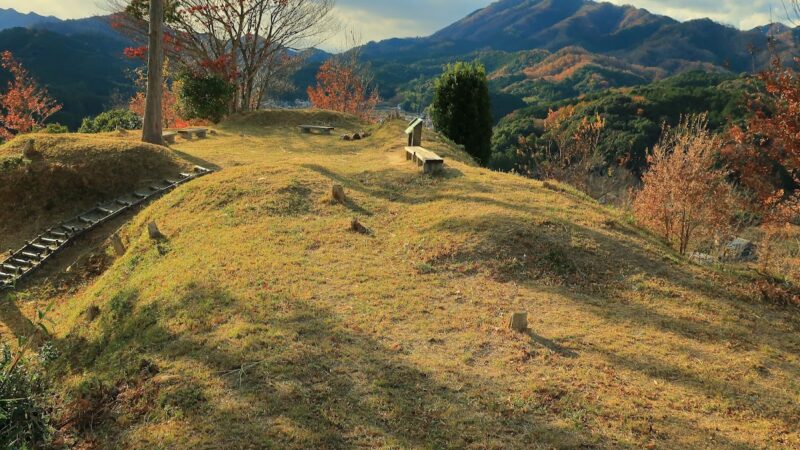
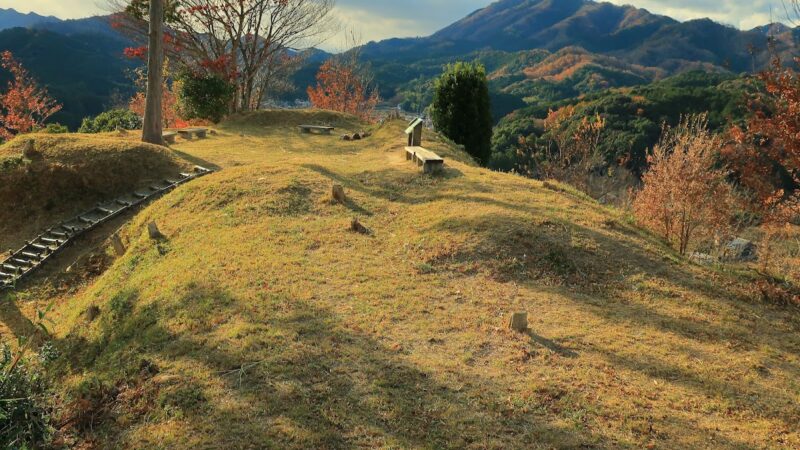
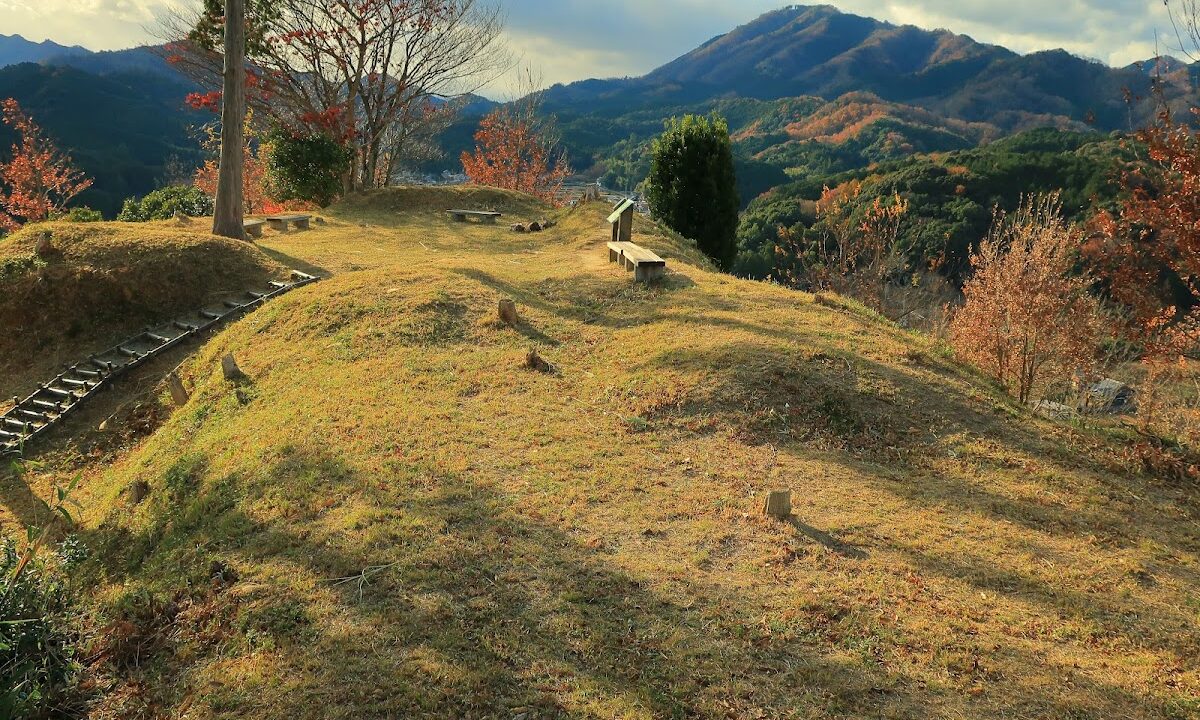
Even today, the remains of the castle, including baileys, earthworks, moats, and wells, are well-preserved, making it a valuable historical site for understanding the castle structure of local powerful families during the Sengoku period. While Mie Prefecture boasts numerous famous castles such as Iga-Ueno Castle, Matsusaka Castle, Tamaru Castle, and Tsu Castle, Shimo-Mise Castle is noteworthy in castle research as a typical example of a small to medium-sized castle that played a leading role in regional control.
Location and Geographical Characteristics of Shimo-Mise Castle
Geography of Odai Town, Taki District
Taki District in Mie Prefecture is comprised of three towns: Taki, Meiwa, and Odai. Odai Town, where Shimo-Mise Castle is located, is situated in the mountainous region of the Kii Mountains, a naturally rich area with the clear waters of the Miyagawa River flowing through it. Historically known as Take-no-kori, and as evidenced by the mention of “Taki-gun Taki-go” in the Wamyō Ruijushō (a Japanese dictionary compiled in ancient Japan), it has been a rural area inhabited by people since ancient times.
The Mitsuse district of Odai Town was a key transportation hub along the Miyagawa River, situated on an important highway connecting Ise with Yamato and Yoshino. This geographical condition formed the base of power for the Mitsuse clan during the Sengoku period, increasing the strategic value of Shimo-Mitsuse Castle.
A Fortress on a River Terrace
The most distinctive feature of Shimo-Mitsuse Castle is that it is built on a river terrace formed by the Miyagawa River. River terraces are stepped terrains formed by river erosion, making them ideal natural fortresses for castle construction. The castle’s main enclosure is located on the upper surface of the terrace, with the steep slopes functioning as natural defensive walls.
Due to this location, Shimo-Mitsuse Castle served to monitor and control water transport on the Miyagawa River, as well as act as a military base controlling the main roads. The surrounding area also includes the Kami-Mitsuse district, and the Mitsuse clan also had bases in Kami-Mitsuse (Mitsuse Manor and Mitsuse Palace), indicating their control over this entire region.
History of Shimo-Mitsuse Castle
Relationship between the Mitsuse and Kitabatake Clans
The Mitsuse clan, who were the lords of Shimo-Mitsuse Castle, were vassals of the Kitabatake clan, who ruled southern Ise Province from the Nanboku-cho period to the Sengoku period as the provincial governors of Ise. The Kitabatake clan was descended from Kitabatake Chikafusa, a prominent figure on the Southern Court side, and built their power centered in Taki District of Ise Province, with Kiriyama Castle (Taki Kitabatake Clan Castle) as their base.
The Mitsuse clan, headed by Mitsuse Sakyo, were local samurai who were entrusted with governing the Miyagawa River basin under the Kitabatake clan’s rule. It is believed they were responsible for regional military and administrative affairs, using Mitsuse Manor (Mitsuse Palace) and Shimo-Mitsuse Castle as their bases. Shimo-Mitsuse Castle is believed to have been built during the Eiroku era (1558-1570), and is presumed to have been developed as a defensive base just before Oda Nobunaga’s invasion of Ise Province intensified.
Oda Nobunaga’s Invasion of Ise and Shimo-Mise Castle
Shimo-Mise Castle first appears on the historical stage during Oda Nobunaga’s invasion of Ise in 1569 (Eiroku 12). That year, Nobunaga launched a large-scale military operation into southern Ise, the sphere of influence of the Kitabatake clan. Nobunaga’s army besieged Okawachi Castle (Kiriyama Castle), the Kitabatake clan’s stronghold, and demanded their surrender.
At this time, Mise Sakyo resisted the Oda army under Kitabatake Tomonori. Shimo-Mise Castle, being a strategically important transportation hub and possessing the geographical advantage of a river terrace, is thought to have been a significant obstacle on the Oda army’s invasion route. While Mise Sakyo’s resistance played a crucial role in the Kitabatake clan’s defense strategy, the fighting ultimately ended when Kitabatake Tomonori made peace with Nobunaga.
Kitabatake Tomonori’s Retirement and the Mitsuse Incident
After making peace with Oda Nobunaga, Kitabatake Tomonori handed over the family headship to Nobunaga’s second son, Oda Nobuo (later renamed Kitabatake Tomotoyo), and retired to Mitsuse Manor (Mitsuse Palace). Mitsuse Manor was located in Kami-Mitsuse, and it is believed that Shimo-Mitsuse Castle continued to function as a military base responsible for its defense.
However, on November 25, 1576 (Tensho 4), Tomonori was attacked at Mitsuse Manor by Oda Nobuo’s forces and forced to commit suicide. This incident is known as the “Mitsuse Incident.” This incident effectively eliminated the Kitabatake clan’s power, and Ise Province came completely under the control of the Oda clan. It is presumed that Shimo-Mitsuse Castle was either abandoned around this time or lost its function under the Oda clan’s rule.
Layout and Remains of Shimosanze Castle
Basic Structure of the Castle
Shimosanze Castle has a layout (castle design) that skillfully utilizes the topography of a river terrace. Multiple baileys (flat sections) are arranged around the main enclosure, and these are defended by earthen ramparts (earthen defensive walls) and horizontal moats (moats dug horizontally).
The castle is of medium to small scale and has a typical structure for a local powerful family’s residence. Since no stone walls were used, and it is an earthen castle with earthen ramparts and moats, it demonstrates the common castle-building techniques of the Ise region during the Sengoku period. This is in contrast to the advanced stone wall techniques found in castles built in later periods, such as Iga Ueno Castle, Matsusaka Castle, and Tsu Castle, also in Mie Prefecture.
Arrangement of the Baileys
It is believed that the baileys of Shimosanze Castle were arranged in a stepped fashion, with the main enclosure on the upper surface of the terrace, and the second and third baileys surrounding it. The main enclosure was the central section where the lord’s residence and command post were located, and it was the most heavily fortified area.
Each enclosure was surrounded by earthen ramparts, and the enclosures were separated by moats and steep slopes (artificially constructed steep slopes). This structure created a multi-layered defensive system where even if the enemy captured one enclosure, the next enclosure could provide defense.
Earthen Ramparts and Horizontal Moats
Some of the earthen ramparts of Shimosanze Castle remain in good condition today. The ramparts are arranged to surround the enclosures, and some are approximately 2-3 meters high. It is presumed that fences or walls were installed on top of the ramparts, functioning as a first-line defensive structure to prevent enemy intrusion.
Horizontal moats are moats dug horizontally around the enclosures, hindering enemy approach and also serving as traces of soil extraction for building the earthen ramparts. The horizontal moats of Shimosanze Castle are arranged along the terrain, forming an efficient defensive line. Some of the moats can still be seen as depressions today, offering a glimpse into the defensive system of the time.
Wells and Living Facilities
The remains of wells have been confirmed within the castle grounds, indicating that securing a water source during sieges was considered. The wells are thought to have been located in or near the main enclosure, making them an important facility for enabling long-term stays within the castle.
Furthermore, the presence of building foundations and post holes within the enclosures suggests the existence of facilities such as the lord’s residence, soldiers’ quarters, and an armory. Further archaeological excavations could reveal more detailed traces of daily life.
Shimo-Mitsuse Castle and Surrounding Castles
Relationship with Mitsuse-kan (Mitsuse Gosho)
North of Shimo-Mitsuse Castle, in the Kami-Mitsuse area, lies Mitsuse-kan (Mitsuse Gosho). Mitsuse-kan is designated a prefectural historical site and is known as the place where Kitabatake Tomonori retired. The remains of stone walls and baileys are still present at the Mitsuse Manor, suggesting it was a more residential facility than Shimo-Mitsuse Castle.
It’s possible that Shimo-Mitsuse Castle and the Mitsuse Manor had a division of functions: one as a military base, and the other as a political and residential center. Shimo-Mitsuse Castle, situated on a river terrace, was likely specialized for defense, while the Mitsuse Manor, built on relatively flat ground, served as a residence for daily administrative affairs and living. Both are thought to have functioned as an integrated base of control for the Mitsuse clan.
Kitabatake Clan’s Castle Network
Shimo-Mitsuse Castle played a part in the Kitabatake clan’s castle network. Centered around Kiriyama Castle (Taki Kitabatake Clan Castle), the Kitabatake clan’s headquarters, multiple castles, including Tamaru Castle and Hase Castle, were located within Taki County, coordinating with each other to control the territory.
Shimosanze Castle was positioned as a base controlling the western part of the Kitabatake clan’s territory, the Miyagawa River basin, and was one of the front lines to prepare for invasions from the Yamato region. During Oda Nobunaga’s invasion of Ise Province, this entire castle network was mobilized for defense, but ultimately, it succumbed to Nobunaga’s overwhelming military power.
Comparison with Major Castles in Mie Prefecture
Mie Prefecture has many other important castles besides Shimosanze Castle. Iga Ueno Castle is a modern castle built by Todo Takatora and is known for having some of the highest stone walls in Japan. Matsusaka Castle is also a famous castle with stone walls built by Gamo Ujisato, and its keep base and stone walls remain in good condition. Tsu Castle functioned as the residence of the Todo clan throughout the early modern period and became the political center of Mie Prefecture.
Compared to these castles, Shimosanze Castle is smaller in scale and does not utilize advanced construction techniques such as stone walls. However, as a typical example of an earthen castle built by a local powerful family during the Sengoku period, it holds an important position in the study of castle history. Furthermore, it shares characteristics with other medieval castles in Mie Prefecture, such as Tamaru Castle, Akagi Castle, and Kitabatake Clan Residence, making it a valuable heritage site for understanding the region’s history.
Access and Visiting Information for Shimosanze Castle
Location and Transportation Access
Location: 1012, Ootochi, Sanze, Odai-cho, Taki-gun, Mie Prefecture
Public Transportation: The nearest station is Sanseya Station on the JR Kisei Main Line. It’s about a 20-30 minute walk from the station to the castle ruins. However, since bus service is limited, it is recommended to check the timetable in advance.
By Car: It’s about a 15-minute drive from the Omiya-Odai Interchange on the Kisei Expressway via National Route 42. There is no dedicated parking lot around the castle ruins, but it may be possible to find parking spaces on the roadside. However, consideration should be given to avoiding inconveniencing local residents.
Important Notes for Visitors
Shimosanze Castle Ruins are not a developed tourist facility; the remains are preserved within a forest. Please note the following points when visiting:
- Clothing: Wear appropriate clothing and shoes for mountain hiking. The ground can be particularly slippery after rain.
- Time of Year: In summer, vegetation can be overgrown, making the ruins difficult to see. Spring and autumn are the best times to visit.
- Equipment: We recommend bringing insect repellent, drinking water, a map, and a GPS.
- Safety: Avoid visiting alone; it is best to travel in a group.
- Manners: Since you may pass through private property, please be considerate of local residents. Damaging the ruins or collecting plants is strictly prohibited.
Nearby Attractions
When visiting Shimosanze Castle, we recommend also visiting nearby historical sites.
Mitsuse-kan (Mitsuse Palace): Designated as a prefectural historical site, this is a historically significant site as the place where Kitabatake Tomonori retired. Remains of stone walls and baileys still exist.
Kitabatake Clan Residence Garden: Located in Misugi-cho, Tsu City, Taki District, this is the site of the Kitabatake clan’s residence. A beautiful garden, designated as a national scenic spot, remains. It offers insights into the cultural aspects of the Kitabatake clan.
Odai Town Local History Museum: A facility where you can learn about the history and culture of Odai Town. It may contain exhibits related to the Mitsuse clan and Shimo-Mitsuse Castle.
Historical Significance and Modern Value of Shimo-Mitsuse Castle
The Reality of Regional Governance in the Sengoku Period
Shimo-Mitsuse Castle is a valuable historical site that illustrates the reality of regional governance during the Sengoku period, as a castle of a local powerful family. Unlike castles of daimyo (feudal lords), it allows us to understand how small to medium-sized castles were constructed and what functions they had.
Local samurai like the Mitsuse clan were responsible for regional military and administrative affairs under the daimyo power of the Kitabatake clan. Shimo-Mitsuse Castle likely functioned as a base for such regional control, fulfilling diverse roles including protecting the local population, managing transportation routes, and mobilizing troops.
Contribution to Research on Oda Nobunaga’s Invasion of Ise
Oda Nobunaga’s invasion of Ise was a crucial turning point in his path to unifying Japan. Shimo-Mitsuse Castle is a site where actual fighting may have taken place during this historical event, making it an important historical site for studying Nobunaga’s military strategy and the reality of the Kitabatake clan’s resistance.
The Mitsuse Incident, in which Kitabatake Tomonori was forced to commit suicide, symbolizes the completion of the Oda clan’s control over Ise, and Shimo-Mitsuse Castle and Mitsuse Manor hold historical significance as the stage for this event.
Preservation and Utilization as a Cultural Property
Currently, the Shimosanze Castle ruins are not designated as a cultural property, but the remains such as baileys, earthworks, moats, and wells are well-preserved, giving them significant cultural value. With appropriate investigations and preservation measures, designation as a town-designated or prefectural-designated cultural property is possible.
Furthermore, its use as a resource for local history education and tourism is also conceivable. By developing it together with the Sanze-kan (Sanze Residence) as the “Sanze Clan Castle Group,” and installing explanatory signs and walking paths, it has the potential to become a historical site enjoyed not only by history enthusiasts but also by general tourists.
Summary
Shimosanze Castle is a mountain castle from the Sengoku period located in Odai-cho, Taki-gun, Mie Prefecture. It was the residence of Sanze Sakyo, a vassal of the Kitabatake clan. It was a formidable stronghold that took advantage of the geographical advantage of the river terrace of the Miyagawa River, and it was a historical stage where Sanze Sakyo resisted Oda Nobunaga’s invasion of Ise Province, following Kitabatake Tomonori.
The castle ruins retain well-preserved structures such as baileys, earthworks, moats, and wells, making it a valuable historical site for understanding the castle structure of local powerful families during the Sengoku period. It is believed to have functioned in conjunction with the Mitsuse Manor (Mitsuse Palace) and played a part in the Kitabatake clan’s castle network.
While Mie Prefecture boasts a diverse array of castles, including Iga Ueno Castle, Matsusaka Castle, Tsu Castle, Tamaru Castle, and Akagi Castle, Shimo-Mitsuse Castle, as a small to medium-sized earthen castle, possesses a unique historical value. As a site related to important historical events such as Oda Nobunaga’s invasion of Ise and the Mitsuse Incident, further investigation and preservation are anticipated.
For castle enthusiasts and history researchers, Shimo-Mitsuse Castle is a historical site well worth visiting, offering a valuable opportunity to experience the realities of regional control during the Sengoku period and the conflicts between the Kitabatake and Oda clans. When visiting Odai Town, be sure to stop by the Shimo-Mitsuse Castle ruins and reflect on the history of the Sengoku period.