Complete Guide to Uneme Castle (Yokkaichi City, Mie Prefecture) | History, Highlights, and Access Explained in Detail
Located in Uneme-cho, Yokkaichi City, Mie Prefecture, Uneme Castle is a mountain castle that was ruled by the Goto clan for over 300 years, from the medieval period to the Sengoku period. Built on a plateau approximately 40 meters high, this castle is known as a technically sophisticated mountain castle, showcasing advanced fortification techniques such as dividing nine baileys with moats and strategically placing square-shaped gates.
Currently, it has been developed as the “Uneme Castle Ruins Citizens’ Green Space,” and with well-maintained walking paths, it is an easily accessible historical site not only for castle enthusiasts but also for those who enjoy historical walks. This article provides a thorough explanation of Uneme Castle’s detailed history, notable remains, and access methods.
Basic Information on Uneme Castle
Location: Uneme-cho, Yokkaichi City, Mie Prefecture
Common Name/Alternate Name: Unemeyama Castle, Kitayama Castle
Castle Structure: Mountain Castle
Year of Construction: Bun’ō 1 (1260)
Builder: Gotō Motohide
Main Lords: Gotō clan (15 generations)
Year of Abandonment: Eiroku 11 (1568)
Remains: Enclosures, dry moats, earthworks, earthen bridges, masugata gate
Elevation: 50-70 meters
Relative Height: Approximately 40 meters
Designated Cultural Property: None (Preserved as a public green space)
Uneme Castle is located approximately 300 meters west of Uchibe Higashi Elementary School and is built on a ridge of a broad hilly terrain. The southern side of the castle was a strategically important location, protected by the Uchikawa River and its tributary, the Ashimigawa River, and its defenses skillfully utilized the natural terrain.
History of Uneme Castle
The Beginning of the Castle’s Construction and Rule by the Goto Clan
The history of Uneme Castle begins in 1260 (Bun’ō 1). Goto Motohide became the jitō (land steward) of Uneme-gō in Mie County, and moved to the Uneme area with his family and retainers, building a castle on Mount Uneme (Kitayama).
The Goto clan was descended from the Ise Taira clan, whose ancestors were the Fujiwara clan. They were granted this land due to the achievements of Goto Sanemoto, who distinguished himself in the Heiji Rebellion, and Goto Motokiyo, who served as a Kebiishi (police officer) in the suppression of Hiraga Tomomasa. There is also a tradition that the castle was built by Goto Saemon-no-jō Motokiyo, and it played an important role as a base for the Goto clan’s military achievements and regional control.
300 Years of Goto Clan Rule
For approximately 300 years, from Bun’ō 1 (1292) to Eiroku 11 (1568), Uneme Castle served as the residence of 15 generations of the Goto clan. During this long period of rule, the Goto clan governed Uneme-go in Mie County, maintaining their power as a prominent local family.
The castle underwent renovations and expansions over time, developing into a formidable mountain castle utilizing advanced fortification techniques during the Sengoku period (Warring States period). The structure, with its nine baileys separated by moats and each bailey serving as an independent defensive unit, is believed to be a result of renovations during this period.
Oda Nobunaga’s Invasion of Ise and the Castle’s Fall
The fate of Uneme Castle changed dramatically in Eiroku 11 (1568). Oda Nobunaga, who had unified Owari Province and begun his path to national unification, launched an invasion of Ise Province.
The lord of the castle at that time was Goto Uneme Masafujikatsu. The Goto clan, along with the Seki and Gamo families, resisted Oda Nobunaga’s invasion, but Nobunaga’s retainer, Takigawa Kazumasu, led over 6,000 soldiers to attack Uneme Castle.
Takigawa Kazumasu employed a tactic of setting fire to houses north of Uneme Castle and then attacking from all sides at the opportune moment. After a fierce battle, Uneme Castle fell, and its lord, Goto Fujikatsu, was killed. According to legend, Fujikatsu’s daughter, Princess Chinami, also threw herself into a deep well in the main enclosure, following in her father’s footsteps.
With this fall, the Goto clan’s rule, which had lasted for over 300 years, came to an end, and Uneme Castle was subsequently abandoned.
Uneme Castle’s Layout and Structure
Defensive System with Nine Enclosures
The most distinctive feature of Uneme Castle is its structure, which divides the castle grounds into nine large enclosures (kuruma). Each enclosure is surrounded by a moat and designed to function as an independent defensive unit. This structure created a multi-layered defensive system, allowing for continued defense even if one enclosure fell.
Despite being abandoned during the Eiroku era, its remains demonstrate such advanced construction techniques that it’s considered a remarkably modern and technically sophisticated castle.
Divide by Moats and Dry Moats
The moats and dry moats separating each enclosure were crucial to the defense of Uneme Castle. The dry moats between the first and second enclosures, and between the second and third enclosures, are particularly deep and clearly preserved, making them a highlight.
These moats were constructed to cut across the ridgeline, functioning as barriers to prevent enemy intrusion. The difference in elevation from the bottom of the moat to the top of the enclosures amounts to several meters, demonstrating the high level of civil engineering technology of the time.
Arrangement of Masugata Koguchi (Square Enclosures)
Masugata koguchi are strategically placed throughout Uneme Castle. A masugata koguchi is a defensive structure where the castle entrance is bent into a “U” or “L” shape, trapping invading enemies in a narrow space and allowing for attacks from three sides.
The remains of the entrance to the first enclosure are particularly well-preserved, allowing for confirmation of the masugata structure. The existence of these masugata koguchi indicates that Uneme Castle was not merely a residence, but a full-fledged military facility designed for combat.
Earthworks and Earthen Bridges
Earthworks were built around each enclosure, and the earthworks of the second enclosure are particularly well-preserved. These earthworks enhanced the defensive capabilities of the enclosures and also obstructed visibility from within the castle, making it difficult to observe enemy movements.
Earthen bridges for crossing the moats can also be seen. The earthen bridge was constructed by piling up earth to create a passageway without filling in the moat, and in emergencies it could be destroyed to prevent enemy intrusion.
Highlights of Uneme Castle
First Enclosure (Main Enclosure)
The first enclosure is the main enclosure, the center of Uneme Castle. Located at the highest point, it is believed to have been the residence of the castle lord. Earthen ramparts surround the enclosure, and the remains of the gate are clearly visible.
According to legend, the deep well from which Princess Chinami threw herself during the castle’s fall was also located in this first enclosure. Although it is now filled in, there is a sign indicating its location.
Second and Third Enclosures
The second enclosure is the second most important enclosure after the first, and well-preserved earthen ramparts remain. These ramparts are about 1-2 meters high and retain much of their original appearance.
The dry moat between the second and third enclosures is particularly deep and clearly defined, making it an important structure for understanding Uneme Castle’s defensive system. Walking along the bottom of the moat allows you to experience the formidable defenses of the time.
Horizontal and Vertical Moats
Several horizontal moats (moats dug along the ridge) and vertical moats (moats dug along the slope) can be identified within the castle grounds. These moats served to prevent flanking attacks by the enemy and made it difficult for them to approach the castle.
In particular, the vertical moats on the northern slope are thought to have functioned as defensive structures when Takigawa Kazumasu launched an attack from the north.
Walking Trails and Information Boards
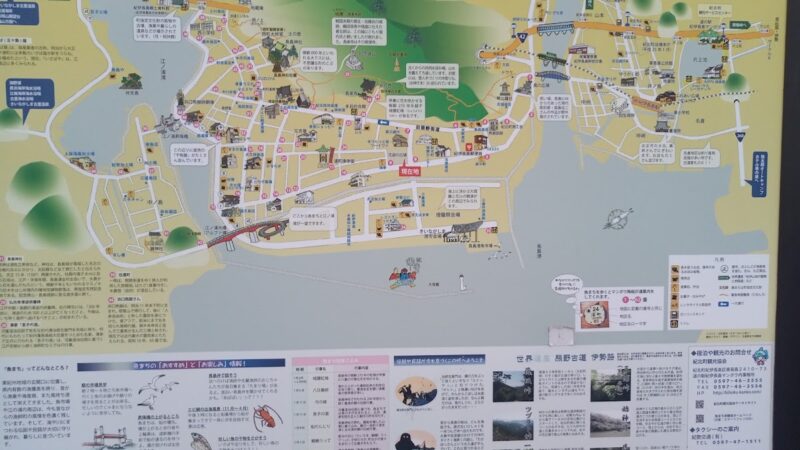
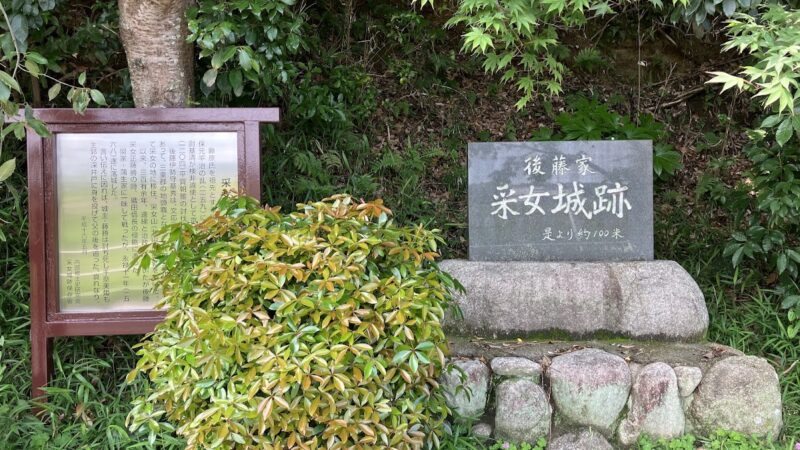
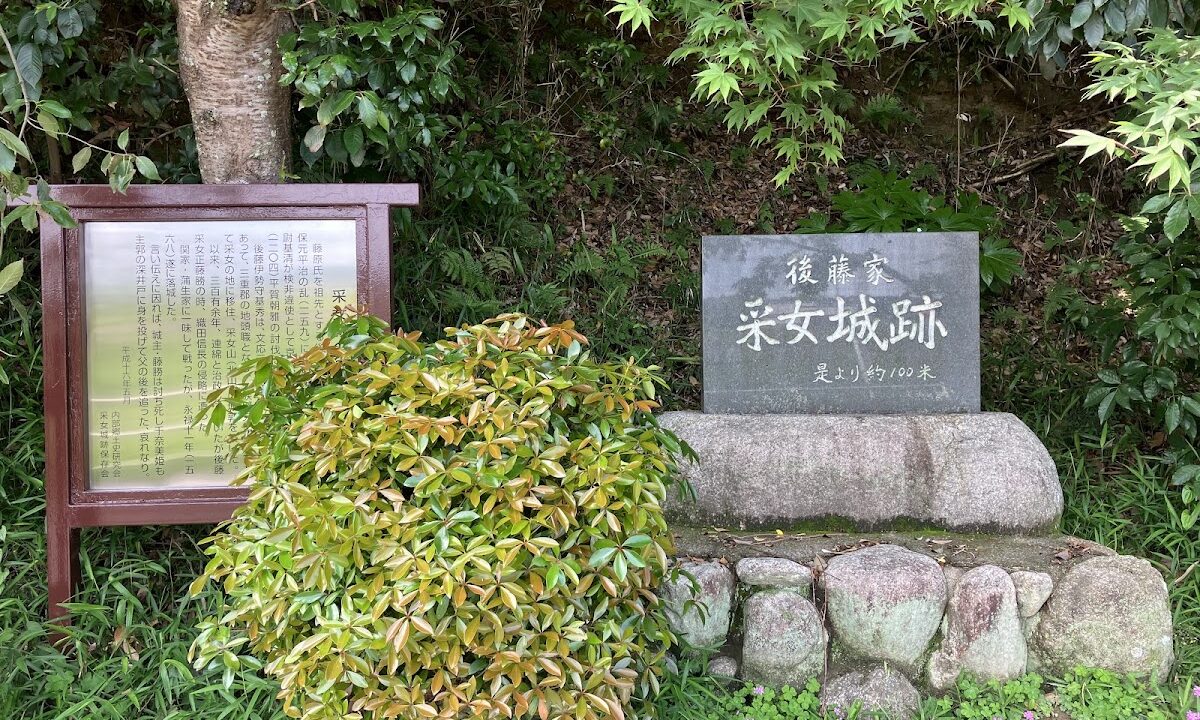
Currently, the Uneme Castle ruins have been developed as a public green space with walking trails. If you head west along the road south of Naibu Higashi Elementary School, you will find a castle site information board right next to the road, from which you can enter the castle grounds.
The walking trails are designed to take you around the main enclosures and remains, making it easy for first-time visitors to navigate without getting lost. Information boards are placed at key points, allowing you to stroll while reading explanations of each remains.
Evaluation and Recommendation of Uneme Castle
Highly rated by castle enthusiasts, it receives a ★★★★☆ (4 out of 5) recommendation rating, described as a “technically designed mountain castle with nine baileys separated by moats and strategically placed square enclosures.”
Despite being abandoned relatively early during the Eiroku era, the castle’s excellent state of preservation and the clear visibility of its ingenious layout contribute to its high rating. Its accessibility as a public green space is also a positive factor.
Place Name and Historical Background of Uneme
Origin of Uneme-go
Yokkaichi City has a place name called “Uneme-cho,” and this region has long been known as “Uneme-go.” “Uneme” refers to lower-ranking female court officials who served the ancient imperial court, primarily responsible for preparing meals for the emperor and empress.
Many of the court ladies (Uneme) were daughters of local powerful families, and it is said that beauty was the primary requirement. The name of this area, Uneme-go, is believed to have originated from the fact that many Uneme were produced in Mie Prefecture.
Tokaido Road and Surrounding Historical Sites
The Tokaido Road runs through Uneme-cho, and there are historical sites related to the legend of Yamato Takeru no Mikoto. These include “Tsuetsuki-zaka” (Staff-Piercing Slope), where Yamato Takeru no Mikoto is said to have climbed using his sword as a staff, and “Ochizuka-sha” (Blood Mound Shrine), where he is said to have stopped bleeding after reaching the top, giving a sense of the deep history from ancient times.
Access to Uneme Castle and Parking Information
Access by Public Transportation
Nearest Station: Kintetsu Nagoya Line “Uneme Station”
Uneme Castle ruins are approximately a 15-20 minute walk from Uneme Station. From the station, head towards Uchibe Higashi Elementary School. If you proceed west along the road south of the school, you will see a signpost for the castle ruins.
Access by Car
Tomeihan Expressway: Approximately 15 minutes from Yokkaichi IC
After exiting Yokkaichi IC, head north on National Route 477 towards Uneme-cho. Aiming for Uchibe Higashi Elementary School will make it easier to find.
Parking
There is no dedicated parking lot for Uneme Castle Ruins, but there are a few parking spaces near the entrance to the castle ruins. However, space is limited, so using public transportation is recommended.
When visiting, please avoid parking on the street to avoid inconveniencing local residents.
Notes and Manners for Visitors
Clothing and Equipment
Uneme Castle Ruins is a mountain castle, and although there are walking paths, you will be walking on undulating terrain. The following equipment is recommended:
- Comfortable walking shoes (trekking shoes or sneakers)
- Long-sleeved shirt and long pants (insect repellent in summer)
- Hat (for sun protection)
- Drinking water
- Insect repellent spray (spring to autumn)
Visiting Hours
The time required to see all the main remains is approximately 1 to 1.5 hours. If you want to thoroughly explore each enclosure, allow about 2 hours.
Visiting during daylight hours is recommended as visibility becomes poor after sunset.
Manners and Precautions
- To protect the remains, please do not climb on or dig up the earthworks or moats.
- Please take all your trash with you.
- The use of fire is strictly prohibited.
- Collecting plants is prohibited.
- Please be considerate of nearby residents and keep noise levels down.
Spot Information Around Uneme Castle
Naibu Higashi Elementary School
This elementary school serves as a landmark for the Uneme Castle ruins. While you cannot enter the school grounds, aiming for this elementary school will make it easier to find the ruins of Uneme Castle.
Historical Sites on the Tokaido Road
Along the Tokaido Road, which passes through Uneme town, there are historical sites related to the legend of Yamato Takeru no Mikoto, such as Tsuetsukizaka and Mikotsuzuka Shrine. Visiting these sites in conjunction with Uneme Castle will allow you to feel the flow of history from ancient to medieval times.
Other Castle Ruins in Yokkaichi City
Besides Uneme Castle, Yokkaichi City also has castle ruins such as Hoho-nishi Castle, Ichiba Castle, and Isaka Castle. If you have time, visiting these castle ruins as well will allow you to gain a deeper understanding of the characteristics of castles in the Ise region.
The Cultural Value of Uneme Castle
A Typical Example of a Medieval Mountain Castle
Uneme Castle is an important archaeological site that shows the development process of mountain castles from the medieval period to the Sengoku period. The castle’s structure, with its nine baileys separated by moats, the placement of square-shaped gates, and the combination of horizontal and vertical moats, embodies the pinnacle of Sengoku period castle construction techniques.
Resources for Regional History Research
As the base of the Goto clan’s 300-year rule, it is an important historical site for studying the medieval history of the Ise region. It was also the stage for the historical event of Oda Nobunaga’s invasion of Ise, making it a valuable historical site that tells the story of the changes in regional rule during the Sengoku period.
Preservation and Utilization
Currently, the Uneme Castle ruins are preserved and utilized as a public green space, serving as a place of relaxation for local residents. It serves as a good example of balancing historical site preservation with public use, and is a reference for the preservation of other castle ruins.
Summary
Uneme Castle, located in Yokkaichi City, Mie Prefecture, is a technically sophisticated mountain castle known as the residence of the Goto clan for 300 years across 15 generations. From its construction in 1260 to its fall in 1568, this castle witnessed the history of the Ise region.
It showcases advanced castle construction techniques, with nine baileys separated by moats and strategically placed masugata koguchi (square-shaped gates). Remains such as dry moats, earthworks, and earthen bridges are remarkably well-preserved. Currently, it is developed as a public green space with well-maintained walking paths, making it easily accessible even for first-time visitors.
It was also the stage for the historical event of Oda Nobunaga’s invasion of Ise, and the castle ruins are steeped in the legend of the tragic end of its lord, Goto Fujikatsu, and his daughter, Chinami-hime.
When visiting Mie Prefecture, be sure to visit the Uneme Castle ruins and experience the charm of this mountain castle with its 300-year history. The ingenious layout, clearly preserved remains, and the weight of history felt in the quiet mountains will surely create an unforgettable experience.