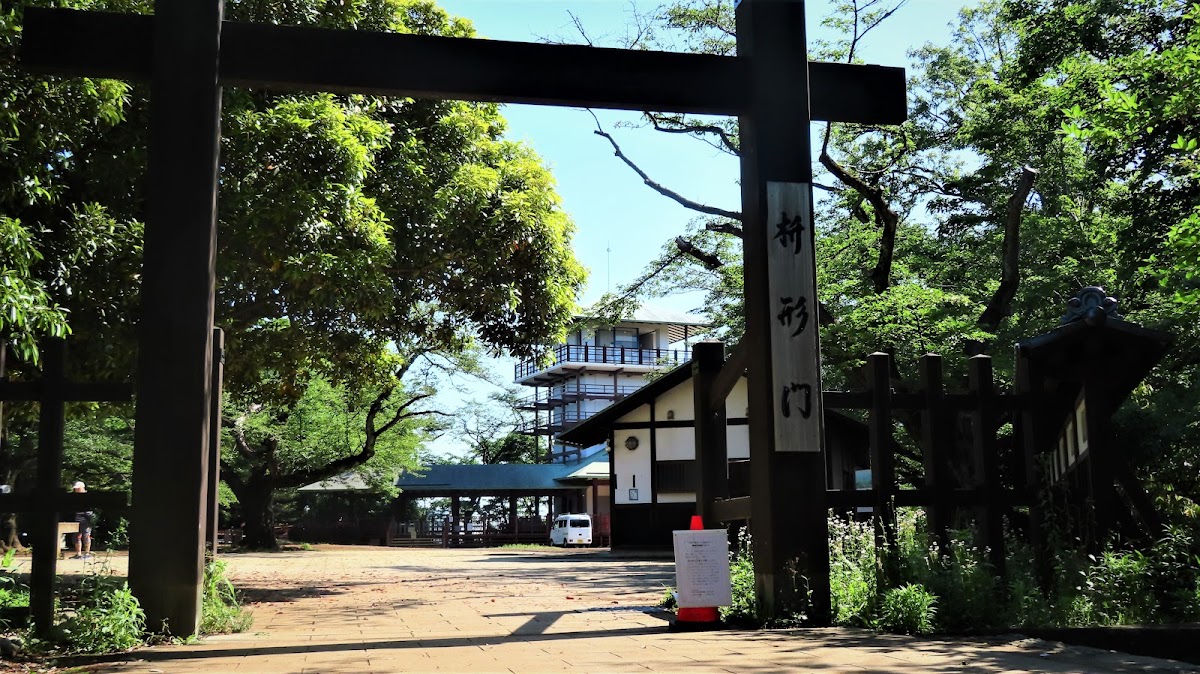
Masugata Castle (Kawasaki City, Kanagawa Prefecture) Complete Guide | From Inage Shigenari’s Mountain Castle to Modern Ikuta Ryokuchi Park
Basic Information on Masugata Castle
Masugata Castle is a Japanese castle site located at 6-4740 Masugata, Tama-ku, Kawasaki City, Kanagawa Prefecture. Also known as Masugata-yama Castle, it is currently developed as a park within Ikuta Ryokuchi Park.
Location and Access
Location: 6-4740 Masugata, Tama-ku, Kawasaki City, Kanagawa Prefecture (within Ikuta Ryokuchi Park)
Access Method:
- Approximately 13 minutes on foot from the South Exit of Mukogaoka-Yuen Station on the Odakyu Line
- Approximately 10-15 minutes on foot from the North Exit of Mukogaoka-Yuen Station
- Approximately 25 minutes on foot from Noborito Station on the JR Nambu Line and Odakyu Line
- If using the bus, get off at the Ikuta Ryokuchi Iriguchi bus stop
Castle Classification and Structure
Former Province Name: Musashi Province
Classification: Mountain Castle
Elevation: Approximately 84 meters
Relative Height: Approximately 58 meters
Remains: Moat, bailey remains
Year of Construction: Kenkyu era (1190-1199)
Builder: Inage Saburo Shigenari
Main Lords: Inage clan, Later Hojo clan
Year of Abandonment: After the Sengoku period (exact year unknown)
Masugata Castle was a mountain castle with very steep slopes surrounding it, and it had a defensive structure that skillfully utilized the natural terrain. Even today, observing the topography of Ikuta Ryokuchi Park gives one a sense of its ruggedness.
History and Background of Masugata Castle
Early Kamakura Period: Construction by Inage Shigenari
The history of Masugata Castle dates back to the Kenkyu era (1190-1199) in the early Kamakura period. The builder was Inage Saburo Shigenari, who belonged to the Oyamada clan, a branch of the Chichibu clan, one of the eight clans of Musashi Province.
Inage Shigenari was born the son of Oyamada Arishige and served as a senior retainer of Minamoto no Yoritomo. Because he was married to the sister of Hojo Masako, the principal wife of Minamoto no Yoritomo, Inage Shigenari was related to Yoritomo by marriage. This political position allowed Inage Shigenari to control the Inage Manor in Musashi Province.
From the Heian period to the early Kamakura period, the area of present-day central Kawasaki City was a manor called “Inage Manor.” Inage Shigenari, as the lord of this area, built his castle on Masugatayama. Masugatayama was a strategically important location overlooking the Tama River, and is thought to have been a militaryly significant base.
The End of Inage Shigenari and the Decline of the Inage Clan
Inage Shigenari had gained the trust of Minamoto no Yoritomo, but when his wife died in 1198, he built a bridge over the Sagami River to commemorate her. It is believed that Minamoto no Yoritomo fell from his horse at the ceremony celebrating the completion of this bridge, and this is considered one of the causes of his death.
Subsequently, Inage Shigenari was executed in 1203 for his involvement in the Hiki Yoshikazu Incident. This significantly weakened the Inage clan’s power, and it is believed that Masugata Castle temporarily lost its importance.
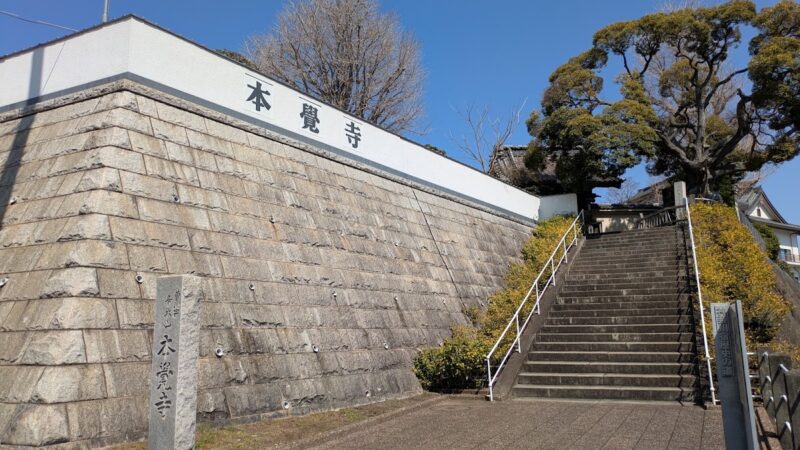
The grave of Inage Saburo Shigenari is located at Kofuku-ji Temple, situated on the northern foot of Mount Masugata. Kofuku-ji Temple is also said to be the site of the Inage residence, and it remains a place of historical significance associated with the Inage clan.
Sengoku Period: The Camp of Hojo Soun and Imagawa Ujichika
Masugata Castle reappeared on the historical stage in 1504, during the Sengoku period. In September of that year, Masugata Castle became an important military base in the struggle for supremacy in the Kanto region.
Ise Moritoki (later Hojo Soun) and Imagawa Ujichika entered Masugata Castle to subdue the Yamanouchi Uesugi clan. Both generals used this castle as a base camp and proceeded to the Battle of Tachigawara. The Battle of Tachigawara, fought near the border between Sagami and Musashi provinces, was a crucial battle that significantly altered the balance of power in the Kanto region.
Hojo Soun (Ise Sozui) was the founder of the Later Hojo clan, which later established its base in Odawara, and Imagawa Ujichika was a Sengoku daimyo of Suruga Province. The fact that these two powerful warlords both positioned themselves at Masugata Castle speaks to its high strategic value.
Afterward, it is believed that Masugata Castle came under the control of the Later Hojo clan. As the Hojo clan gained control of the Kanto region centered around Odawara, Masugata Castle likely functioned as part of the Hojo clan’s castle network.
Abandonment and its Legacy in the Modern Era
After the Sengoku period, Masugata Castle was abandoned. It is presumed that Masugata Castle ceased to function after the fall of the Later Hojo clan in Toyotomi Hideyoshi’s Odawara campaign in 1590.
During the Edo period, the castle completely lost its function, and Masugata Mountain became part of the local community’s living area. Even after the Meiji era, the area was preserved as forest, and in the Showa era, it was developed into Ikuta Green Space.
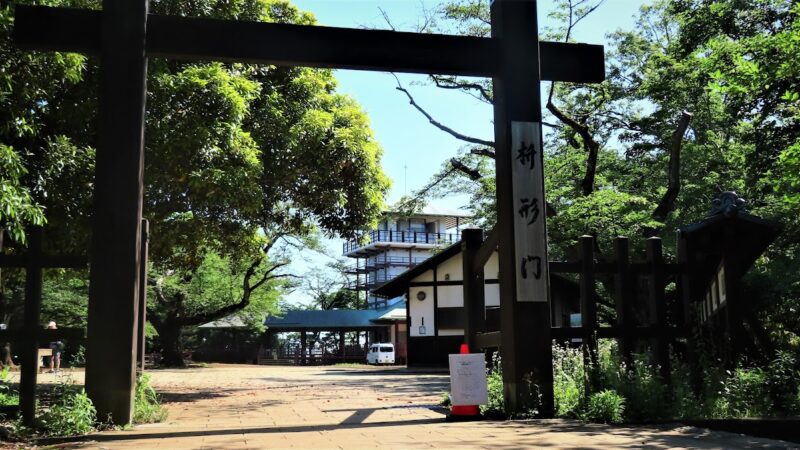
Currently, the Masugata Castle ruins are part of Ikuta Green Space and have been transformed into a park, serving as a place of relaxation for citizens. A Masugata Mountain Observation Deck has been installed at the summit, and its appearance, modeled after a castle keep, has earned it the nickname “Mock Castle Keep.”
Highlights and Remains of Masugata Castle
View from Masugata Mountain Observation Deck
The biggest highlight of the Masugata Castle ruins is the Masugata Mountain Observation Deck located at the summit. This observation deck, with its appearance reminiscent of a castle keep, is a landmark of Ikuta Green Space.
The view from the observation deck is exceptional, and on a clear day you can enjoy the following scenery:
- Towards central Tokyo: The skyscrapers of Shinjuku
- Towards the south: The cityscape of Yokohama
- Towards the west: The mountain range of the Tanzawa Mountains
- Towards the north: The lush green landscape of the Tama Hills
The view at sunset is particularly beautiful and it is a popular spot for photography. Perhaps the former lords of the castle gazed upon the same scenery and surveyed their territories from this very spot.
Remaining Structures
The following are the main remains of Masugata Castle that have been confirmed:
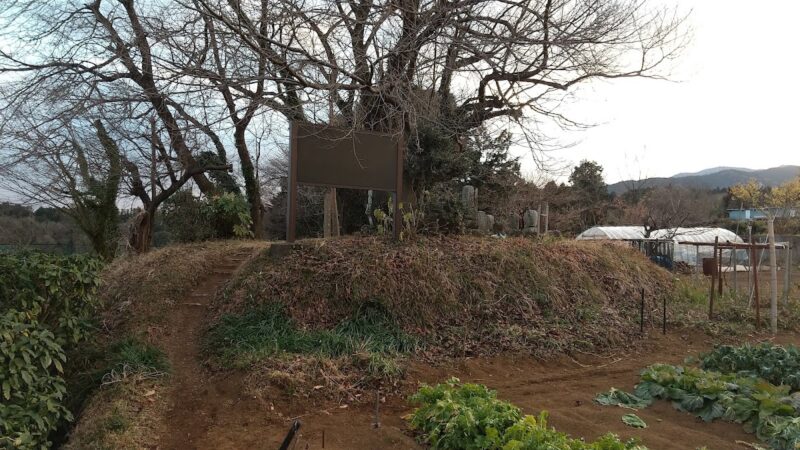
Moat: Traces of moats, a defensive structure unique to mountain castles, remain. Moats are ditches dug to cut across ridges, serving to prevent enemy intrusion. Careful observation within Ikuta Ryokuchi Park can reveal remnants of moats as unnatural depressions in the terrain.
Kuruwa Remains: Traces of the flat area (kuruwa) that formed the central part of the castle also remain. The area around the current observation deck is believed to have been the former main enclosure (honmaru).
Steep Slopes: The area surrounding Masugata Castle is a steep slope that utilizes the natural terrain, and this itself served as a defensive structure. The elevation difference of approximately 58 meters must have been a major obstacle for attackers.
Castle Site Monument and Information Board
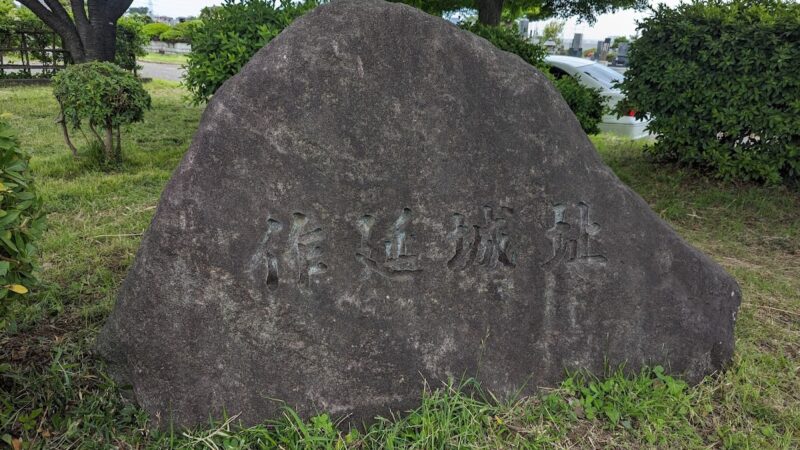
Within Ikuta Ryokuchi Park, there are information boards explaining the history of Masugata Castle, and a castle site monument has also been erected. These play an important role in conveying the historical background of the castle to visitors.
The information boards describe the achievements of Inage Shigenari and the history of Hojo Soun and Imagawa Ujichika setting up camp there, allowing visitors to learn about history on-site.
How to Enjoy Ikuta Ryokuchi Park and Masugata Castle Ruins
Overview of Ikuta Ryokuchi Park
Ikuta Ryokuchi Park, where the Masugata Castle ruins are located, is one of the largest urban parks in Kawasaki City. The total area covers approximately 179.3 hectares, and a rich natural environment is preserved.
Besides the Masugata Castle ruins, Ikuta Ryokuchi Park has many other facilities:
- Kawasaki City Taro Okamoto Museum of Art
- Kawasaki Space and Green Science Museum (Planetarium)
- Japan Open-Air Folk House Museum (Open-Air Museum of Traditional Japanese Houses)
- Fujiko F. Fujio Museum (Adjacent)
Visiting these facilities in combination will allow you to enjoy a full day of fun.
Masugata Castle as a Hiking Course
The approach to the Masugata Castle ruins is a well-maintained, easy hiking course. Accessible on foot from Mukogaoka-Yuen Station, it is one of the closest mountain castles to central Tokyo, making it popular with castle enthusiasts and history buffs.
The hiking trail is well-maintained, and you can climb it even in casual clothes, but comfortable walking shoes are recommended. Along the way, you will walk through a mixed forest, allowing you to enjoy the changing seasons.
Seasonal Highlights
Spring: During cherry blossom season, the entire Ikuta Ryokuchi Park becomes a popular spot for viewing blossoms. You can also enjoy cherry blossoms around Masugatayama Mountain.
Summer: The lush, shady trees provide cool shade, making it a comfortable summer retreat.
Autumn: Known as a famous spot for autumn foliage, the scenery, combined with the view from the Masugatayama Mountain observation deck, is beautiful.
Winter: The air is clear, allowing for excellent visibility, making this the most beautiful season for viewing from the observation deck. Mount Fuji can sometimes be seen.
Related Historical Sites Around Masugata Castle
Hirofuku-ji Temple (Inage Manor Site)
Located at the northern foot of Masugatayama Mountain, Hirofuku-ji Temple is said to be the site of Inage Shigenari’s manor. The temple grounds contain the grave of Inage Saburo Shigenari, making it a must-visit spot when visiting Masugata Castle.
Hirofuku-ji Temple is within walking distance of Mukogaoka-Yuen Station, and visiting it along with Masugata Castle will allow you to gain a deeper understanding of Inage Shigenari’s footsteps.
Tama River and the Tachigawara Battlefield
Looking south from Masugata Castle, you can see the Tama River. The Battle of Tachigawara in 1504 took place around this Tama River. This battle, in which Hojo Soun and Imagawa Ujichika sallied forth from Masugata Castle, was a crucial turning point in the history of the Sengoku period in the Kanto region.
While it is difficult to imagine the former battlefield from the current Tama River riverbed, viewing the Tama River from the Masugatayama Observatory allows you to imagine the perspective of the warlords of that time.
Masugata Castle and the Musashi Eight Clans/Chichibu Clan
The Musashi Eight Clans and the Oyamada Clan
The Musashi Eight Clans, from which Inage Shigenari originated, were a collective term for samurai groups that wielded considerable power in Musashi Province from the Heian period to the Kamakura period. The eight clans were the Yokoyama, Inomata, Murayama, Noyo, Nishi, Kodama, Tan, and Chichibu clans.
The Chichibu clan was particularly powerful among the Musashi Eight Clans, giving rise to many branches. The Oyamada clan was one of these branches, based in Oyamada-sho, Tama District, Musashi Province (present-day Machida City, Tokyo).
Inage Shigenari was born the son of Oyamada Arishige and adopted the name “Inage” because he ruled Inage-sho. Thus, it was common for samurai in the medieval period to adopt the name of their territory as their surname.
Genealogy of the Chichibu Taira Clan
The Chichibu clan was a family descended from the Kanmu Taira clan, and expanded its power in Musashi Province from the late Heian period. Founded by Chichibu Shigetsuna, his descendants spread throughout the Kanto region, including the Hatakeyama, Kawagoe, Edo, and Kasai clans.
The Oyamada clan, a branch of Inage Shigenari, was also part of this Chichibu Taira clan and played an important role in the establishment of the Kamakura Shogunate. Masugata Castle was one of the strongholds within the Chichibu Taira clan’s sphere of influence.
Military and Geographical Importance of Masugata Castle
Strategic Point in the Tama River Basin
Masugata Mountain, where Masugata Castle was built, is located on a hill overlooking the middle reaches of the Tama River. The Tama River has been a boundary separating Musashi and Sagami Provinces since ancient times and was also a crucial transportation hub.
Controlling this area had the following strategic significance:
- Management of the Tama River crossing point: Allowing monitoring and control of the main routes crossing the Tama River.
- Northern defense line to Kamakura: Serving as a defensive base north of Kamakura.
- Base for advance into Musashi Province: Serving as a starting point for military operations inland.
Defense system during the Kamakura period
The Kamakura Shogunate established a defense system centered on Kamakura, placing castles and residences of its vassals in strategic locations around the area. Masugata Castle is thought to have been part of this system, playing a role in the defense of southern Musashi Province.
Inage Shigenari’s position as a brother-in-law of Minamoto no Yoritomo likely also contributed to the ability to construct a castle in this important location.
Strategic base during the Sengoku period
The fact that Hojo Soun and Imagawa Ujichika used Masugata Castle as a fortified camp in 1504 indicates that its strategic value was recognized even during the Sengoku period.
The Battle of Tachigawara was a complex conflict involving the Yamanouchi Uesugi and Ogigayatsu Uesugi clans, with intervention from the Hojo and Imagawa clans. The route from Masugata Castle towards Tachigawara was a crucial route for crossing the Tama River and invading Sagami Province.
Practical Guide to Visiting Masugata Castle
Estimated Time and Sightseeing Route
Estimated Time: Visiting only the Masugata Castle ruins takes approximately 40 minutes to 1 hour. If you wish to enjoy the entire Ikuta Ryokuchi Park, allow 2-3 hours.
Recommended Route:
- From Mukogaoka-Yuen Station South Exit to Ikuta Ryokuchi East Exit (13-minute walk)
- Follow the signs within Ikuta Ryokuchi towards Masugata-yama
- Climb the mountain trail to the Masugata-yama Observatory (15-20 minutes)
- Enjoy the view from the observatory and observe the surrounding ruins
- After descending, if time permits, visit Kofuku-ji Temple
Notes for Visitors
- Clothing: Comfortable walking shoes are recommended. Full-fledged mountaineering equipment is not necessary, but sneakers are recommended.
- Season: Insect repellent is useful in summer. Take precautions against the cold in winter.
- Weather: Be careful as the ground can be slippery in rainy weather.
- Opening Hours: Ikuta Ryokuchi is generally open all day, but the observatory may be closed depending on the season.
Photography Tips
- Observation Deck: Taking a photo of the castle-like exterior from below makes for a powerful image.
- View: The best views are in the morning on a clear day.
- Evening View: The night view of Tokyo at dusk is also beautiful.
- Castle Ruins Monument: A popular spot for commemorative photos.
History of Masugata Castle and Kawasaki City
Origins of Kawasaki City
The area that is now Kawasaki City belonged to Tachibana District and Tama District of Musashi Province from ancient to medieval times. During the Kamakura period, manors such as Inage-sho were established, and samurai like Inage Shigenari ruled as lords.
During the Edo period, Kawasaki-juku developed as a post town on the Tokaido road, and from the Meiji era onward, it grew into an industrial city. Currently, it is a designated city with a population exceeding 1.5 million.
Castle Ruins in Kawasaki City
Besides Masugata Castle, several other medieval castle sites have been identified within Kawasaki City:
- Ozawa Castle: A mountain castle located in the Suga district of Tama Ward
- Terao Castle: A flatland castle located in Takatsu Ward
These castles are also believed to be associated with Inage Shigenari and the Oyamada clan, illustrating the power of medieval samurai groups in the Kawasaki City area.
Research and Preservation Activities of Masugata Castle
Archaeological Investigation
While no full-scale excavation has been conducted at Masugata Castle, basic investigations such as topographic surveys and the creation of castle layout maps have been carried out.
Because the site has been developed into Ikuta Ryokuchi Park, large-scale excavation is difficult, but the castle’s structure and historical changes are being studied through comparison with historical documents and topographic analysis.
Preservation and Utilization
Kawasaki City recognizes the historical value of the Masugata Castle ruins and is working to preserve and utilize them within the development plan for Ikuta Ryokuchi Park. The installation of observation decks and the improvement of information boards provide opportunities for citizens and tourists to experience history.
Guided tours and site visits by local history enthusiasts and castle researchers are also held occasionally, promoting the historical significance of Masugata Castle.
Future Challenges and Prospects
Further research and investigation of Masugata Castle, and the publication of its findings, are future challenges. The use of historical heritage in new forms, such as restoration CG using digital technology and historical experiences using VR/AR, is also anticipated.
Furthermore, developing historical walking routes in conjunction with related historical sites such as Kofuku-ji Temple will enhance the historical value of the entire region.
Summary: Historical Significance of Masugata Castle
Although not large in scale, Masugata Castle is a valuable historical site that embodies the history of Japan from the medieval period to the Sengoku period.
In the early Kamakura period, it was the residence of Inage Saburo Shigenari, a brother-in-law of Minamoto no Yoritomo, and an important base in southern Musashi Province. During the Sengoku period (Warring States period), two great heroes, Hojo Soun and Imagawa Ujichika, established their camps here, making it the stage for battles for supremacy in the Kanto region.
Today, the Masugata Castle ruins are part of Ikuta Ryokuchi, an urban park, and are popular with locals. As one of the closest mountain castles to central Tokyo, it’s an easily accessible historical spot.
Why not enjoy the view from the Masugatayama observation deck and imagine the figures of the warlords who once ruled this land? Masugata Castle, where history and nature harmonize, conveys to us, who live in the present day, the lives of our ancestors and the memories of the land that have been passed down through the ages.
Accessible on foot from Mukogaoka-Yuen Station, Masugata Castle is an ideal place for weekend strolls and historical exploration. As a historical heritage site that Kawasaki City is proud of, it will continue to be cherished by many people, and its value will be passed down to future generations.