Complete Guide to Shinohara Castle (Kohoku Ward, Yokohama City) | Details of the Kaneko Clan’s Residence and the Sengoku Period Ruins Remaining in Shin-Yokohama
What is Shinohara Castle?
Shinohara Castle (Shinohara-jo) was a Japanese castle (mountain castle) that once existed near 2564 Shinohara-cho, Kohoku Ward, Yokohama City, Kanagawa Prefecture. Also known as Kaneko Castle, it is a valuable historical site that preserves the remains of the Sengoku period, despite being located in the heart of the city, about a 10-minute walk from the east exit of JR Shin-Yokohama Station.
While the area around modern Shin-Yokohama Station is a modern cityscape lined with skyscrapers and hotels, the ruins of the castle, once the residence of the Kaneko clan who served the Hojo clan, quietly stand on a small hill amidst the buildings. The contrast between the modern landscape with its passing Shinkansen trains and the ruins of a Sengoku period castle is striking.
Basic Information about Shinohara Castle
Location and Former Province
- Location: Near 2564 Shinohara-cho, Kohoku-ku, Yokohama City, Kanagawa Prefecture
- Former Province: Musashi Province
- Castle Structure: Concentric-style hill castle
- Elevation: On a hill approximately 30 meters high
Common Name/Alternate Name
Shinohara Castle is also known by the alternative name Kaneko Castle. This name originates from the name of the Kaneko clan, who were the castle’s lords. Both names have been used in historical documents and locally.
Builder and Year of Construction
- Builder: Kaneko clan (estimated)
- Year of Construction: Around the 15th century (estimated)
- Main Lord: Kaneko Izumo-no-kami
The exact construction date is unclear, but it is believed to have been built sometime between the Kamakura period and the Sengoku period. During the Sengoku period, the castle was ruled by Kaneko Izumo-no-kami, a vassal of the Hojo clan, as recorded in the “Odawara Shūsho Ryōyakuchō” (Odawara Clan Territory Register).
History of Shinohara Castle
Relationship between the Kaneko and Hojo Clans
The Kaneko clan, who were the lords of Shinohara Castle, were members of the vassal group serving the Odawara Hojo clan. The name Kaneko Izumo can be found in the “Odawara Shūsho Ryōyakuchō,” an important historical document recording the Hojo clan’s vassals and their territories. This document indicates that the Kaneko clan played a certain role within the Hojo clan’s system of rule.
Connection to Kozukue Castle
Shinohara Castle is thought to have functioned as a branch castle of the nearby Kozukue Castle (the current Kozukue Castle Ruins Citizens’ Forest). Kozukue Castle was one of the Hojo clan’s important strongholds, and Shinohara Castle played a role in its defense network.
Geographically, Shinohara Castle and Kozukue Castle are several kilometers apart, suggesting that they cooperated in the defense of the region. It is believed that local samurai, such as the Kaneko clan, and farmers used this castle for defense and refuge during wartime.
The Kaneko Clan After the Fall of the Hojo Clan
Even after the Hojo clan was destroyed in Toyotomi Hideyoshi’s Odawara campaign in 1590, the Kaneko clan remained in this area. Records show that they played an important role in the local community as village headmen (nanushi) during the Edo period.
This indicates that the Kaneko clan was not merely samurai, but also a powerful local figure. Their continued influence in the region, even amidst the major political upheaval of the Hojo clan’s downfall, is noteworthy.
Year of Abandonment
The exact year of abandonment is unknown, but it is believed that the castle lost its military function after the 1590s, following the fall of the Hojo clan. It is presumed that, influenced by the Edo shogunate’s “One Castle Per Province” decree, the castle’s function as a fortress was gradually abandoned.
Remains and Highlights of Shinohara Castle
Existing Remains
The following remains still exist at Shinohara Castle:
Kuruwa (Enclosures)
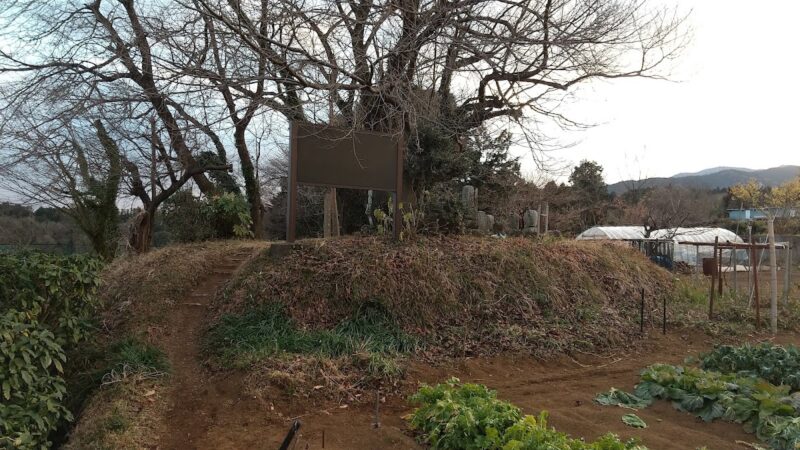
The topography of the kuruwa, the central part of the castle, can be seen. It is believed to have had a concentric structure with multiple kuruwa connected to the main keep.
Dry Moat
An important dry moat, a defensive feature of the castle, remains. Excavation revealed a remarkably large dry moat, approximately 12.7 meters wide at the top, 5.0 meters wide at the bottom, and 12 meters deep.
The scale of this dry moat indicates that Shinohara Castle was not merely a small fort, but a full-fledged castle with robust defensive capabilities.
Earthworks
Traces of earthworks have also been confirmed around the kuruwa. These earthworks were earthen walls designed to prevent enemy intrusion and, in combination with the dry moat, enhanced the castle’s defensive capabilities.
Results of Archaeological Excavations
Previous archaeological excavations have uncovered new remains, such as moat traces. These investigations have revealed the specific structure and scale of the castle, which were not apparent from historical documents alone.
The investigations have confirmed that Shinohara Castle possessed more substantial fortifications than previously thought, leading to a re-evaluation of its importance within the power structure of the Kaneko clan and the Hojo clan’s system of rule.
Current Situation and Access Restrictions
Shinohara Castle ruins are currently access prohibited. While it was previously possible to enter the main keep area, for safety reasons and to protect the remains, the area is now fenced off, and entry into the interior is not permitted.
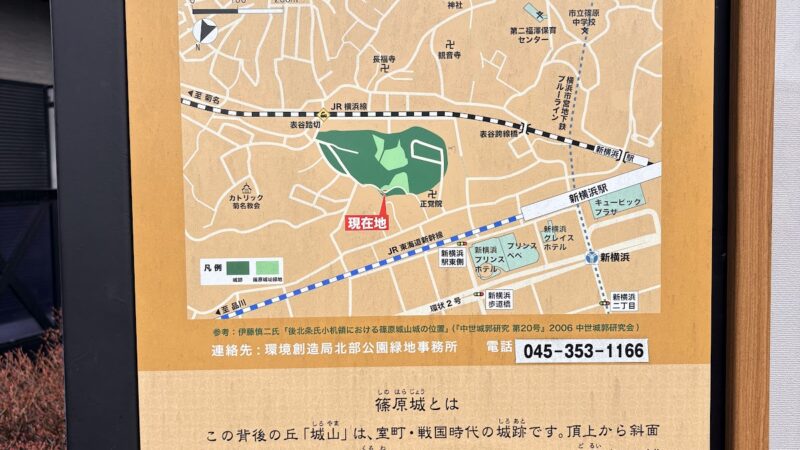
An explanatory sign is located near the entrance to the castle ruins, providing an overview of the site. Additionally, a guided tour is held once a year, offering an opportunity to visit the interior of the castle ruins, which is normally off-limits, under the guidance of experts.
While the access restrictions are unfortunate, they are an important measure to preserve these valuable remains for future generations. Although viewed from behind a fence, you can still feel the presence of a valuable relic from the Sengoku period remaining in the heart of the city.
Access and Surrounding Information
Access to Shinohara Castle
Access by Train
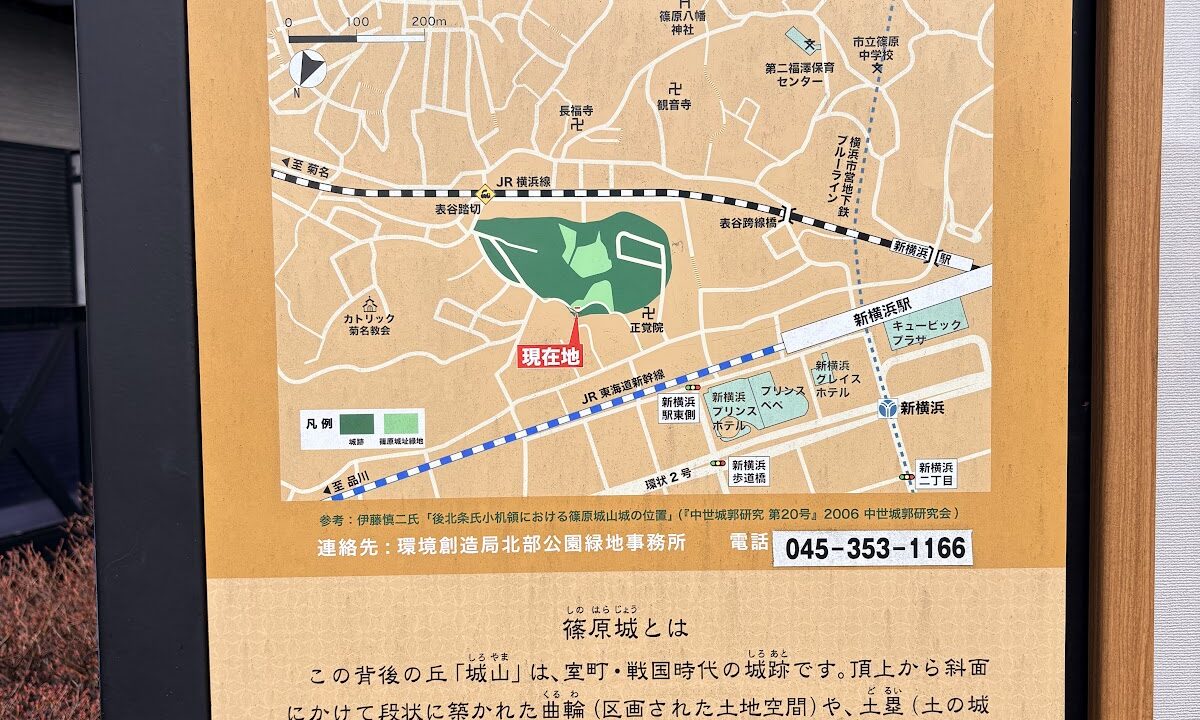
- Approximately 10 minutes on foot from JR Yokohama Line/Tokaido Shinkansen Shin-Yokohama Station
- Exit the east exit of Shin-Yokohama Station and head towards Shinohara-cho
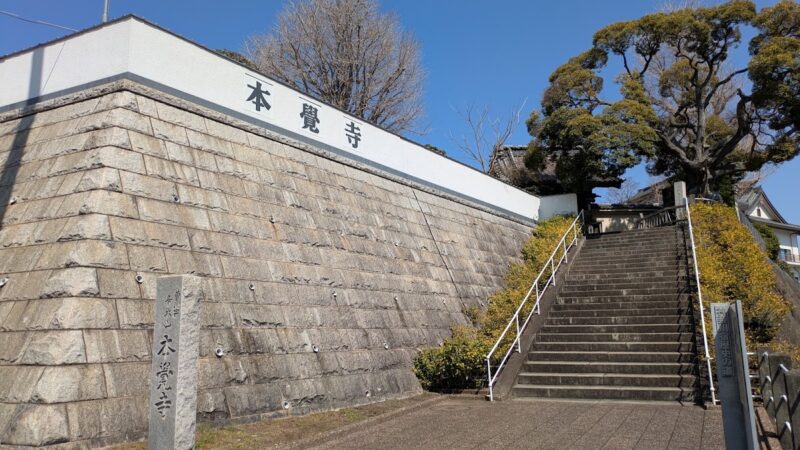
- The castle site is on the hill behind Shogakuin Temple.
It boasts an extremely convenient location among Japanese castle ruins, within walking distance of Shin-Yokohama Station, a Shinkansen stop.
Access by Car
It is accessible from the Daisan Keihin Expressway and major roads within Yokohama City, but there is no dedicated parking lot for the castle ruins. You will need to use nearby coin-operated parking lots.
Map and Location
Shinohara Castle is located on a small hill east of Shin-Yokohama Station, adjacent to the residential area of Shinohara-cho and Shogakuin Temple. On modern maps, it can be seen as a green space amidst the buildings around Shin-Yokohama Station.
Nearby Attractions
Shin-Yokohama Prince Hotel
A landmark hotel located in front of Shin-Yokohama Station, and close to the Shinohara Castle ruins. Convenient accommodation for those visiting the castle ruins. From the upper floors, you can enjoy panoramic views of Yokohama city, offering a modern perspective on the area that Shinohara Castle once overlooked.
Shin-Yokohama International Hotel
Another major hotel near Shin-Yokohama Station. Used as a base for business and sightseeing, and suitable as a base for visiting historical sites in Yokohama, including the Shinohara Castle ruins.
Kozukue Castle Ruins Citizens’ Forest
The site of Kozukue Castle, closely related to Shinohara Castle, is now developed as a citizens’ forest. Visiting it in conjunction with Shinohara Castle allows for a deeper understanding of the castle network under the Hojo clan’s rule. The Kozukue Castle ruins retain well-preserved remains such as dry moats and earthworks, and walking paths are also maintained.
Other Castle Ruins in Yokohama
Besides Shinohara Castle, Yokohama City has several other medieval castle ruins, including Shishigaya Castle and Terao Castle. A “Yokohama Castle Ruins Tour” visiting these sites is a popular route among history enthusiasts.
Characteristics and Historical Significance of Shinohara Castle
Valuable Remains in an Urban Area
The most distinctive feature of Shinohara Castle is that it retains remains from the Sengoku period (Warring States period) despite being located in the heart of the city, within walking distance of Shin-Yokohama Station, a stop on the Tokaido Shinkansen line. In the rapidly developing area around Shin-Yokohama Station, Shinohara Castle is a miraculously preserved historical heritage site.
The sight of the castle ruins surrounded by skyscrapers and the Shinkansen can be seen as symbolic of the challenge of balancing Japan’s rapid modernization with the preservation of historical heritage.
Research Materials on the Hojo Clan’s Rule System
Shinohara Castle is an important historical site for studying the rule system of the Hojo clan, who controlled the Kanto region during the Sengoku period. As the castle of the Kaneko clan, as recorded in the “Odawara Shoshoryo Yakucho” (a historical record of the Odawara clan’s territories), it serves as a concrete example illustrating the structure of the Hojo clan’s retainers and their regional governance.
Its relationship with Kozukue Castle provides insight into a part of the castle network built by the Hojo clan, offering clues to understanding the regional defense system of the Sengoku period.
Importance in Local History
Shinohara Castle occupies an important position in the local history of Kohoku Ward, Yokohama City. The fact that the Kaneko clan remained in the area after the fall of the Hojo clan and acted as village headmen during the Edo period demonstrates the historical continuity of this region.
The modern place name, Shinohara-cho, is also deeply connected to the history of this castle site and is part of the region’s identity.
Points to Note When Visiting Shinohara Castle
Precautions When Visiting
- Restricted Area: Currently, the interior of the castle site is surrounded by a fence and entry is prohibited. You will be able to observe the remains from behind the fence.
- Check the Information Sign: The information sign near the entrance contains detailed information about the castle’s history and structure.
- Surrounding Environment: Since the castle is adjacent to a residential area, consideration for local residents is necessary when visiting.
- Information on Tours: Information on the annual tours can be found on the websites of Yokohama City and local cultural property preservation organizations.
Photography Tips
Since entry is prohibited, photography will be done from behind the fence. The following compositions are recommended:
- A composition that expresses the contrast of eras, combining the castle ruins hill with the Shin-Yokohama skyline in the background.
- A photograph of the explanatory sign and the castle ruins together, including the historical background.
- A composition that captures the Shinkansen bullet train and the castle ruins simultaneously, demonstrating the coexistence of modernity and history.
Recommended Time to Visit
While the exterior of Shinohara Castle Ruins can be viewed throughout the year, the following times are especially recommended:
- Spring (March-May): The season of fresh greenery, the castle ruins hill is covered in green, creating a beautiful landscape.
- Autumn (October-November): The season of autumn leaves, allowing you to feel the historical atmosphere more strongly.
- During Guided Tours: When the annual guided tour is held, it is a valuable opportunity to see the interior of the castle ruins, which is normally off-limits.
Castle Ruins Tour in Yokohama City
Recommended Course Including Shinohara Castle
A course starting from Shinohara Castle and visiting other castle ruins in Yokohama City is popular with history enthusiasts:
Part 1 Course (Half Day)
- Shinohara Castle (Walking distance from Shin-Yokohama Station)
- Kozukue Castle Ruins Citizens’ Forest (Approx. 2km from Shinohara Castle)
Part 2 Course (Full Day)
- Shishigaya Castle (Travel from Kozukue Castle)
- Terao Castle (Travel from Shishigaya Castle)
These castle ruins are all important historical sites that tell the history of southern Musashi Province from the medieval period to the Sengoku period.
Characteristics of Each Castle Ruin
- Kozukue Castle: Considered a parent castle of Shinohara Castle, it has larger remains. It has been developed as a citizens’ forest with well-maintained walking trails.
- Shishigaya Castle: A castle ruin located in Tsurumi Ward, Yokohama City, also related to the Hojo clan.
- Terao Castle: Terao Castle in Tsurumi Ward, Yokohama City, is said to have been the residence of the Suwa clan and has its own unique history.
References and Information Sources
For those who want to know more about Shinohara Castle, the following materials are helpful:
- “Odawara-shu Shoshoryo Yakucho”: A primary source recording the retainers and territories of the Hojo clan.
- Local history materials of Kohoku Ward, Yokohama City: Available for viewing at local libraries and local history museums.
- Archaeological excavation reports: Detailed records of past excavations.
- Castle research books such as “Medieval Castles of Kanagawa Prefecture”
Information about Shinohara Castle is also included in materials published by the Yokohama City Cultural Properties Protection Department and local history research groups in Kohoku Ward.
Summary
Shinohara Castle (Kaneko Castle) is a valuable mountain castle site from the Sengoku period, located near Shin-Yokohama Station in Kohoku Ward, Yokohama City, Kanagawa Prefecture. Kaneko Izumo-no-kami, a retainer of the Hojo clan, served as the castle lord, and it functioned as a branch castle of Kozukue Castle. Although currently off-limits, remnants such as dry moats, earthworks, and baileys remain, and archaeological excavations have revealed its full structure. Despite being located in an urban area within walking distance of a Shinkansen station, it is a valuable historical site that conveys the atmosphere of the Sengoku period, and is cherished by history enthusiasts and local residents alike.
The history of the Kaneko family remaining in the area after the fall of the Hojo clan and acting as village headmen during the Edo period indicates that this castle site was not merely a military facility, but something deeply connected to the local community.
When visiting Shin-Yokohama, why not take a stroll through this historical heritage site, quietly nestled amidst modern buildings, and reflect on Musashi Province during the Sengoku period? If there is an opportunity for an annual guided tour, we highly recommend participating to observe the internal remains of the castle up close, which are not normally accessible.